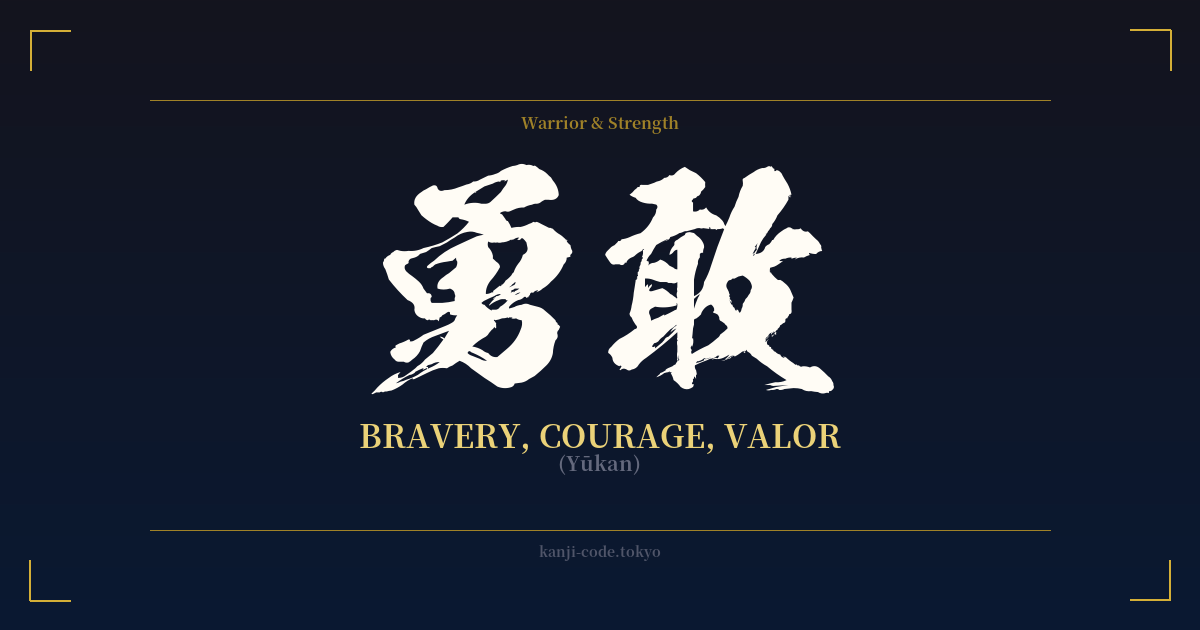
✍️ 勇敢 (Yūkan) — Cultural Context
勇敢 (Yūkan) is a powerful Japanese word that goes beyond the simple English translation of 'bravery.' It signifies a specific kind of courage: active, daring, and demonstrated through action, especially in the face of adversity or danger. While other words might describe an inner feeling of courage, Yūkan is about the bold choice to act on that feeling.
This distinction is crucial. Another common word for courage is 勇気 (Yūki). Yūki refers to the inner spirit, the potential for bravery that resides within a person. Yūkan, on the other hand, is the manifestation of that spirit. It's the firefighter running into a burning building, the activist speaking truth to power, or the individual standing up for what is right despite personal risk. Yūkan is courage in motion.
The roots of this concept are deeply embedded in Japanese culture, particularly within the philosophy of Bushidō, the way of the samurai. One of the seven core virtues of Bushidō is 勇 (Yū), the very first character in Yūkan. For a samurai, this wasn't just about fearlessness in battle; it was about having the moral and physical strength to do the right thing, to act with justice and integrity even when it was difficult or dangerous. Yūkan perfectly encapsulates this ideal of heroic, righteous action.
In modern Japan, Yūkan is used to praise acts of valor and heroism in all walks of life. It’s a term of high respect, reserved for those who demonstrate exceptional fortitude and a willingness to confront challenges head-on. It’s not about reckless abandon but about a conscious and resolute decision to be brave. This makes it a profound word that embodies a respected and admired human quality, recognized and valued across cultures.
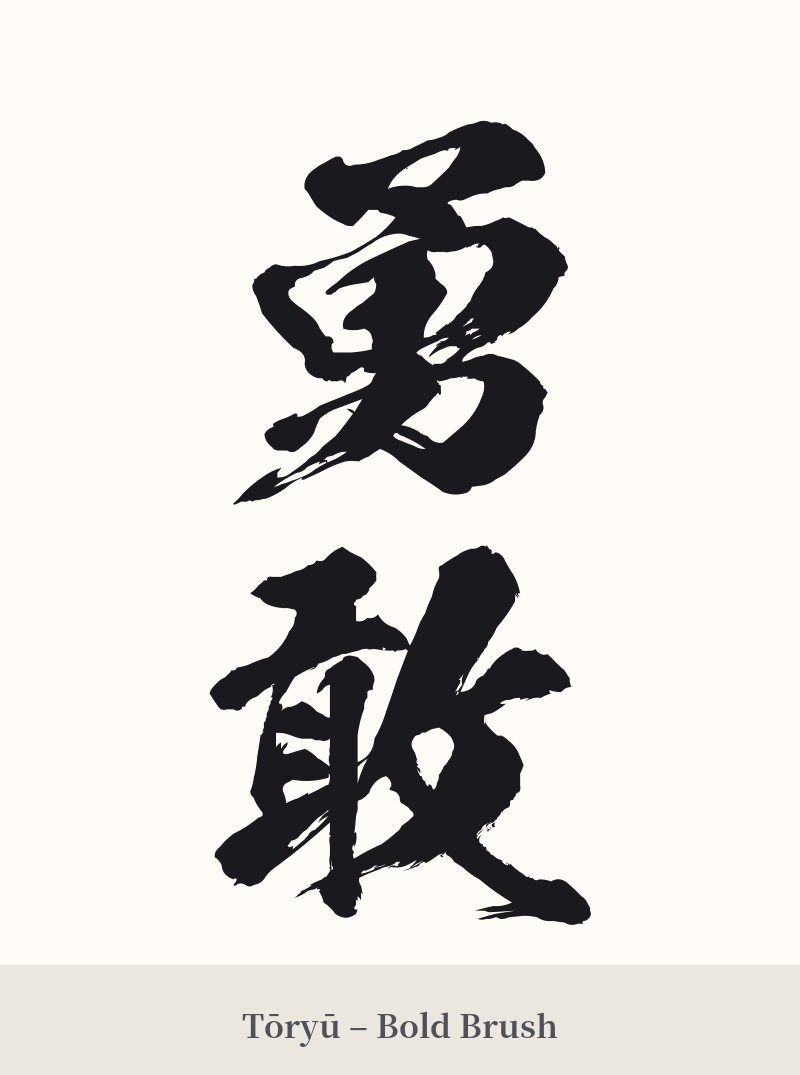
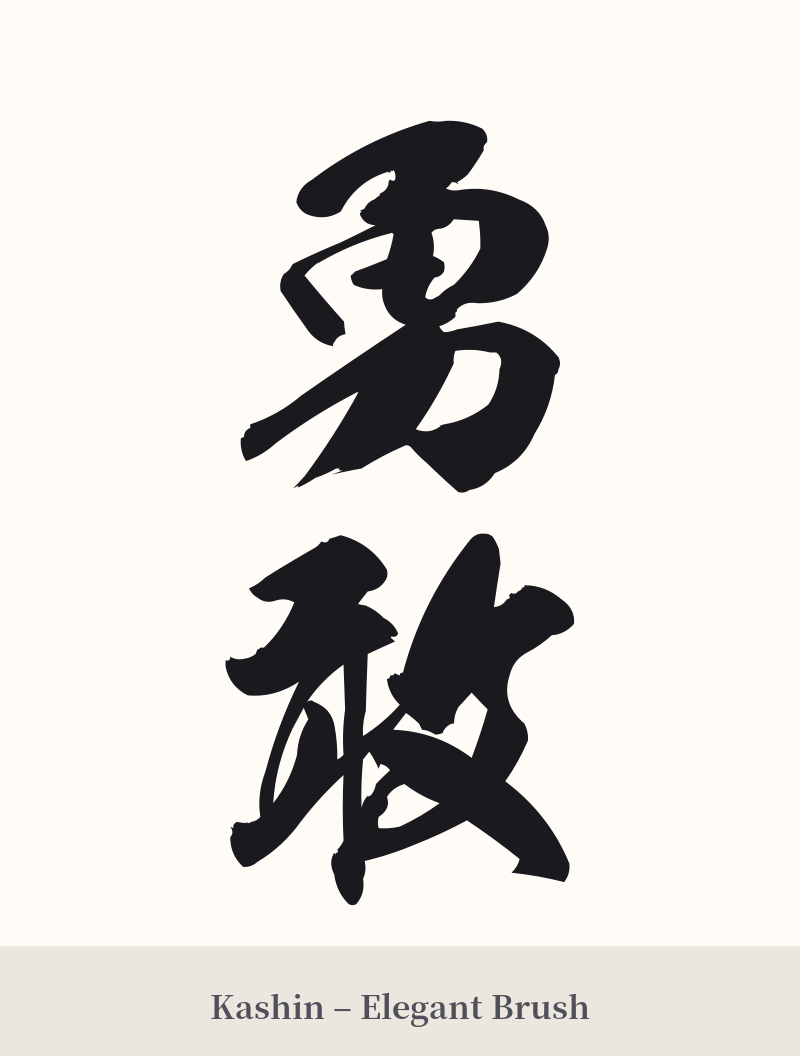
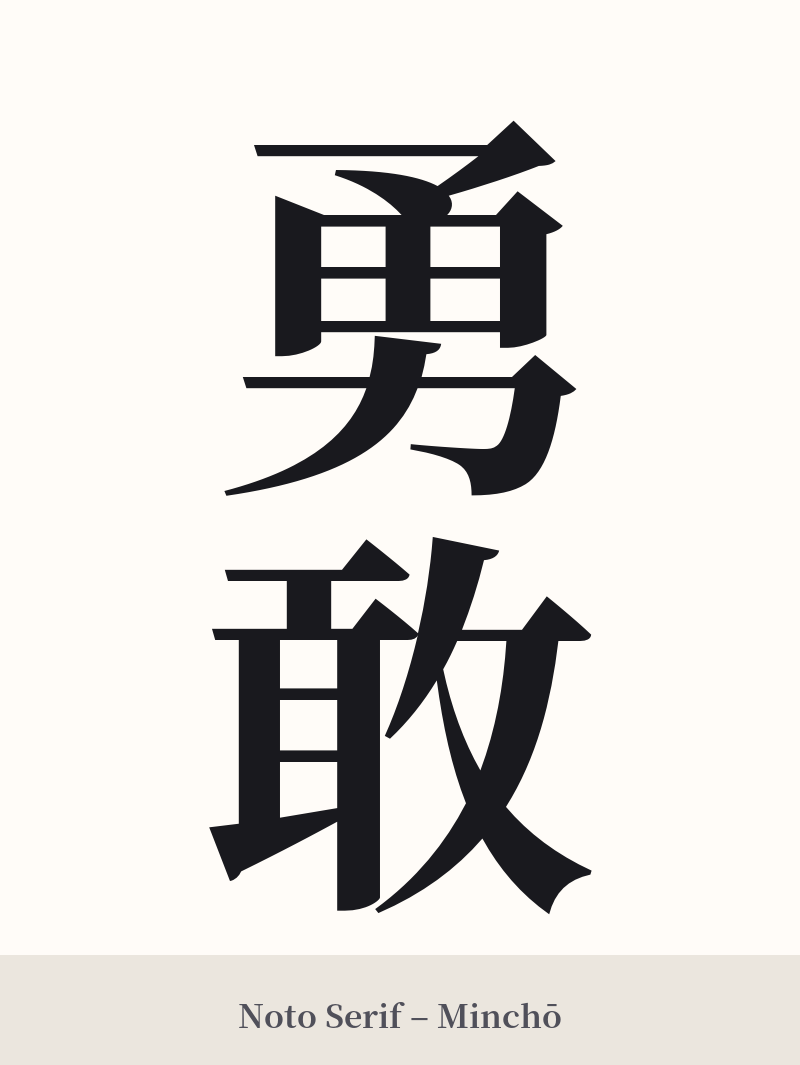
🖌️ Font Styles for 勇敢
The same kanji can look dramatically different depending on the calligraphy style. Choose a font that matches the mood you want for your tattoo or design.
🎨 Tattoo Suitability
📐 Tattoo Design Guide
For a 勇敢 tattoo, the design should project strength and clarity. Given its vertical symmetry, a top-to-bottom arrangement is classic and highly recommended.
– Placement: This design works exceptionally well along the spine, forearm, or calf, where its vertical nature can be emphasized. For a horizontal placement, the upper back or chest allows the characters enough space to breathe.
– Font Style: A bold, angular script like Kaisho (block script) will underscore the fortitude and stability inherent in the word. For a more dynamic feel, a Gyosho (semi-cursive) style can capture the 'action' element of Yūkan, suggesting bravery in motion.
– Visual Elements: While 勇敢 stands powerfully on its own, it can be paired with symbolic imagery. Consider a backdrop of a stoic tiger (tora) or a determined koi fish swimming upstream, both of which are Japanese symbols of strength and perseverance. However, ensure these elements complement, rather than overpower, the kanji itself.
Comments