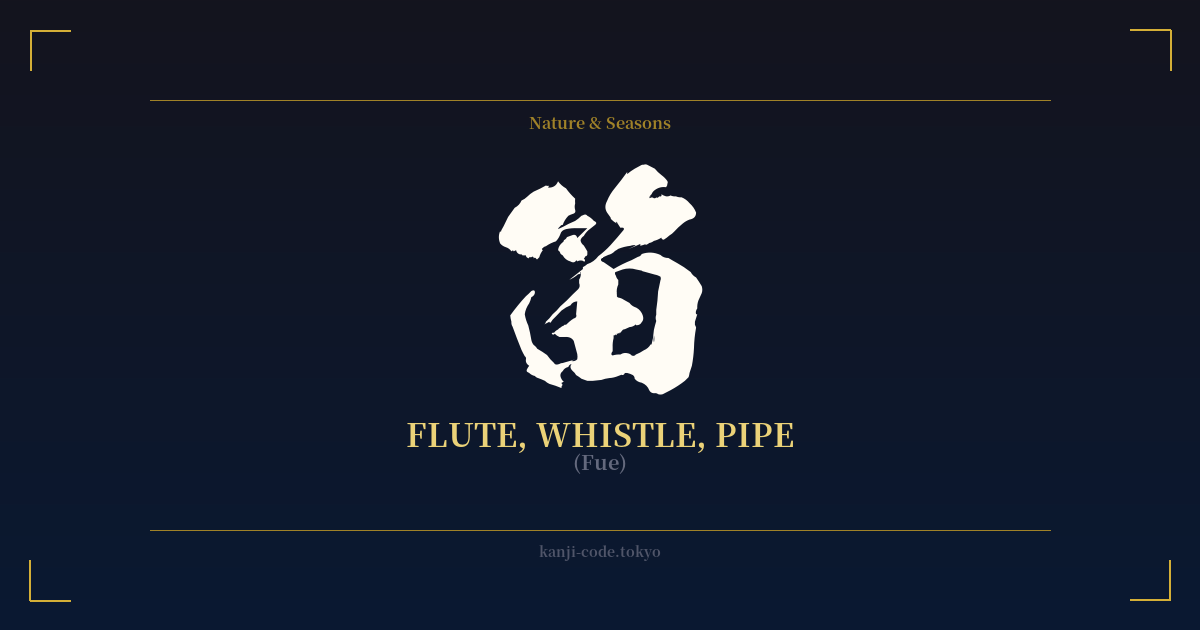
✍️ 笛 (Fue) — Cultural Context
The kanji 笛 (Fue) is a simple yet evocative character that resonates deeply within Japanese culture, conjuring images of serene bamboo groves, lively festivals, and the haunting melodies of traditional theater. Its very structure tells a story: the top radical, 竹 (take), means 'bamboo,' the primary material for crafting traditional Japanese flutes. This instantly connects the character to the natural world and the craft of instrument making.
The term 'fue' is a general word for flute, encompassing a wide variety of instruments that have played a crucial role in Japan's artistic and spiritual life for centuries. One of the most famous is the shakuhachi, a vertically held bamboo flute known for its deep, breathy tones. Historically, it was used by the komusō, or 'monks of emptiness,' wandering Zen Buddhist monks who played it as a form of meditation called suizen ('blowing Zen'). The music was not for performance but for achieving enlightenment, making the shakuhachi a symbol of spiritual discipline and introspection.
In stark contrast is the shinobue, a transverse flute with a high-pitched, piercing sound that is inseparable from the lively atmosphere of Japanese festivals (matsuri). Its energetic melodies accompany processions and traditional dances, filling the air with a sense of joy and community celebration. The sound of the shinobue is, for many Japanese people, the sound of summer itself.
Beyond spirituality and celebration, the fue is also a cornerstone of traditional performing arts. In Noh and Kabuki theater, the flute (specifically the nōkan) is used to set the mood, signal scene changes, and accompany the actors' movements. Its melodies can be ethereal, sorrowful, or tense, guiding the audience's emotional journey through the narrative. This use in theater has cemented the flute's image as a powerful tool for storytelling and emotional expression.
In poetry and painting, the flute often appears as a symbol of elegance (fūryū), loneliness, or a deep connection with nature. A lone figure playing a flute under the moon is a classic artistic motif, representing a moment of quiet contemplation and harmony with the universe. Therefore, the simple character 笛 is more than just an object; it is a key that unlocks a vast world of Japanese music, history, and aesthetic sensibilities.
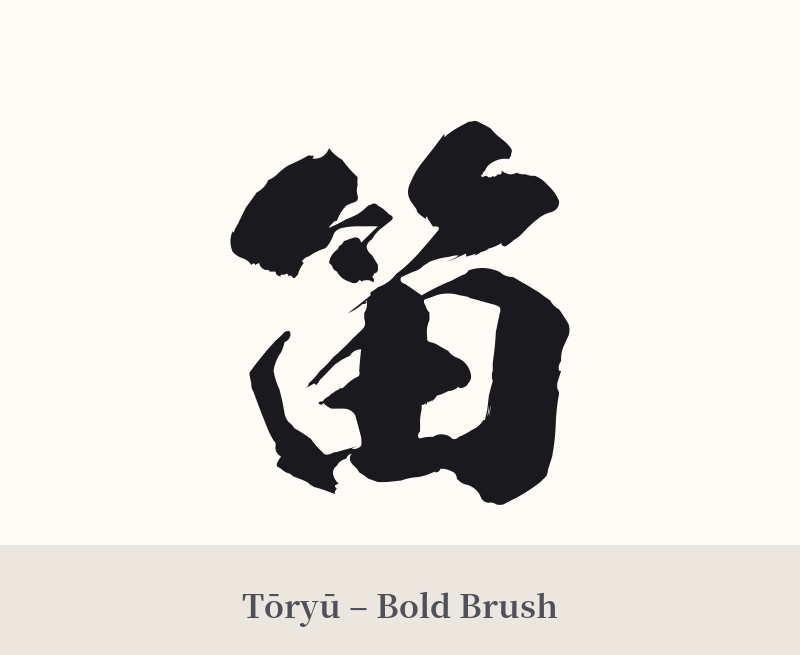
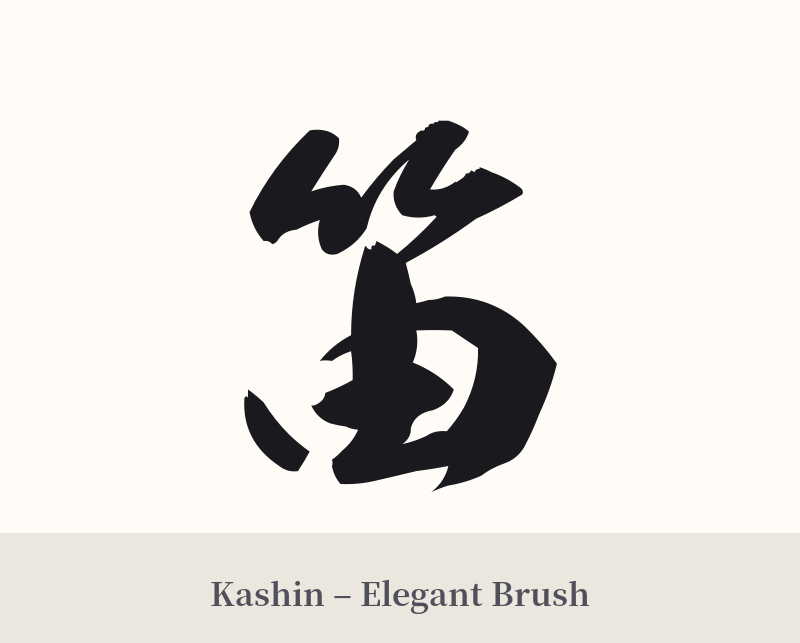
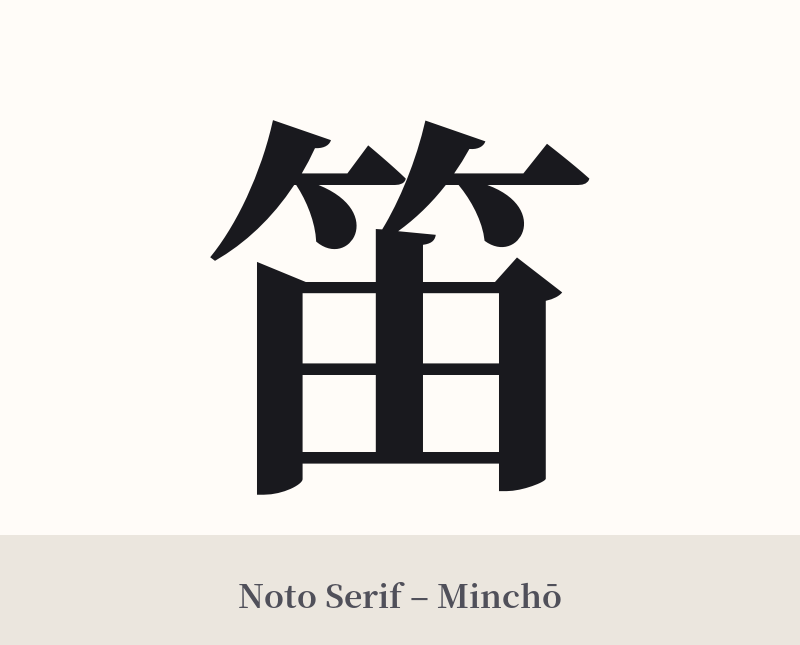
🖌️ Font Styles for 笛
The same kanji can look dramatically different depending on the calligraphy style. Choose a font that matches the mood you want for your tattoo or design.
🎨 Tattoo Suitability
📐 Tattoo Design Guide
For a 笛 (Fue) tattoo, the design should aim to capture the elegance and musicality of the character. Its balanced form works well in various styles and placements.
– Placement: The vertical nature of the character is well-suited for the forearm, calf, or along the spine. For a more subtle placement, the back of the neck or behind the ear can be effective.
– Style: A flowing, semi-cursive calligraphy style (gyōsho) can mimic the movement of music and wind. For a more traditional and dignified look, a crisp block script (kaisho) is an excellent choice. Avoid overly aggressive or spiky fonts that contradict the character's serene and artistic nature.
– Visual Elements: Consider pairing the kanji with complementary imagery to enhance its meaning. Wisp-like lines representing wind or sound waves can add a sense of motion. Incorporating a stalk of bamboo, a crescent moon, or delicate maple leaves can ground the design in its natural and poetic context.
Comments