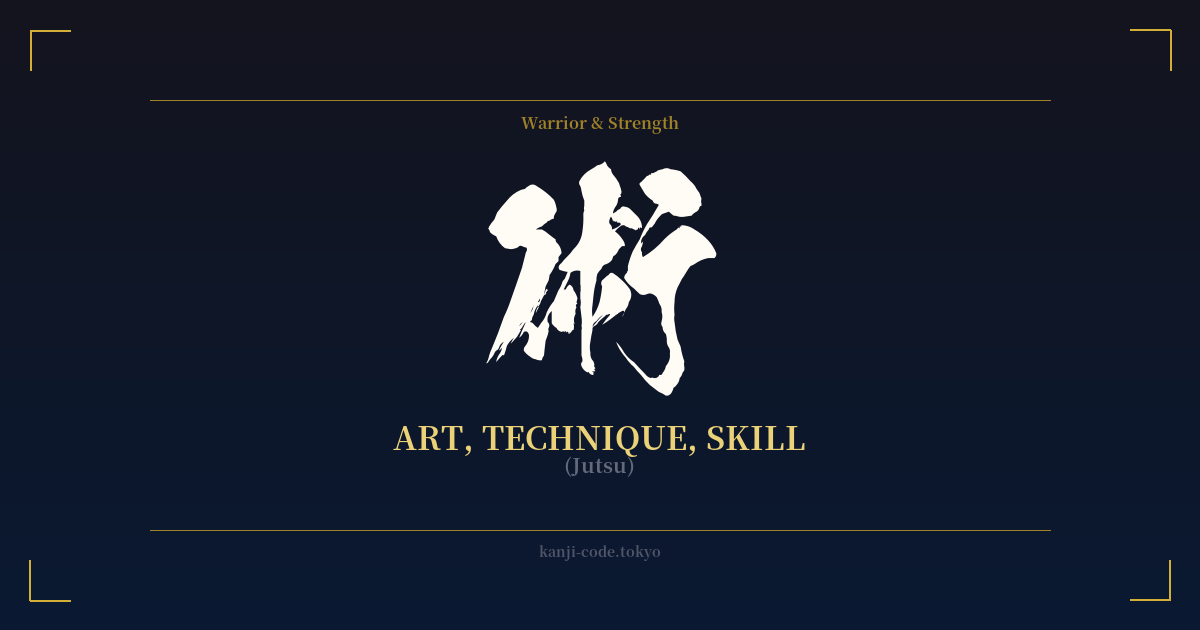
✍️ 術 (Jutsu) — Cultural Context
The kanji 術 (jutsu) is a cornerstone of Japanese culture, representing the mastery of a specific method, technique, or art. While often translated as 'skill' or 'art,' its essence lies in the practical application of a refined system, achieved through immense dedication and practice.
Historically, the character's components hint at its origins. It is composed of elements that once depicted a 'path' or 'street' (行) and a type of grain, suggesting a method or process within a community. Over centuries, this evolved to signify a systematic approach to accomplishing a task, whether in craftsmanship, strategy, or combat.
Nowhere is the spirit of 'jutsu' more evident than in the world of Japanese martial arts, or 武術 (bujutsu). Terms like 柔術 (jūjutsu, the 'gentle technique'), 剣術 (kenjutsu, the 'art of the sword'), and 忍術 (ninjutsu, the 'art of stealth') all use this kanji. Here, 'jutsu' emphasizes the practical, combative application of the discipline. It is the 'how-to' of fighting, the collection of techniques that make a warrior effective.
This contrasts with the concept of 道 (dō), meaning 'the way' or 'path,' as seen in words like 柔道 (jūdō) and 剣道 (kendō). While 'jutsu' focuses on the technical skill itself, 'dō' elevates the practice to a spiritual and philosophical journey of self-improvement. A martial art often begins as a 'jutsu' and evolves into a 'dō,' but the 'jutsu' remains its practical, functional core.
Beyond the dojo, 術 is integral to many other fields. 美術 (bijutsu) means 'fine arts,' 技術 (gijutsu) refers to 'technology' or 'engineering,' and 手術 (shujutsu) is the term for a surgical 'operation.' In each case, it signifies a specialized, systematic skill set. This versatility shows that 'jutsu' is not just about fighting, but about the mastery of any complex craft.
In modern pop culture, particularly through anime and manga like 'Naruto,' 'jutsu' has become globally recognized as the term for a ninja's mystical or superhuman techniques. While this has popularized the word, it's important to remember its deeper, more grounded meaning rooted in centuries of disciplined practice across all facets of Japanese society.
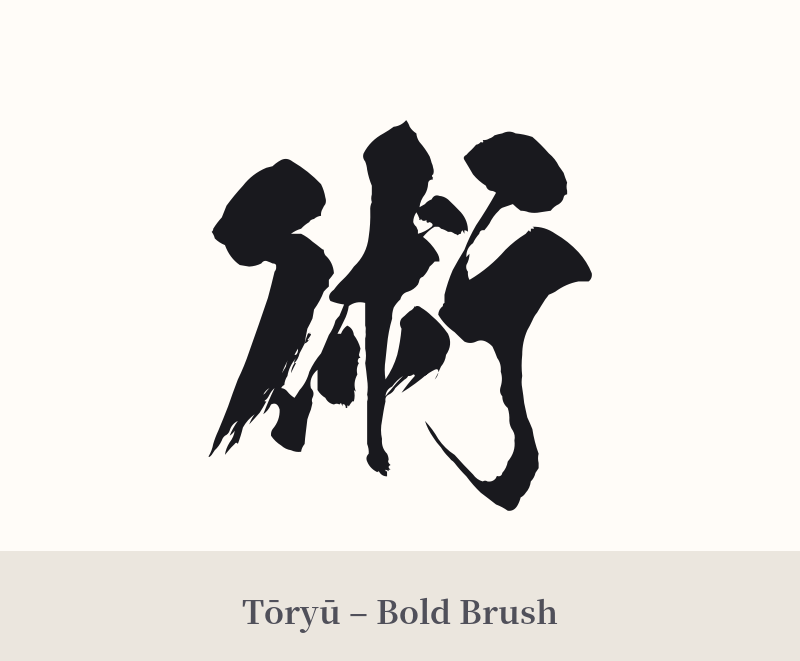
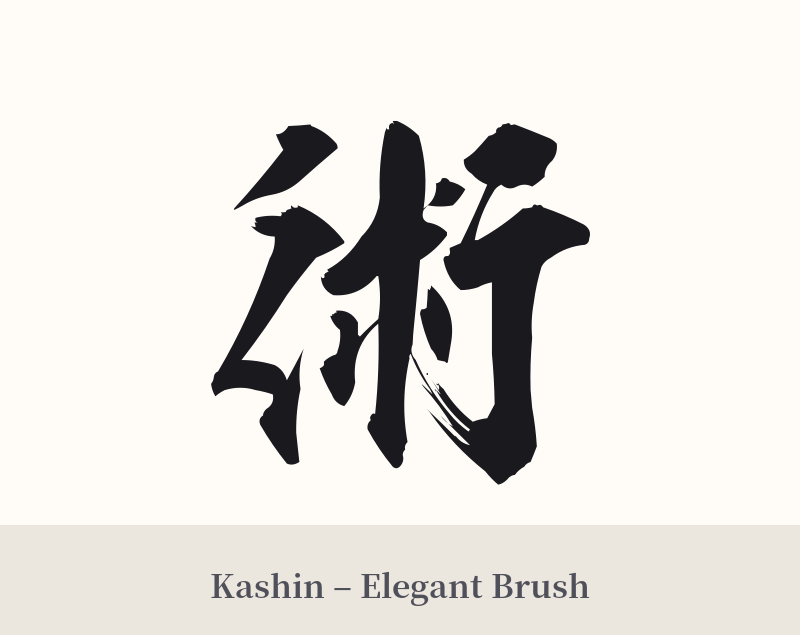
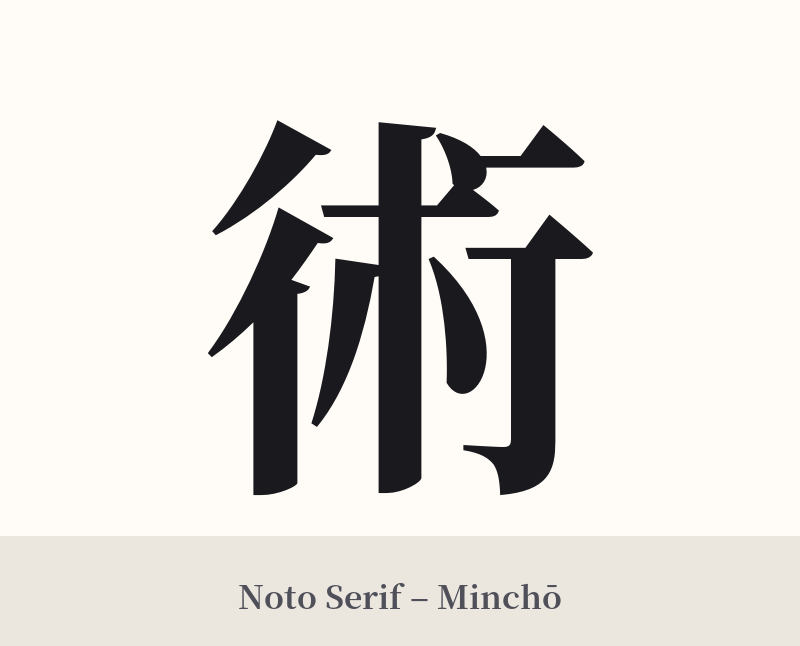
🖌️ Font Styles for 術
The same kanji can look dramatically different depending on the calligraphy style. Choose a font that matches the mood you want for your tattoo or design.
🎨 Tattoo Suitability
📐 Tattoo Design Guide
The kanji 術 is a strong and versatile choice for a tattoo, symbolizing dedication to a craft. Its balanced form works well in a variety of styles and placements.
For placement, consider areas that reflect action and dedication: – The forearm or bicep, to represent a skill honed by one's hands. – The calf, symbolizing a strong foundation and forward movement. – The back of the shoulder or upper back, a classic placement that provides a broad canvas.
Regarding style, a bold and dynamic calligraphy script like Gyosho (semi-cursive) or Sosho (cursive) can capture the fluid motion inherent in martial arts. For a cleaner, more modern look that emphasizes the 'technical' aspect, a crisp Mincho or Gothic font is an excellent choice. To add personal meaning, you could integrate a small, subtle symbol of your specific 'jutsu'—be it a paintbrush, a musical note, or a programming bracket—alongside the kanji.
Comments