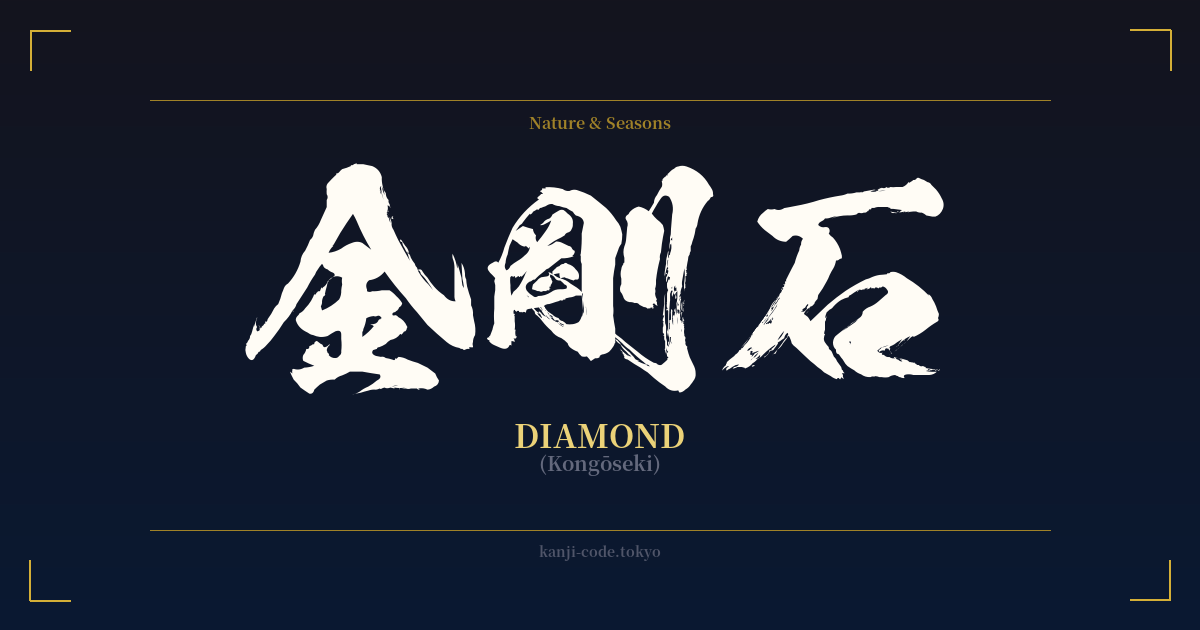
✍️ 金剛石 (Kongōseki) — Cultural Context
金剛石 (Kongōseki) is the traditional and formal Japanese word for 'diamond.' While modern Japanese often uses the katakana loanword ダイヤモンド (daiyamondo) in everyday conversation, 金剛石 carries a much deeper, more poetic, and historically rich connotation.
To understand its significance, we must break it down. The word is composed of three kanji: 金 (kin/kon) meaning 'gold' or 'metal,' 剛 (gō) meaning 'sturdy' or 'strength,' and 石 (seki) meaning 'stone.' Literally, it translates to 'metal-strength stone' or 'hard-metal stone,' a name that beautifully captures the diamond's defining characteristic: its unparalleled hardness.
However, the true depth of this word lies in the first two characters, 金剛 (Kongō). This is the Japanese term for the Sanskrit word 'vajra.' In Hindu and Buddhist traditions, the vajra is a legendary ritual weapon and symbol. It represents both the thunderbolt of the god Indra, signifying irresistible force, and the diamond, signifying indestructibility and immutability.
In Japanese Buddhism, the concept of Kongō is central. It symbolizes the ultimate, indestructible nature of reality and the power of enlightened wisdom to cut through ignorance and illusion, just as a diamond can cut through any other material. You can see this influence in the names of powerful Buddhist figures, such as the Kongōrikishi (金剛力士), the fierce guardian deities who stand at the entrance of many temples, embodying raw, protective power. The 'Diamond Realm' or Kongōkai (金剛界) is a key concept in esoteric Buddhism, representing a metaphysical space of unwavering truth.
Therefore, calling a diamond 'Kongōseki' elevates it from a mere gemstone to a 'Vajra-Stone.' It imbues the object with this profound spiritual and philosophical weight—a symbol of unshakeable resolve, clarity of mind, and the power to overcome any obstacle. It speaks to a strength that is not just physical but also spiritual and absolute. Choosing 金剛石 over ダイヤモンド is a choice for history, poetry, and profound meaning over simple, modern utility.
🖌️ Font Styles for 金剛石
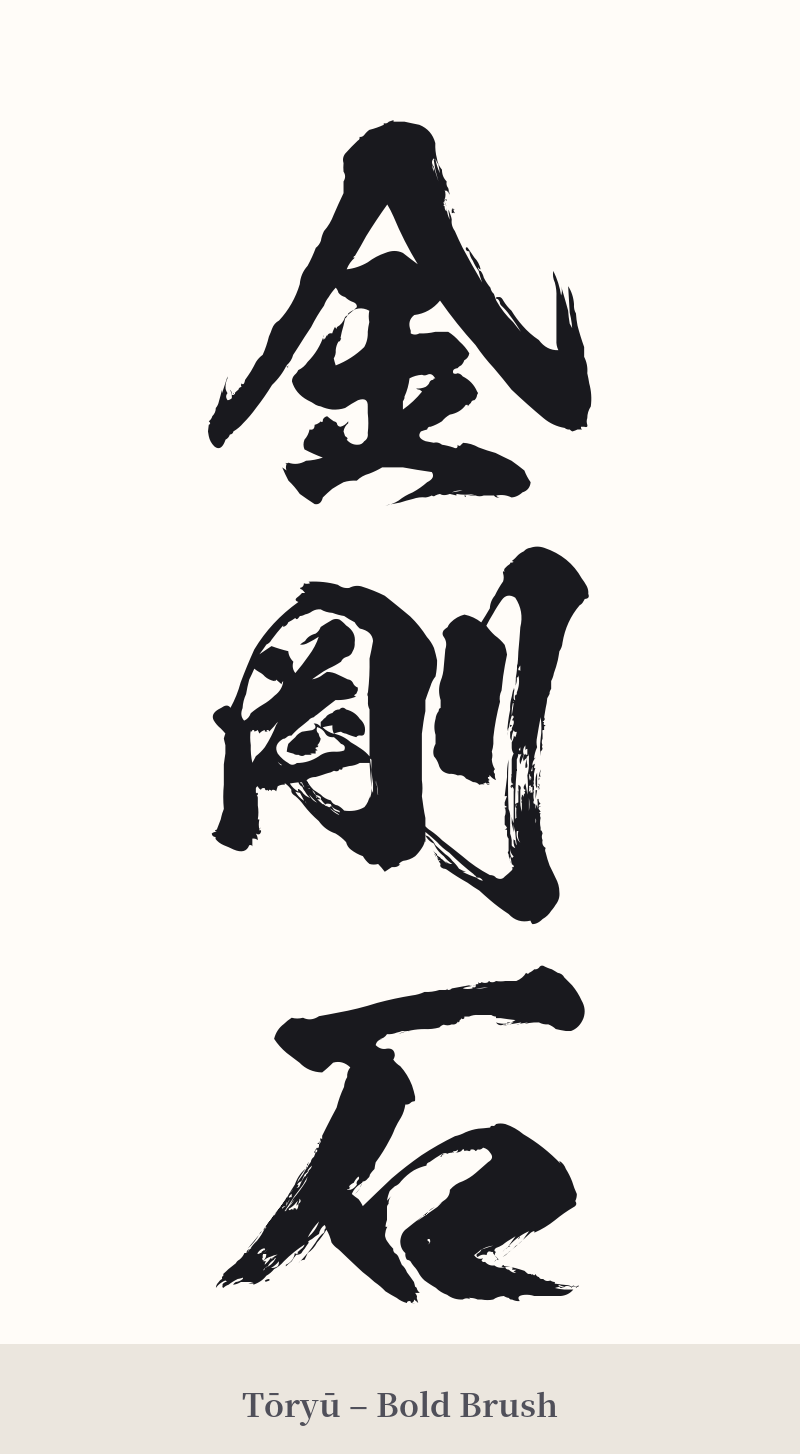
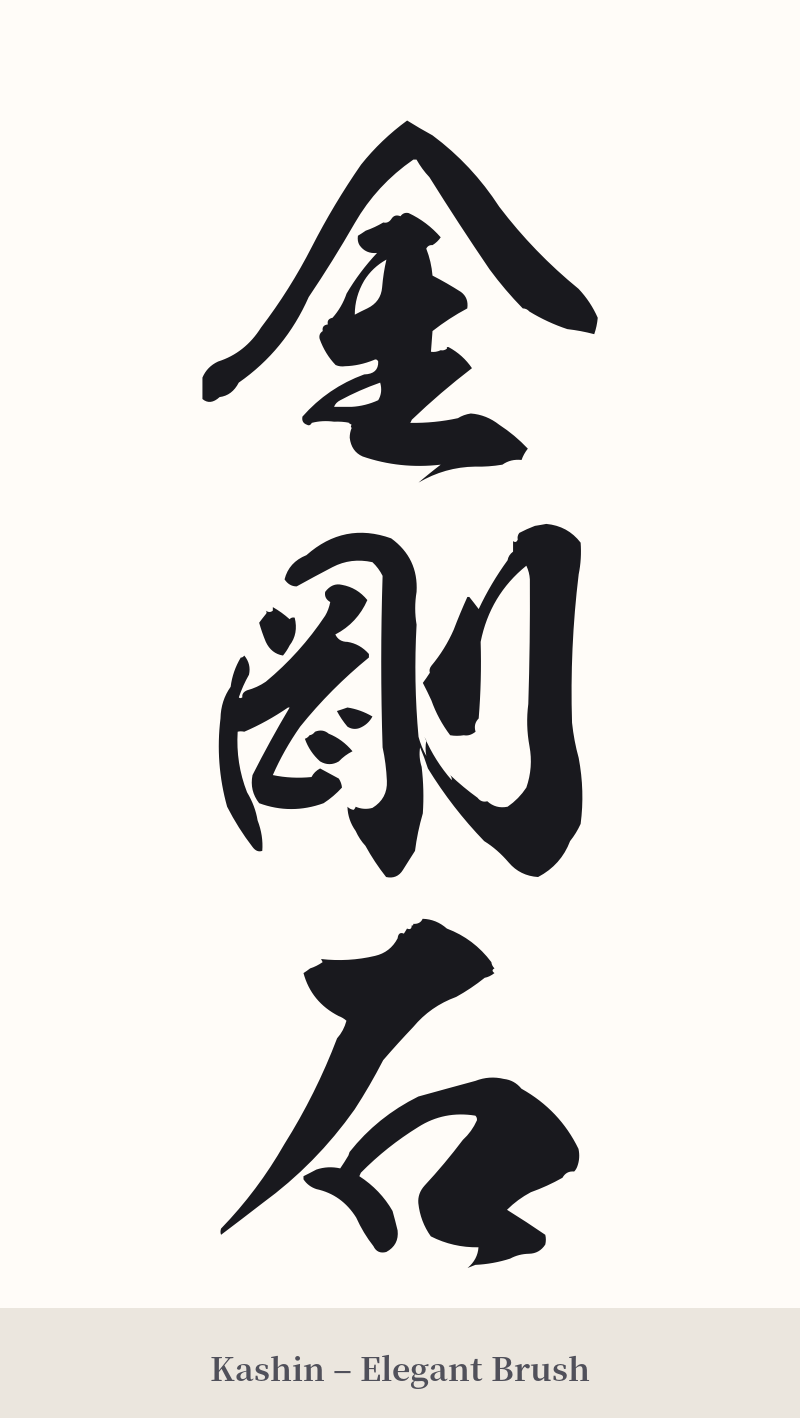
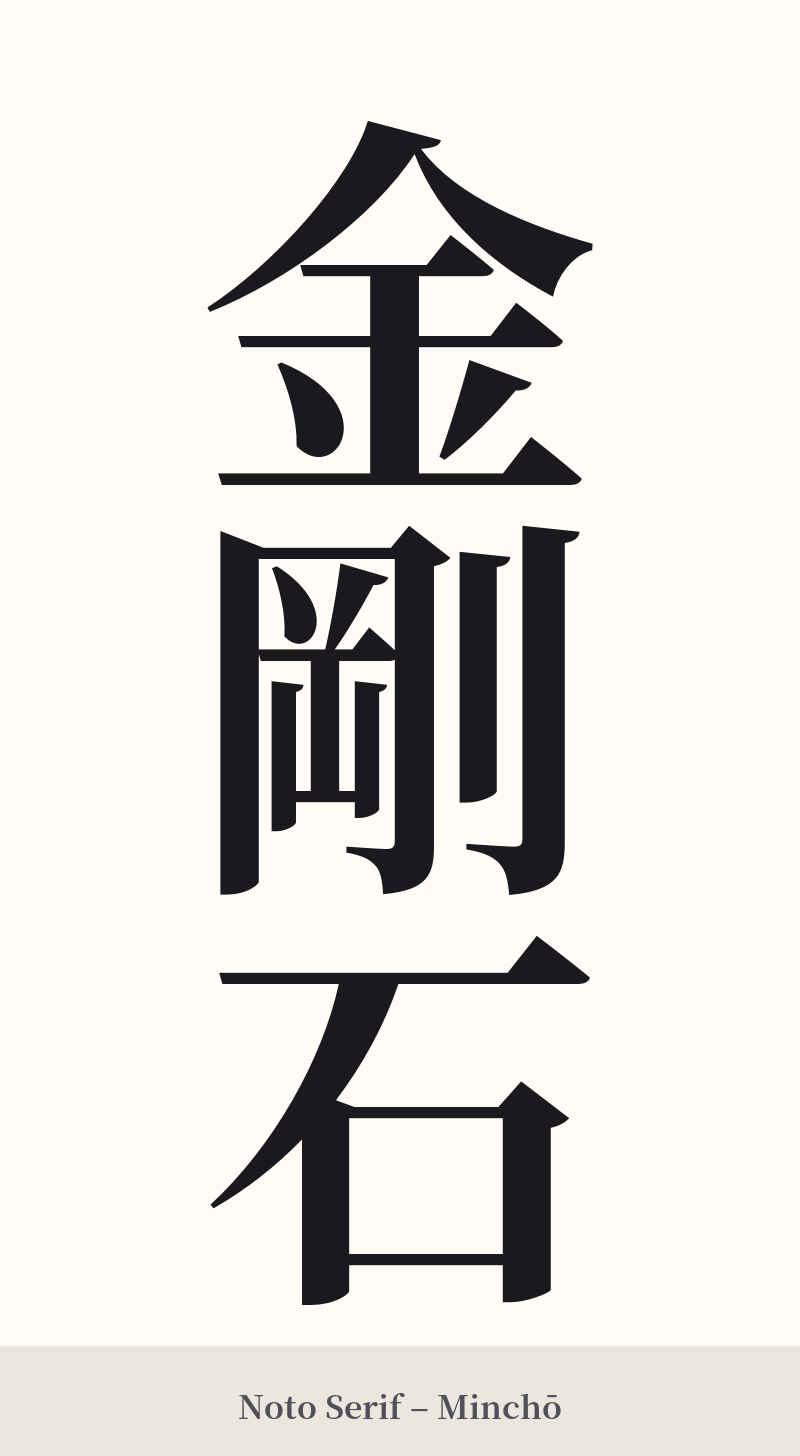
The same kanji can look dramatically different depending on the calligraphy style. Choose a font that matches the mood you want for your tattoo or design.
🎨 Tattoo Suitability
📐 Tattoo Design Guide
The three-character structure of 金剛石 offers excellent versatility for a tattoo design. Its inherent meaning of strength and indestructibility should be reflected in the style and placement.
For placement, a vertical alignment is classic and powerful. It works exceptionally well along the forearm, the calf, or down the spine, creating a strong visual line. A horizontal arrangement is also effective, suited for the chest, upper back, or across the ribs.
When it comes to font style, consider the following: – A bold, angular Kaisho (block script) or a modern Gothic style will emphasize the 'sturdy' and 'unbreakable' aspects of the word. – A dynamic, semi-cursive Gyōsho script can add a sense of energy and power, evoking the 'thunderbolt' aspect of the vajra. – Avoid overly delicate or thin fonts, as they may visually contradict the powerful meaning of the kanji.
To enhance the design, you could incorporate a small, stylized vajra symbol or a geometric diamond facet near the kanji. This can add a layer of visual interest and help convey the deeper meaning to those unfamiliar with the term.
Comments