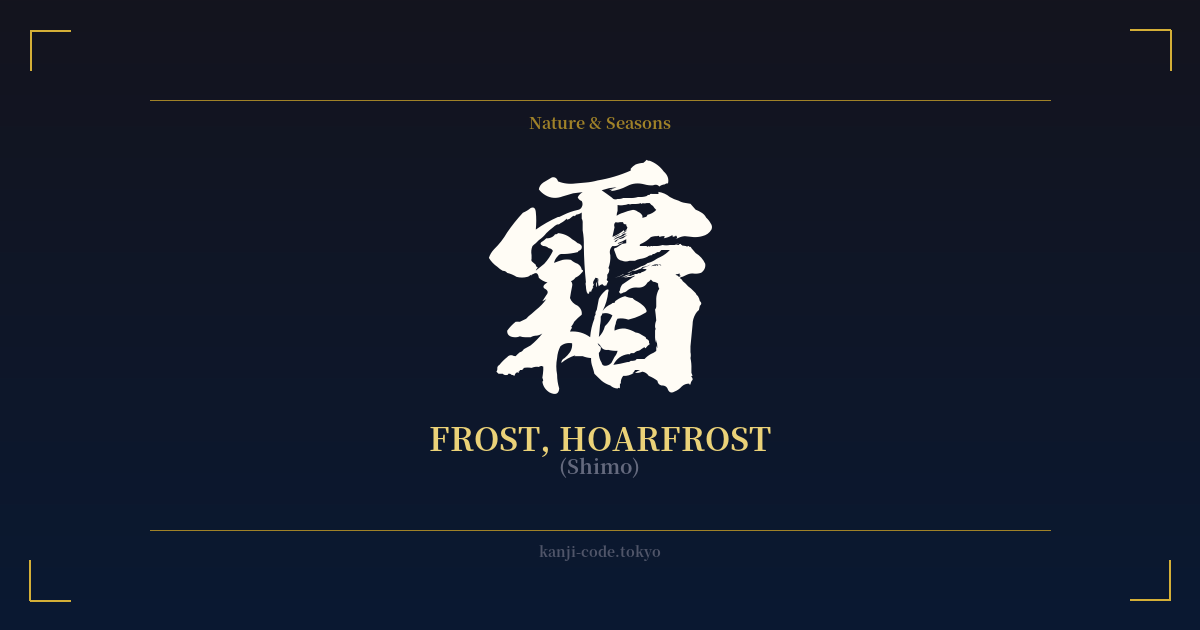
✍️ 霜 (Shimo) — Cultural Context
The kanji 霜 (shimo) refers to frost, the delicate ice crystals that blanket the landscape on cold, clear mornings. In Japan, it is more than just a meteorological phenomenon; it is a powerful symbol woven deeply into the nation's art, literature, and seasonal consciousness.
As a 'kigo' or seasonal word, 霜 is intrinsically linked to winter in Japanese poetry, particularly haiku and waka. Its appearance signals the deepening cold and the quiet stillness that descends upon nature. The image of frost is often used to evoke a sense of serene beauty, purity, and crisp clarity. It represents a world transformed overnight, where ordinary objects are coated in a temporary, glittering layer of white.
This transient nature is central to its meaning. Like the cherry blossoms in spring, frost is a poignant reminder of 'mono no aware'—the beautiful sadness of fleeting things. It is here for a moment, breathtaking and perfect, only to vanish with the first rays of the morning sun. This quality makes it a symbol of ephemeral beauty and the impermanence of life itself, a core concept in Japanese aesthetics like wabi-sabi.
Historically, frost also carried connotations of severity and hardship. For an agrarian society, an early or late frost could be devastating, destroying crops and heralding a difficult winter. This duality—of delicate beauty and underlying harshness—gives the character a profound depth. It speaks to a resilience found in enduring the cold and finding beauty even in challenging circumstances.
Metaphorically, 'shimo' can refer to the whitening of hair with age. The phrase 霜のような髪 (shimo no you na kami) poetically describes 'hair like frost,' linking the natural process of winter to the human journey through life. This adds a layer of meaning related to wisdom, experience, and the graceful passage of time.
The kanji itself is a combination of 雨 (ame, rain) on top and 相 (sō, mutual/together) below. This composition beautifully illustrates the concept: a phenomenon born from the interaction of moisture (rain radical) and the right conditions, coming together to form something new.
🖌️ Font Styles for 霜
The same kanji can look dramatically different depending on the calligraphy style. Choose a font that matches the mood you want for your tattoo or design.
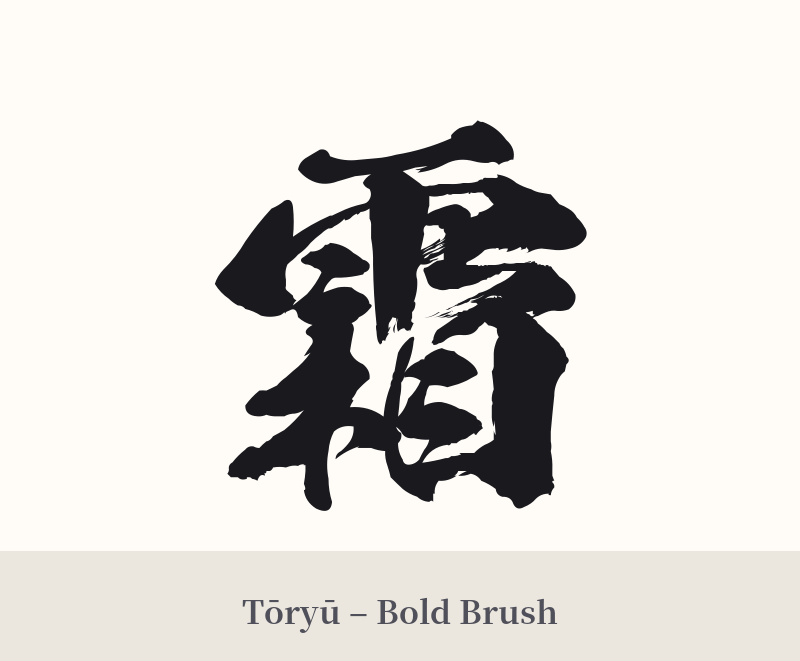
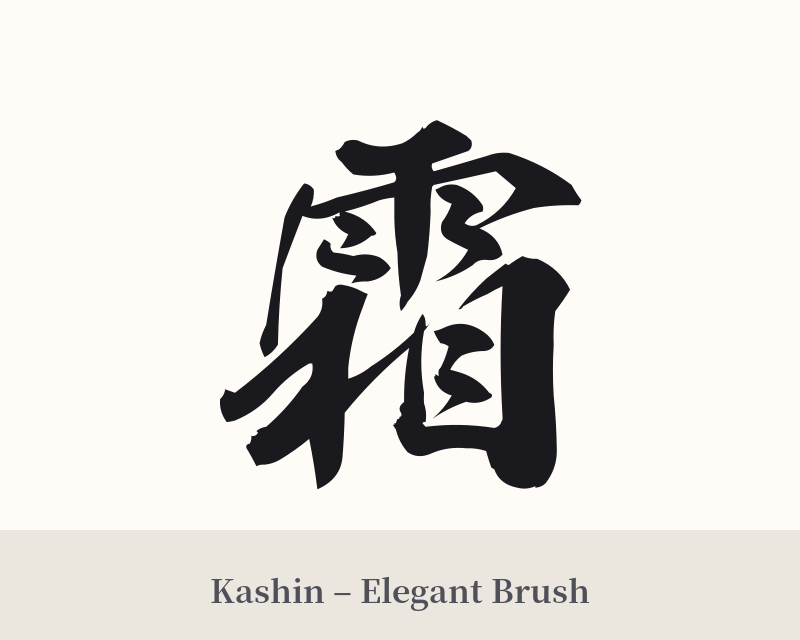
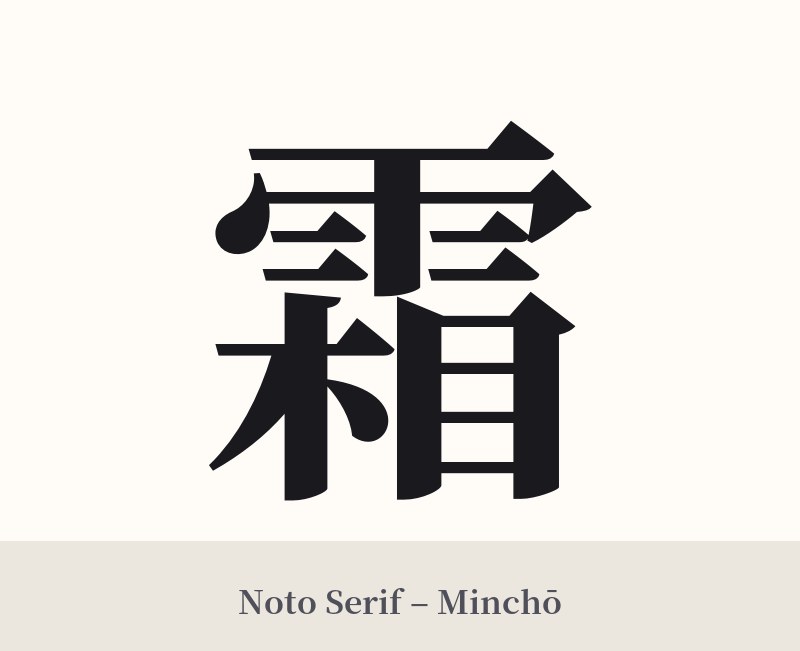
🎨 Tattoo Suitability
📐 Tattoo Design Guide
The kanji 霜 (shimo) is visually intricate and offers rich design possibilities. Its complexity lends itself well to a statement piece where the details can be appreciated.
– Placement: Consider areas with enough space to prevent blurring, such as the forearm, calf, back, or shoulder blade. A vertical placement along the spine can be particularly striking.
– Style: A semi-cursive 'gyosho' or full-cursive 'sosho' script can capture the fluid, organic way frost forms. For a more defined and architectural look, a 'kaisho' block script will emphasize the character's 17 strokes and balanced structure.
– Visual Elements: Complement the kanji with related imagery. A few delicate, bare branches, a single camellia flower (a winter bloom), or a pale winter moon can enhance the theme. A watercolor or 'sumi-e' (ink wash) style background can evoke the feeling of a cold, misty morning.
Comments