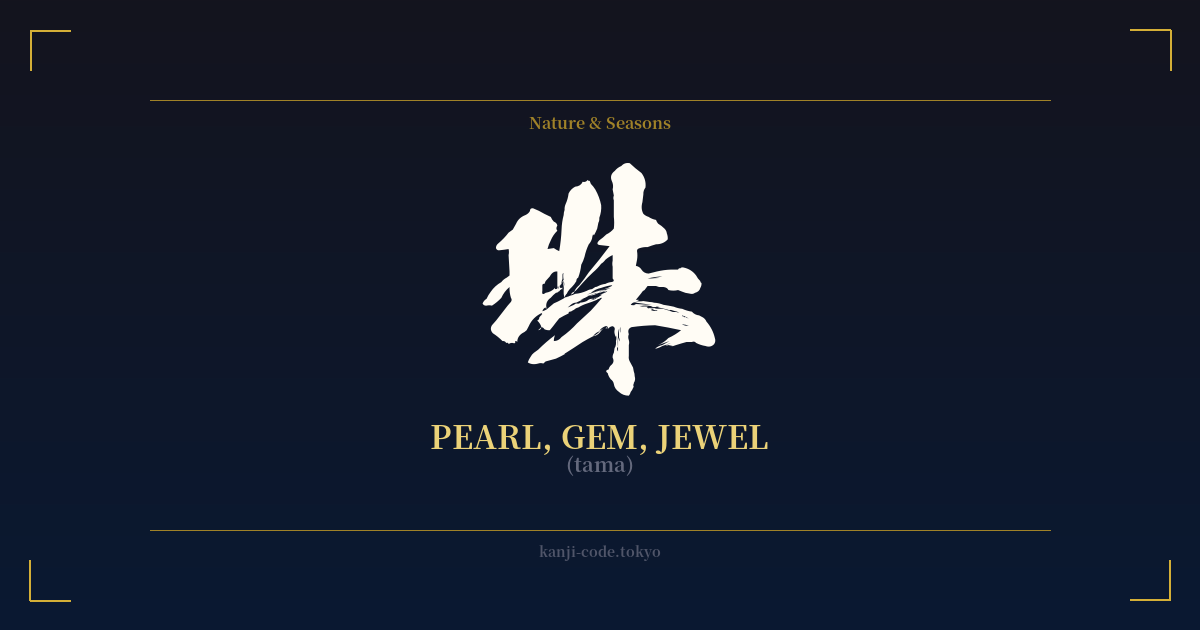
✍️ 珠 (tama) — Cultural Context
The kanji 珠 (tama) is a beautiful and evocative character that captures the essence of a pearl, gem, or jewel. Its very structure tells a story of value. The left-hand radical, 王, is a simplified form of 玉 (gyoku), the character for jade or gem. The dot on the right, a part of the character's phonetic component, is often poetically interpreted as the jewel itself, held within its precious setting. Together, they create a pictograph of something rare and valuable.
In Japanese culture, 珠 is most closely associated with pearls (真珠, shinju). Japan has a deep and storied history with these ocean gems, from the ama divers—female free-divers who have collected pearls for centuries—to the innovation of cultured pearls by Mikimoto Kōkichi in the late 19th century. This history has imbued the pearl with a distinct cultural significance, representing not just wealth but purity, innocence, and a quiet, profound beauty that emerges from the depths. A pearl is a hidden treasure, formed through patience and adversity, a powerful metaphor captured by the single character 珠.
Beyond its literal meaning, 珠 is used to describe anything of exceptional quality or worth. The word 珠玉 (shugyoku), which combines 'pearl' and 'jade', means 'gem' or 'masterpiece.' It's used to praise a brilliant piece of writing, a moving film, or a flawless work of art. This metaphorical extension speaks to the high esteem in which the concept is held; to call something a 'tama' is to elevate it to the status of a perfect, polished treasure.
This sense of preciousness also makes 珠 a popular element in Japanese names, particularly for females. Names like Tamaki (珠希, 'precious hope') or Tamayo (珠代, 'generation of jewels') bestow upon the bearer a wish for a life of beauty, value, and grace. The character carries an inherently gentle, elegant, and refined connotation, making it a cherished choice for parents.
While the character itself isn't directly tied to religious rituals, the concept of sacred jewels is central to Japanese spirituality. The Yasakani no Magatama (八尺瓊勾玉) is a legendary curved jewel and one of the Three Imperial Regalia of Japan, representing benevolence. Though it uses a different kanji, the underlying reverence for 'tama' as a sacred object permeates the culture, linking 珠 to a deeper, spiritual appreciation for precious things.
🖌️ Font Styles for 珠
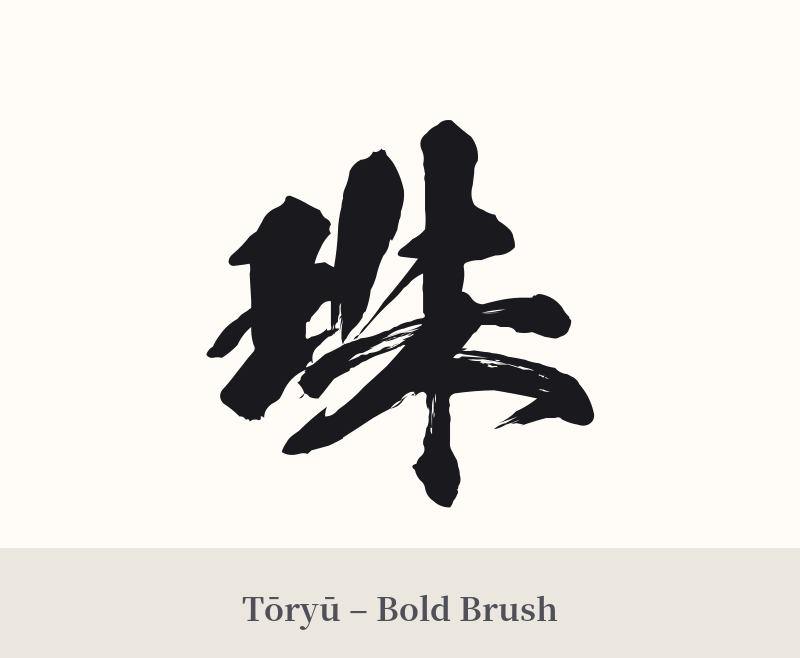
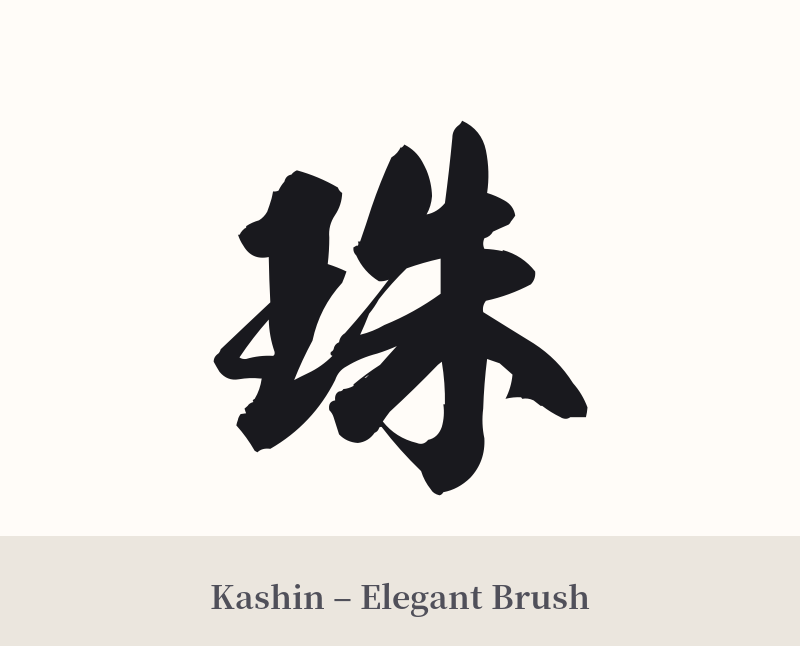
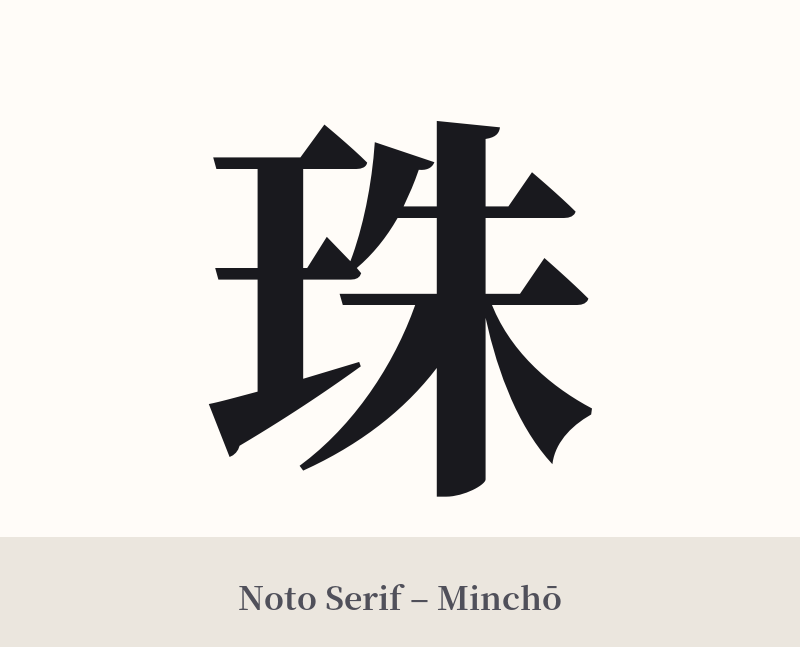
The same kanji can look dramatically different depending on the calligraphy style. Choose a font that matches the mood you want for your tattoo or design.
🎨 Tattoo Suitability
📐 Tattoo Design Guide
The kanji 珠 (tama) lends itself to elegant and refined tattoo designs that emphasize its meaning of purity and value.
– Placement: For a subtle and personal touch, consider smaller placements like the inner wrist, behind the ear, on the ankle, or near the collarbone. These locations complement the kanji's delicate feel. For a more prominent piece, the inner forearm or shoulder blade provides a clean canvas that allows the calligraphic lines to be appreciated.
– Style: A flowing, semi-cursive (Gyōsho) or cursive (Sōsho) script can enhance the organic, natural beauty of a pearl. This style adds movement and grace. Conversely, a crisp and formal Mincho or Kaisho style will highlight its elegance and timeless quality, emphasizing the 'gem' aspect.
– Visuals: Consider pairing 珠 with complementary imagery. A few gentle water ripples or waves can allude to its connection with pearls and the ocean. Placing it within or near a lotus flower reinforces the theme of purity and beauty emerging from humble origins. It can also be incorporated into an Enso circle to symbolize perfection and the universe.
Comments