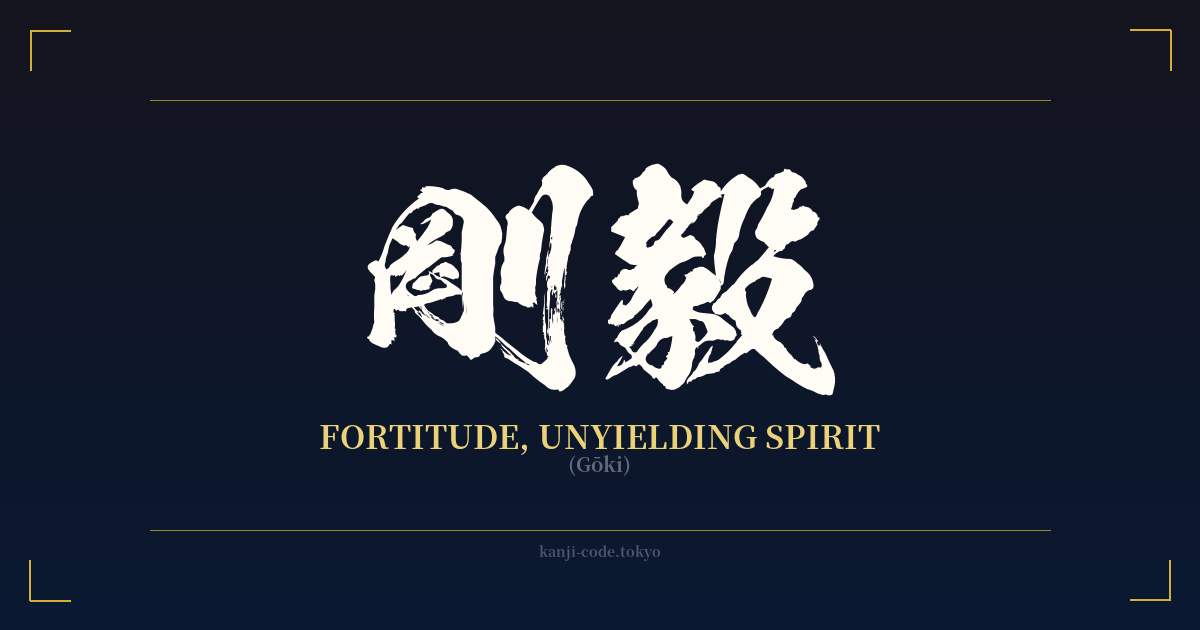
✍️ 剛毅 (Gōki) — Cultural Context
剛毅 (Gōki) is a Japanese word that transcends a simple translation of 'strength.' It embodies a specific kind of power: the fortitude of the human spirit, an unyielding resolve in the face of adversity, and a quiet, diamond-hard inner core. It's less about the muscles of the body and more about the mettle of one's character.
Historically and culturally, Gōki is deeply intertwined with the ideals of Bushido, the code of the samurai. For a warrior, physical prowess was essential, but Gōki was the spiritual bedrock that allowed them to endure immense hardship, face death with composure, and maintain their integrity. It was the ability to withstand pain, loss, and fear without complaint, governed by a disciplined and immovable mind (不動心, Fudōshin).
This concept is not about aggressive posturing. In fact, it is often associated with quiet sincerity. A related Confucian concept, 剛毅木訥 (gōki-bokutotsu), describes the ideal person as being strong and resolute (剛毅) yet simple and unpretentious in speech (木訥). This highlights that true strength doesn't need to be loud or boastful; it is self-evident in one's actions and resilience.
The first kanji, 剛 (gō), means 'sturdy' or 'hard,' evoking the image of steel or rock. The second kanji, 毅 (ki), specifically refers to a strong will or resolute spirit. When combined, they create a powerful synergy: the hardness of steel fused with the unbreakable resolve of the will. It is the strength to stand firm when everything else is attempting to knock you down.
In modern Japan, while the age of the samurai is long past, the spirit of Gōki remains a respected virtue. It's the spirit seen in an athlete pushing through the pain barrier, an entrepreneur navigating relentless setbacks, or anyone facing personal tragedy with quiet dignity and the will to keep moving forward. It represents a timeless and universal ideal of human resilience, making it a powerful statement of inner strength and moral courage.
🖌️ Font Styles for 剛毅
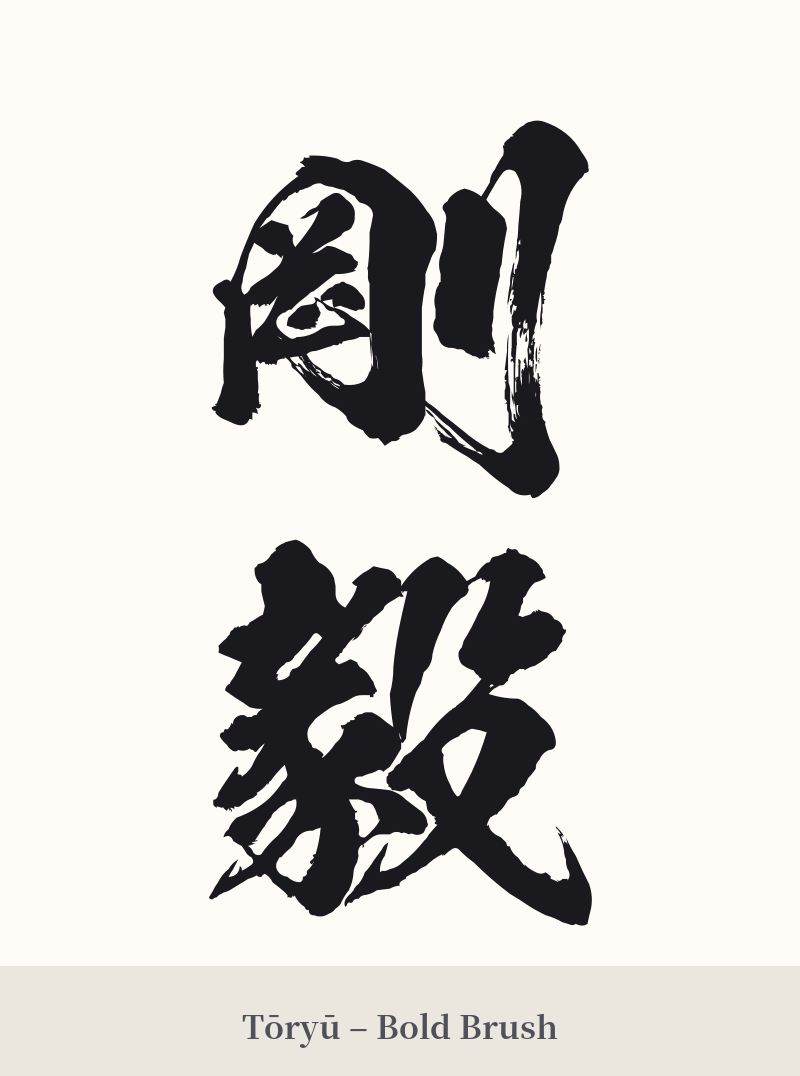
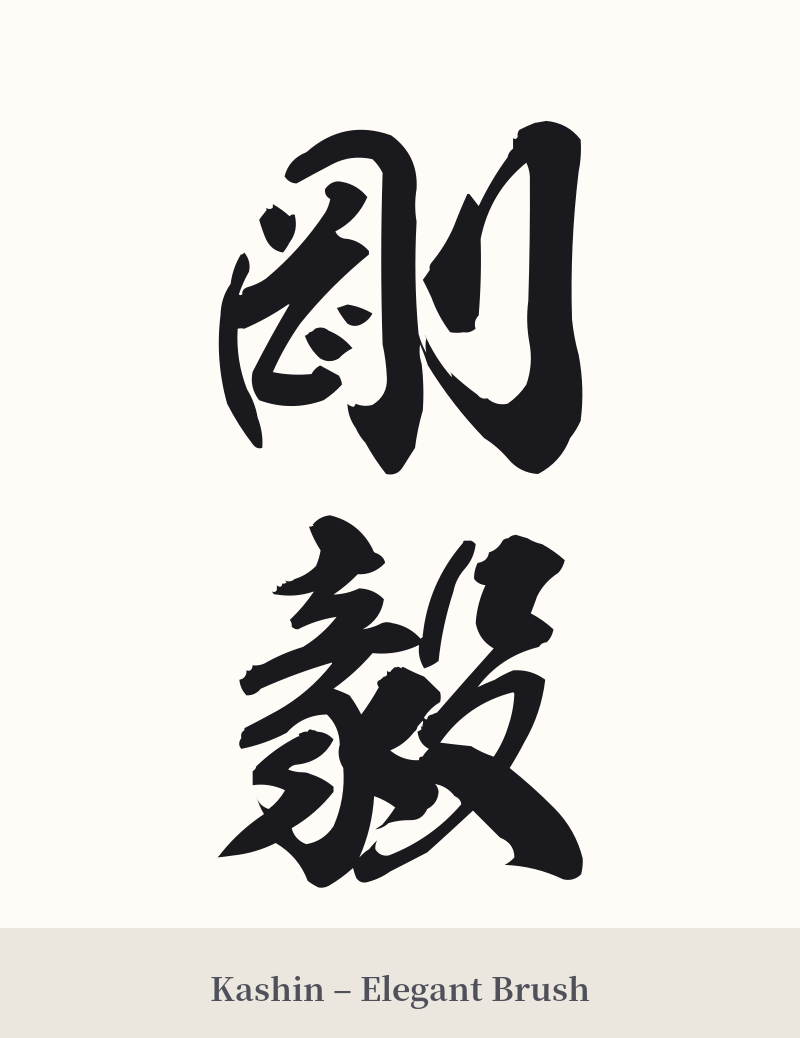
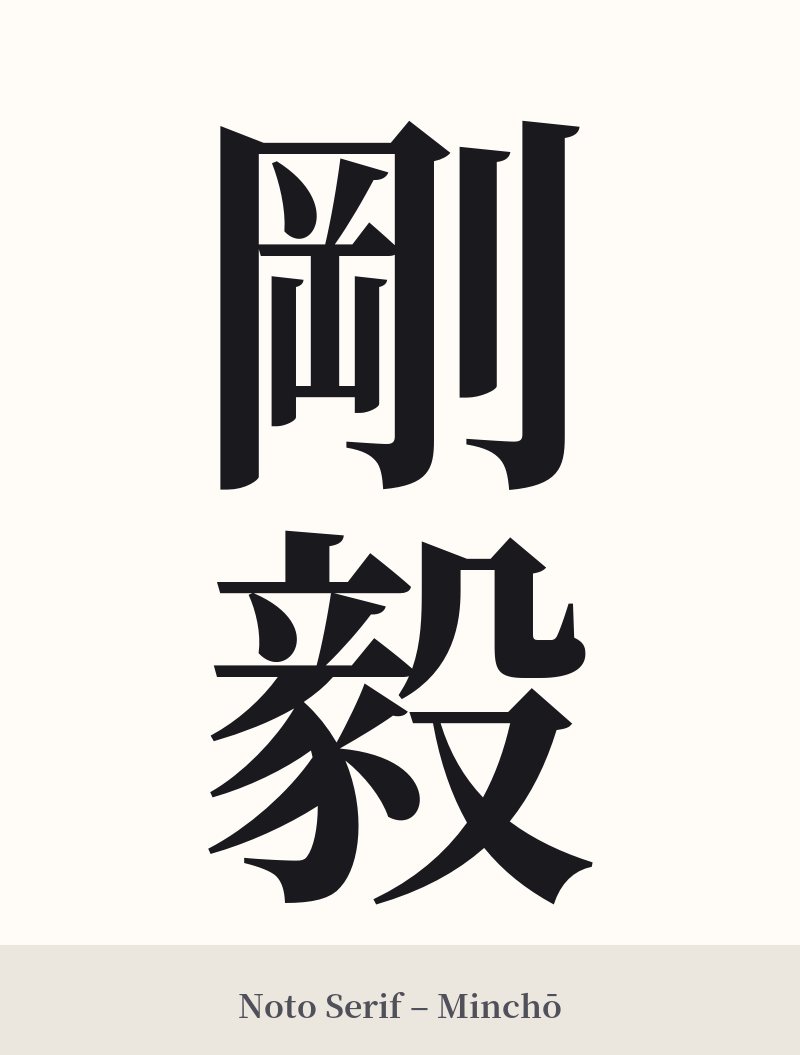
The same kanji can look dramatically different depending on the calligraphy style. Choose a font that matches the mood you want for your tattoo or design.
🎨 Tattoo Suitability
📐 Tattoo Design Guide
Gōki is a word that calls for a design that reflects its inherent strength and stability. Its powerful meaning is best conveyed through clear and intentional design choices.
– Placement: This two-character compound works exceptionally well in a vertical orientation. Consider placements like the forearm, the calf, or along the spine. Horizontally, it fits well across the chest or on the upper back between the shoulder blades.
– Font Style: A strong, angular script is highly recommended. Standard script (Kaisho) provides clarity and a sense of structure. A semi-cursive style like Gyosho can add a touch of dynamic energy while retaining its power. Avoid overly delicate or complex cursive styles (Sosho) as they can undermine the 'unyielding' feeling of the word.
– Visual Tips: The characters are visually interesting on their own and often need no extra embellishment. A bold, thick brushstroke style can emphasize the concept of strength. If you wish to add imagery, consider elements that share its symbolism, such as a diamond (unbreakable), a mountain (steadfast), or a sturdy oak tree.
Comments