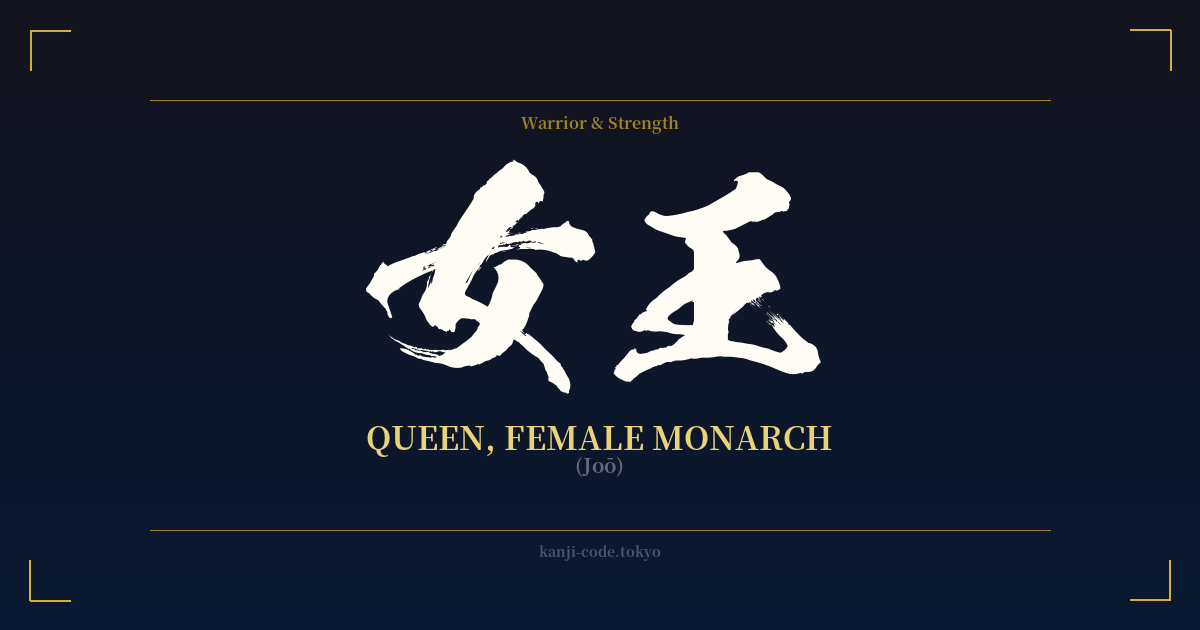
✍️ 女王 (Joō) — Cultural Context
女王 (Joō) is the Japanese word for “Queen.” It’s a compound of two fundamental and potent kanji: 女 (jo), meaning “woman,” and 王 (ō), meaning “king.” The combination is strikingly direct, literally translating to “woman-king,” a testament to its meaning of a female sovereign who rules in her own right.
This term is most commonly used in Japan to refer to queens of foreign nations. For example, Queen Elizabeth II was known as エリザベス女王 (Erizabesu Joō). This is a crucial distinction, as the title for the consort of the Japanese Emperor is different: 皇后 (Kōgō), or “Empress.” While Japan has a history of female sovereigns, they held the title of 女帝 (Jotei), or “female emperor,” reflecting the imperial lineage. The most famous of these was the legendary shaman-queen Himiko of Yamatai, who ruled in the 3rd century, though her historical accounts are shrouded in mystery.
The existence of these distinct terms highlights the nuanced structure of Japanese monarchy and nobility. A 女王 is a ruler of a kingdom, whereas a 女帝 is the sovereign of the Japanese Empire. This precision is key to understanding the cultural weight of the word.
Beyond literal royalty, 女王 has taken on a powerful figurative role in modern Japanese culture. It can be used to describe a woman who is the absolute best in her field—a dominant, unrivaled figure. You might hear of a “queen of the tennis court” or the “queen of pop music.” This usage elevates a woman’s skill and authority to the level of royalty, celebrating her mastery and dominance.
However, it can also carry a slightly playful or even negative connotation, such as in the term 悲劇の女王 (higeki no joō), or “drama queen.” This versatility shows how the concept of a “queen” has been adapted from a formal title into a broader cultural archetype representing supreme female presence, for better or worse.
Ultimately, 女王 embodies themes of feminine power, leadership, and undeniable authority. It stands as a symbol of a woman who does not merely inherit a position but commands it, making it a compelling and empowering word in both historical and modern contexts.
🖌️ Font Styles for 女王
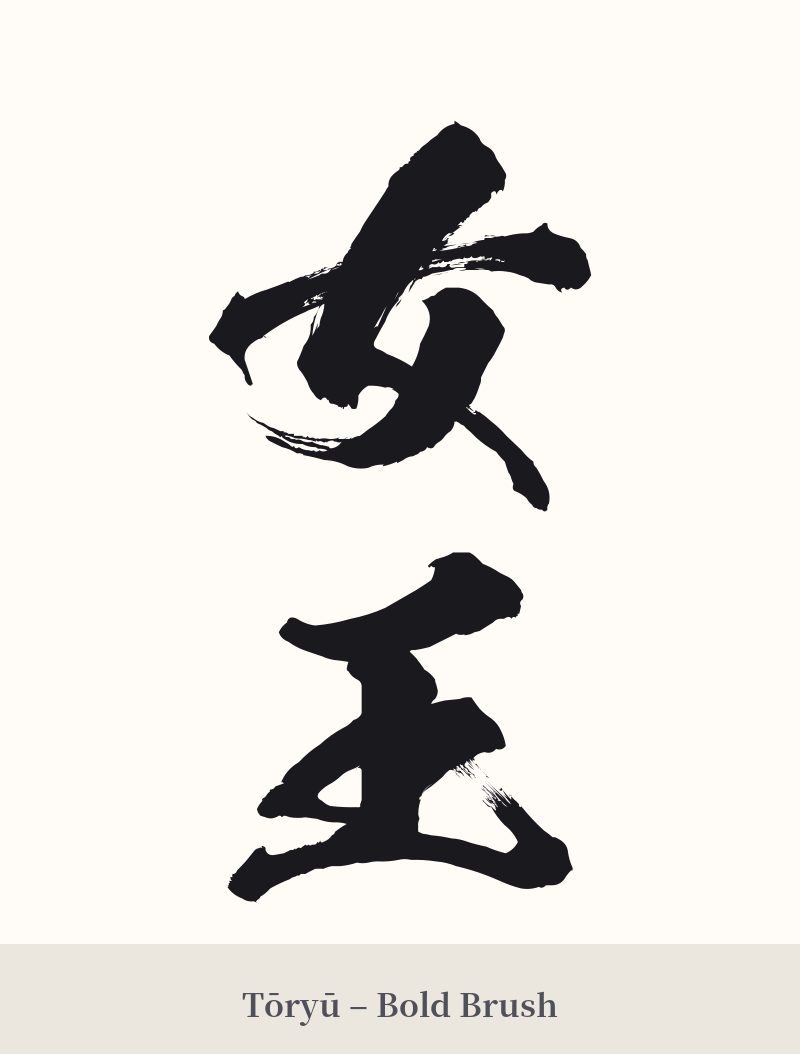
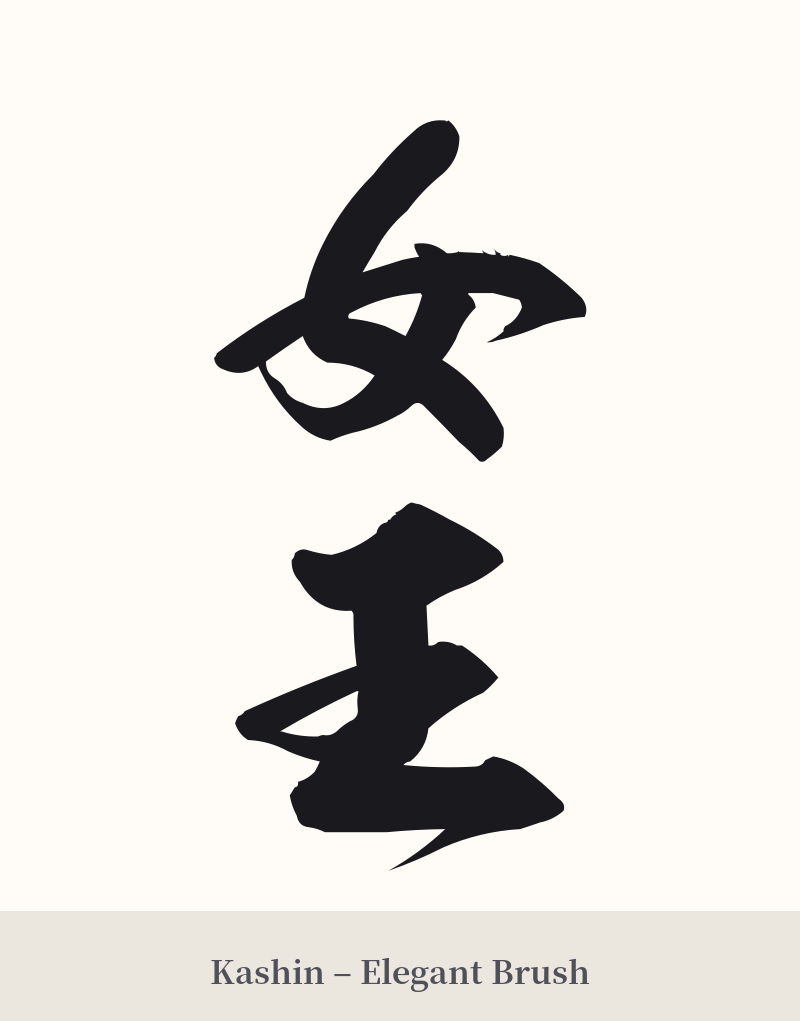
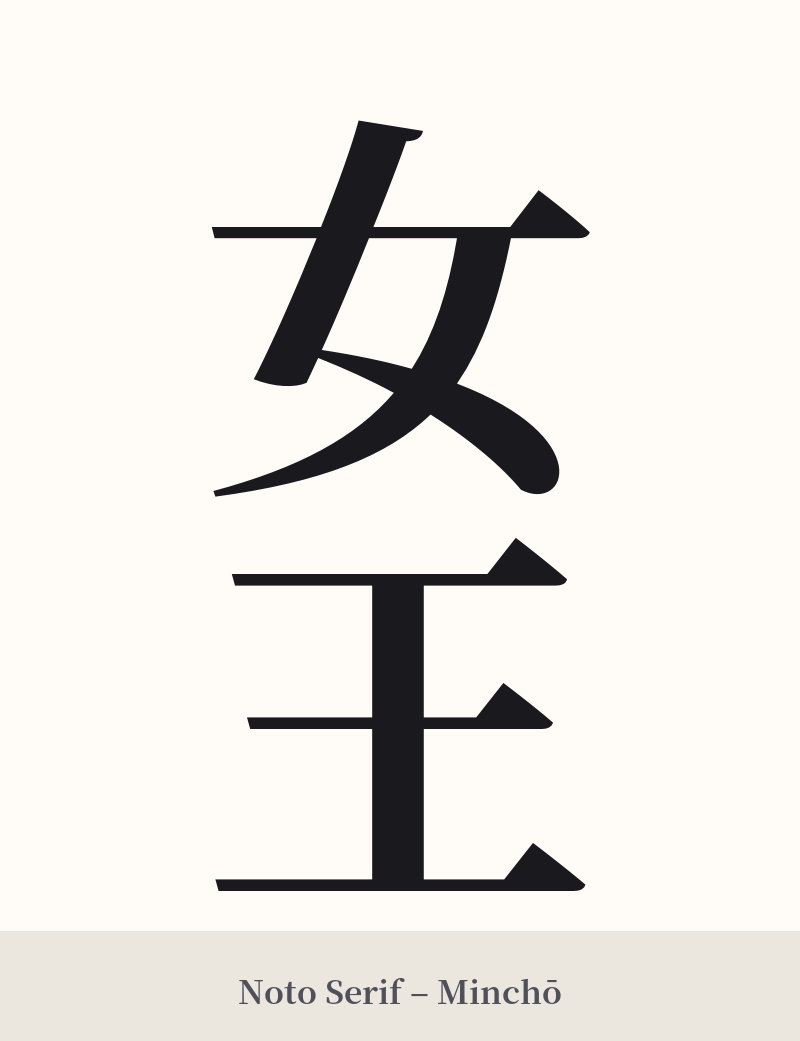
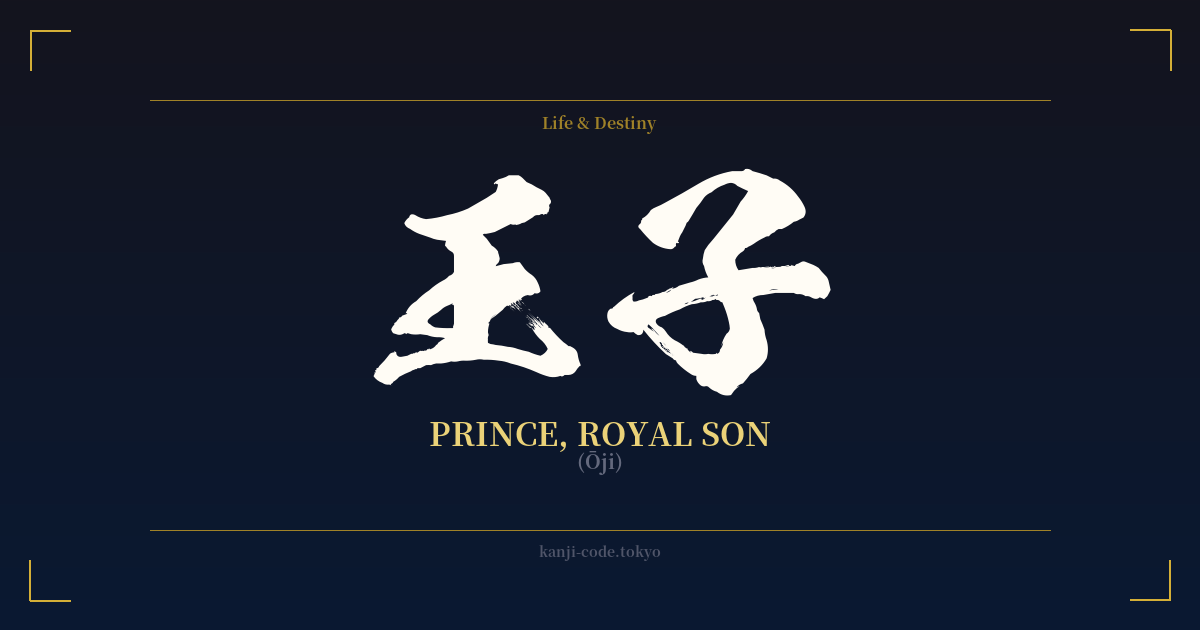
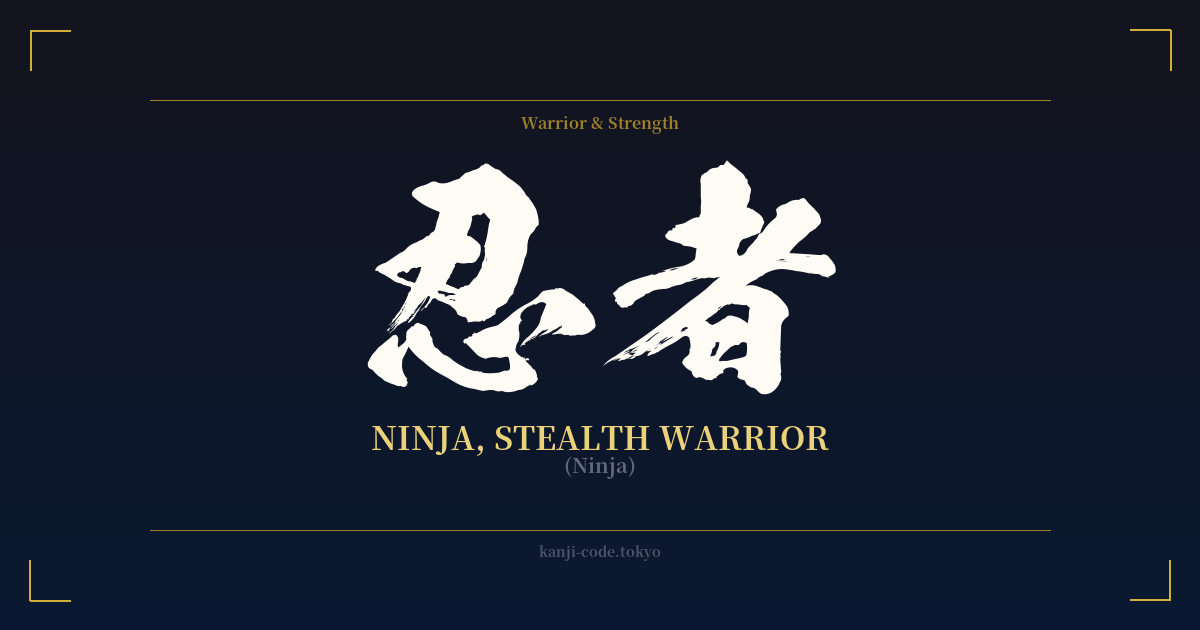
The same kanji can look dramatically different depending on the calligraphy style. Choose a font that matches the mood you want for your tattoo or design.
🎨 Tattoo Suitability
📐 Tattoo Design Guide
A tattoo of 女王 (Joō) is a statement of power and feminine sovereignty. The simplicity of the characters allows for a wide range of design interpretations.
– Placement: A vertical arrangement is classic and elegant, perfect for the spine, forearm, or along the calf. A horizontal layout works well across the collarbone, upper back, or chest.
– Font Style: For a bold, impactful look, a thick, angular script like a blocky Kaisho or a modern Gothic style emphasizes strength. For a more graceful and regal feel, a flowing semi-cursive (Gyosho) or cursive (Sosho) script is an excellent choice.
– Visual Elements: While the kanji stands strong on its own, it can be paired with symbolic imagery. Consider integrating it with a crown, a lioness, a lotus flower, or even a dragon to amplify its meaning. The clean lines of the kanji ensure it won't be overshadowed by more complex background elements.
Comments