✍️ 金将 (Kinshō) — Cultural Context
金将 (Kinshō), translated as the 'Gold General,' is a pivotal piece in the traditional Japanese board game Shogi (将棋), often called Japanese Chess. Unlike its Western counterpart, Shogi is a game of deep strategic complexity where captured pieces can be returned to the board, making every move and every piece profoundly important.
The Gold General is one of the most powerful and crucial pieces for defense. It sits directly beside the King (王将, Ōshō) at the start of the game, acting as its personal bodyguard. Its movement is unique: it can move one step in any direction except diagonally backward. This limitation is key to its character—it is a forward-facing, unyielding protector, incapable of retreat in certain directions.
In Shogi strategy, the Gold General is the cornerstone of building a defensive 'castle' (囲い, kakoi) around the King. Its reliable, straightforward movements make it an anchor of stability. While other pieces like the more agile Silver General (銀将, Ginshō) are used for flanking attacks and complex maneuvers, the Gold General’s strength lies in its steadfastness. Losing a Gold General early in the game is often a devastating blow to one's defensive structure.
Metaphorically, the Kinshō has come to represent more than just a game piece. It embodies the concept of unwavering loyalty, dependable strength, and the quiet power of a guardian who stands their ground. It can symbolize a trusted friend, a mentor, or an inner resolve that protects one's core values. The 'Gold' (金) prefix elevates this idea, suggesting something precious, valuable, and incorruptible.
While deeply rooted in the world of Shogi, the spirit of the Gold General resonates with anyone who values reliability and protective strength. It speaks to the power that doesn't come from flashy, long-range attacks, but from holding the line and being an unbreachable defense for what is most important.
🖌️ Font Styles for 金将
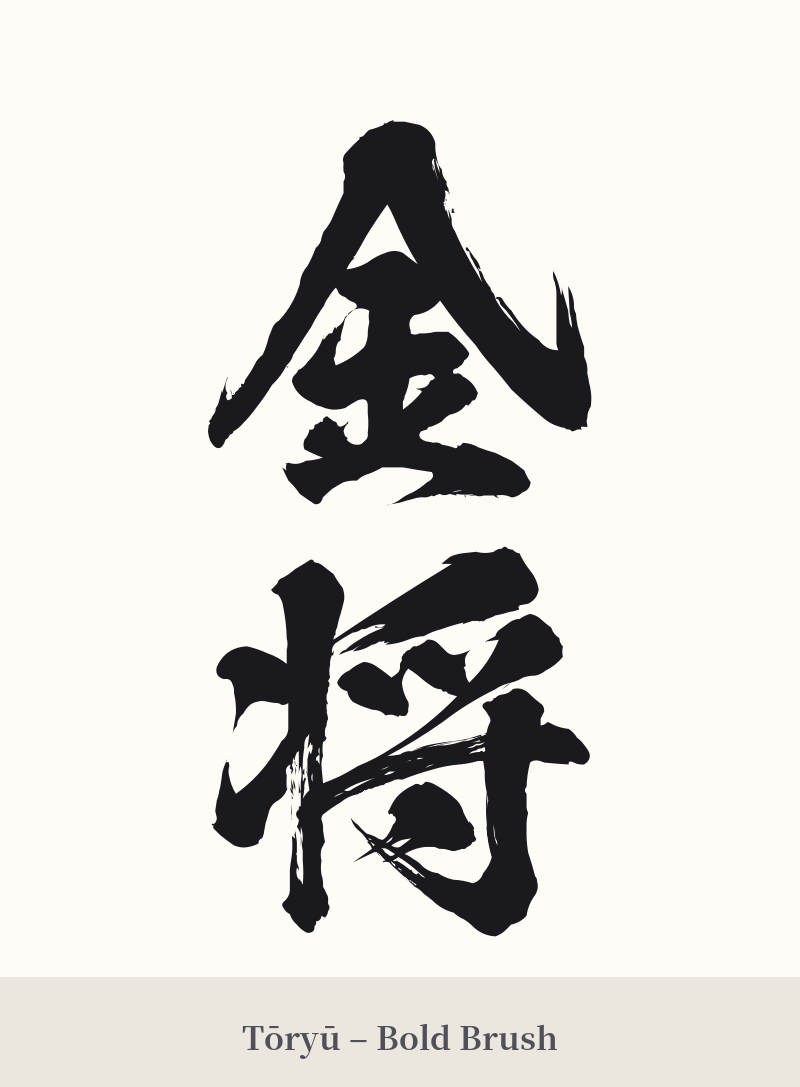
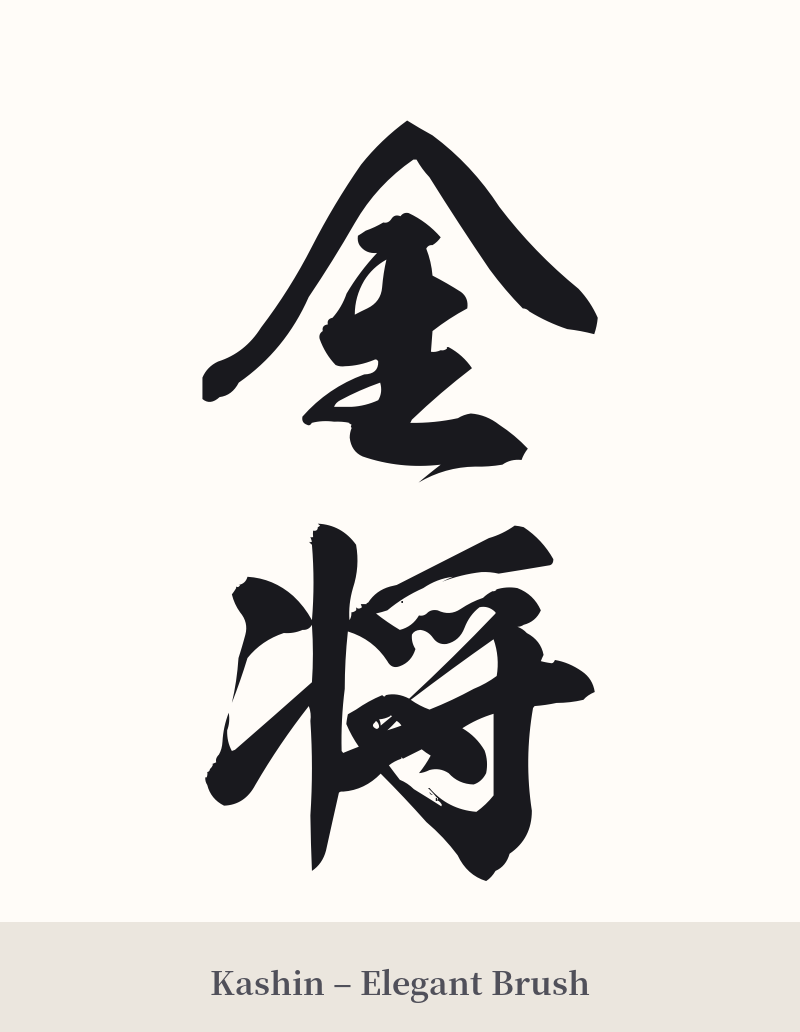
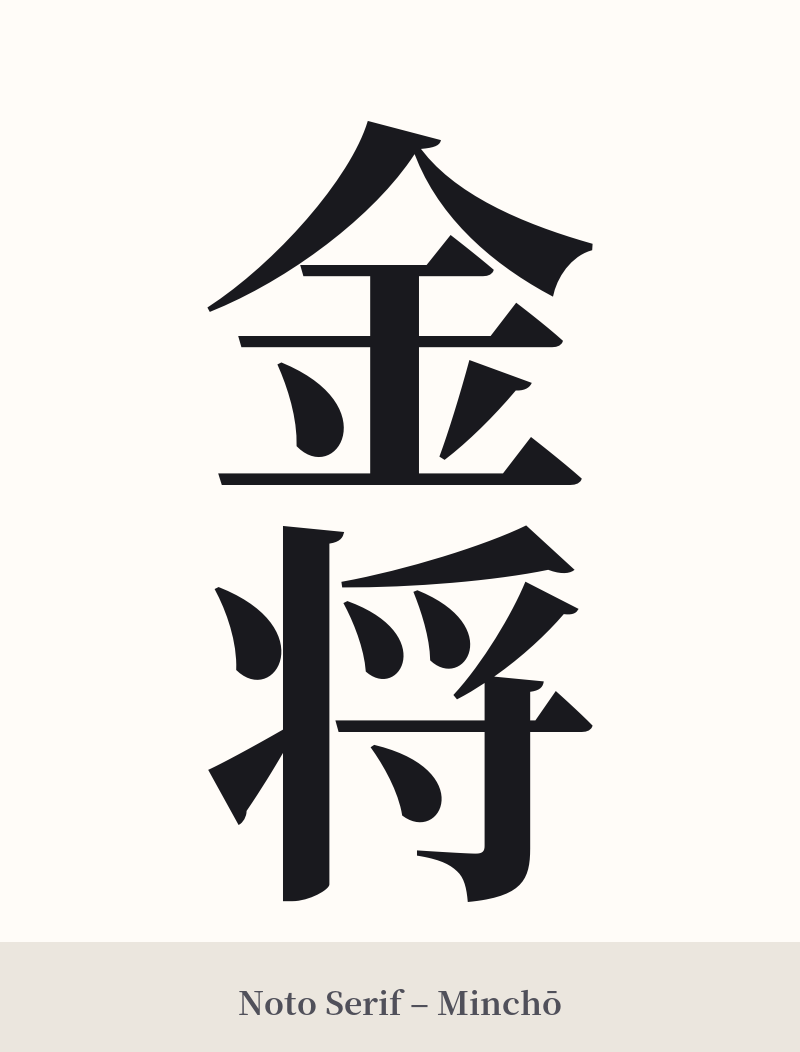
The same kanji can look dramatically different depending on the calligraphy style. Choose a font that matches the mood you want for your tattoo or design.
🎨 Tattoo Suitability
📐 Tattoo Design Guide
A tattoo of 金将 carries a specific, strategic energy. The design should reflect its role as a steadfast guardian.
– Placement: A vertical orientation on the forearm, calf, or along the spine works well. For a more symbolic placement, consider the upper back or shoulder, as if it's 'guarding your back'.
– Font Style: A strong, stable script like a blocky Kaisho (楷書) style emphasizes its defensive nature. For a slightly more fluid feel that still retains strength, a Gyosho (行書) script could be a good choice. Avoid overly ornate or delicate styles that would contradict its meaning.
– Visual Elements: Consider incorporating the design into the shape of a pentagonal Shogi piece. This immediately provides context and creates a unique, thematic design. You could also pair it with a subtle background pattern resembling a Shogi board (shōgiban) or place it near a tattoo of the King piece (王将) to represent its role as a royal guard.
Comments