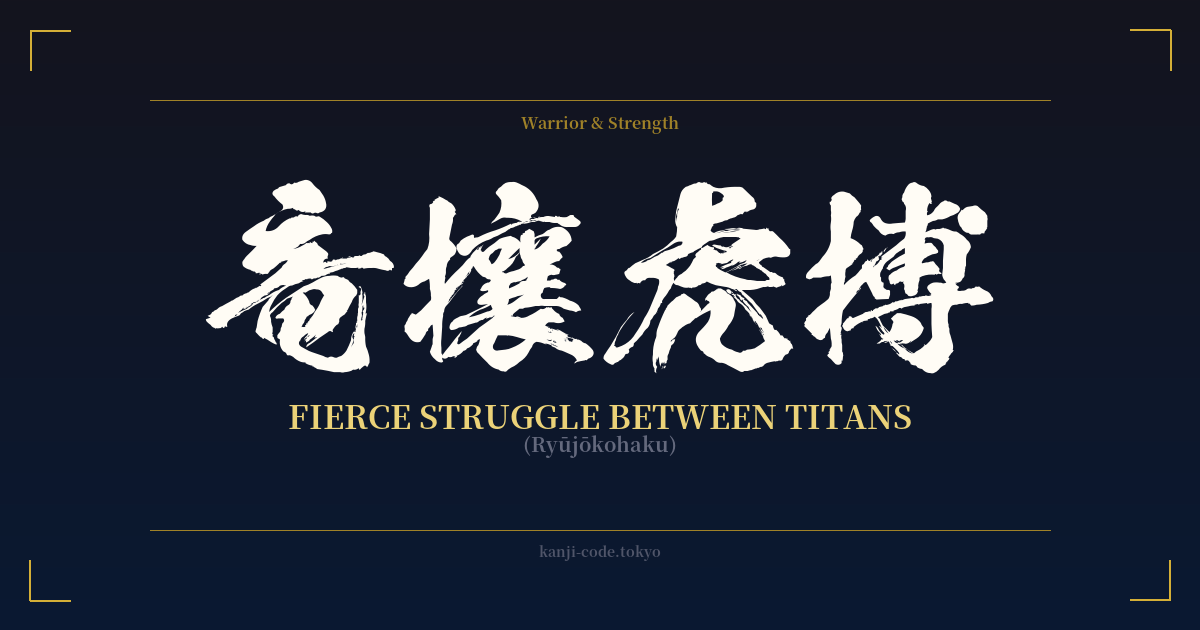
✍️ 竜攘虎搏 (Ryūjōkohaku) — Cultural Context
竜攘虎搏 (Ryūjōkohaku) is a powerful four-character idiom, or yojijukugo, that paints a vivid picture of a ferocious and evenly matched battle. It translates to something like "dragon repelling, tiger striking," capturing the dynamic essence of two titans locked in a desperate struggle where neither can gain the upper hand.
The idiom's power comes from the deep-seated symbolism of its two central figures: the dragon (竜) and the tiger (虎). In Japanese and broader East Asian culture, these are not just animals; they are fundamental forces of the cosmos. The dragon is a celestial being, a master of the heavens, rain, and water, symbolizing divine power, wisdom, and imperial authority. It represents the spirit and the sky.
In contrast, the tiger is the undisputed king of the earthly beasts. It embodies raw physical strength, ferocity, courage, and terrestrial power. The tiger represents the body and the earth. When these two meet, it is a clash of heaven and earth, spirit and matter, a perfect and eternal rivalry. This pairing is one of the most fundamental dualities in East Asian art and philosophy.
This rivalry is codified in the ancient concept of the Four Symbols (四神, Shishin), the celestial guardians of the four cardinal directions. The Azure Dragon of the East (Seiryū) and the White Tiger of the West (Byakko) are two of these guardians. Their opposition is a built-in feature of the cosmic order, representing a balance of power that defines the world. Art, from ink wash paintings to screen doors in temples, has depicted their epic battles for centuries.
The remaining two characters, 攘 (jō) and 搏 (haku), add the action and violence to the scene. 攘 means to "chase away" or "repel," suggesting a desperate, powerful defense. 搏 means to "strike" or "spring upon," a direct and brutal attack. Together, they create a sense of frantic, back-and-forth combat, far more dynamic than a static image. It’s not just 'Dragon and Tiger'; it’s 'The Dragon Fights Back as the Tiger Pounces.'
Today, Ryūjōkohaku is used to describe any intense, evenly matched contest. It could be two rival companies battling for market dominance, two top sports teams in a championship final, or two political opponents in a heated debate. It evokes a sense of epic scale, high stakes, and mutual respect between powerful adversaries.
🖌️ Font Styles for 竜攘虎搏
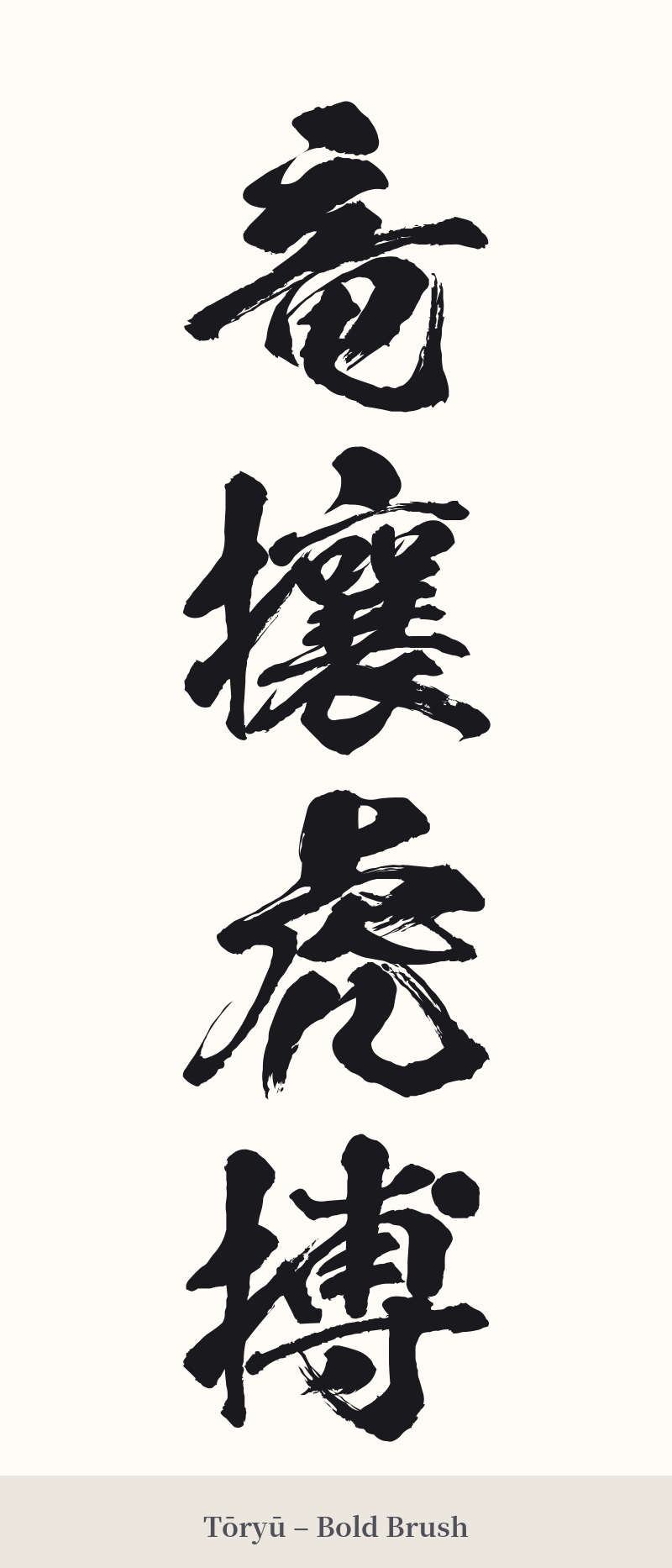
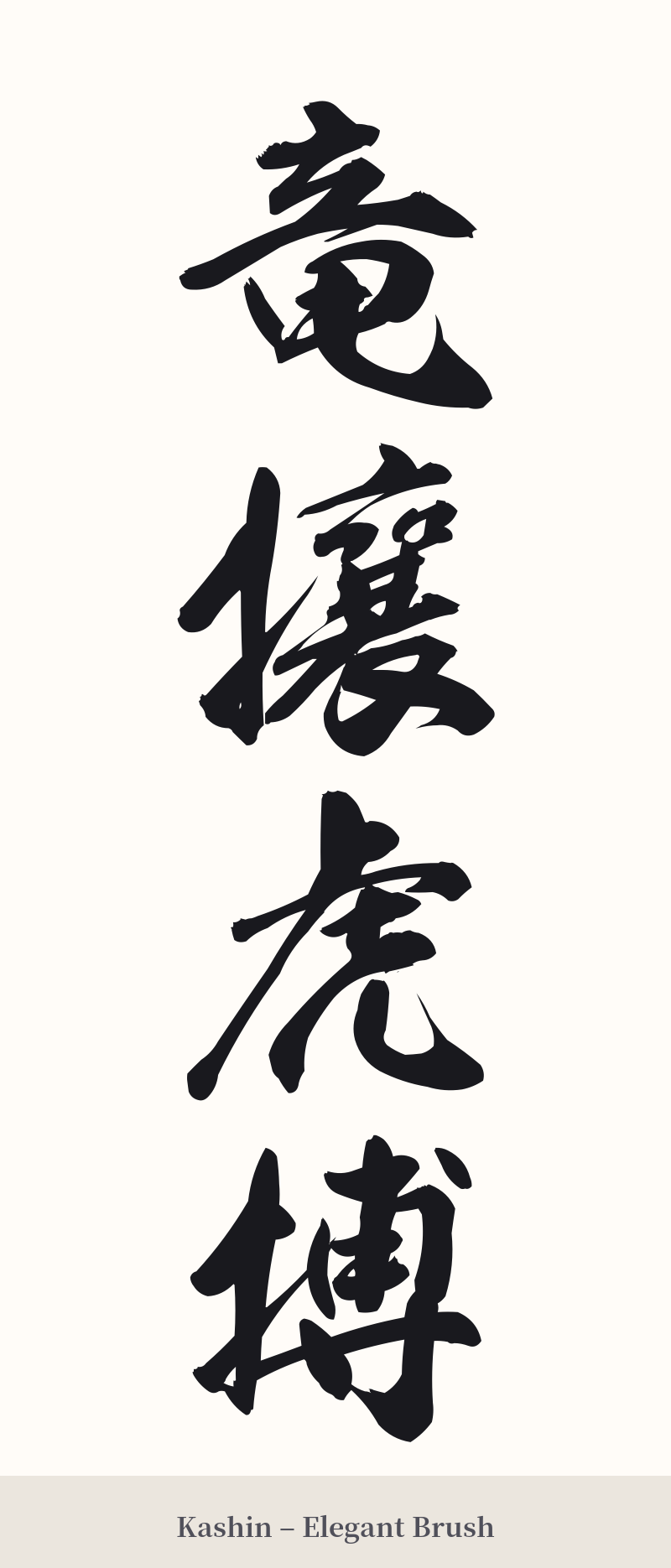
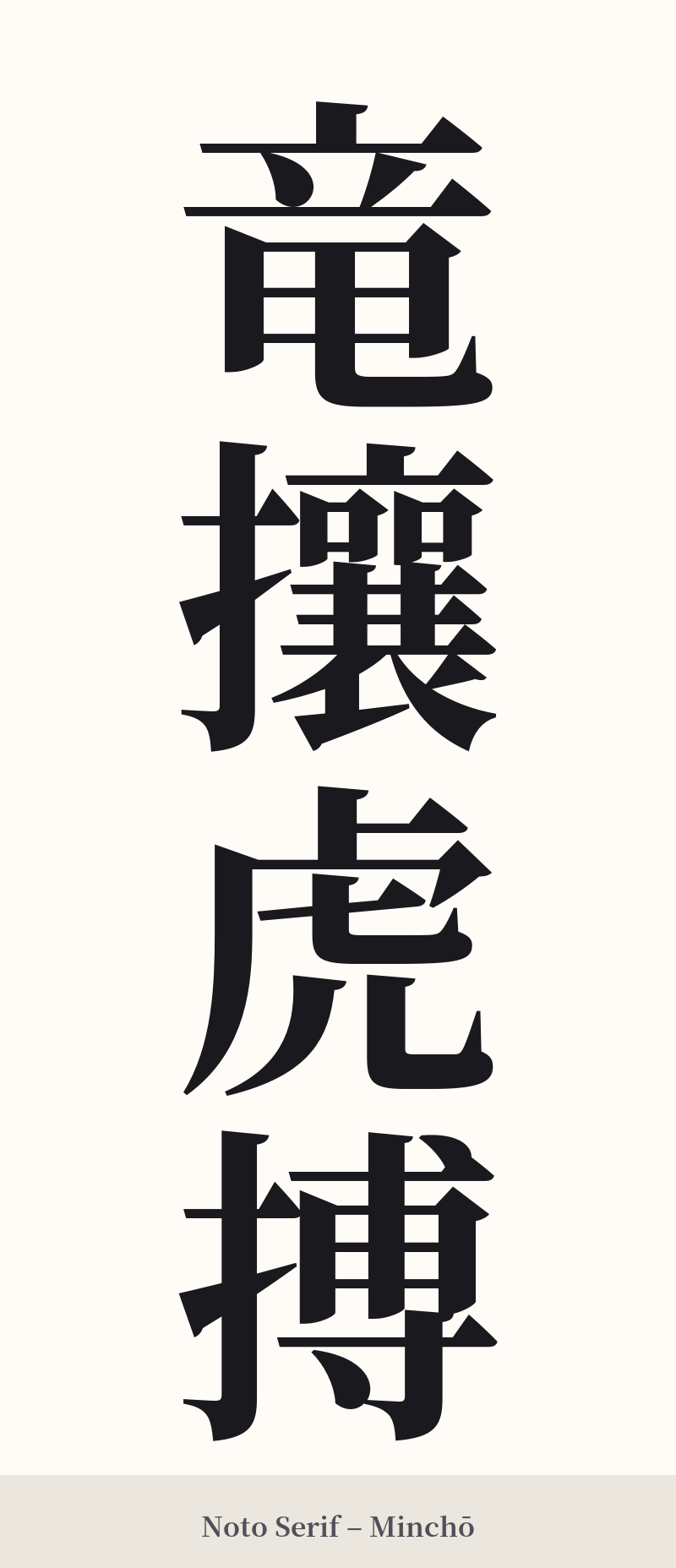
The same kanji can look dramatically different depending on the calligraphy style. Choose a font that matches the mood you want for your tattoo or design.
🎨 Tattoo Suitability
📐 Tattoo Design Guide
The dramatic nature of 竜攘虎搏 lends itself to bold tattoo designs. Its four-character structure and powerful meaning require careful consideration of placement and style.
– Placement: This idiom needs space. A vertical column down the spine, along the arm or leg, or across the ribs works beautifully. For a horizontal arrangement, the chest or upper back provides a wide enough canvas to prevent the characters from feeling cramped.
– Font Style: The style should match the energy of the phrase. A dynamic, semi-cursive script (Gyosho) can capture the movement and flow of battle. For a more aggressive and raw feel, a wild, untamed cursive (Sosho) is an excellent choice. Conversely, a strong, angular block script (Kaisho) can give the phrase a monumental, permanent quality.
– Visual Tips: Consider pairing the kanji with imagery. A classic design features a dragon descending from the clouds to clash with a tiger emerging from a bamboo forest. The kanji can be integrated into the background, or placed vertically alongside the main artwork to serve as a title or caption for the scene.
Comments