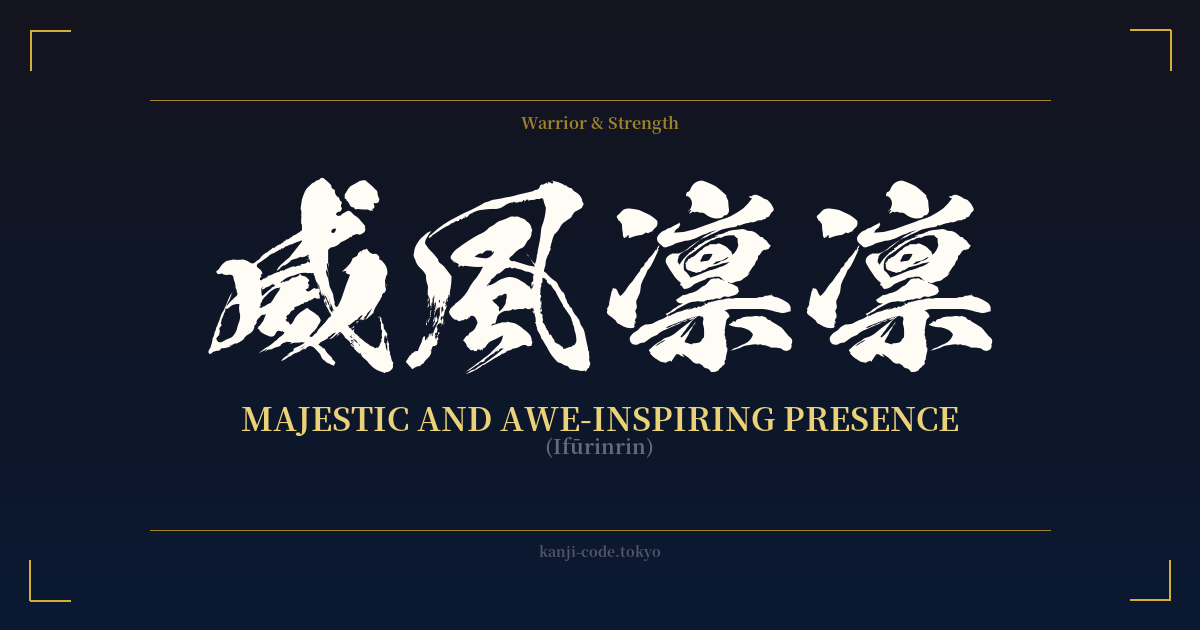
✍️ 威風凛凛 (Ifūrinrin) — Cultural Context
威風凛凛 (Ifūrinrin) is a Japanese four-character idiom, or yojijukugo, that paints a vivid picture of a person's character and presence. It doesn't just mean 'strong' or 'intimidating'; it describes a profound sense of majesty and dignity that inspires awe and respect in others. It's the kind of presence that fills a room, not through noise or aggression, but through sheer force of will and an unwavering, dignified bearing.
The term evokes the image of a great leader, a seasoned samurai commander, or a master of a martial art. Think of a figure standing calmly amidst chaos, their posture erect and their gaze firm. This is the essence of Ifūrinrin. It's an aura of invincibility that comes from inner strength and self-possession, rather than external armor or weapons.
Breaking it down, 威風 (Ifū) combines 'majesty' or 'might' (威) with 'wind' or 'manner' (風), suggesting a majestic air or a powerful bearing that moves like a great wind. The second part, 凛凛 (rinrin), repeats the character for 'cold' or 'severe.' However, this isn't the cold of cruelty, but the crisp, bracing cold of a clear winter morning. It implies a sharp, focused, and severe sense of integrity and composure. The repetition of the character amplifies this quality, making it an unshakable attribute.
In Japanese culture, this quality is highly esteemed. It is seen as the ideal bearing for anyone in a position of authority or anyone who has cultivated their spirit through rigorous training or life experience. You might hear it used to describe a CEO who commands a boardroom with quiet confidence, a kendo master whose every movement is precise and powerful, or even a historical figure renowned for their leadership and character.
It's a concept that transcends mere physical appearance. A person described as Ifūrinrin might not be physically large or imposing. Instead, their power is projected from within. It’s a testament to their spirit, discipline, and the respect they have earned through their actions and character. This makes it a deeply aspirational term, representing a state of being that one strives to achieve through self-cultivation.
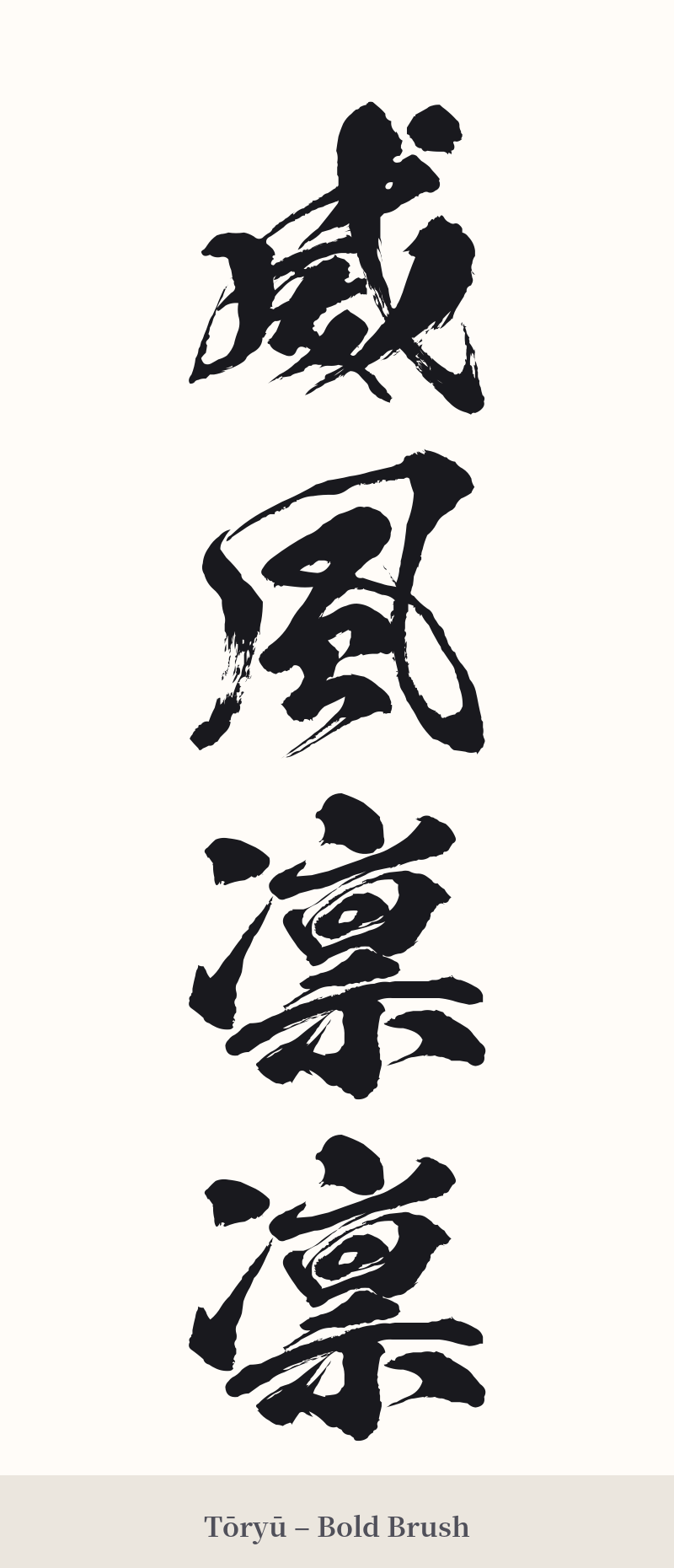
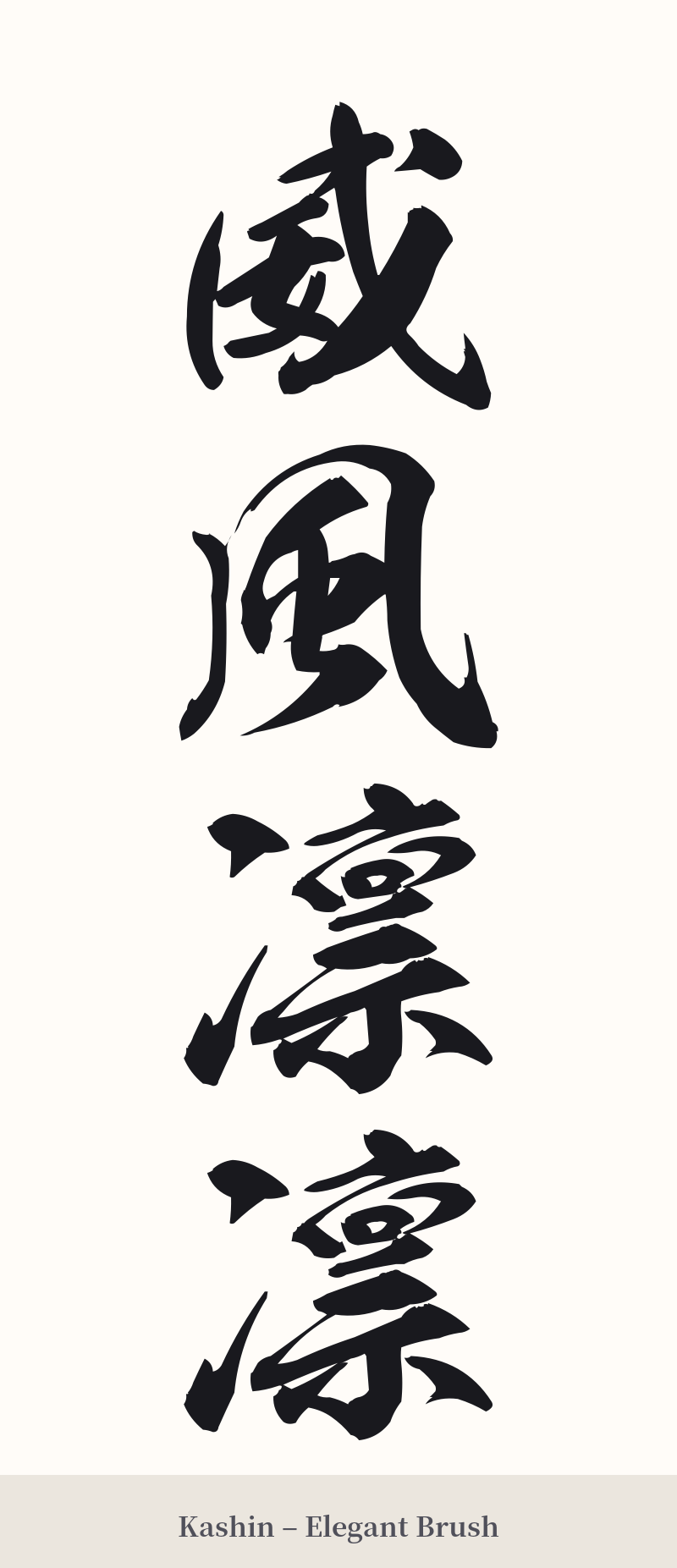
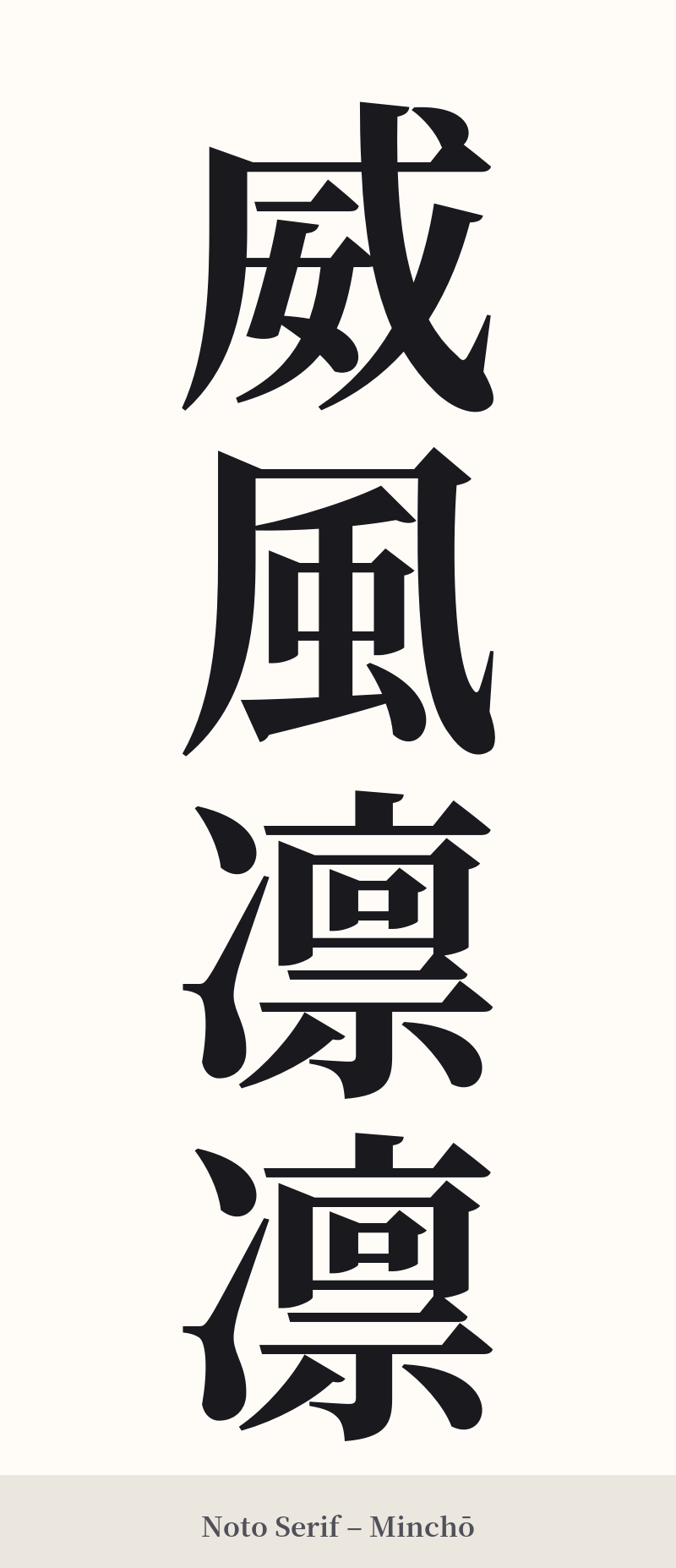
🖌️ Font Styles for 威風凛凛
The same kanji can look dramatically different depending on the calligraphy style. Choose a font that matches the mood you want for your tattoo or design.
🎨 Tattoo Suitability
📐 Tattoo Design Guide
For a powerful and legible 威風凛凛 tattoo, consider these design principles:
– Placement: Vertical alignment is the traditional and most aesthetically pleasing choice for a four-character idiom. Ideal placements include the spine, the length of the forearm, or the calf, as these areas provide the necessary vertical space for the characters to breathe.
– Font Style: A strong, clear script is essential due to the complexity of the 凛 character. A bold Kaisho (block script) style will emphasize the structure and dignity of the phrase. For a more fluid and dynamic look, a semi-cursive Gyosho style can work, but it requires an artist who is an expert in Japanese calligraphy to maintain legibility.
– Size and Detail: This is not a design for a small tattoo. To prevent the dense strokes of 凛 from blurring into a black smudge over time, the characters must be tattooed at a significant size. Discuss the minimum viable size with your artist to ensure the long-term integrity of the piece.
– Visual Elements: While the kanji itself is the main event, you could subtly frame it with elements that echo its meaning. Abstract brush strokes suggesting wind (風), or a background that evokes the stoicism of a mountain, can enhance the design without overwhelming the characters.
Comments