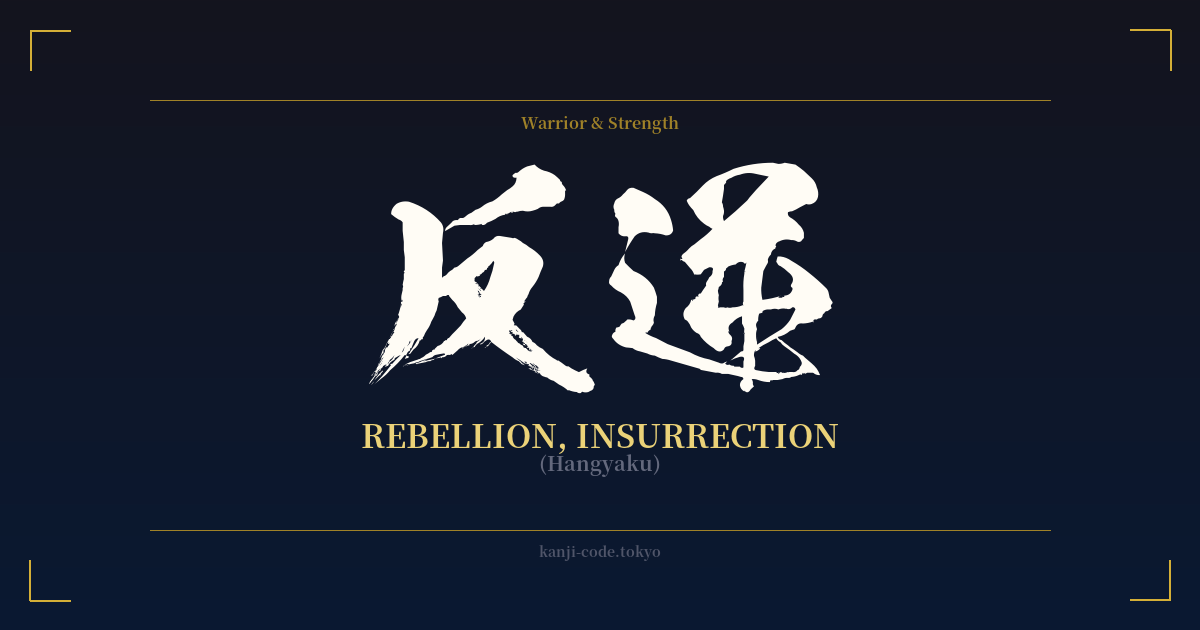
✍️ 反逆 (Hangyaku) — Cultural Context
反逆 (Hangyaku) is a potent and charged term in the Japanese language, encapsulating the act of rebellion, insurrection, or treason. It goes beyond simple disagreement; it signifies a direct and often hostile defiance of an established authority, whether that be a government, a lord, or a societal norm. It is the conscious choice to turn against and oppose the prevailing power structure.
Historically, Japan has a complex relationship with the concept of `hangyaku`. In the feudal era, loyalty to one's lord was paramount under the code of Bushido. Therefore, an act of rebellion was often seen as the ultimate betrayal, a stain on one's honor. Famous instances of `hangyaku`, such as the rebellion led by Akechi Mitsuhide against his lord Oda Nobunaga, are steeped in controversy and debate. Was it a treacherous power grab or a justified act against a tyrannical ruler? This ambiguity is central to the word's power.
However, history is also filled with rebellions that are viewed more sympathetically over time. The Satsuma Rebellion, led by the 'last samurai' Saigō Takamori, was an act of `hangyaku` against the new Meiji government. While it failed, its participants are often romanticized as tragic heroes fighting to preserve a way of life against overwhelming change. This duality—the line between traitor and tragic hero—is what gives `hangyaku` its profound narrative depth.
In modern Japan, `hangyaku` has found a powerful home in popular culture, particularly in anime, manga, and video games. It's a core theme in stories about protagonists who rise up against corrupt systems, dystopian governments, or unjust fate. Characters who embody the spirit of `hangyaku` are often celebrated for their conviction and willingness to fight for their beliefs, even if it means being branded an enemy of the state. This has reshaped the word's perception, associating it with a strong will, a fight for justice, and an indomitable spirit.
For an individual, `hangyaku` can also represent an internal struggle. It can symbolize a rebellion against conformity, a rejection of imposed expectations, or a personal fight against one's own limitations. It is the spirit of the underdog, the dissenter, and the trailblazer who dares to walk a different path.
🖌️ Font Styles for 反逆
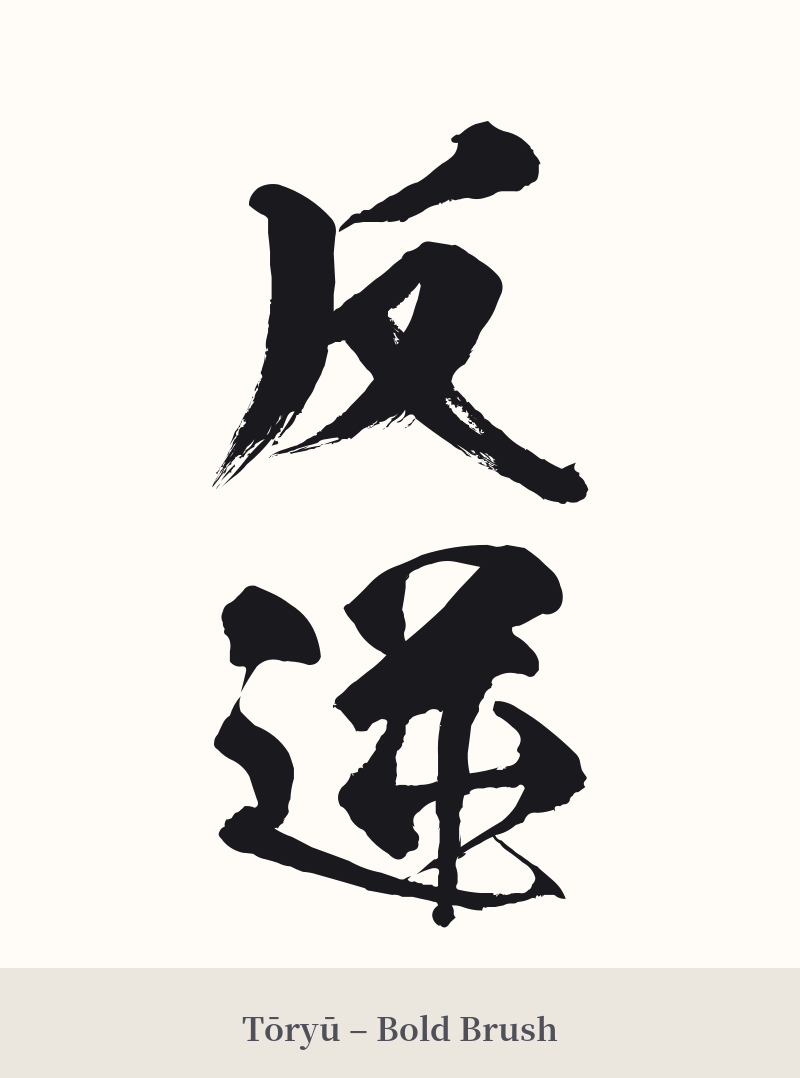
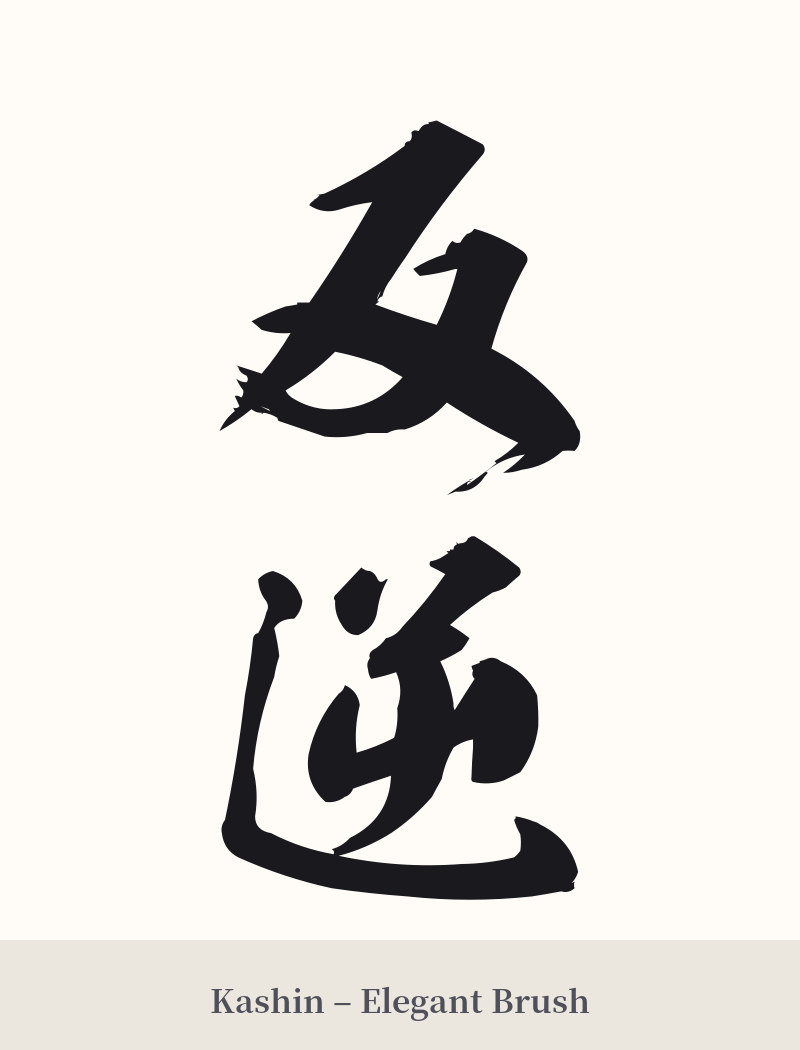
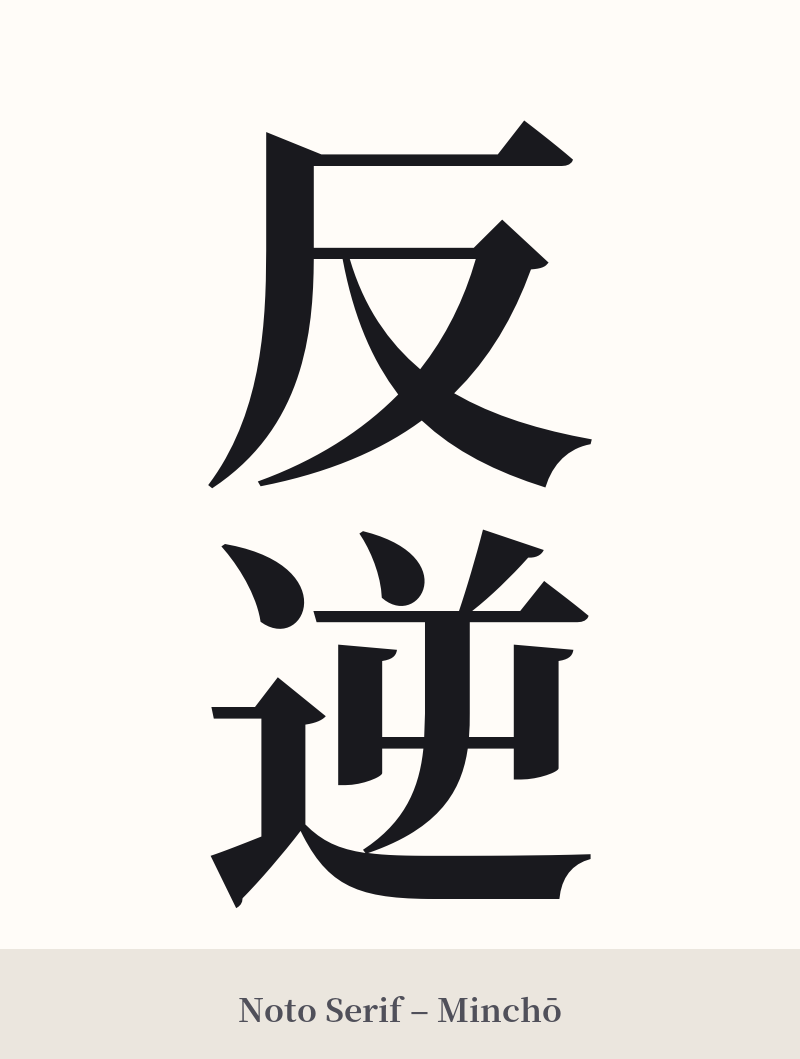
The same kanji can look dramatically different depending on the calligraphy style. Choose a font that matches the mood you want for your tattoo or design.
🎨 Tattoo Suitability
📐 Tattoo Design Guide
The defiant nature of 反逆 (Hangyaku) lends itself to bold and dynamic tattoo designs.
– Placement: A vertical orientation is particularly striking, making it ideal for the forearm, calf, or along the spine to symbolize an unwavering backbone. Horizontally, it commands attention across the chest or upper back.
– Font Style: Consider an aggressive, semi-cursive calligraphy script (gyōsho) to capture the energy and motion of an uprising. For a more resolute and unyielding statement, a thick, angular block font (kaisho) works exceptionally well.
– Visual Elements: Enhance the theme by pairing the kanji with symbolic imagery. A broken chain can represent liberation, a rising phoenix can signify rebirth from the ashes of the old order, or a single defiant flower growing through concrete can symbolize hope against oppression.
Comments