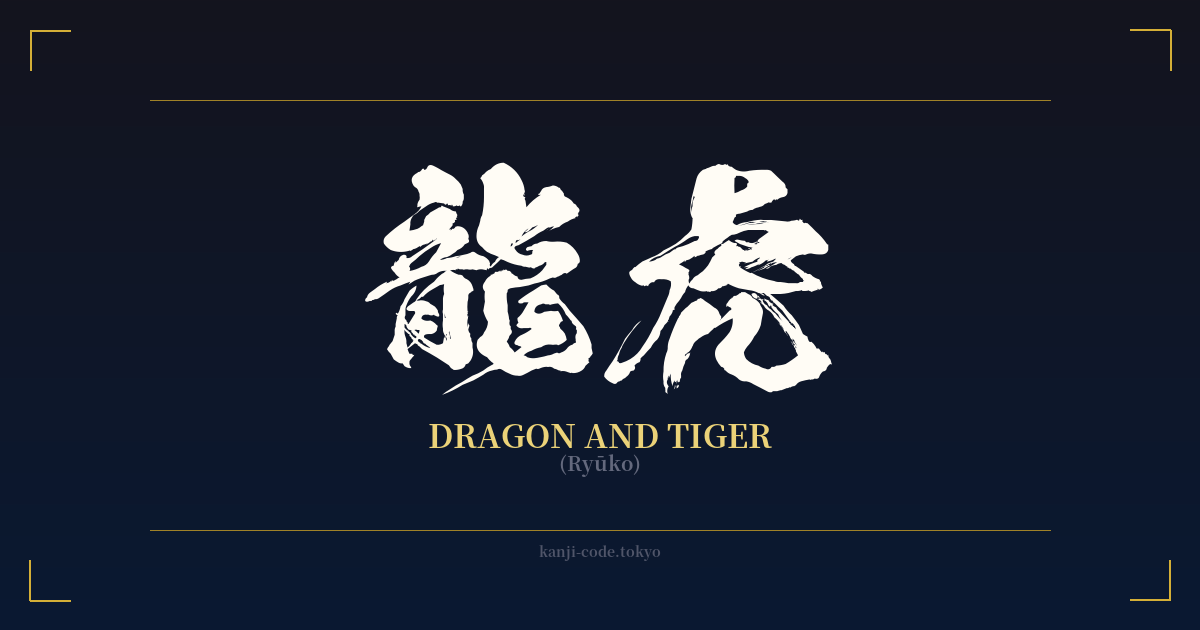
✍️ 龍虎 (Ryūko) — Cultural Context
The term 龍虎 (Ryūko) translates to 'Dragon and Tiger,' but its meaning extends far beyond a simple description of two animals. It encapsulates the concept of a fierce rivalry between two equally matched, powerful opponents. This is a classic theme in East Asian art, literature, and philosophy, representing a fundamental duality and a balance of cosmic forces.
The origin of this pairing is deeply rooted in Chinese mythology and cosmology, specifically the Four Symbols (四神, Shishin), which are celestial guardians of the four cardinal directions. The Azure Dragon of the East (青龍, Seiryū) and the White Tiger of the West (白虎, Byakko) are two of these guardians. The Dragon, a celestial and spiritual creature associated with water and the heavens, is pitted against the Tiger, an earthly king of beasts representing physical prowess and ferocity. Their clash is not one of good versus evil, but of two supreme powers vying for dominance in an eternal struggle.
In Japan, this symbolism was eagerly adopted and integrated into the nation's cultural fabric. You can see the Dragon and Tiger motif everywhere, from ancient folding screens (byōbu) and temple carvings to ukiyo-e woodblock prints by masters like Hokusai and Kuniyoshi. These artworks often depict the two creatures locked in a dramatic, swirling battle, capturing the raw energy of their conflict.
The concept of Ryūko is also a powerful metaphor in human affairs. It's used to describe legendary rivalries in sports, martial arts, business, or politics, where two giants of their field constantly push each other to greater heights. The Japanese proverb 「龍虎相搏つ」 (Ryūko aiutsu), meaning "Dragon and Tiger fight each other," perfectly describes such an epic confrontation.
In modern pop culture, the theme continues to resonate. The popular anime and light novel series Toradora! is a prime example, with the protagonists' names, Ryūji (containing the character for dragon) and Taiga (a phonetic play on 'tiger'), setting up their dynamic from the very beginning. This enduring presence in art and media speaks to the universal appeal of 龍虎 as a symbol of power, balance, and the epic nature of conflict between equals.
🖌️ Font Styles for 龍虎
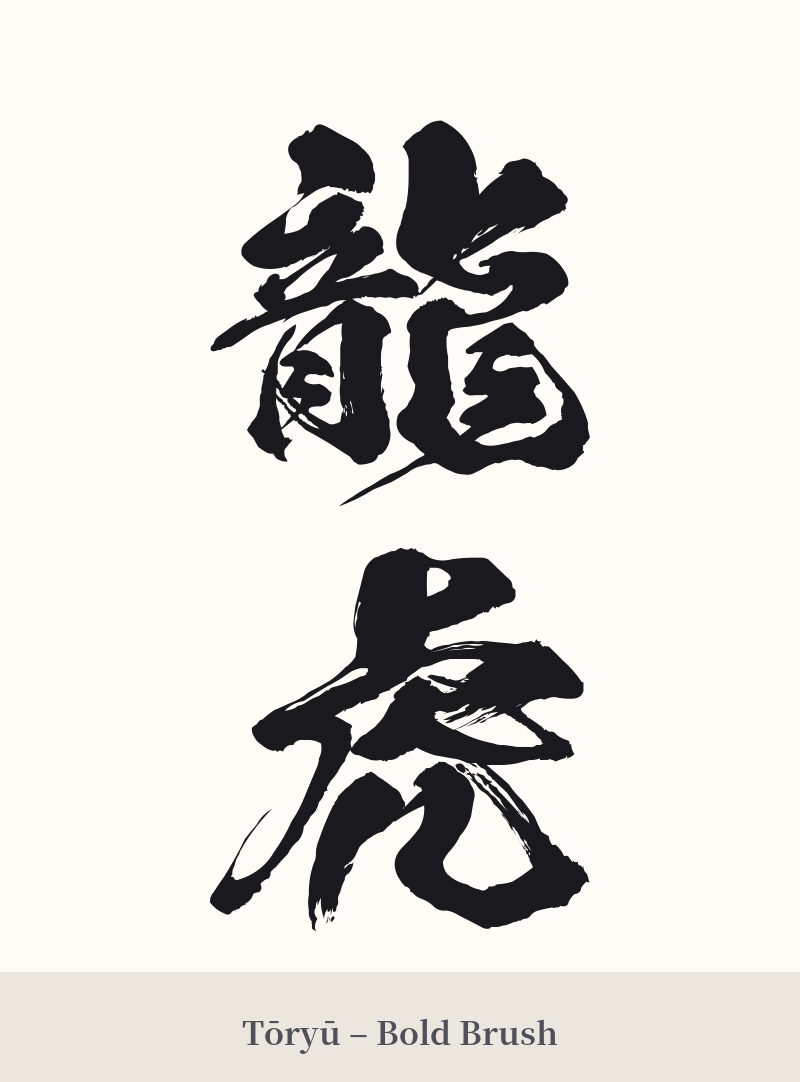
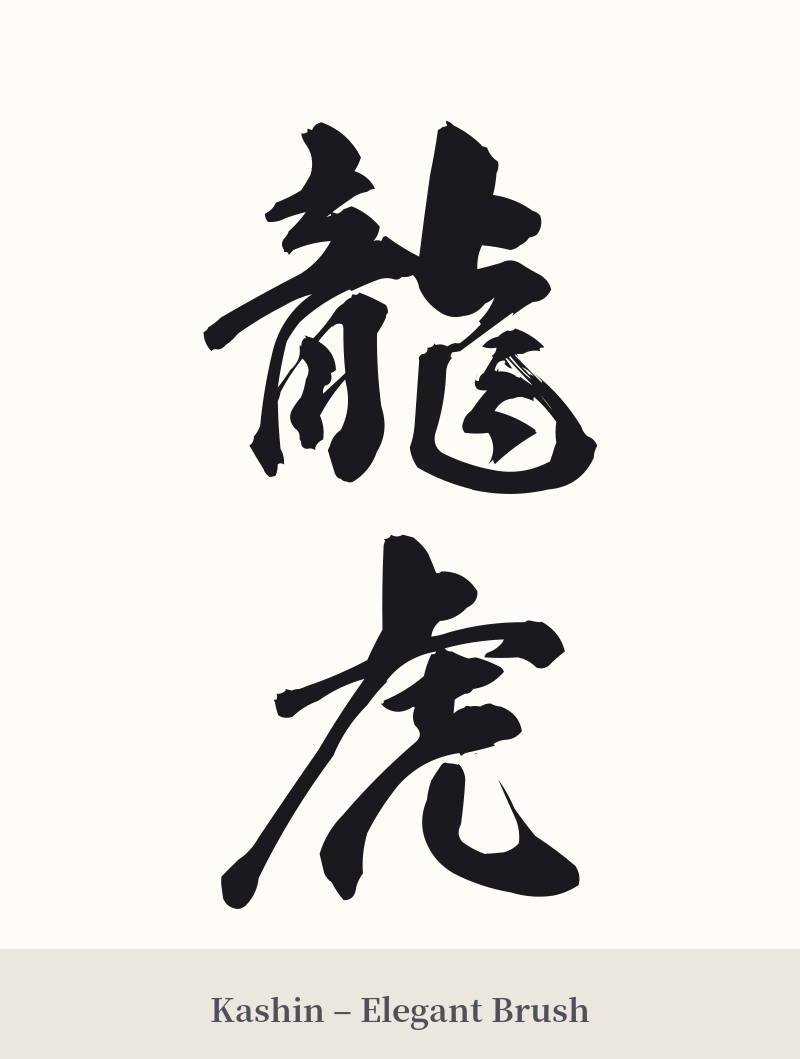
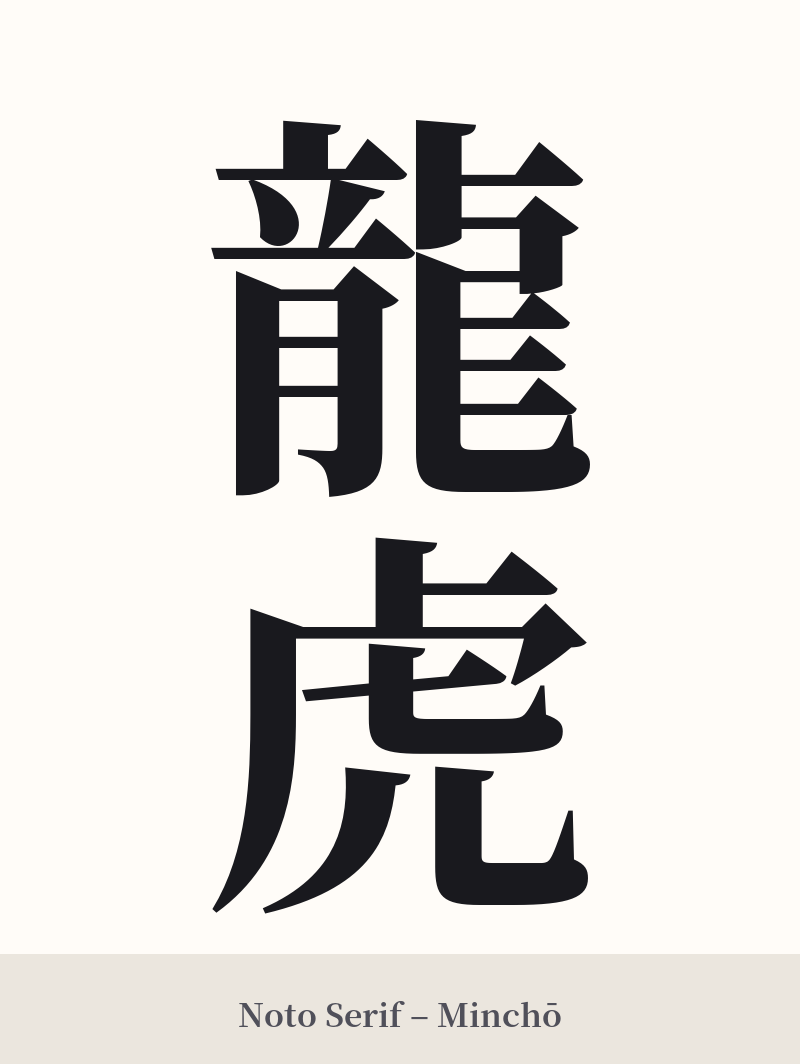
The same kanji can look dramatically different depending on the calligraphy style. Choose a font that matches the mood you want for your tattoo or design.
🎨 Tattoo Suitability
📐 Tattoo Design Guide
The power of 龍虎 lies in its dynamic contrast, and a tattoo design should reflect that. Given the detail, especially in the 龍 character, this design benefits from a larger canvas.
– Placement: Consider large, flat areas like the back, chest, or the outer thigh. This allows the artist enough space to render the intricate strokes of 龍 correctly. A vertical orientation is the most traditional and visually striking way to display the two characters.
– Style: A calligraphic style is highly recommended. A semi-cursive script (gyōsho) can capture the flowing movement of the dragon, while a bolder, more angular brushstroke style (kaisho) can emphasize the tiger's strength. The key is to convey a sense of energy and conflict.
– Visual Elements: Many people choose to pair the kanji with imagery of the dragon and tiger themselves. A popular design shows the two creatures circling the kanji, or with the kanji integrated into the scene. You could also use color subtly, perhaps a hint of blue or green in the 龍 character and a touch of orange or gold in the 虎 character to allude to their elemental associations.
Comments