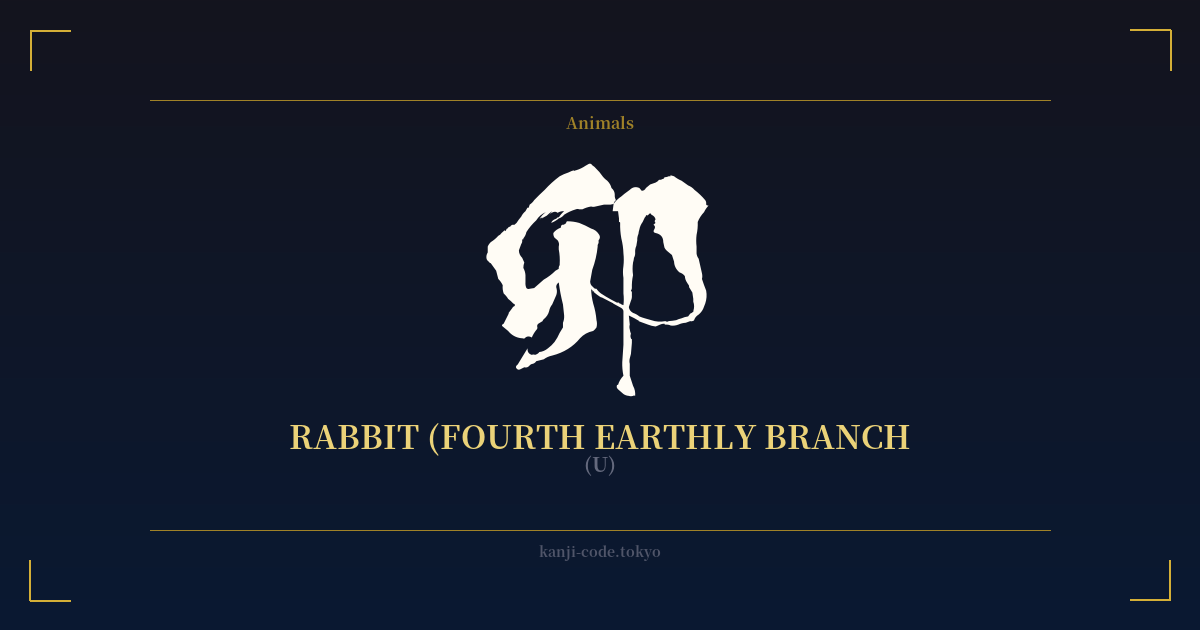
✍️ 卯 (U) — Cultural Context
The kanji 卯 (u) is a character rich with symbolism, primarily known as the fourth of the twelve Earthly Branches, or Jūnishi (十二支), which form the Japanese zodiac. While it is associated with the Rabbit, it is not the everyday character used to write the word 'rabbit'—that would be 兎 (usagi). Instead, 卯 functions as a celestial symbol, a marker of time, direction, and cosmic order.
Historically, the twelve Earthly Branches were an ancient system used across East Asia to measure years, months, days, hours, and even orientation. In this system, 卯 represents the direction of the east, the place of the rising sun. This links it powerfully to concepts of new beginnings, dawn, and the promise of a new day.
Furthermore, 卯 corresponds to the second month of the traditional lunar calendar, placing it squarely in the heart of spring. This seasonal association imbues the character with feelings of growth, vitality, fertility, and the gentle blossoming of nature after a long winter. It is a symbol of life stirring and moving forward.
In terms of time, 卯 represents the “Hour of the Rabbit,” which was approximately 5:00 AM to 7:00 AM. This further reinforces its connection to sunrise and the start of daily activities. The character itself is thought to be a pictograph of a gate or door opening, symbolizing the opening of the day's gate at dawn.
The Rabbit itself, as the animal avatar for 卯, carries its own cultural weight in Japan. Rabbits are seen as clever, gentle, and quick-witted. They are also strongly associated with good fortune and prosperity. A famous piece of Japanese folklore tells of a rabbit living on the moon, where it can be seen pounding rice cakes (mochi). This imagery connects the rabbit, and by extension 卯, to the moon (月), harvest, and festivity.
Therefore, to choose 卯 is to embrace a more abstract and philosophical concept than simply the animal. It speaks to a cyclical understanding of the universe, representing a specific energy within the grand tapestry of time and space, characterized by gentleness, new growth, and the quiet promise of dawn.
🖌️ Font Styles for 卯
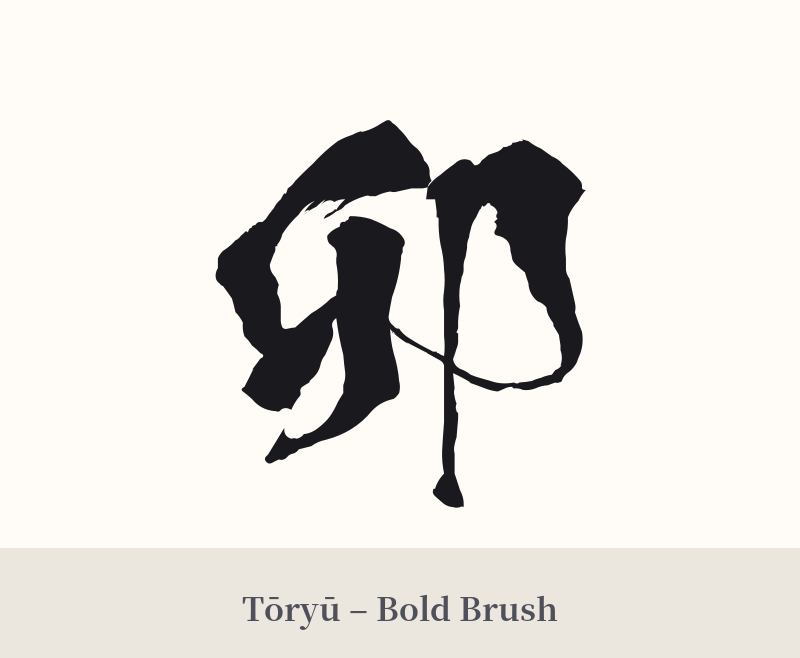
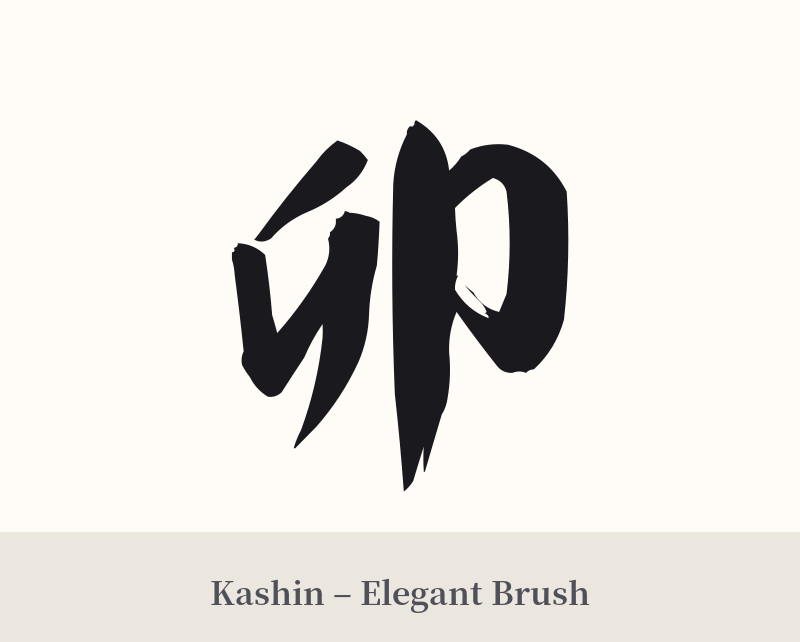
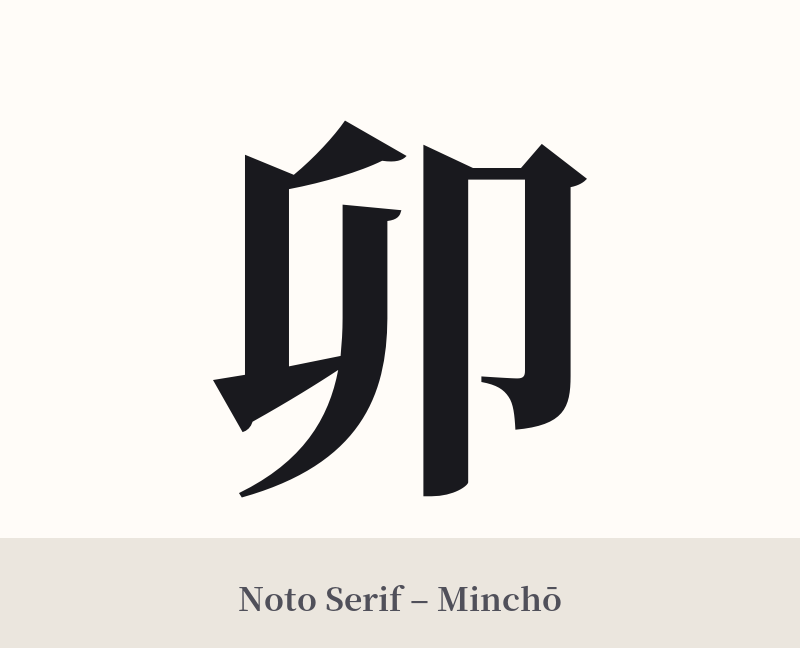
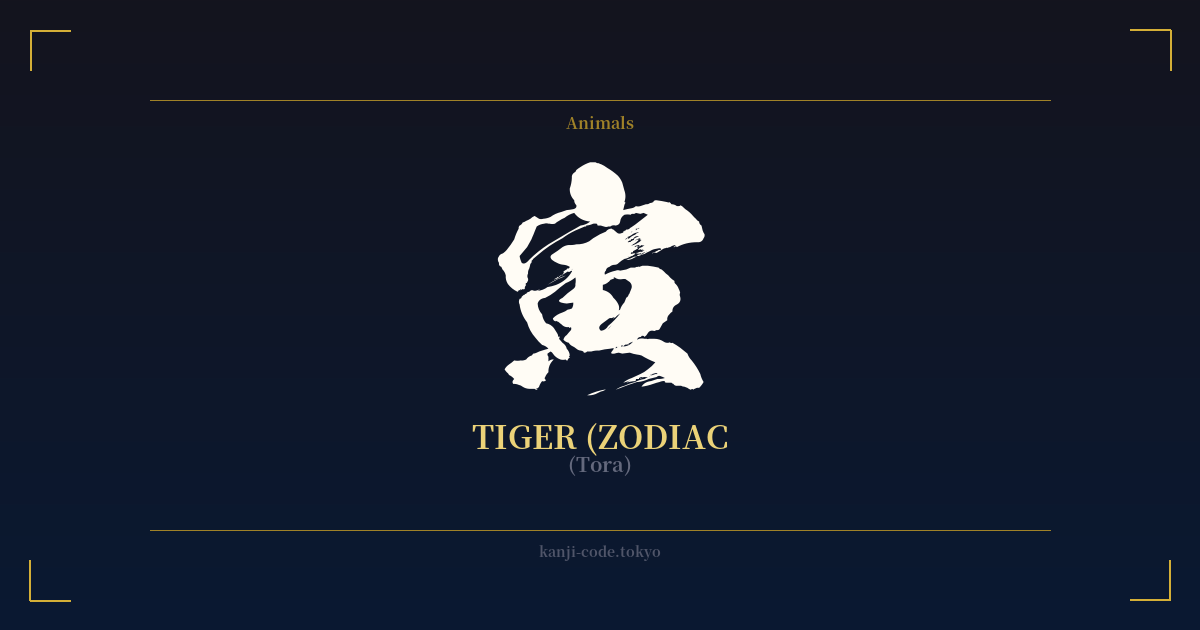
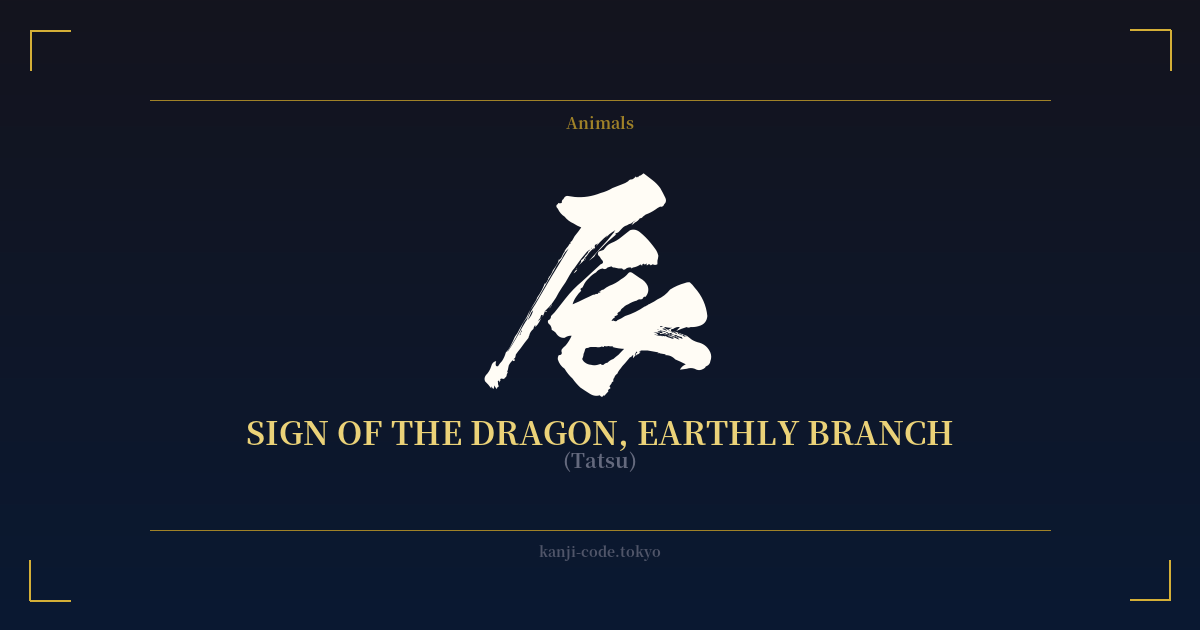
The same kanji can look dramatically different depending on the calligraphy style. Choose a font that matches the mood you want for your tattoo or design.
🎨 Tattoo Suitability
📐 Tattoo Design Guide
The kanji 卯 is defined by its simplicity and symmetry, making it a versatile choice for a tattoo. Its clean lines lend themselves to a more subtle and elegant aesthetic.
– Placement: Due to its compact and simple form, 卯 works beautifully in smaller, more discreet locations. Consider the inner wrist, behind the ear, on the ankle, or the nape of the neck. It can also be integrated into a larger design as a symbolic element.
– Font Style: A minimalist style like a clean Mincho or a modern sans-serif font will emphasize its sharp, gate-like structure. For a softer feel, a delicate and flowing calligraphy (shodō) script can add a touch of grace and movement, hinting at the Rabbit's gentle nature.
– Visual Tips: To make its meaning clearer, consider pairing 卯 with related imagery. A small silhouette of a rabbit, a crescent moon, or cherry blossoms (sakura) to represent spring can provide context and enhance the design's narrative. Using it as part of a sequence with other zodiac symbols could also be a powerful way to represent a birth year or significant date.
Comments