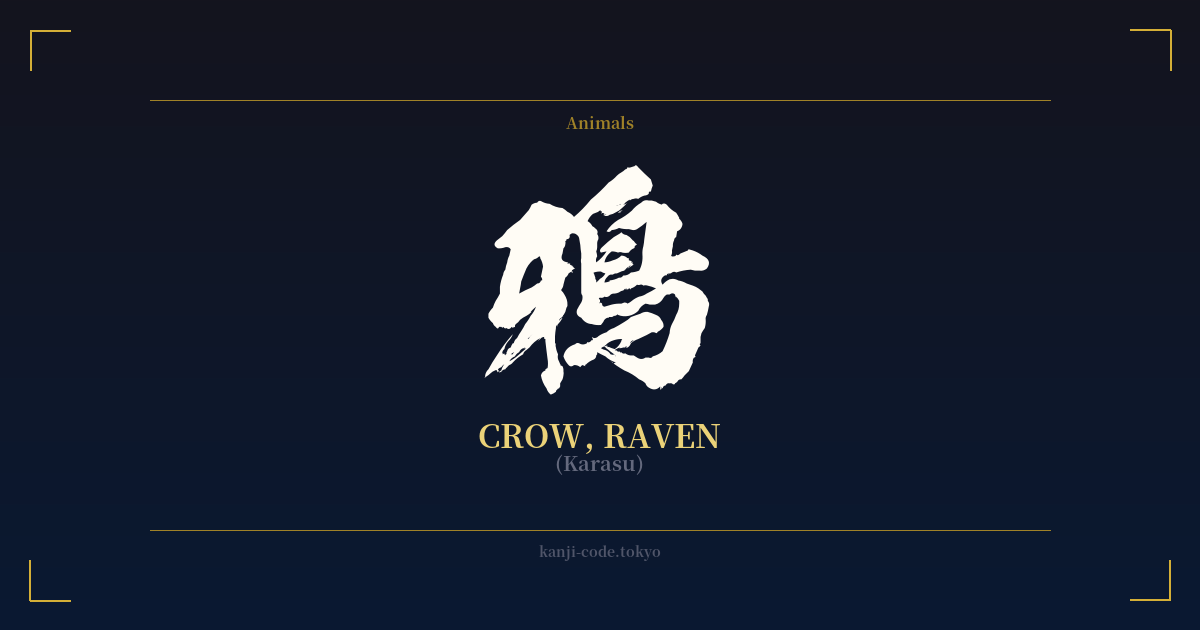
✍️ 鴉 (Karasu) — Cultural Context
The kanji 鴉 (karasu) translates to crow or raven, a bird that holds a deeply ambivalent and powerful place in Japanese culture. Unlike the simple kanji for bird, 鳥 (tori), the character 鴉 is visually distinct. It's said that the top horizontal stroke within the 'eye' of the bird radical is missing because the crow is so jet-black that its eye is indistinguishable from its feathers—a poetic origin story embedded in its very form.
In Japan, the crow walks a fine line between the sacred and the profane, the revered and the reviled. On one hand, crows are often seen as birds of ill omen, symbols of death and misfortune. Their cawing can be interpreted as a bad sign, and their presence as scavengers on ancient battlefields cemented their association with mortality. This image of the crow as a dark harbinger is common in folklore and literature.
However, this is only half the story. The crow is also a figure of immense divine importance, most famously embodied by the Yatagarasu (八咫烏), the "eight-span crow." This mythical, three-legged crow is a creature of the sun and a divine messenger of the Shinto gods. According to the foundational myths of Japan, the Yatagarasu was sent by the sun goddess Amaterasu to guide the legendary first emperor, Jimmu, through the treacherous mountains of Kumano.
Because of this legend, the Yatagarasu is a revered symbol of divine intervention, guidance, and rebirth. It is the sacred symbol of the Kumano Sanzan shrines, a major pilgrimage site, and has been adopted as the emblem of the Japan Football Association, symbolizing the speed and guidance needed to lead the team to victory.
This duality is the essence of the 鴉. It is both a creature of the material world, intelligent and opportunistic, and a messenger from the spiritual realm. It represents the wisdom that can be found in darkness, the idea of guidance through difficult passages, and the thin veil between life and death. This makes it a far more complex and profound symbol than a simple bird.
🖌️ Font Styles for 鴉
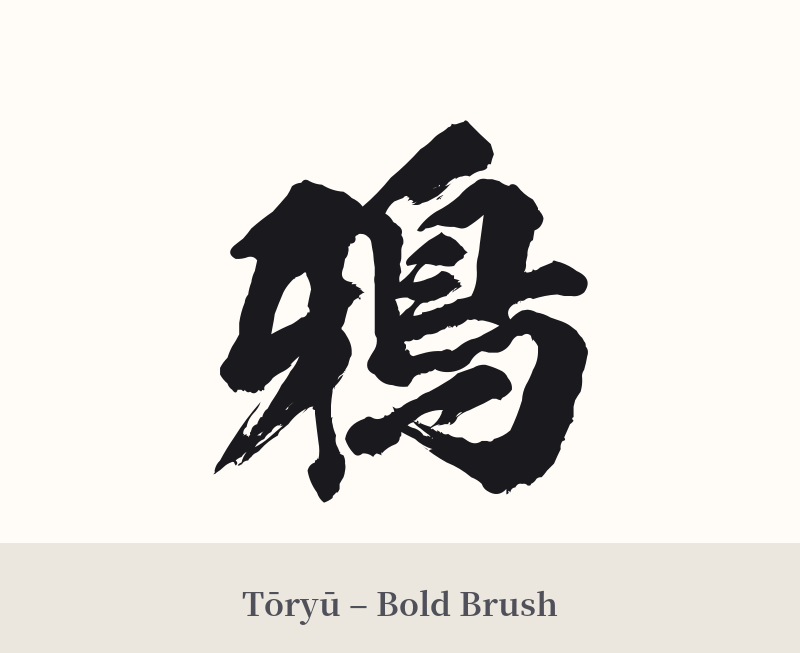
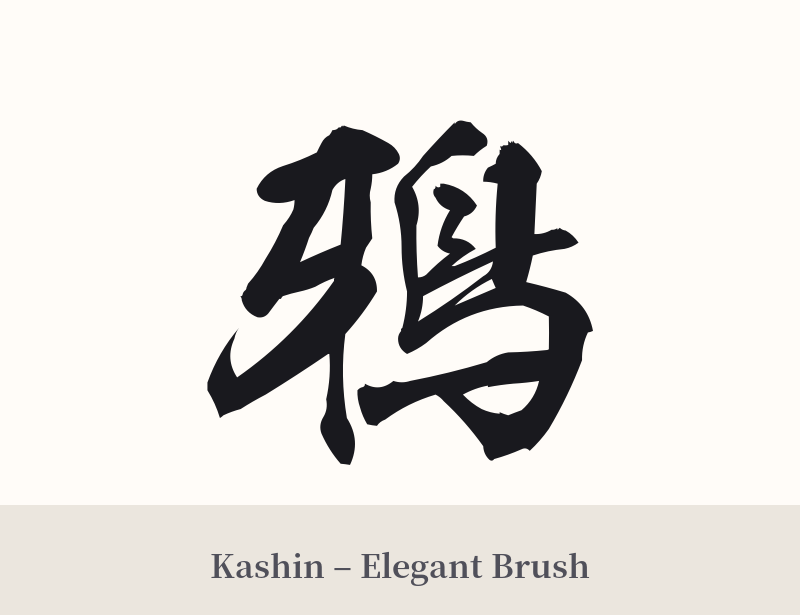
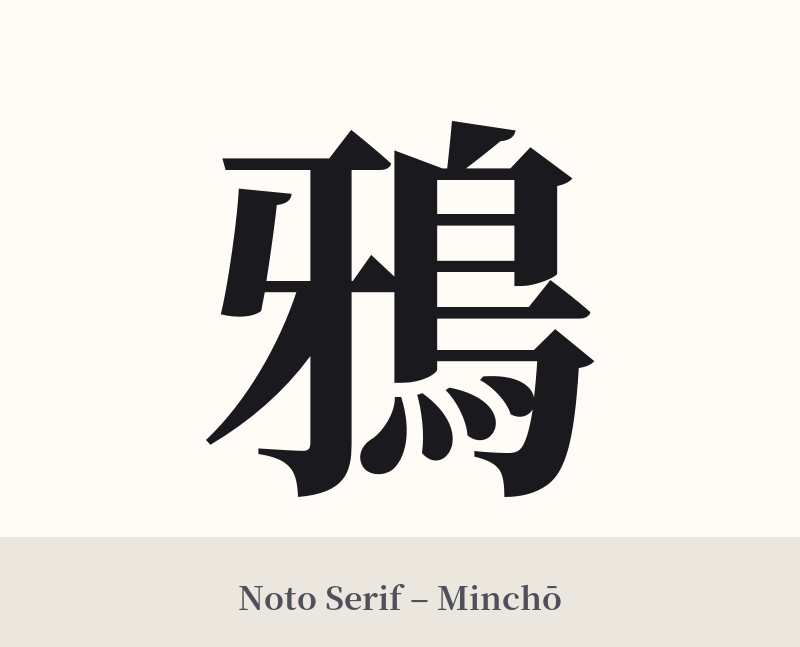
The same kanji can look dramatically different depending on the calligraphy style. Choose a font that matches the mood you want for your tattoo or design.
🎨 Tattoo Suitability
📐 Tattoo Design Guide
The kanji 鴉 is visually complex and full of character, offering many design possibilities.
– Placement: Due to its detail, this kanji works best in medium to large formats. Consider placements like the forearm, calf, shoulder blade, or center back, where the artist has enough space to render the strokes cleanly.
– Style: A bold, dynamic calligraphy (shodō) style can emphasize the crow's powerful and wild nature. Alternatively, a crisp, modern font can highlight its sharp intelligence. Avoid making it too small, as the internal strokes can blur together over time.
– Pairings: To emphasize its divine aspect, consider incorporating elements related to the Yatagarasu legend, such as a subtle third leg, a sun motif, or pairing it with a torii gate. For a darker theme, it can be set against a full moon or alongside a skull.
Comments