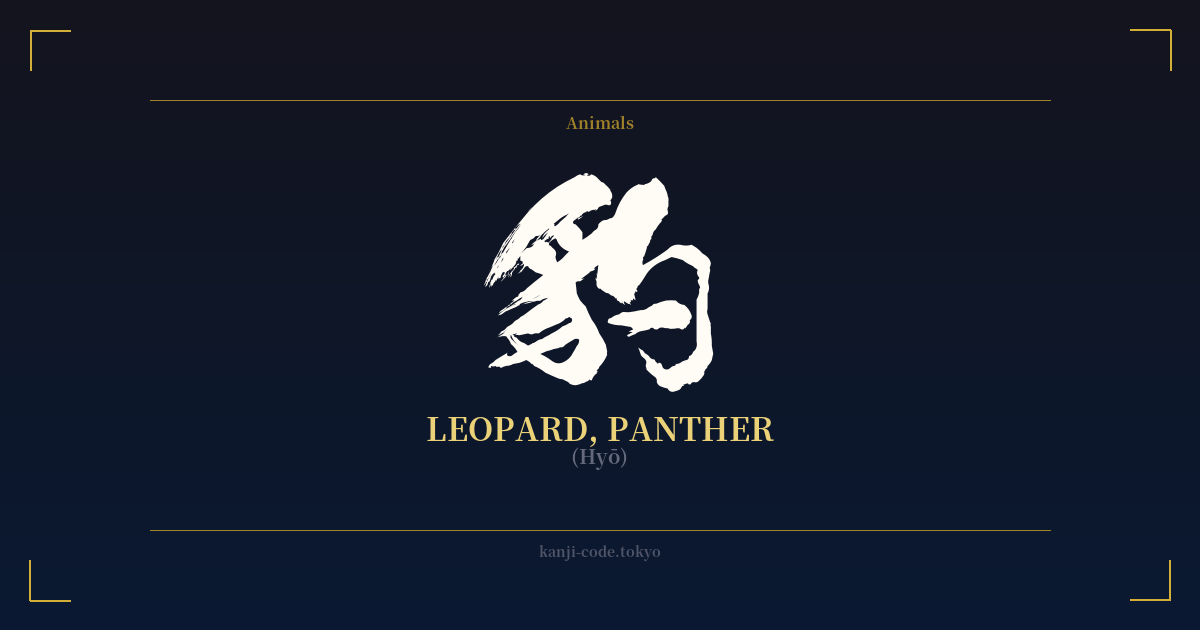
✍️ 豹 (Hyō) — Cultural Context
The kanji 豹 (Hyō) directly translates to leopard or panther, embodying the raw essence of this magnificent and formidable feline. As leopards are not native to Japan, their image and symbolism were largely imported from Chinese culture, where the animal was revered for its power, speed, and strategic hunting prowess. In Japan, 豹 evokes a sense of sleek ferocity, cunning intelligence, and solitary grace.
Unlike the tiger (虎, Tora), which often symbolizes brute strength and royal authority, the leopard represents a different kind of power—one that is more agile, precise, and mysterious. Its spotted coat is a key part of its identity, representing beauty, camouflage, and the ability to blend into its surroundings before striking. This makes the kanji a symbol not just of overt aggression, but of calculated and elegant power.
A fascinating cultural layer is added by the idiom 豹変 (hyōhen). Literally meaning "leopard's change," it describes a person who undergoes a sudden, complete, and often negative transformation in their attitude or character. The origin of this phrase comes from the classic Chinese text I Ching, which states that "a superior man transforms like a leopard." Originally, this meant a clear and beautiful change, like the distinct spots on a leopard's coat appearing as it matures. However, over time, the meaning in modern Japanese has shifted to imply an unpredictable and often frightening change for the worse. This dual meaning adds a compelling tension to the character—it is both beautiful and potentially volatile.
In modern pop culture, from manga and anime to video games, characters associated with the leopard are often depicted as fast, stylish, and deadly. They may be lone wolves (or lone cats, in this case), relying on their own skills and intuition rather than group strength. The term 黒豹 (kurohyō), or black panther, carries an even stronger connotation of stealth, mystery, and nocturnal danger, often associated with sleek, enigmatic, and powerful figures.
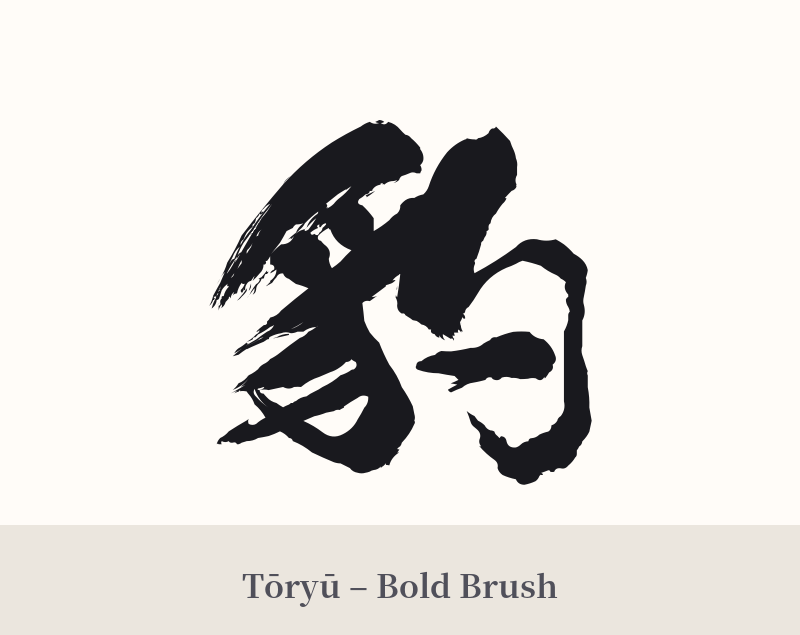
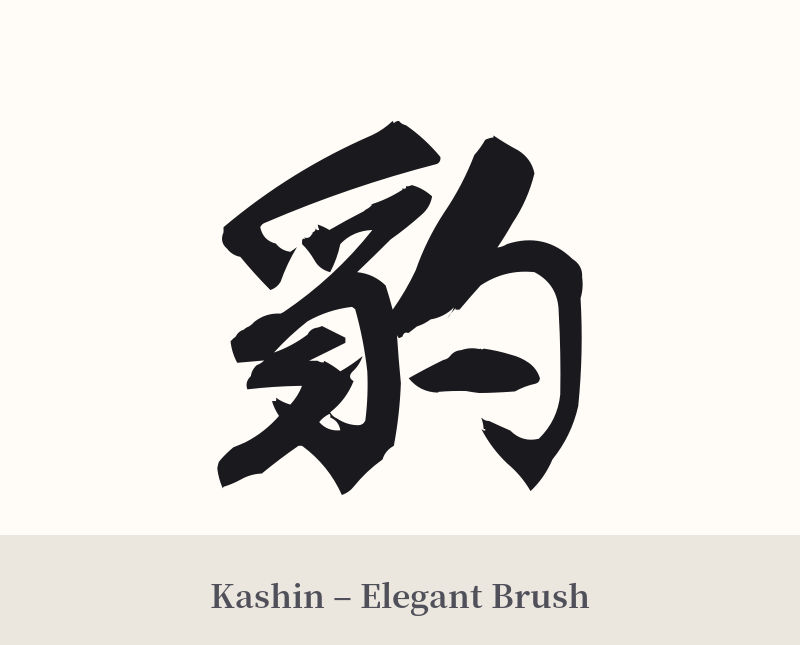
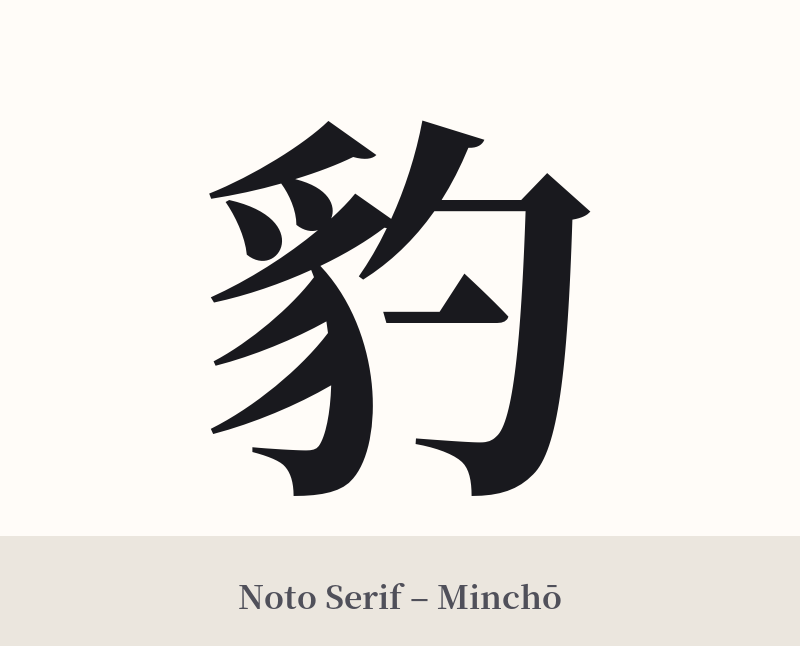
🖌️ Font Styles for 豹
The same kanji can look dramatically different depending on the calligraphy style. Choose a font that matches the mood you want for your tattoo or design.
🎨 Tattoo Suitability
📐 Tattoo Design Guide
When designing a tattoo with 豹 (Hyō), the goal is to capture its essence of speed and sleek power. The character itself is well-balanced, with a mix of sharp angles and containing elements, making it versatile for various styles.
– Placement: This kanji works well in vertical placements that accentuate the body's lines, such as the forearm, the calf, or along the bicep. For a more impactful statement, a larger version on the back or ribs can be very effective.
– Font Style: A bold, blocky Kaisho (standard script) font will emphasize the kanji's inherent strength and stability. For a design that speaks to the leopard's agility and movement, a semi-cursive Gyosho or fully cursive Sosho script with fluid, energetic brushstrokes is an excellent choice.
– Visual Tips: Consider pairing the kanji with imagery. A classic combination is to have the character placed over a faint, ink-wash style image of a leopard. You could also creatively integrate a leopard spot pattern into the background or even within the strokes of the kanji itself. Using primarily black ink maintains a classic, powerful look, while adding a touch of gold or yellow can allude to the leopard's iconic coat.
Comments