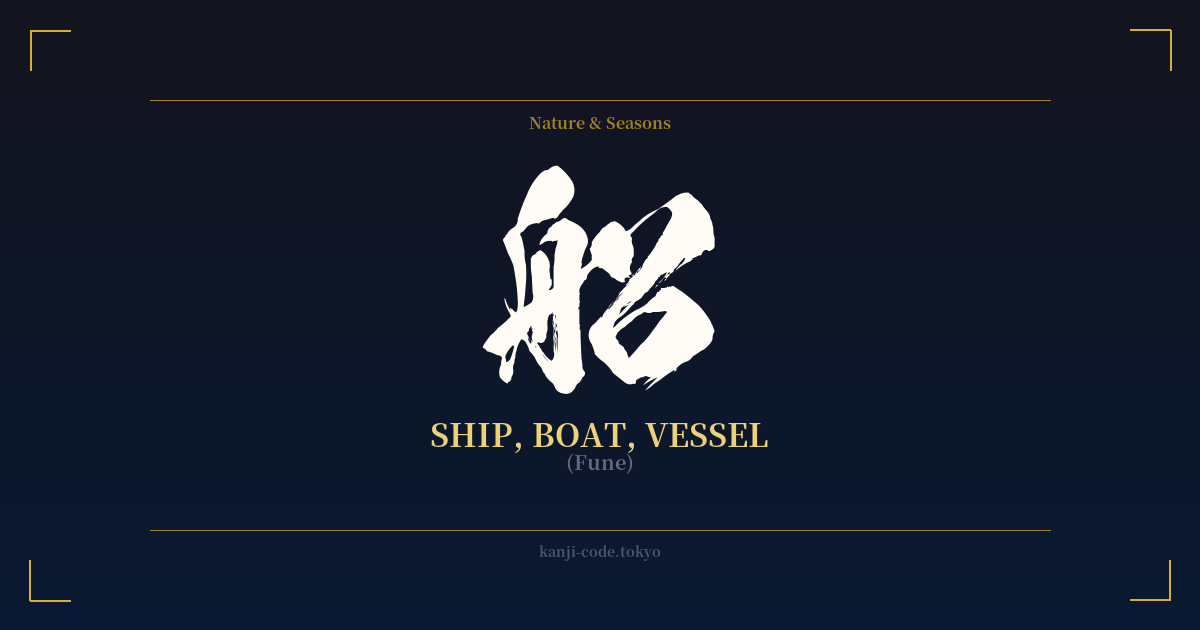
✍️ 船 (Fune) — Cultural Context
As an island nation, Japan's identity is inextricably linked to the sea, and the kanji 船 (fune) captures this fundamental relationship. It represents not just a physical vessel, but a powerful symbol of journey, trade, exploration, and the very lifeline that has shaped Japanese culture for millennia.
The character itself paints a picture. On the left is the radical 舟, a pictograph of a small boat. On the right, 㕣, is thought to represent a container or enclosure, possibly indicating a larger vessel with a hold for cargo or people. This evolution from a simple boat to a larger ship is mirrored in Japan's own maritime history.
Historically, ships were essential for everything from fishing and local transport to diplomatic missions and warfare. The famous Kentōshi missions to Tang China in the 7th to 9th centuries relied on fleets of ships, bringing back invaluable knowledge, religion, and cultural artifacts that profoundly influenced Japanese society. These voyages were perilous, cementing the ship as a symbol of both opportunity and risk.
In folklore, the most iconic image is the Takarabune (宝船), or "Treasure Ship." This mythical vessel is piloted by the Seven Lucky Gods (Shichifukujin) and is said to arrive on New Year's Eve, laden with treasures and good fortune. Having a dream of the Takarabune is considered a sign of great luck for the coming year, and images of it are popular talismans.
The ship is also a potent metaphor in the Japanese language and arts. The phrase 人生の船出 (jinsei no funade) means "setting sail on the journey of life," often used to describe graduations, marriages, or starting a new career. Another common saying, 同じ船に乗る (onaji fune ni noru), means "to be in the same boat," highlighting a shared fate or circumstance.
This imagery permeates art, from the iconic ukiyo-e prints of Hokusai and Hiroshige depicting boats navigating treacherous waves, to the serene practice of Tōrō Nagashi (灯籠流し). During the Obon festival, small paper lanterns on boats are floated down rivers to guide the spirits of ancestors back to the spirit world, a beautiful and poignant use of the boat as a vessel between realms.
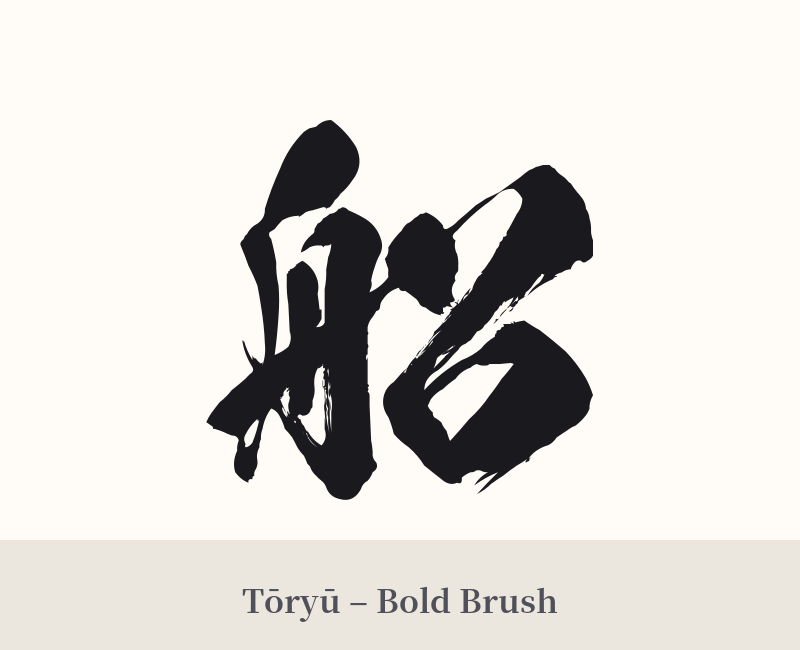
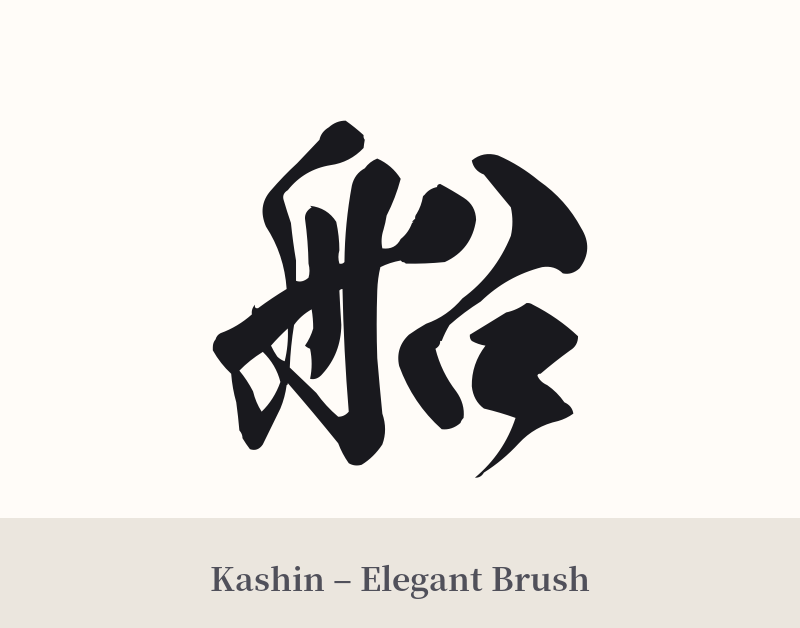
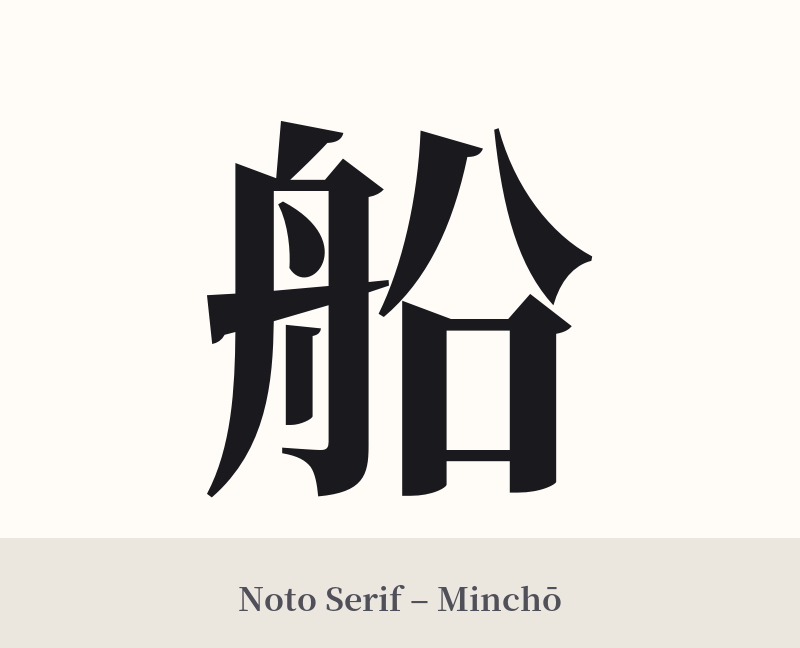
🖌️ Font Styles for 船
The same kanji can look dramatically different depending on the calligraphy style. Choose a font that matches the mood you want for your tattoo or design.
🎨 Tattoo Suitability
📐 Tattoo Design Guide
The kanji 船 (fune) offers a solid and meaningful centerpiece for a tattoo. Its balanced structure lends itself to a variety of styles and placements.
– Placement: Consider areas that suggest movement or a path. The forearm, calf, or along the ribs can create a sense of forward motion. It also works well on the back, below the neck, as a symbol of the journey you carry with you.
– Font Style: A traditional Kaisho (block) script emphasizes the solid, sturdy nature of a ship. For a more dynamic feel, a Gyōsho (semi-cursive) or Sōsho (cursive) style can evoke the movement of water and wind.
– Visual Tips: To enhance its meaning, consider incorporating other elements. Adding waves (波) beneath the character can ground it in its natural element. A compass (羅針盤) or a single star can be paired with it to symbolize guidance and finding one's way. For a larger piece, 船 can be the focal point of a Japanese-style landscape with a distant Mount Fuji or a swirling sea.
Comments