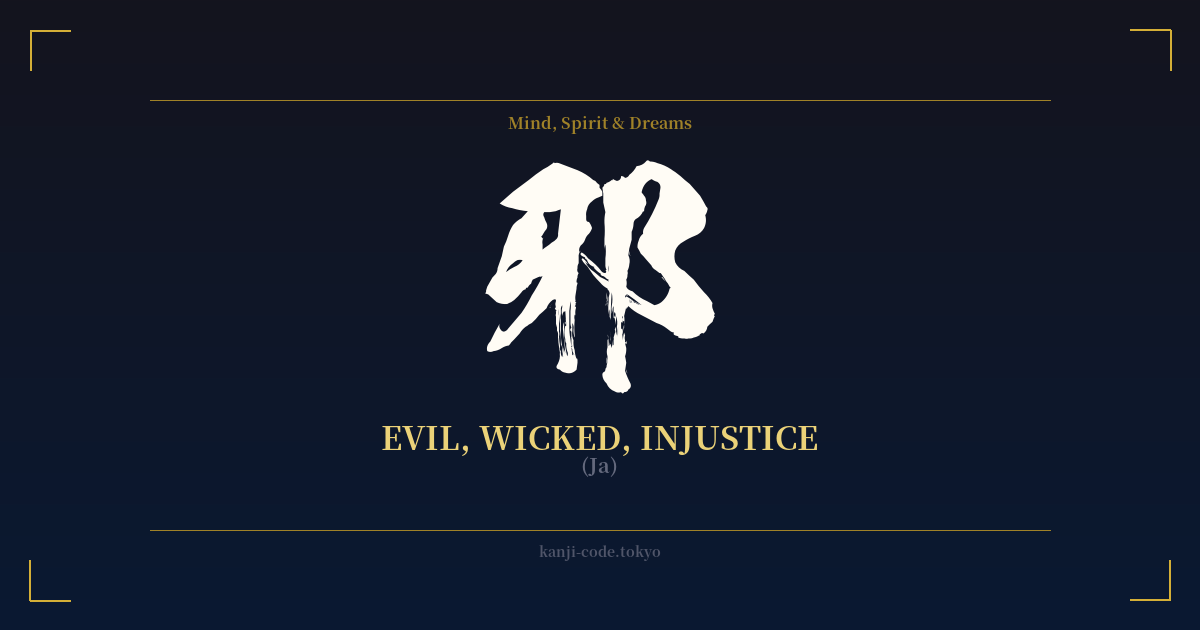
✍️ 邪 (Ja) — Cultural Context
The kanji 邪 (Ja) is a potent and direct symbol, encapsulating concepts of evil, wickedness, injustice, and heresy. Its meaning is not subtle; it represents a deviation from what is considered right, proper, and just. To understand its depth, we must look at its structure, its role in language, and its place in the Japanese cultural imagination.
Etymologically, the ancient form of 邪 is thought to have combined a pictograph for a tooth or fang with the radical for a village or community (邑). This combination suggests something irregular, aberrant, or outside the established norms of the group—a foreign or crooked element within a structured society. This idea of being "crooked" or "aslant" is central to the character's meaning, contrasting sharply with 正 (sei), which means correct, just, and straight.
In Japanese, 邪 is a building block for many words related to malevolence and deviation. For example, 邪魔 (jama) means an obstacle or hindrance, with the literal characters being "evil demon." It's used in everyday language to say "excuse me" when you need to get by someone (お邪魔します – ojamashimasu), literally "I am committing a nuisance." Another term is 邪心 (jashin), meaning an evil or malicious heart. In Buddhism, 邪見 (jaken) refers to a "wrong view" or heretical belief that strays from the path of enlightenment.
It's important to distinguish 邪 (Ja) from another common kanji for evil, 悪 (Aku). While both translate to "evil," they carry different nuances. 悪 often refers to active badness, harm, or wrongdoing—a moral judgment on an action or quality. 邪, on the other hand, frequently carries a sense of perversion, deviance, or heresy. It’s the evil that corrupts, twists, and leads astray. Think of `Ja` as "wickedness" and `Aku` as "badness."
In modern pop culture, 邪 is a staple for all things dark and villainous. From manga and anime to video games, it is used to label dark magic, cursed swords, and malevolent entities. The "Jagan" (邪眼), or "Evil Eye," is a classic trope, granting a character sinister powers. This widespread use has solidified 邪's image as the quintessential symbol of fictional and mythological evil, making it instantly recognizable to fans of Japanese media.
🖌️ Font Styles for 邪
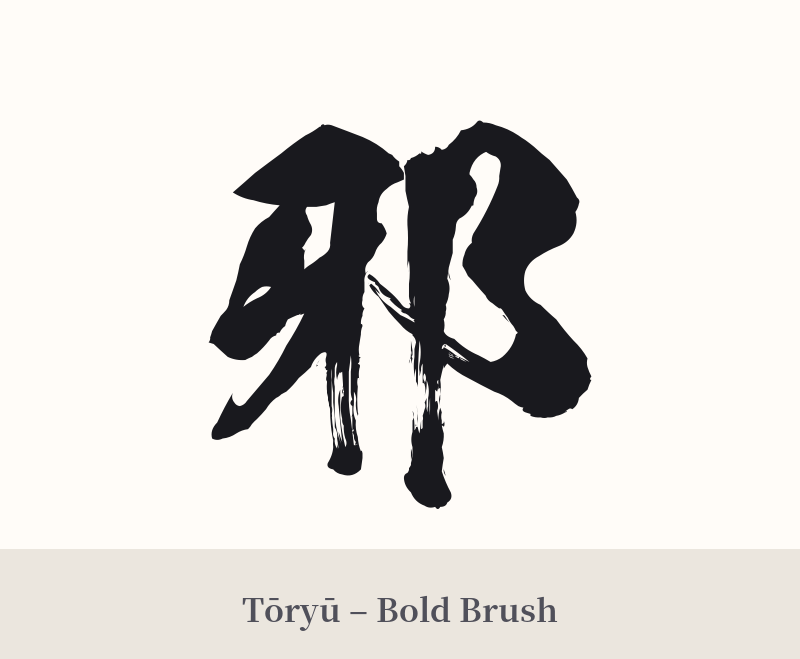
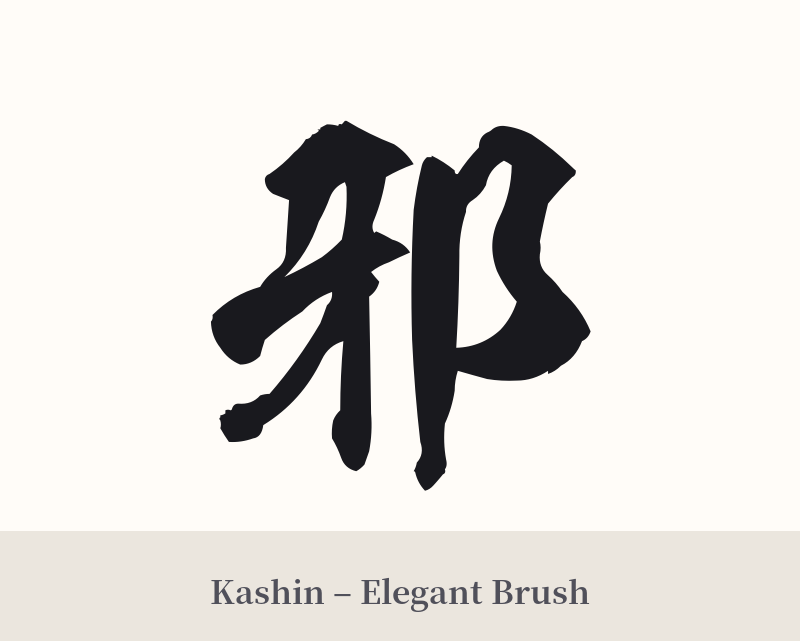
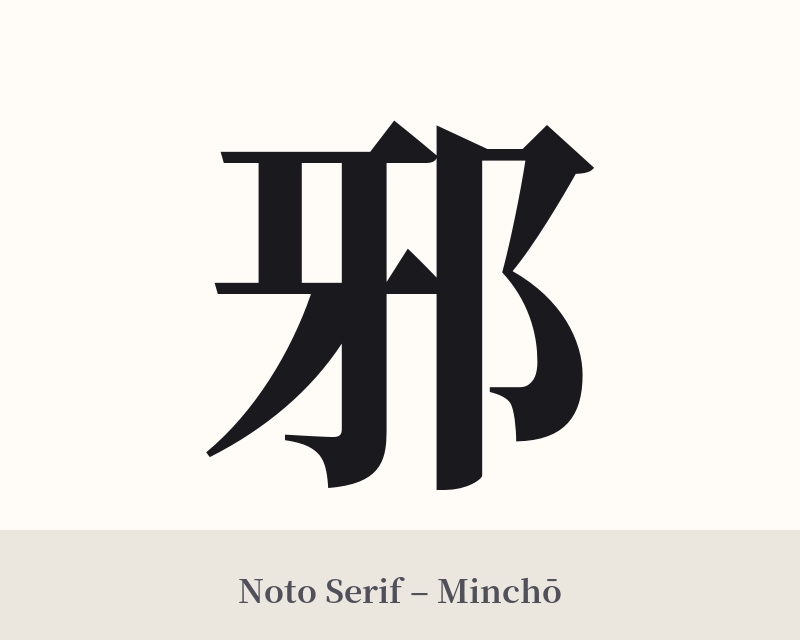
The same kanji can look dramatically different depending on the calligraphy style. Choose a font that matches the mood you want for your tattoo or design.
🎨 Tattoo Suitability
📐 Tattoo Design Guide
A tattoo of 邪 is a bold and confrontational statement. The design should reflect this intensity.
– Placement: This kanji works well as a standalone piece in a visible, high-impact area. Consider the forearm, the back of the neck, or across the upper back. It can also be integrated into a larger piece, perhaps held by a demon or entwined with a serpent.
– Font Style: The choice of font can dramatically alter the feel. A sharp, aggressive calligraphy style (kaisho or sousho) can emphasize the chaotic and dangerous nature of the concept. Conversely, a clean, blocky Mincho font can give it a cold, modern, and sinister feel.
– Visual Tips: Consider using red ink instead of the traditional black to heighten the sense of danger, blood, or malice. You could also have the character appear as if it's cracked or shattering, symbolizing broken morality. Pairing it with traditional motifs like an Oni mask, a Hannya mask, or spider lilies (higanbana) can provide more context and deepen the dark aesthetic.
Comments