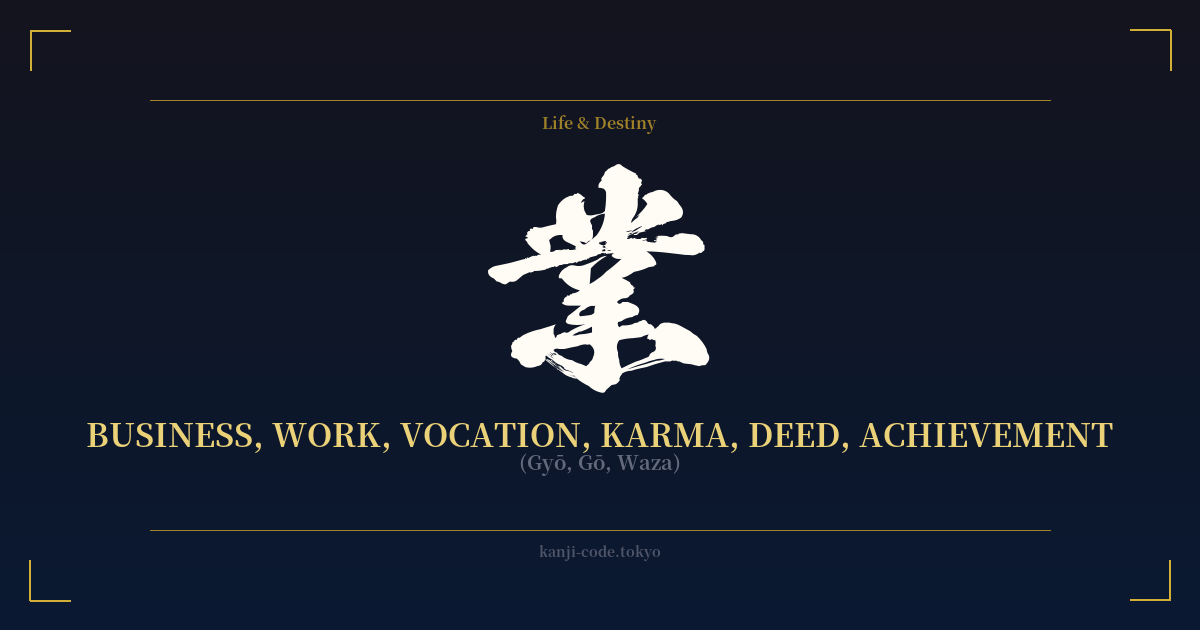
✍️ 業 (Gyō, Gō, Waza) — Cultural Context
The kanji 業 is a fascinating character that sits at the crossroads of the mundane and the profound, embodying concepts as practical as a daily job and as cosmic as spiritual destiny. Its complexity begins with its dual readings and meanings, which split into two primary paths: 'Gyō' for work and 'Gō' for karma.
The character's origin is believed to depict a large, ornate rack for holding musical instruments like bells and drums. This imagery suggests a complex, structured, and skillful activity—a performance or a craft. This etymology beautifully captures the essence of 'Gyō' (ギョウ), which relates to human endeavor, skill, and industry.
In its 'Gyō' reading, the kanji forms the backbone of words related to profession and achievement. For example, 職業 (shokugyō) means 'occupation' or 'vocation,' representing one's life's work. 産業 (sangyō) is 'industry,' and 事業 (jigyō) is 'business' or 'enterprise.' Even 卒業 (sotsugyō), 'graduation,' literally means 'to complete the work' of one's studies. This side of 業 is about tangible action, the things we build, and the roles we play in society.
However, with the reading 'Gō' (ゴウ), the character takes on a profound spiritual dimension. This reading is a direct transliteration of the Sanskrit word 'karma.' In Buddhist philosophy, 業 (Gō) refers to the sum total of an individual's actions—physical, verbal, and mental—and the consequences that arise from them. It is the universal law of cause and effect.
This concept is deeply embedded in Japanese culture and language. The famous proverb 自業自得 (jigō jitoku) translates to 'one's own karma, one's own reward/retribution,' which is the equivalent of 'you reap what you sow.' It highlights the belief that our current circumstances are a result of our past actions, and our present actions will shape our future. This isn't just about punishment; good deeds also create good karma.
The true beauty of 業 lies in the unspoken connection between these two meanings. It suggests that our daily work (Gyō) is not separate from our spiritual path. The effort, intention, and ethics we bring to our profession are, in themselves, actions that create our karma (Gō). Whether you are a craftsman perfecting your art or an office worker completing a task, each act is a 'deed' that contributes to the larger tapestry of your destiny. Thus, 業 teaches that our vocation can be a vehicle for spiritual growth, and our daily grind is, in fact, the very stuff of fate.
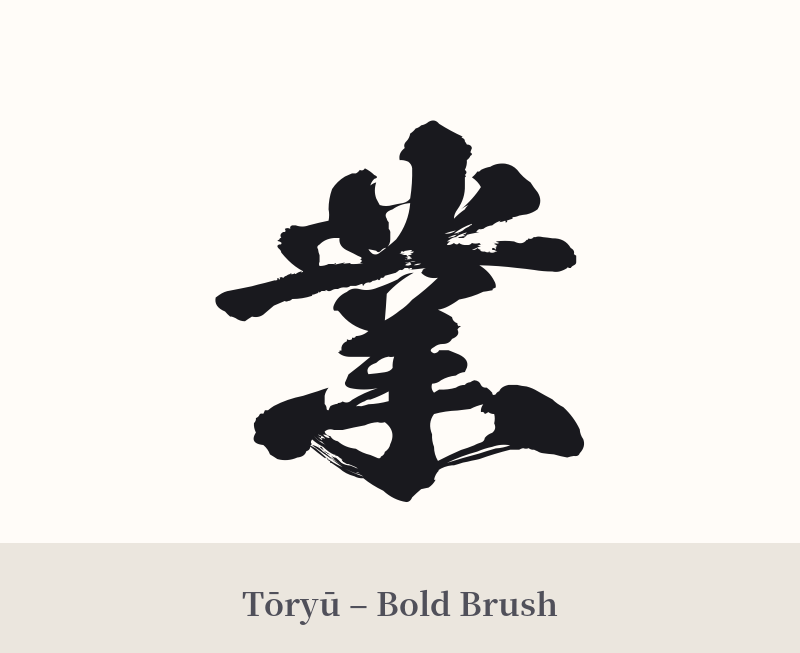
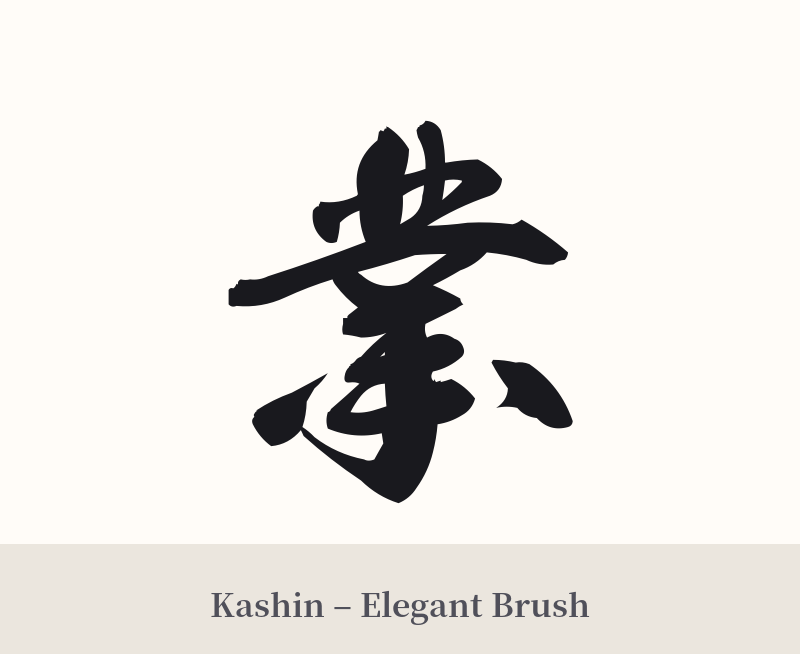
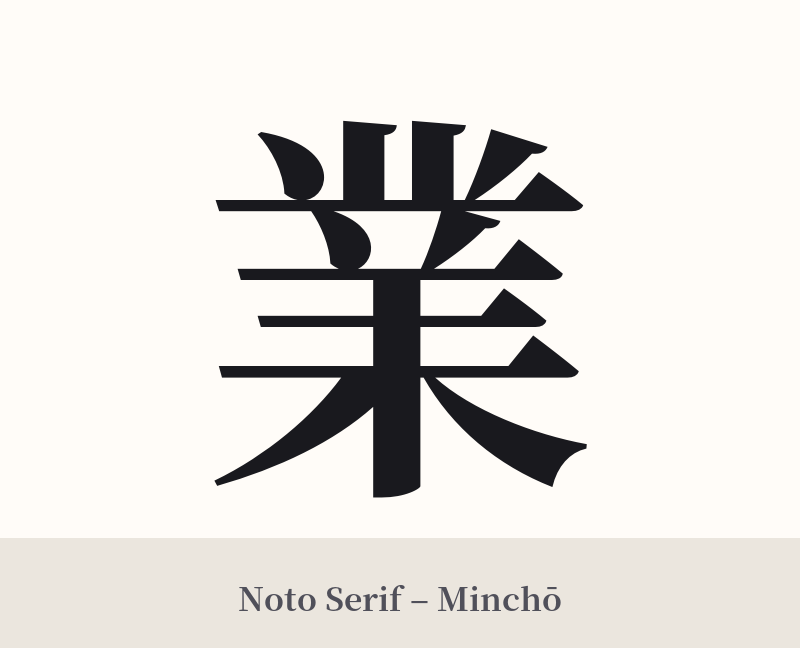
🖌️ Font Styles for 業
The same kanji can look dramatically different depending on the calligraphy style. Choose a font that matches the mood you want for your tattoo or design.
🎨 Tattoo Suitability
📐 Tattoo Design Guide
The kanji 業 offers a strong vertical presence, making it well-suited for certain placements and styles.
– Placement: Consider areas that complement a vertical design, such as the forearm (running from wrist to elbow), the calf, the bicep, or along the spine. These placements allow the character's structure to flow with the lines of the body.
– Style: The style can help emphasize your intended meaning. A bold, angular Kaisho (block) script can convey the solid, industrious nature of 'work' and 'achievement.' Conversely, a flowing Gyōsho (semi-cursive) or Sōsho (cursive) style can evoke the fluid, interconnected nature of 'karma' and destiny.
– Clarifying Meaning: Given the kanji's ambiguity, consider pairing it with other visual elements. For a Buddhist theme, incorporating an Enso circle (symbolizing enlightenment and the universe) or a lotus flower (symbolizing purity and rebirth) can steer the interpretation toward 'karma.' If you wish to emphasize 'vocation,' you could subtly integrate tools of your trade into the background of the design.
Comments