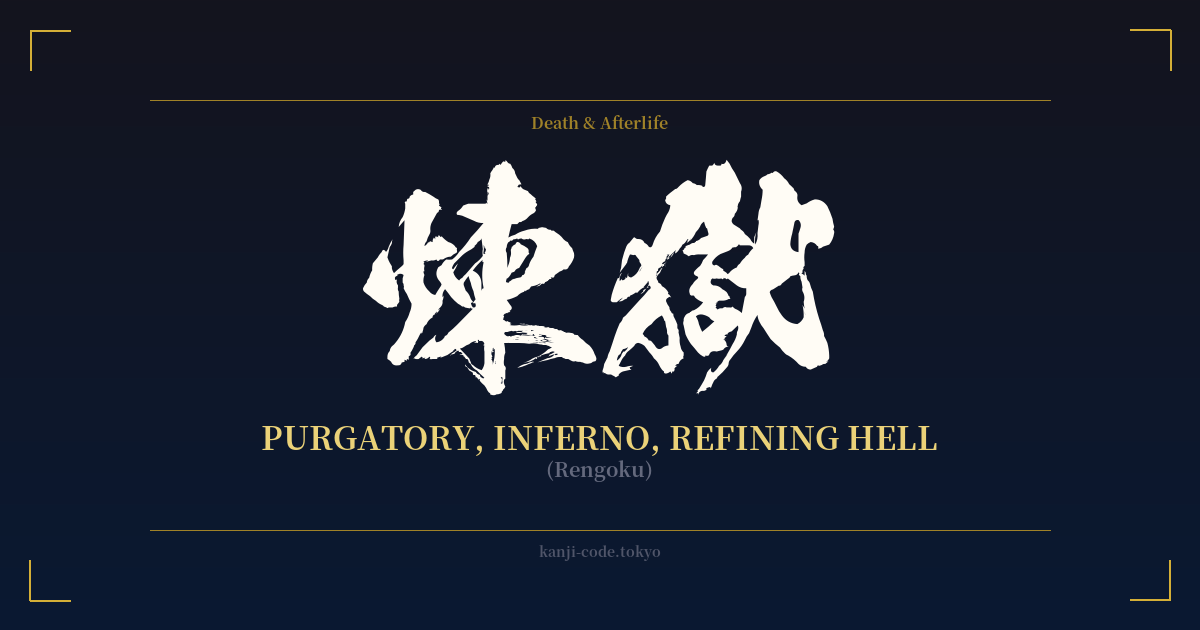
✍️ 煉獄 (Rengoku) — Cultural Context
The word 煉獄 (Rengoku) paints a vivid picture with its very characters: a “refining prison.” It’s a term that evokes images of trial by fire, a crucible where souls are tested and purified. While often translated as “Purgatory,” its origins and modern usage are more nuanced.
Historically, the concept of Purgatory is Christian, not traditionally Buddhist or Shinto. The word 煉獄 was adopted by Japanese Christians in the 16th century to translate the Latin “purgatorium.” It perfectly captured the idea of a place that wasn't quite heaven or hell, but an intermediary state of purification through suffering. The first character, 煉 (ren), means “to refine,” as one would smelt ore to extract pure metal. The second, 獄 (goku), means “prison.” Together, they form a powerful metaphor: a prison of refinement.
While Japan has its own intricate vision of the afterlife, including the multi-layered hell known as 地獄 (Jigoku), Rengoku occupies a unique space. Jigoku is typically a place of punishment for sins, a final destination for the wicked. Rengoku, by contrast, implies a temporary state with the ultimate goal of redemption. It is a trial, not just a punishment—a place one endures to emerge stronger and purified on the other side.
In the modern era, 煉獄 has been catapulted into global consciousness by the phenomenal success of the anime and manga series Demon Slayer: Kimetsu no Yaiba. The beloved character, Kyojuro Rengoku, the Flame Hashira, embodies the word's deeper meaning. His fiery spirit, unwavering sense of duty, and the immense trials he faces perfectly encapsulate the idea of being forged and refined through hellish circumstances. For millions, the word is now inseparable from his heroic and tragic story, representing not just suffering, but the indomitable human spirit that can shine brightest in the darkest of times.
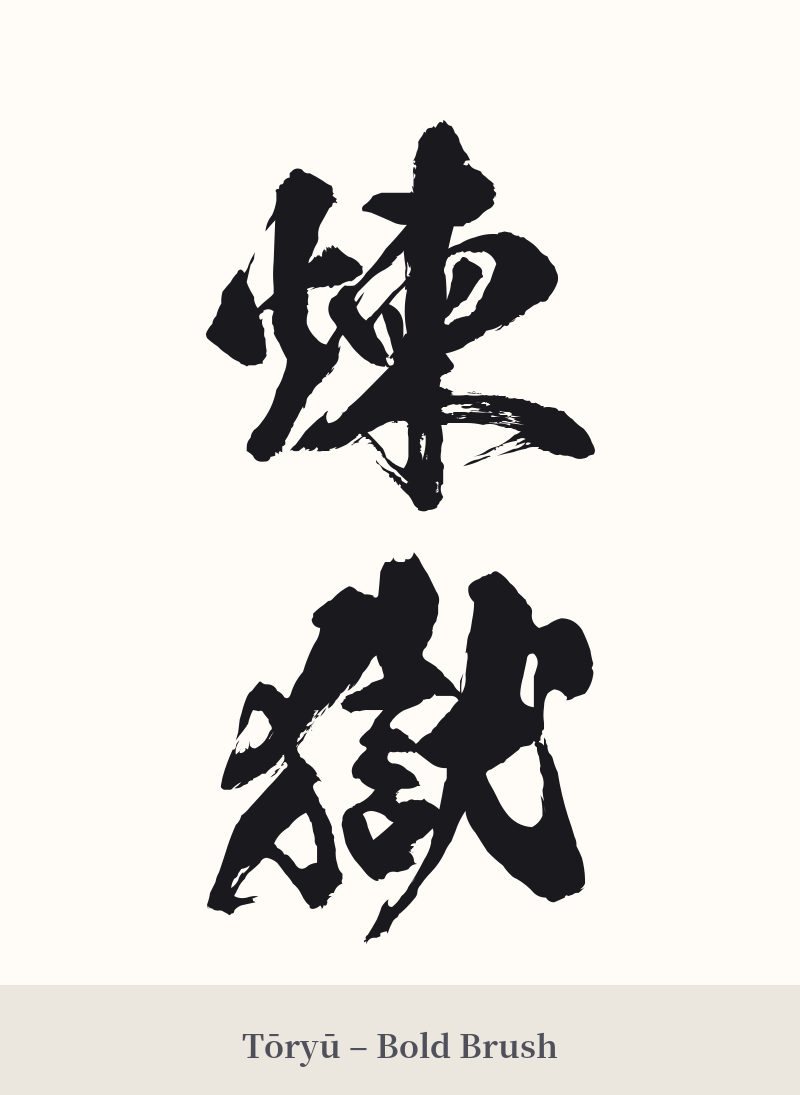
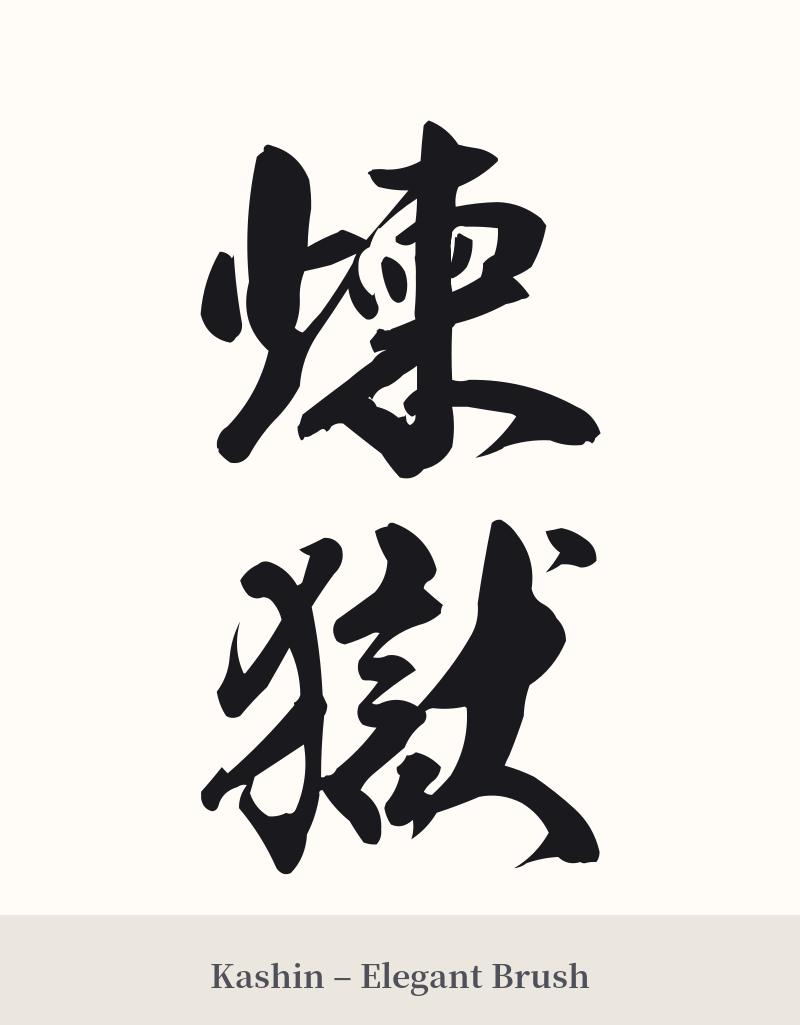
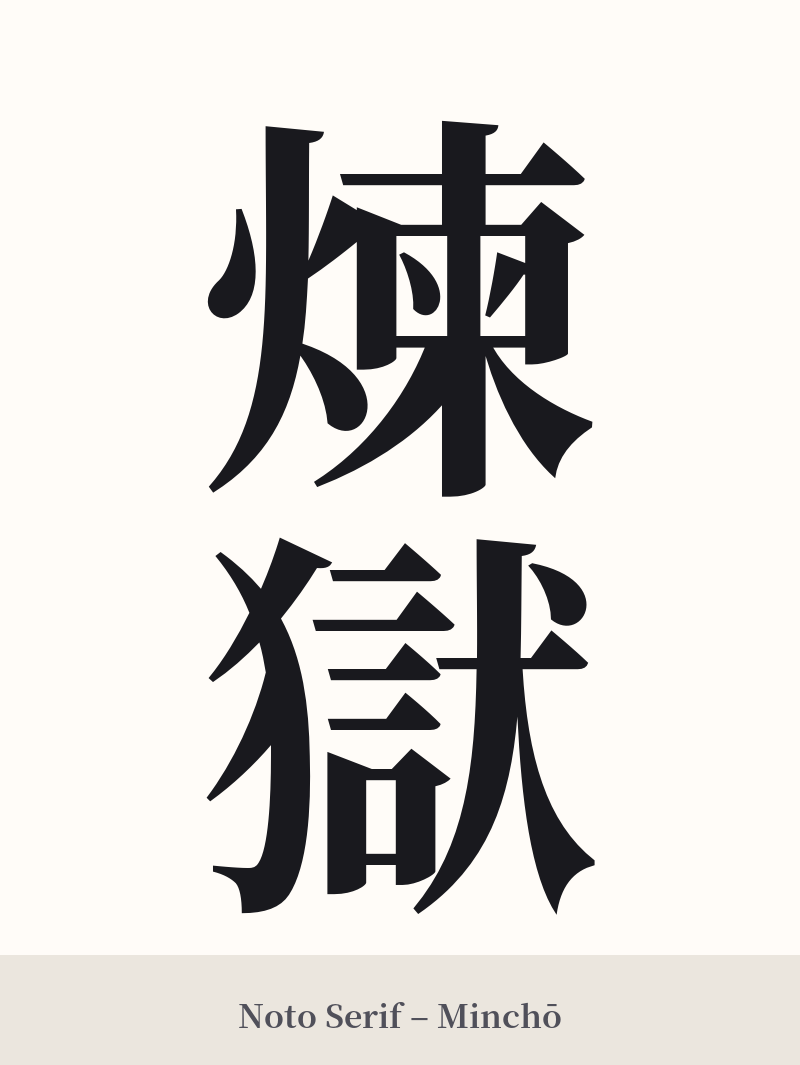
🖌️ Font Styles for 煉獄
The same kanji can look dramatically different depending on the calligraphy style. Choose a font that matches the mood you want for your tattoo or design.
🎨 Tattoo Suitability
📐 Tattoo Design Guide
A 煉獄 tattoo demands a design that reflects its power and intensity. Due to the complexity of the two kanji, this is a piece that benefits from size and careful placement.
– Placement: Consider larger, flatter areas like the forearm, the calf, the back along the spine, or across the chest. These locations provide ample space to render the characters clearly without them becoming a blur.
– Style: A bold, semi-cursive calligraphy style (gyōsho) can capture the fiery, dynamic energy of the word. For a more intense and solid feel, a thick, blocky font like a traditional Mincho or Kaisho style works exceptionally well. Avoid very thin or delicate fonts that would fail to convey the word's weight.
– Visual Elements: This kanji pairs naturally with imagery of fire and flames. Wrapping the characters in stylized flames, or having them appear as if they are forged from fire itself, can create a stunning visual. A vertical orientation is traditional and often has the most aesthetic impact for two-character compounds.
Comments