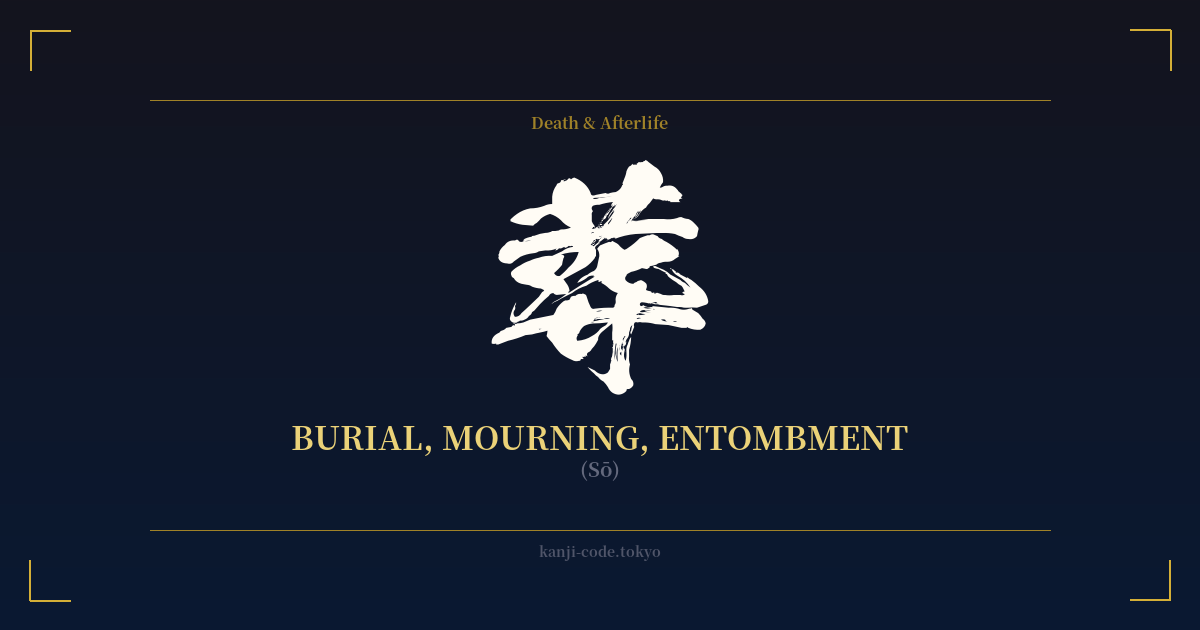
✍️ 葬 (Sō) — Cultural Context
The kanji 葬 (sō) is a powerful and somber character that directly relates to the act of laying the deceased to rest. Its meaning is not abstract or philosophical; it is concrete, referring to the rituals of burial, entombment, and the funeral process itself. Understanding this character is to understand a core aspect of how Japanese culture approaches the finality of life.
The visual construction of the kanji tells a story. The top radical, 艹 (kusa-kanmuri), represents grass or plants. The lower portion is a pictograph of a deceased person (死) being placed between two pieces of wood, representing a coffin or burial structure. Together, they evoke an ancient image of a body being interred and covered, returning to the earth. This etymology highlights the character's deep roots in the physical act of burial.
In modern Japan, 葬 is most commonly seen in the word 葬式 (sōshiki), which means 'funeral ceremony'. This is the formal rite where family, friends, and colleagues gather to pay their last respects. The atmosphere of a sōshiki is one of deep solemnity and respect, governed by strict etiquette and Buddhist traditions. The kanji also appears in terms like 埋葬 (maisō), the physical act of burial or interment, and 国葬 (kokusō), a state funeral for a figure of national importance.
It is crucial to note that while the English word 'mourning' is a valid translation, 葬 is more about the procedural aspect than the internal feeling of grief. The feeling of grief itself is often expressed with different words, like 悲しみ (kanashimi). 葬 is about the respectful, ritualistic handling of the deceased's body and the formal services that accompany it.
Unlike in English, where one might 'bury the past,' the kanji 葬 is not used for such metaphorical concepts in Japanese. Its meaning is literal and tied exclusively to death. This lack of figurative use makes it a particularly stark and unambiguous character, devoid of any lighter or more poetic interpretations. Its presence signifies an end, a final farewell, and the formal transition from life to death.
🖌️ Font Styles for 葬
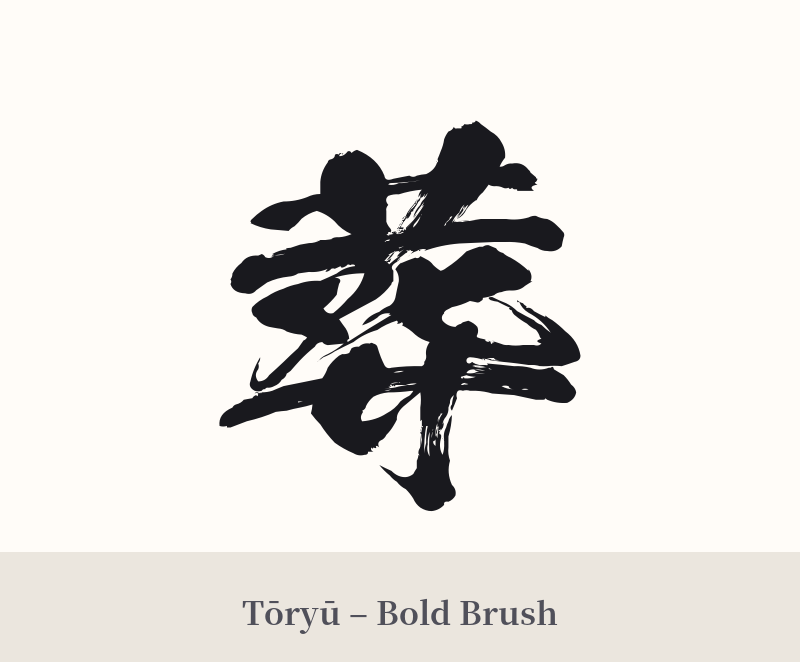
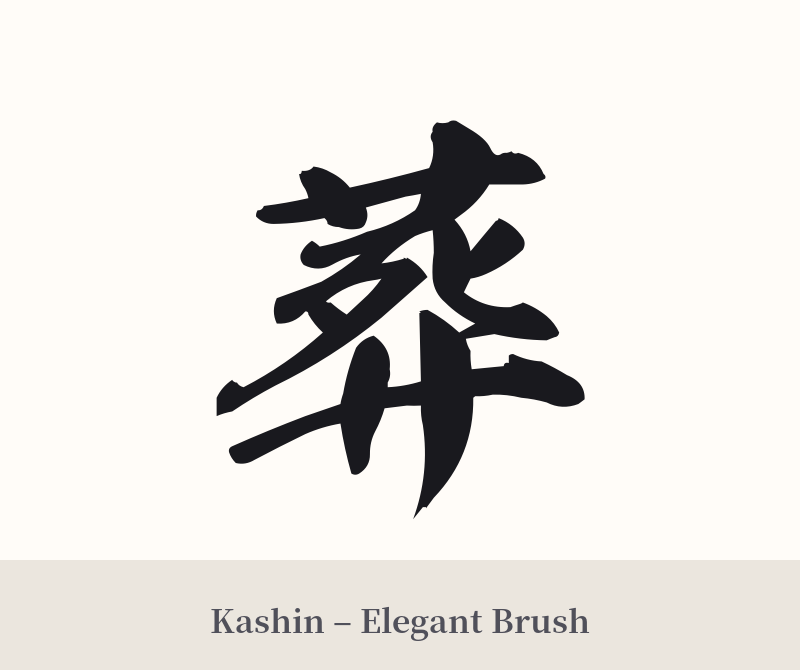
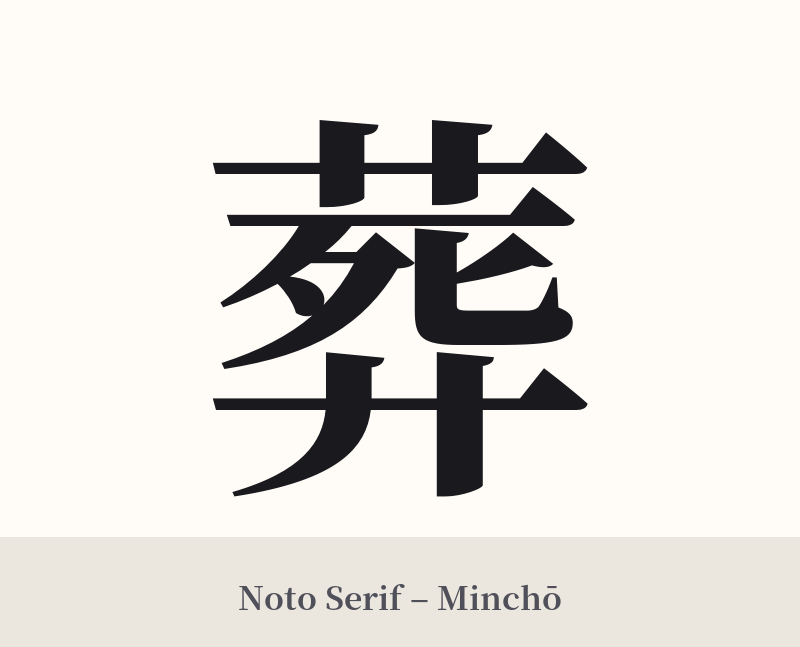
The same kanji can look dramatically different depending on the calligraphy style. Choose a font that matches the mood you want for your tattoo or design.
🎨 Tattoo Suitability
📐 Tattoo Design Guide
Given its heavy and somber meaning, this kanji is not recommended for a casual tattoo. If chosen as a specific memorial for a loved one, its design and placement should be approached with great care and respect.
– Placement: Consider a private and personal location, such as over the heart, on the ribs, or the inner bicep. Highly visible placements like the neck, hands, or forearm are strongly discouraged as they can project a morbid and unsettling message to Japanese viewers.
– Style: A traditional font is most appropriate. A formal Mincho (serif) style conveys solemnity, while a flowing, respectful calligraphy script (Gyosho) can add a sense of personal tribute. Avoid aggressive or overly stylized fonts that would clash with the kanji's meaning.
– Visual Complements: To provide context and soften the starkness, consider pairing it with other symbolic elements. A lotus flower can represent purity and rebirth in the Buddhist tradition. A specific date or a single enso circle (symbolizing eternity and the void) could frame the kanji, clarifying its purpose as a piece of remembrance.
Comments