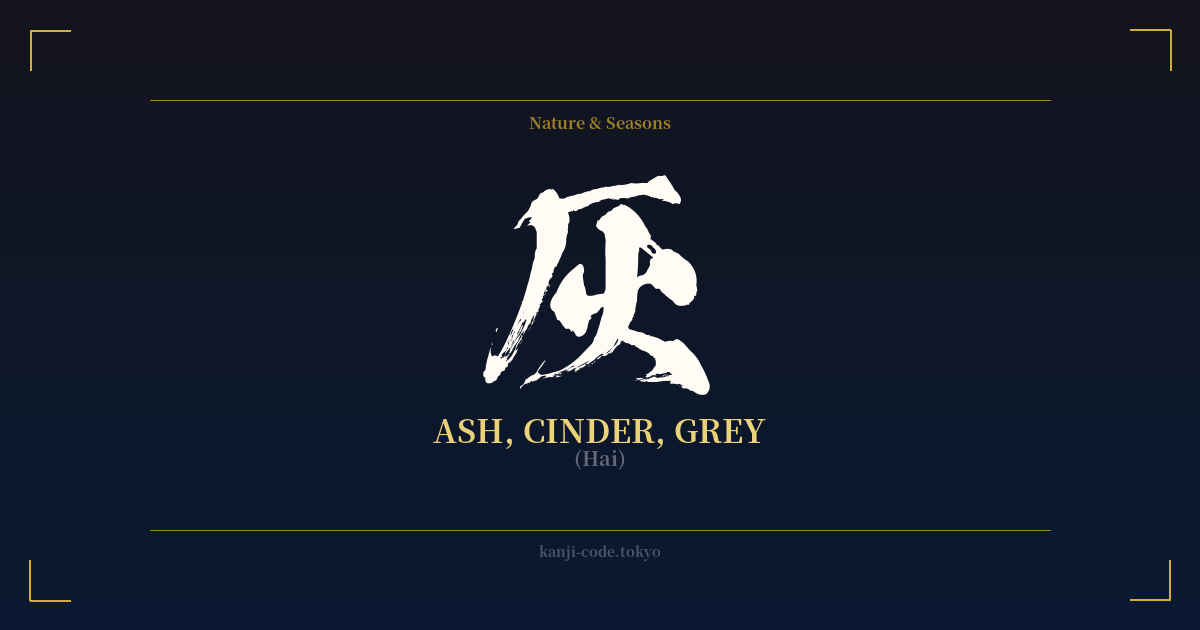
✍️ 灰 (Hai) — Cultural Context
The kanji 灰 (hai) is a character steeped in the physical and philosophical landscape of Japan. At its most basic, it represents ash—the fine, powdery residue left after something has been consumed by fire. This tangible substance carries immense symbolic weight, touching upon themes of finality, impermanence, and the cyclical nature of existence.
In a country shaped by volcanic activity, ash (火山灰, kazanbai) is a powerful force of nature. Eruptions can blanket entire landscapes, representing both destruction and, in time, the creation of fertile new soil. This duality is central to the character's meaning: an ending that is also a prerequisite for a new beginning. It speaks to a deep-seated understanding of nature's unforgiving yet regenerative power.
This concept is woven into Japanese philosophy, particularly through the Buddhist idea of impermanence (無常, mujō). Life, like all things, is transient. Everything eventually returns to a more elemental state, and 灰 serves as the ultimate visual metaphor for this process. The expression 「灰になる」(hai ni naru), meaning "to become ash," is a common and poignant way to speak of death or complete annihilation.
However, 灰 is not solely a symbol of despair. It holds the quiet promise of what comes after. The image of a phoenix rising from the ashes, while a Western concept, has been embraced in modern Japan and resonates with the kanji's potential for rebirth (再生, saisei). It represents the idea that even from total ruin, new life and new hope can emerge. This makes 灰 a symbol not of weakness, but of profound resilience and the quiet strength found in survival.
Beyond destruction and rebirth, 灰 also denotes the color grey (灰色, haiiro). In Japanese aesthetics, grey is not a drab or boring color. It is a shade of subtlety, ambiguity, and understated elegance. It represents the space between black and white, a world of nuance rather than stark absolutes. This adds another layer to the kanji, connecting it to a sophisticated appreciation for the quiet, the humble, and the beautifully imperfect.
🖌️ Font Styles for 灰
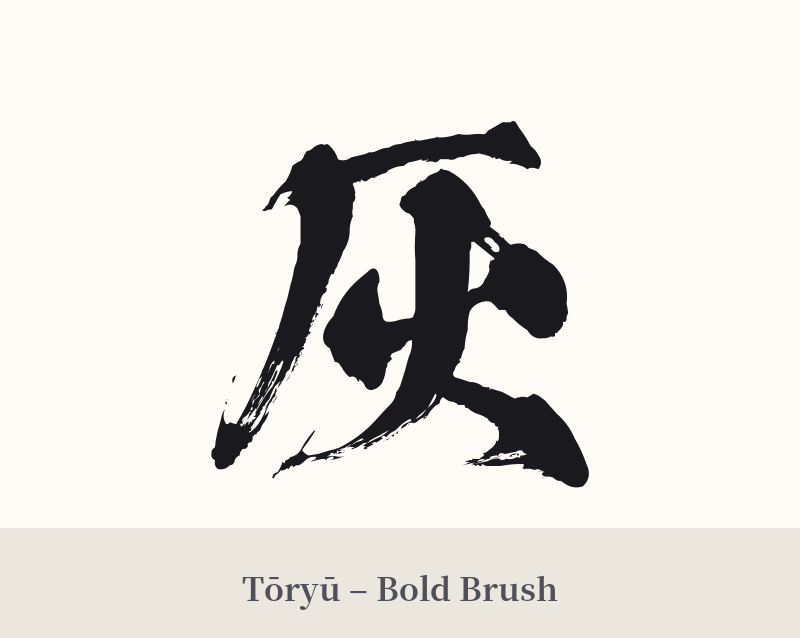
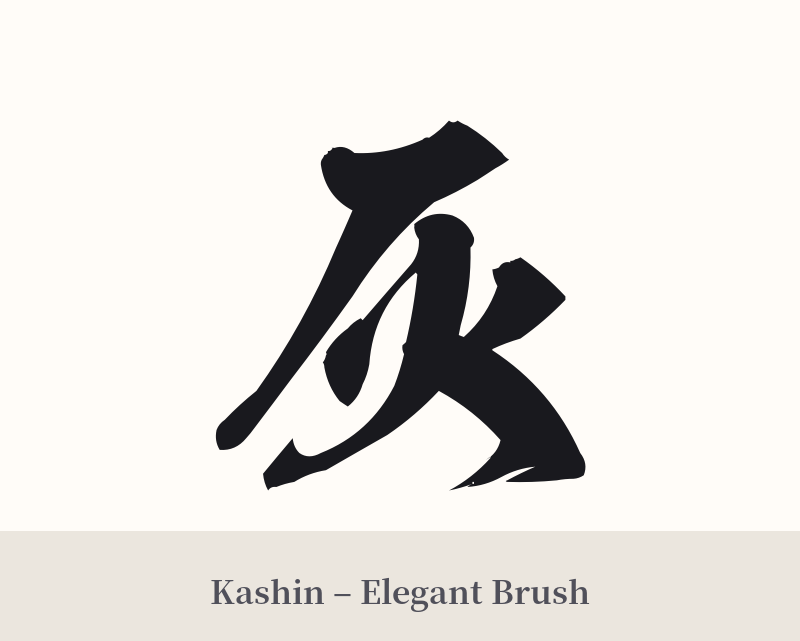
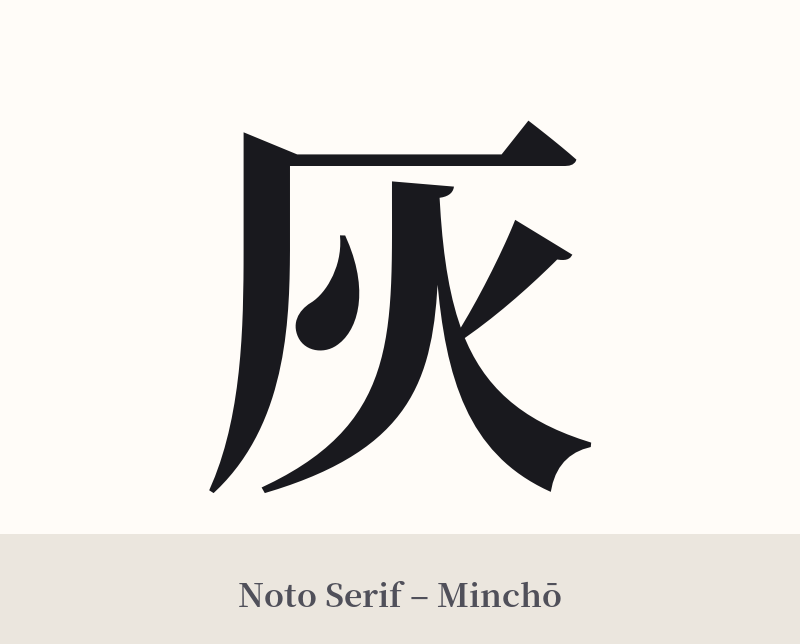
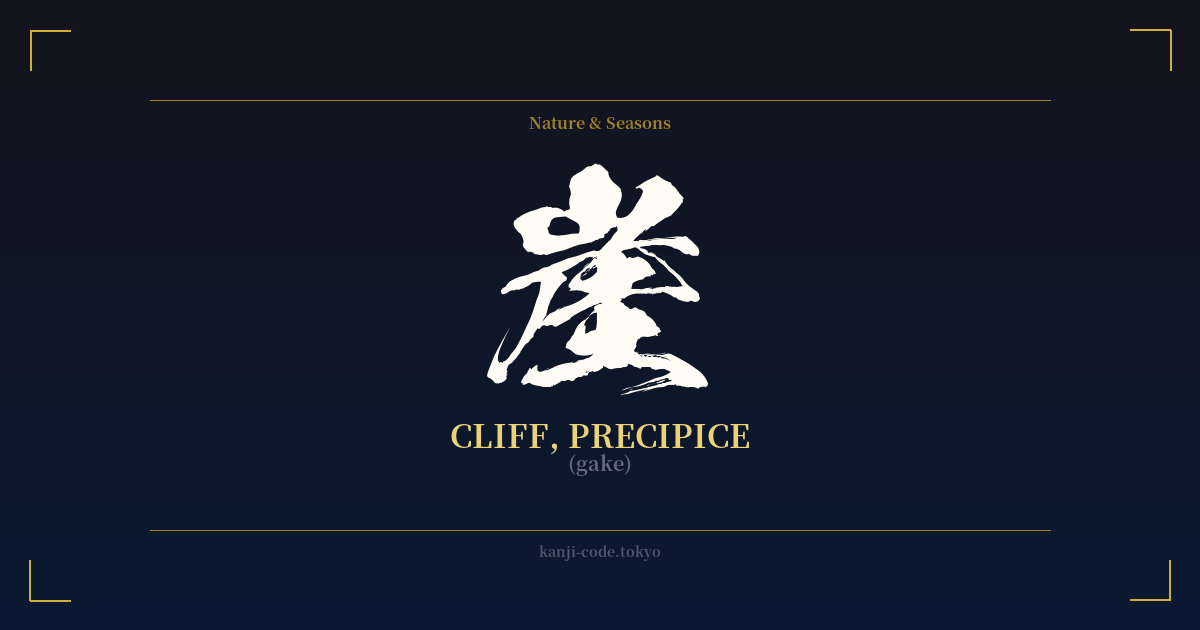
The same kanji can look dramatically different depending on the calligraphy style. Choose a font that matches the mood you want for your tattoo or design.
🎨 Tattoo Suitability
📐 Tattoo Design Guide
The kanji 灰 offers a range of design possibilities depending on the intended meaning. Its simplicity lends itself well to both minimalist and complex compositions.
– Placement: For a subtle, personal statement about impermanence or resilience, consider small placements like the inner wrist, behind the ear, or on the ankle. For a more dramatic piece focusing on rebirth, it could be the centerpiece of a larger design on the back or forearm, perhaps integrated with a phoenix or a lotus flower.
– Font Style: A sharp, clean Mincho or Gothic font can emphasize the starkness of the concept. Conversely, a flowing, semi-cursive (gyōsho) or fully cursive (sōsho) calligraphy style can evoke the feeling of smoke, wind, or the organic texture of ash itself.
– Visual Tips: Consider using grey ink instead of traditional black to directly represent the color and its nuanced meaning. Pairing 灰 with a symbol of life, such as a single red leaf, a blooming flower, or a rising sun, can create a powerful visual contrast between destruction and creation. A design that shows the character dissolving or forming from particles can also be very effective.
Comments