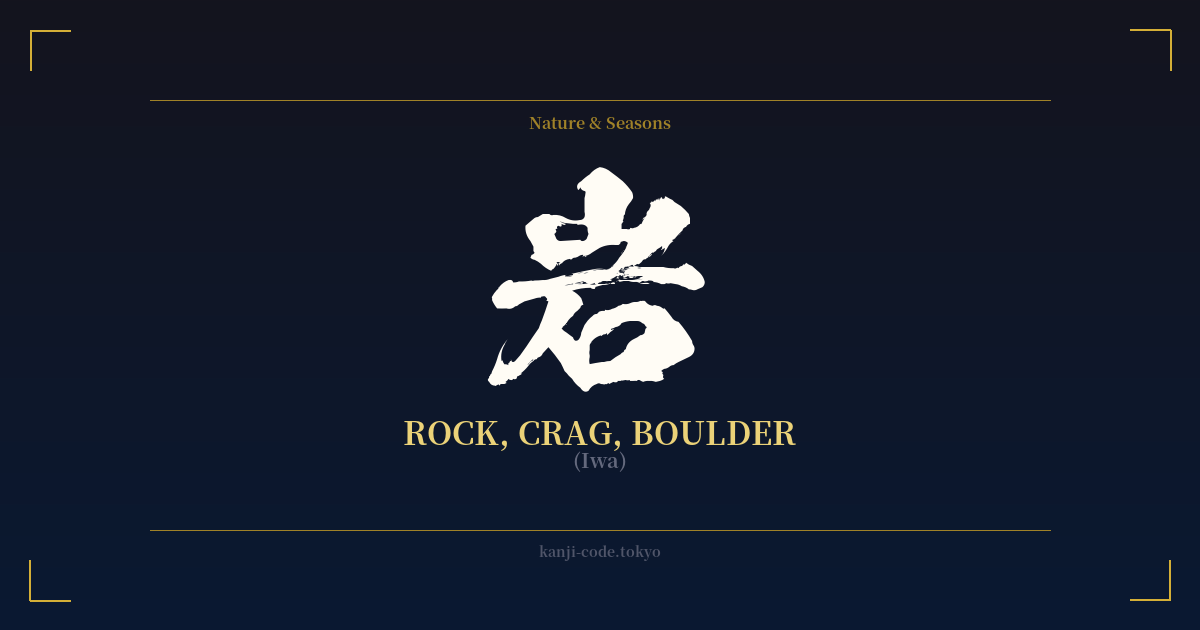
✍️ 岩 (Iwa) — Cultural Context
The Japanese kanji 岩 (iwa) translates to rock, crag, or boulder. While seemingly simple, this character carries a weight of cultural and spiritual significance that goes far beyond its literal definition, embodying concepts of permanence, strength, and the sacredness of nature.
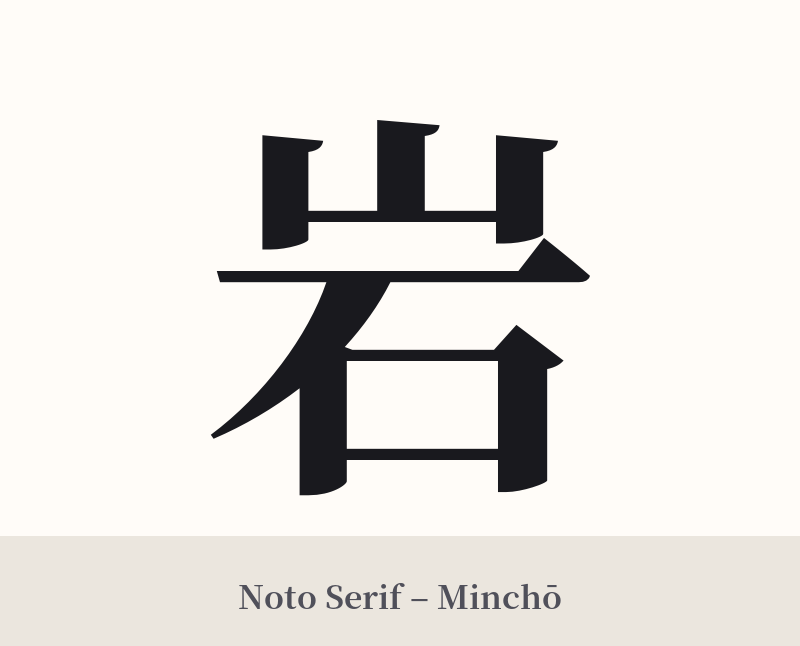
The character's construction offers a direct visual clue to its meaning. It is composed of the kanji for mountain, 山 (yama), placed above the kanji for stone, 石 (ishi). This composition beautifully illustrates the concept: not just any stone, but a massive, foundational rock that is part of a mountain or cliff face. This distinguishes it from the more general 石 (ishi), which can refer to any stone, from a small pebble to a larger rock. 岩 implies scale, immovability, and a deep connection to the landscape.
This connection to the natural world is central to its most profound meaning within Japanese culture, particularly in Shinto, the indigenous faith of Japan. In Shinto, prominent natural objects like mountains, waterfalls, and ancient trees are often considered yorishiro—objects capable of attracting and housing kami (gods or spirits). Large, imposing rocks, known as iwakura (磐座), are especially revered as natural altars where the divine realm touches the earthly one. These are not man-made temples but sacred spaces designated by nature itself.
One of the most famous examples is the Meoto Iwa (夫婦岩), or the "Wedded Rocks," located at the Futami Okitama Shrine in Ise. These two sacred rocks, bound together by a heavy rope of rice straw (shimenawa), represent the union of the creator deities Izanagi and Izanami. They stand as a powerful symbol of marriage, union, and the sacred bond between humanity and the divine. Worshippers pray to them for marital bliss and good fortune, seeing in their enduring form a reflection of eternal commitment.
Metaphorically, 岩 represents unwavering strength, stability, and resilience. A person described as being "like a rock" (iwa no you na) is seen as dependable, steadfast, and unshakable in the face of adversity. This makes the kanji a powerful symbol for personal fortitude and inner strength. It embodies the quiet, stoic power of something that has withstood the elements for millennia, unchanging and resolute. To choose 岩 is to embrace the ideal of being a grounding force, both for oneself and for others.
🖌️ Font Styles for 岩
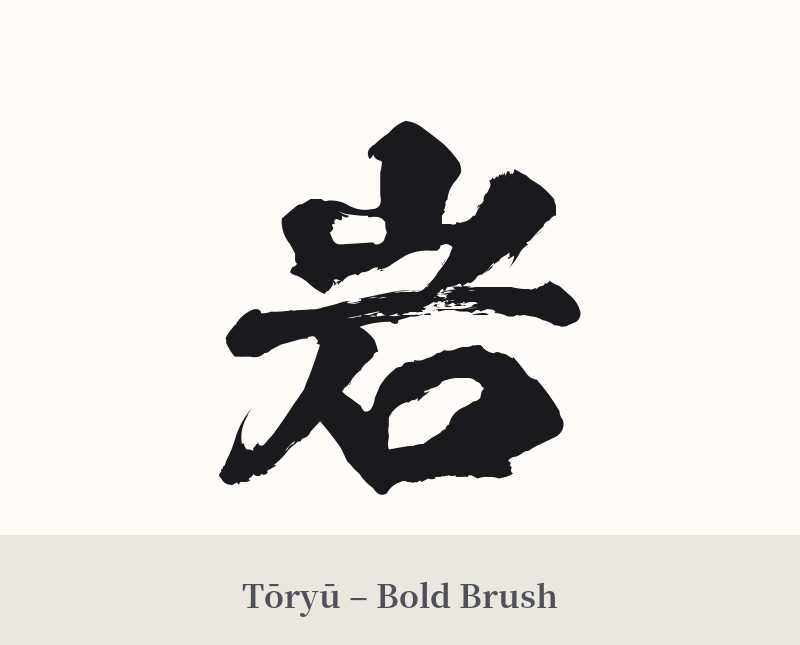
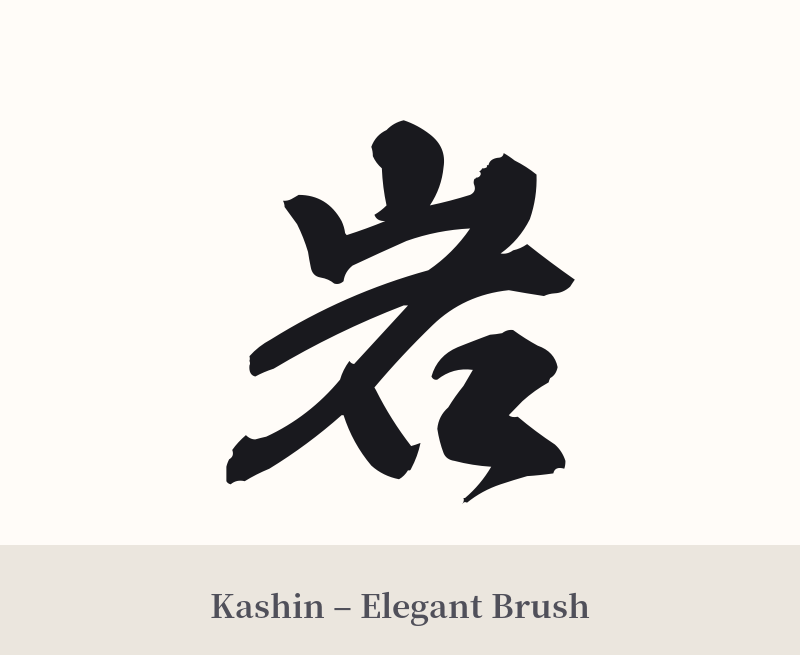
The same kanji can look dramatically different depending on the calligraphy style. Choose a font that matches the mood you want for your tattoo or design.
🎨 Tattoo Suitability
📐 Tattoo Design Guide
The kanji 岩 (iwa) is a strong choice for a tattoo, symbolizing a solid foundation and unshakeable spirit. Its balanced and relatively simple structure allows for versatility in design.
– Placement: Consider areas that emphasize strength and stability. The forearm, calf, or shoulder blade are excellent choices, providing a flat, solid canvas that complements the kanji's meaning. A chest placement can also be powerful, symbolizing core strength.
– Font Style: For a classic, powerful look, a bold Kaisho (regular script) font with thick, confident strokes is ideal. To evoke a more natural, ancient feeling, a rougher Gyosho (semi-cursive) style with a 'kasure' (scratchy) brush effect can mimic the texture of a rock face.
– Visual Tips: While 岩 is strong on its own, it can be integrated into a larger piece. Consider pairing it with elements like crashing waves to show resilience, or growing moss to symbolize age and wisdom. The character itself can be filled with a stone-like texture or a subtle gradient to give it more depth and dimension.
Comments