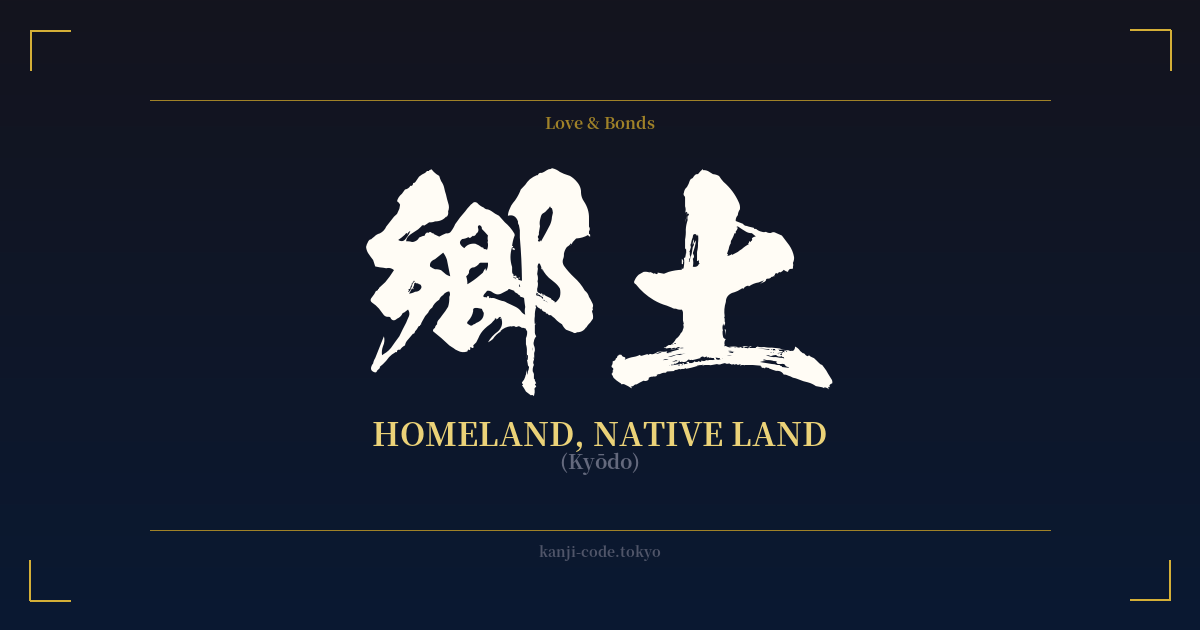
✍️ 郷土 (Kyōdo) — Cultural Context
郷土 (Kyōdo) translates to 'homeland' or 'native land,' but its meaning runs deeper than a simple geographical location. It speaks to the very soil and soul of the place where one's identity was forged. While similar to words like 故郷 (furusato), which evokes a more personal, nostalgic feeling of 'hometown,' Kyōdo carries a slightly broader and more formal weight. It often refers to a specific region, encompassing its unique culture, history, dialect, and traditions.
In Japan, a country with a rich tapestry of regional identities, Kyōdo is a powerful concept. Each of the 47 prefectures, and even smaller districts within them, boasts its own distinct character. This is celebrated through terms like 郷土料理 (kyōdo ryōri), or regional cuisine, which highlights local ingredients and historical recipes. Similarly, 郷土史 (kyōdo-shi) refers to the study of local history, preserving the stories and heritage of a particular place.
The term embodies the idea of 郷土愛 (kyōdo-ai)—a profound love and pride for one's native region. This isn't just passive affection; it's an active force that fuels local festivals (matsuri), supports community projects, and preserves traditional crafts. It’s the reason someone from Osaka might proudly champion their city's vibrant food scene, or a person from Hokkaido might speak passionately about the region's rugged natural beauty. This connection to one's Kyōdo is a cornerstone of personal and collective identity in Japan.
For someone outside of Japan, the concept remains incredibly potent. Kyōdo can represent any place that feels like the bedrock of your being—the landscape, the people, and the culture that shaped you. It's not about nationality, but about roots. It's the 'earth' (土) of your 'village' (郷), the ground from which you grew. This makes it a deeply personal and resonant term for anyone wishing to honor their origins and the place they call home.
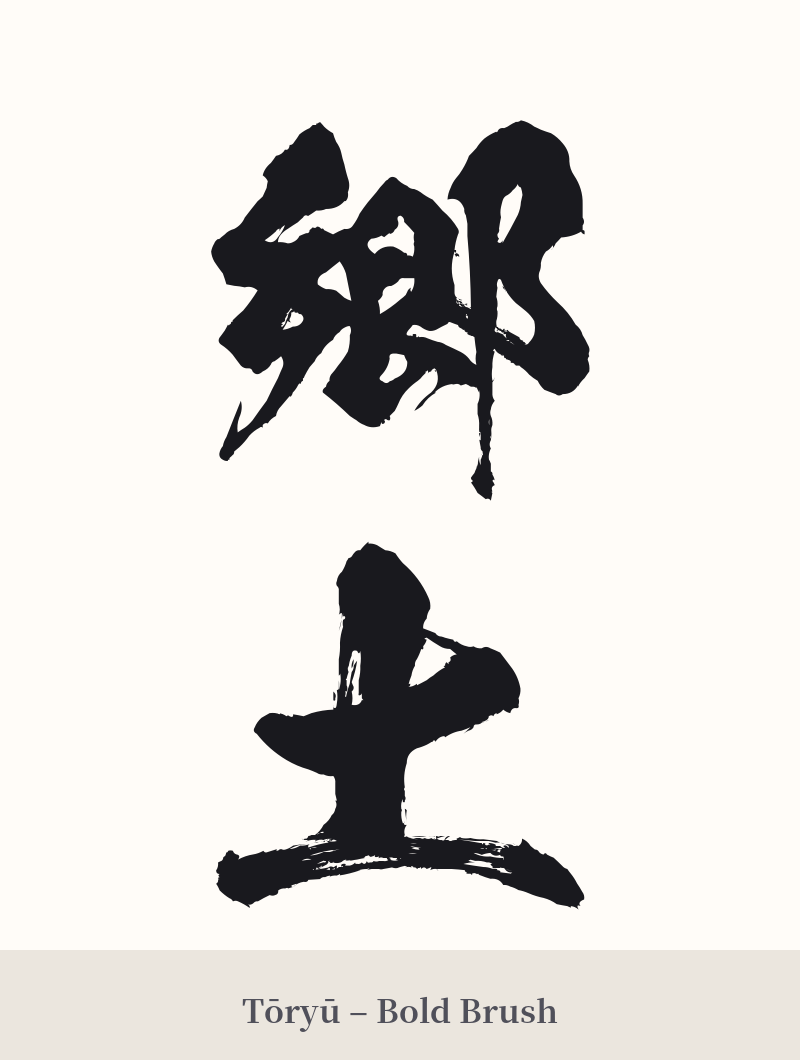
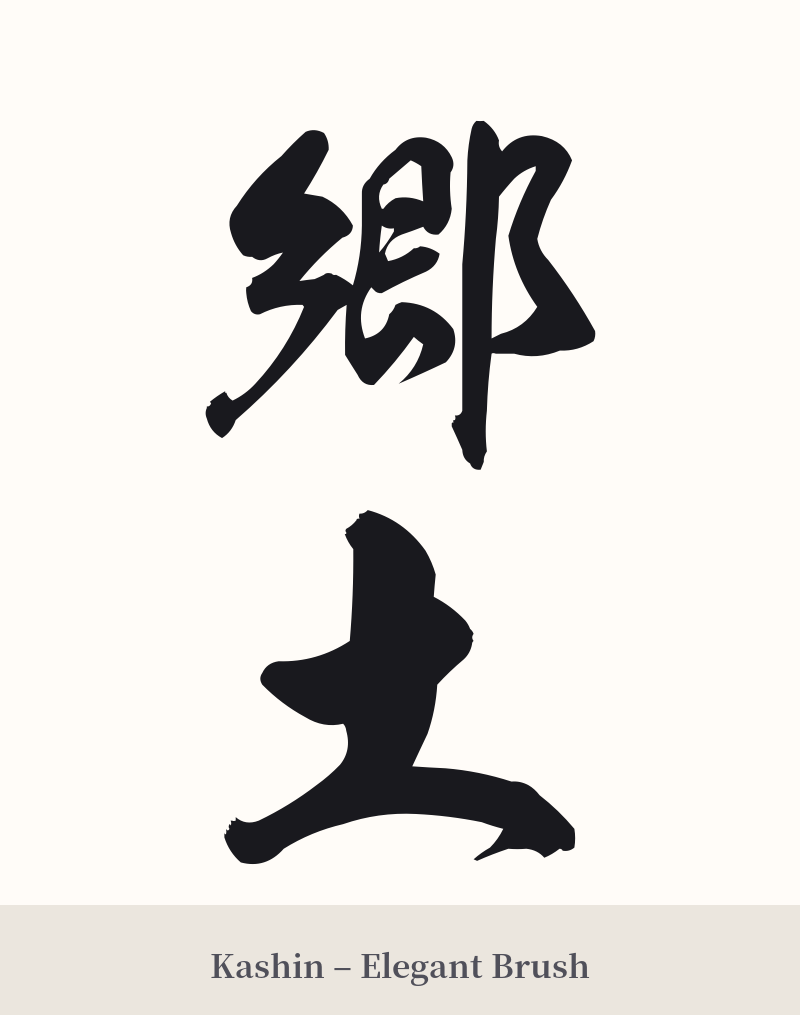
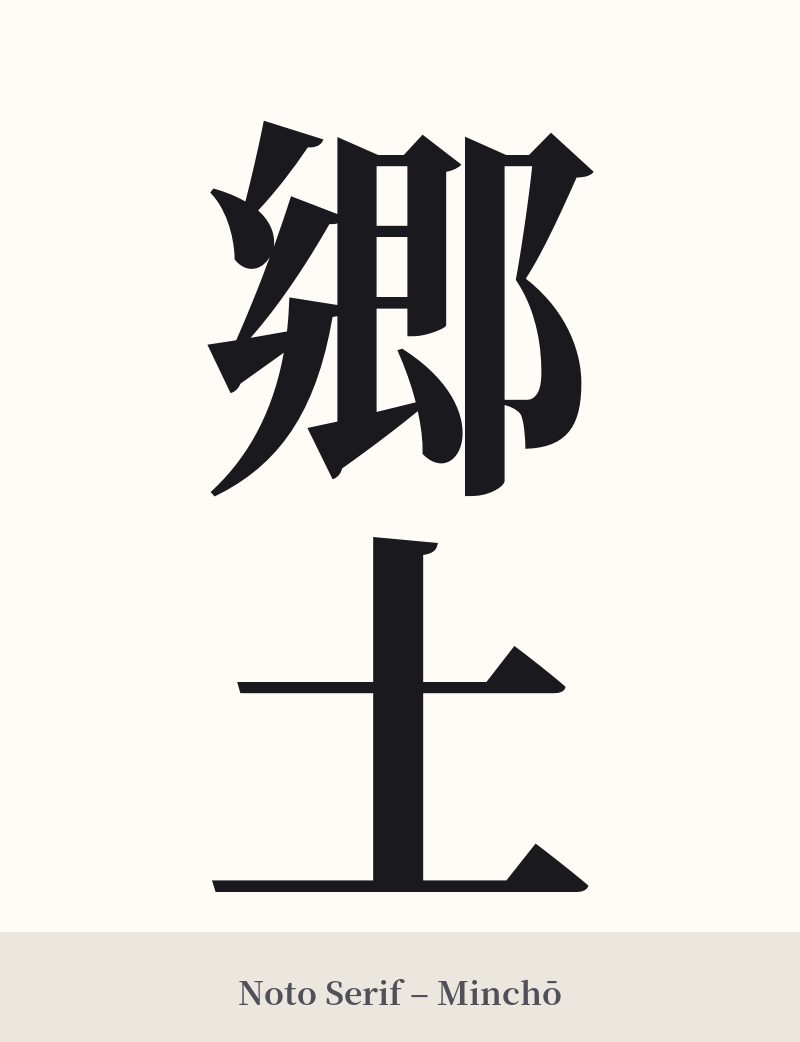
🖌️ Font Styles for 郷土
The same kanji can look dramatically different depending on the calligraphy style. Choose a font that matches the mood you want for your tattoo or design.
🎨 Tattoo Suitability
📐 Tattoo Design Guide
A tattoo of 郷土 (Kyōdo) is a statement of identity and belonging. Here’s how to approach its design:
– Placement: This is a personal and grounded concept. Consider placing it on the chest over the heart, the upper back as a mark of your foundation, or the inner forearm where you can see it as a personal reminder.
– Font Style: Traditional is often best for a word with this much weight. A flowing semi-cursive (Gyosho) or a strong, deliberate standard script (Kaisho) would honor its classic feel. For a more modern take, a clean Mincho font can work well, but avoid overly decorative or unreadable styles that detract from the meaning.
– Visual Tips: The visual contrast between the two characters is a design element in itself. The intricate 郷 (village/home) sits atop the simple, foundational 土 (earth/soil). You can emphasize this balance. Consider incorporating a small, subtle element that represents your own homeland—a native flower, a mountain silhouette, or a wave pattern—to make the design uniquely yours.
Comments