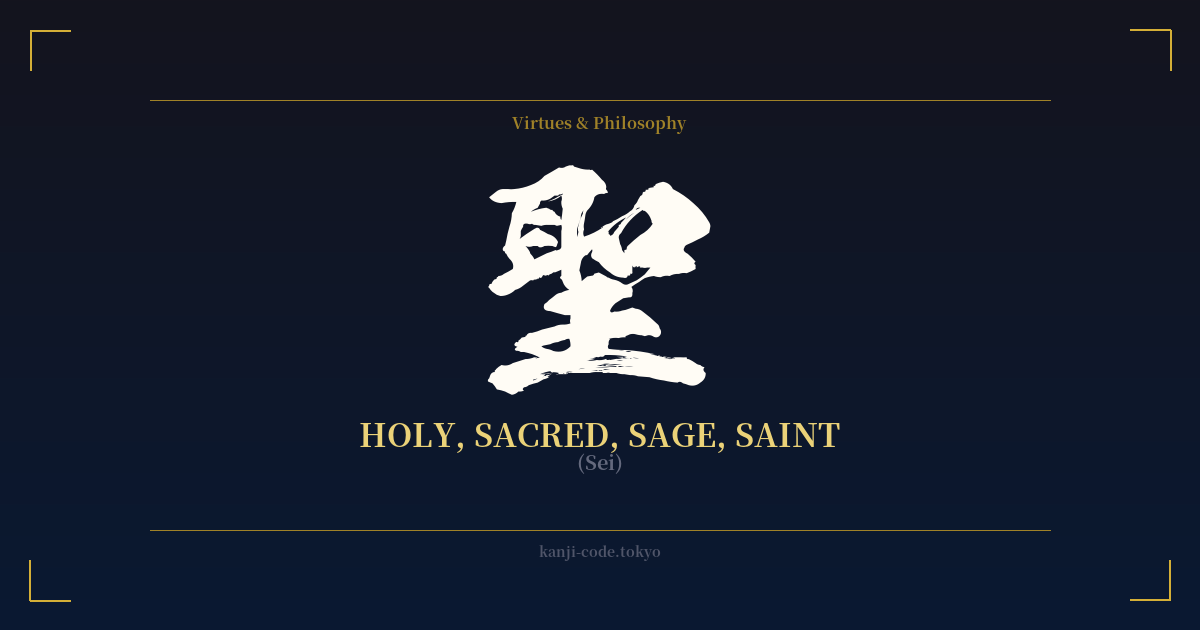
✍️ 聖 (Sei) — Cultural Context
The kanji 聖 (Sei) is a character steeped in reverence, history, and spiritual depth. Its meaning resonates across cultures, encompassing ideas of the 'holy,' 'sacred,' 'saint,' and 'sage.' To understand 聖 is to touch upon core concepts in Japanese religion and philosophy.
Etymologically, the character is a fascinating combination of radicals. It features 耳 (mimi) for 'ear' and 口 (kuchi) for 'mouth,' placed above the radical 壬 (jin, often simplified from a form representing a person of authority or a king, 王). The original pictograph depicted a person with large ears, signifying someone who could hear and understand the divine will or the subtle truths of the universe, and a mouth to articulate that wisdom to others. This paints a picture not of a deity, but of an exceptional human—a conduit of higher knowledge.
In Japan, 聖 is deeply intertwined with both Shintoism and Buddhism. In Shinto, it is used to denote sacred places, objects, or phenomena. A holy site, perhaps a mountain or forest where a kami (deity) resides, is called a 聖地 (seichi), a term now popularly used by anime fans for real-world locations featured in their favorite shows, creating a modern pilgrimage culture. This usage highlights a connection to a pure, revered space.
Within Buddhism, 聖 refers to enlightened beings, saints, or holy scriptures. The term 聖人 (seijin) can mean both a 'saint' and a 'sage,' a person of profound virtue and wisdom. It speaks to a state of spiritual attainment and moral perfection, a goal within the Buddhist path. It is a title of utmost respect for those who have transcended ordinary human frailties.
The character is not confined to religious contexts. It can also describe secular mastery of the highest order. A master calligrapher might be revered as a 書聖 (shosei), or 'calligraphy sage.' This extends the meaning from spiritual enlightenment to the pinnacle of achievement and wisdom in any given art or discipline.
With the introduction of Western culture, 聖 was adopted to translate Christian concepts. The Bible is the 聖書 (Seisho), or 'Holy Book,' and Christian saints are referred to using 聖, such as 聖パウロ (Sei Pauro) for Saint Paul. This adaptability shows the character's core power in conveying the concept of 'holiness' regardless of the specific theological framework. Today, 聖 remains a powerful, formal character, evoking a sense of purity, reverence, and profound wisdom that commands respect.
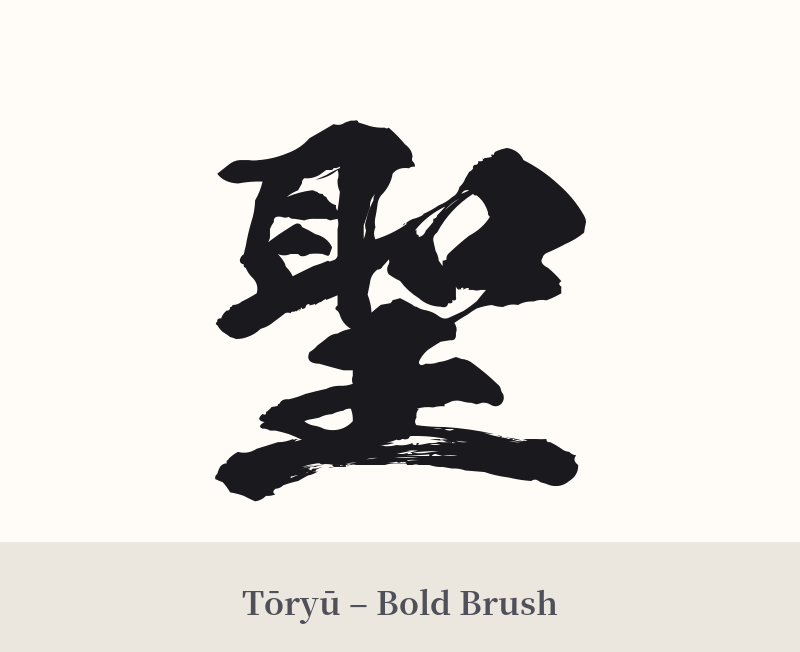
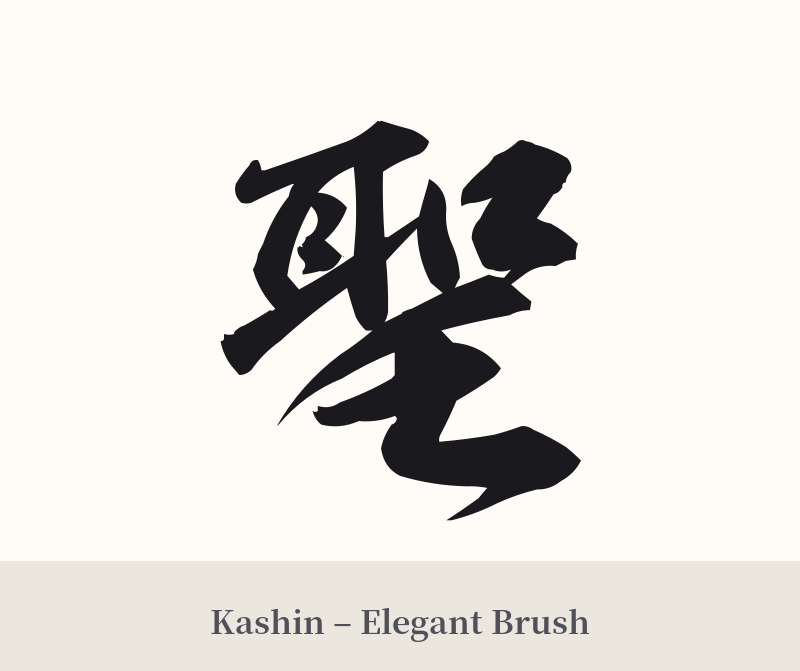
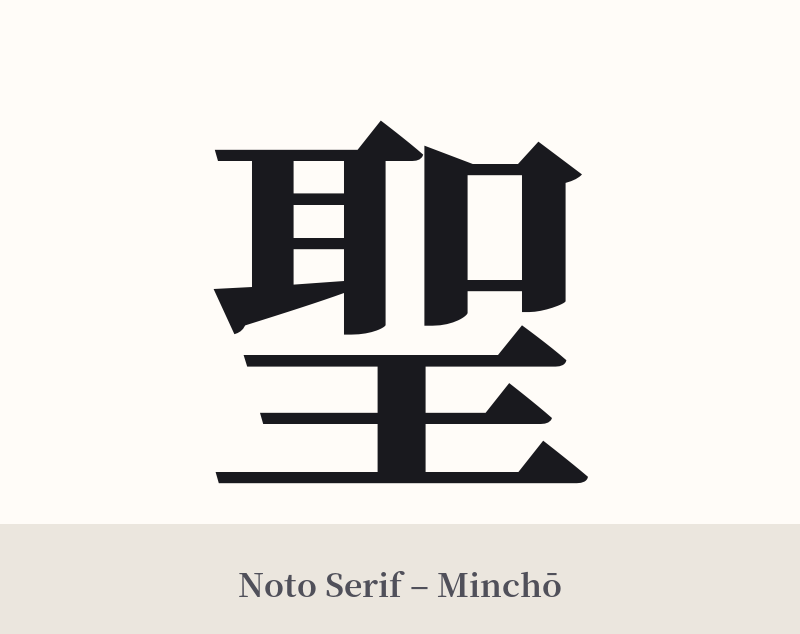
🖌️ Font Styles for 聖
The same kanji can look dramatically different depending on the calligraphy style. Choose a font that matches the mood you want for your tattoo or design.
🎨 Tattoo Suitability
📐 Tattoo Design Guide
The kanji 聖 carries an aura of dignity and reverence, and its tattoo design should reflect that. It's a character that benefits from thoughtful execution rather than flashy embellishments.
– Placement: Consider places that lend themselves to a single, impactful symbol. The center of the upper back, the inner forearm (oriented vertically), or the calf are all excellent choices. These spots provide a flat, stable canvas for the character's balanced strokes.
– Style: Traditional Japanese calligraphy styles are a natural fit. A strong, clear Kaisho (block) script emphasizes its authority and stability. For a more fluid and artistic feel, a Gyōsho (semi-cursive) script can add a touch of elegance and motion. Avoid overly modern or tribal-style fonts, which can clash with the character's classical gravitas.
– Visuals: 聖 is powerful enough to stand alone. If you do wish to add accompanying elements, they should complement its meaning. Consider subtle, respectful imagery like a single lotus flower (purity, enlightenment), soft whisps of clouds (divinity), or an enso circle (the universe, emptiness). The goal is to support the kanji, not overshadow it.
Comments