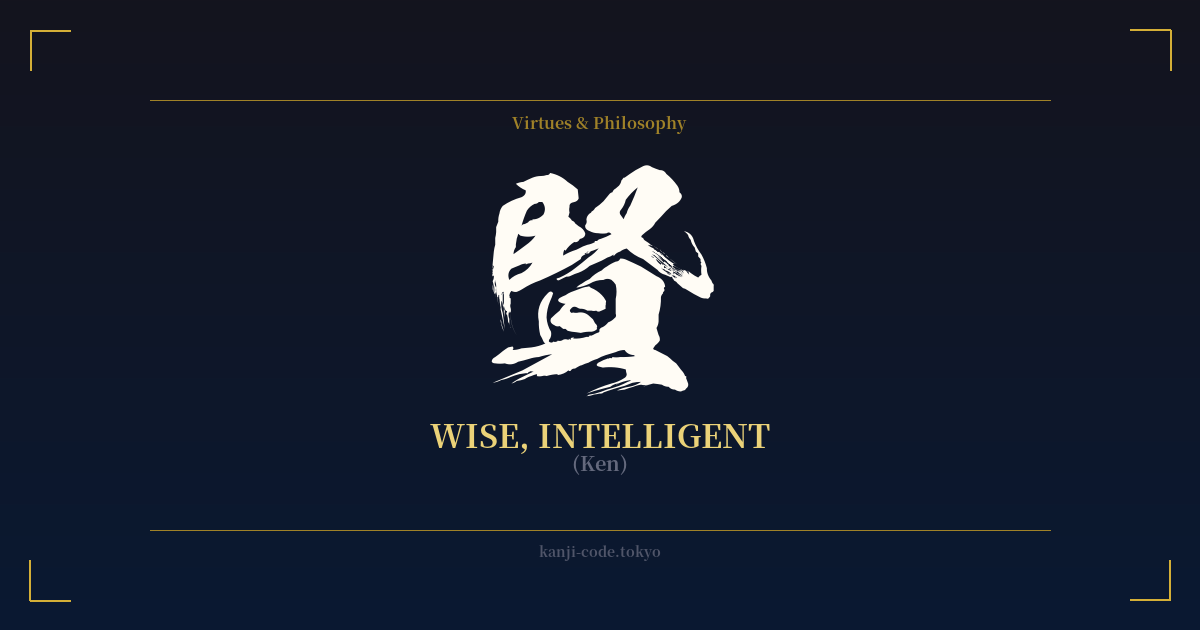
✍️ 賢 (Ken) — Cultural Context
The kanji 賢 (ken) embodies a concept far deeper than simple intelligence. While it translates to 'wise' or 'intelligent,' its essence lies in sagacity, prudence, and sound judgment born from experience. It represents a practical, applied wisdom, not just the accumulation of facts.
To understand its depth, we can look at its structure. The character is a composite of several radicals. The lower part is 貝 (kai), the symbol for a shell, which in ancient times represented currency or valuables. The top part is a combination of 臣 (shin), meaning 'retainer' or 'minister,' and 又 (mata), meaning 'hand'. Together, this paints a picture of a trusted official or minister (臣) holding valuables (貝), suggesting someone entrusted with great responsibility due to their capability and reliable judgment. This etymology grounds the character in a sense of trustworthiness and administrative competence.
In Japanese philosophy and culture, a crucial distinction is made between 賢 (ken) and 知 (chi). 知 refers to knowledge, information, and learning—what one might call 'book smarts.' In contrast, 賢 refers to the ability to use that knowledge effectively and ethically in the real world. A person can be knowledgeable (知) but not wise (賢). The ultimate ideal is to be both, but Japanese culture often places a higher value on the quiet, thoughtful wisdom of 賢.
This reverence for wisdom is seen in historical and literary figures. The famous 'Seven Sages of the Bamboo Grove' (竹林の七賢, Chikurin no Shichiken), a group of Chinese scholars and poets who eschewed politics for a life of art and nature, are celebrated exemplars of this ideal. In Japan, they became a powerful symbol of living authentically and wisely, free from worldly corruption. The term for a sage, 賢者 (kenja), uses this very kanji, elevating it to a near-spiritual status.
In modern usage, 賢 remains a term of high praise. Describing someone as 賢い (kashikoi) is a significant compliment, implying they are not only smart but also sensible and level-headed. It speaks to a calm, centered intelligence that navigates life's complexities with grace and foresight. It's a quiet virtue, not a loud declaration of genius, making it a symbol of mature and profound intellect.
🖌️ Font Styles for 賢
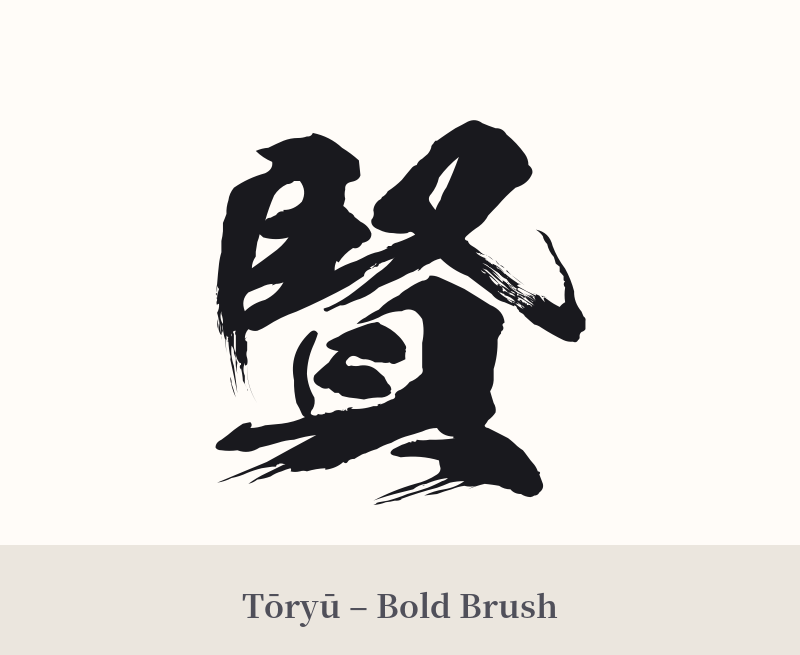
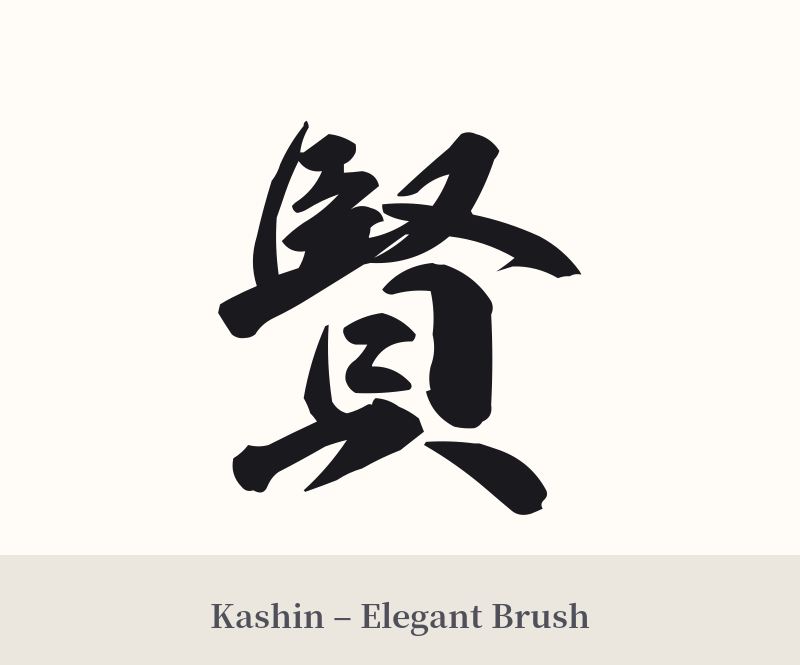
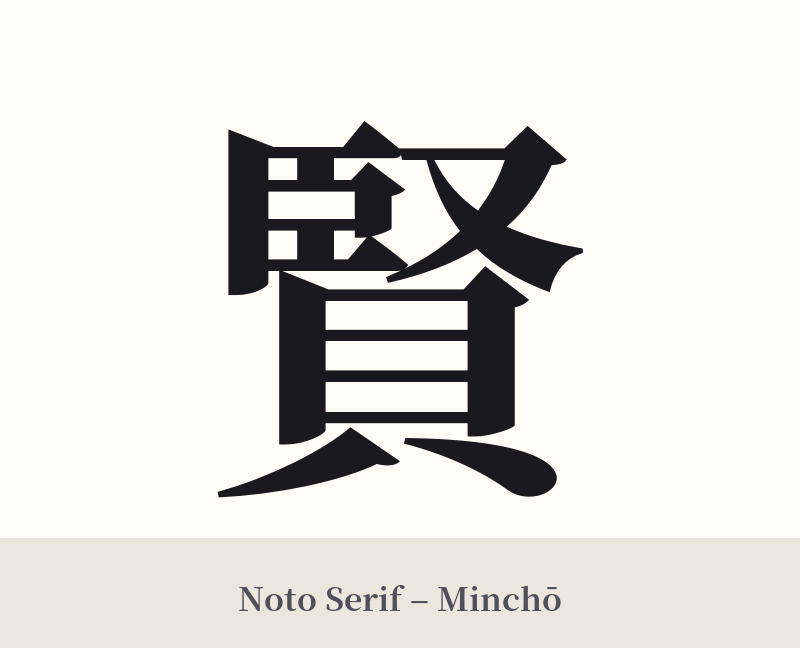
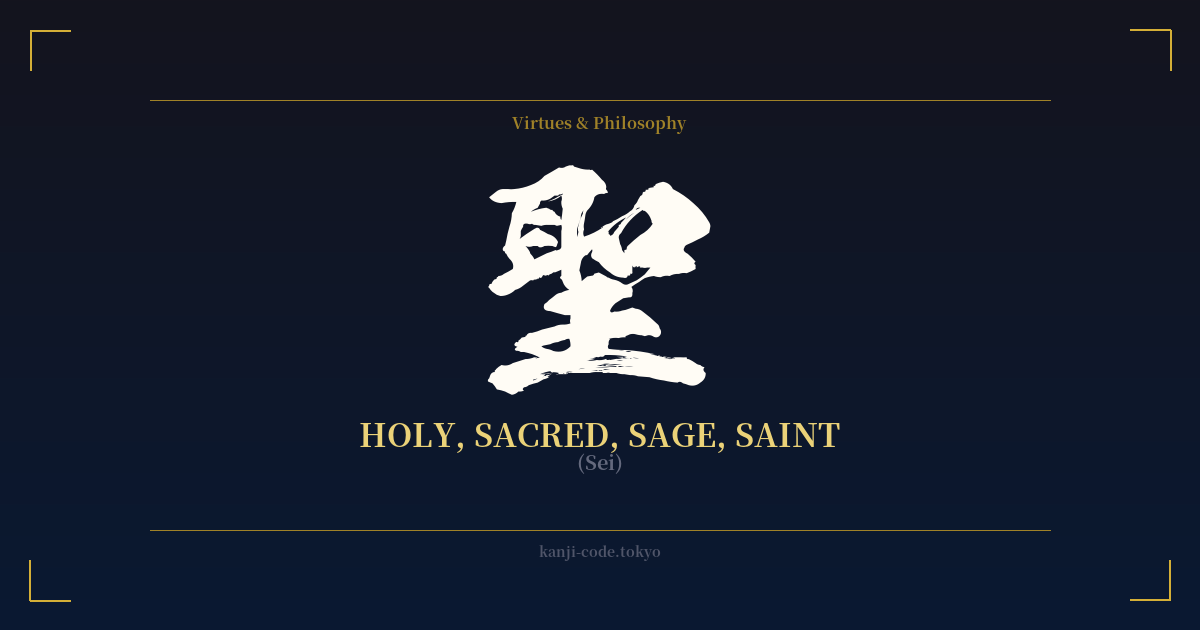
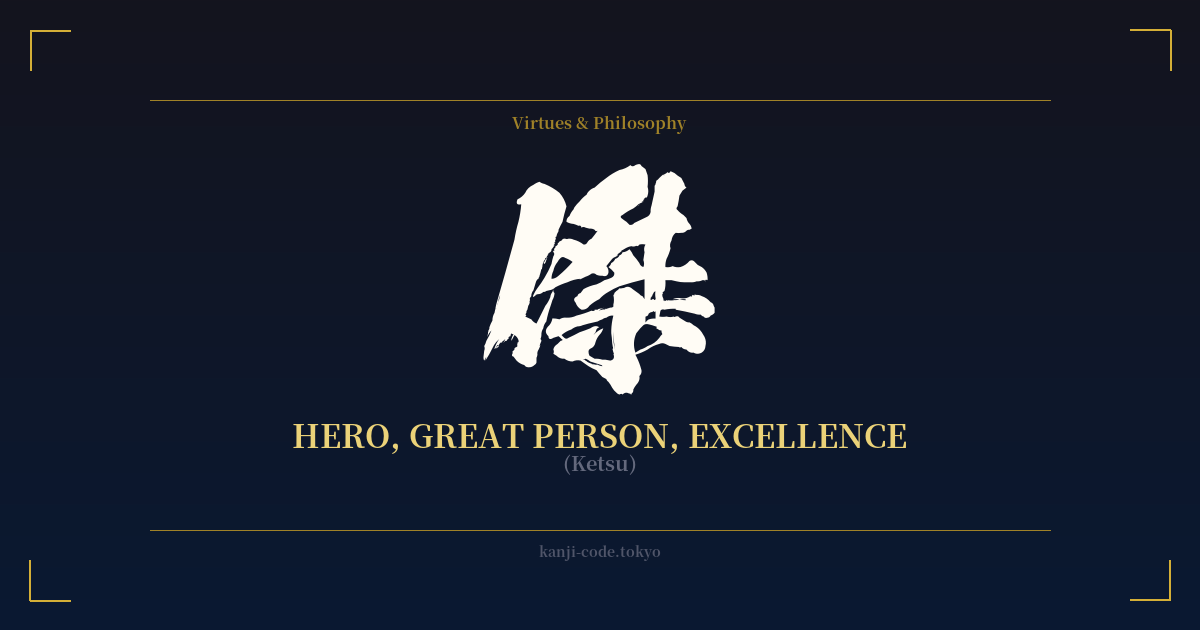
The same kanji can look dramatically different depending on the calligraphy style. Choose a font that matches the mood you want for your tattoo or design.
🎨 Tattoo Suitability
📐 Tattoo Design Guide
The kanji 賢 is a strong, dignified choice for a tattoo that benefits from thoughtful design and placement.
– Placement: Consider areas that allow for a clear, vertical orientation and sufficient space for its 16 strokes to breathe. The inner forearm, the calf, the back of the shoulder, or along the spine are all excellent choices. These placements give the character the prominence it deserves.
– Font Style: The style of calligraphy can dramatically alter the feel of the tattoo. For 賢, a Kaisho (block) script emphasizes its structure, formality, and clarity, projecting a sense of stability and integrity. A Gyosho (semi-cursive) script can introduce more flow and personality, suggesting a more fluid and adaptable wisdom. For a truly ancient and stylized feel, a Tensho (seal script) design can be very powerful, though it may be less immediately recognizable.
– Visual Tips: As a single-character tattoo, 賢 should be the centerpiece. Avoid cluttering it with other elements unless they are deeply connected. For a larger piece, you could subtly incorporate symbols of wisdom, such as a bamboo stalk (a nod to the Seven Sages) or an owl, designed around the kanji. Ensure your artist is experienced with kanji to preserve the correct stroke order and balance, which is crucial to the character's aesthetic integrity.
Comments