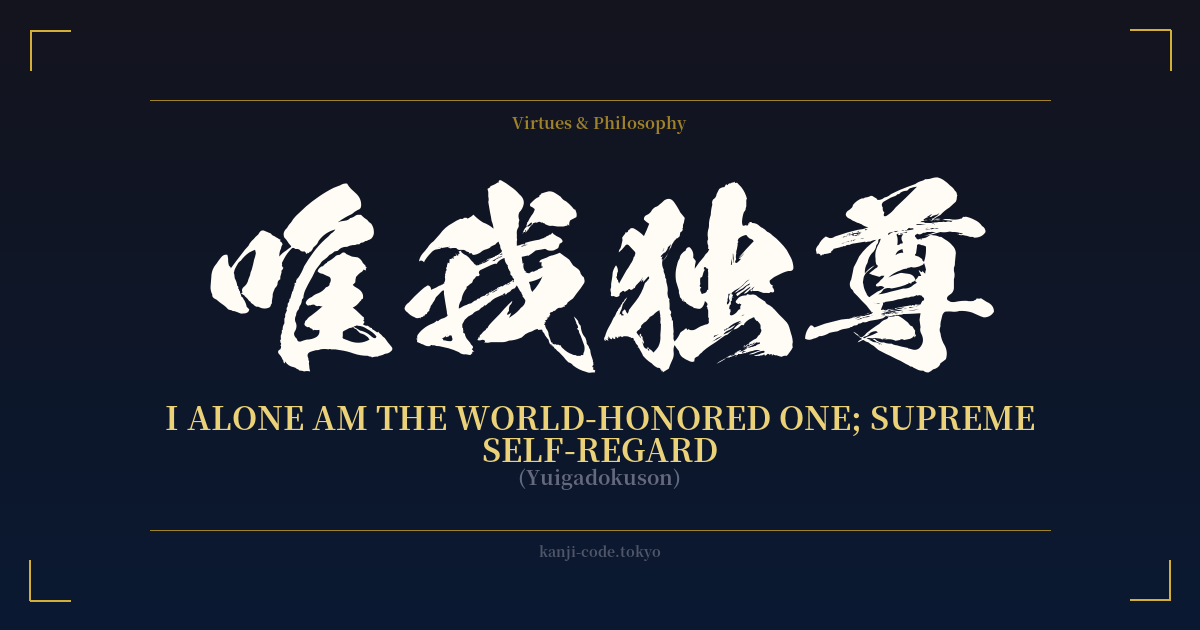
✍️ 唯我独尊 (Yuigadokuson) — Cultural Context
唯我独尊 (Yuigadokuson) carries one of the most dramatic shifts in meaning in the Japanese language, journeying from a statement of universal sacredness to a modern insult for arrogance. Its origin is a cornerstone of Buddhist lore, tied to the very birth of Siddhartha Gautama, the man who would become the Buddha.
Legend says that immediately after his birth, the infant Siddhartha took seven steps, pointed one hand towards the heavens and the other towards the earth, and declared, "天上天下唯我独尊" (Tenjō tenge yuiga dokuson). This full phrase translates to "Throughout heaven and earth, I alone am the honored one."
On the surface, this sounds like a declaration of supreme ego. However, the original Buddhist interpretation is far more profound and selfless. The "I" (我) in this context does not refer to the individual personality of Siddhartha. Instead, it represents the inherent, unique, and precious nature of every single living being in the cosmos. It was a proclamation that each individual possesses the potential for enlightenment, that every life is singularly sacred and worthy of reverence. It's a statement about the universal Buddha-nature within all existence.
Over centuries, as the phrase seeped into secular culture, this deep philosophical meaning was lost on the general populace. The characters themselves—唯 (only), 我 (I), 独 (alone), 尊 (revered)—lend themselves to a more literal and self-centered reading. The phrase was slowly stripped of its spiritual context and began to signify someone who believes they are the center of the universe.
In contemporary Japan, Yuigadokuson has an almost entirely negative connotation. It's used to describe someone who is insufferably arrogant, a narcissist who acts without regard for others. It paints a picture of a person who is selfish, haughty, and lives by their own rules to the detriment of the community. This modern meaning is heavily reinforced in pop culture, where it's often the motto or defining characteristic of powerful, lone-wolf anti-heroes or arrogant villains in anime and manga. Gojo Satoru from Jujutsu Kaisen is a prime example of a character who embodies this modern interpretation.
Therefore, to understand Yuigadokuson is to understand its profound duality. It is simultaneously a sacred expression of universal potential and a common descriptor for egotism. This chasm between its origin and its modern use is what makes the phrase so fascinating, and also so risky for anyone considering it for a permanent design.
🖌️ Font Styles for 唯我独尊
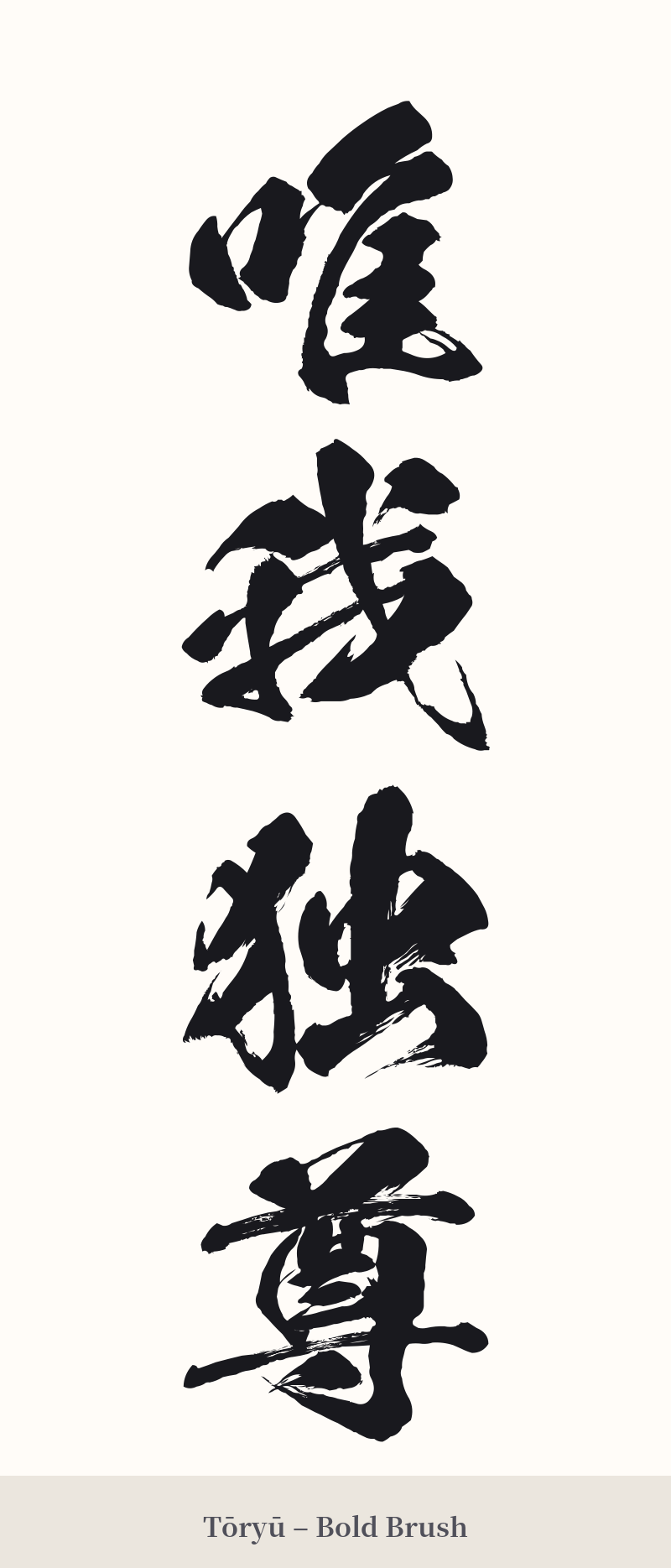
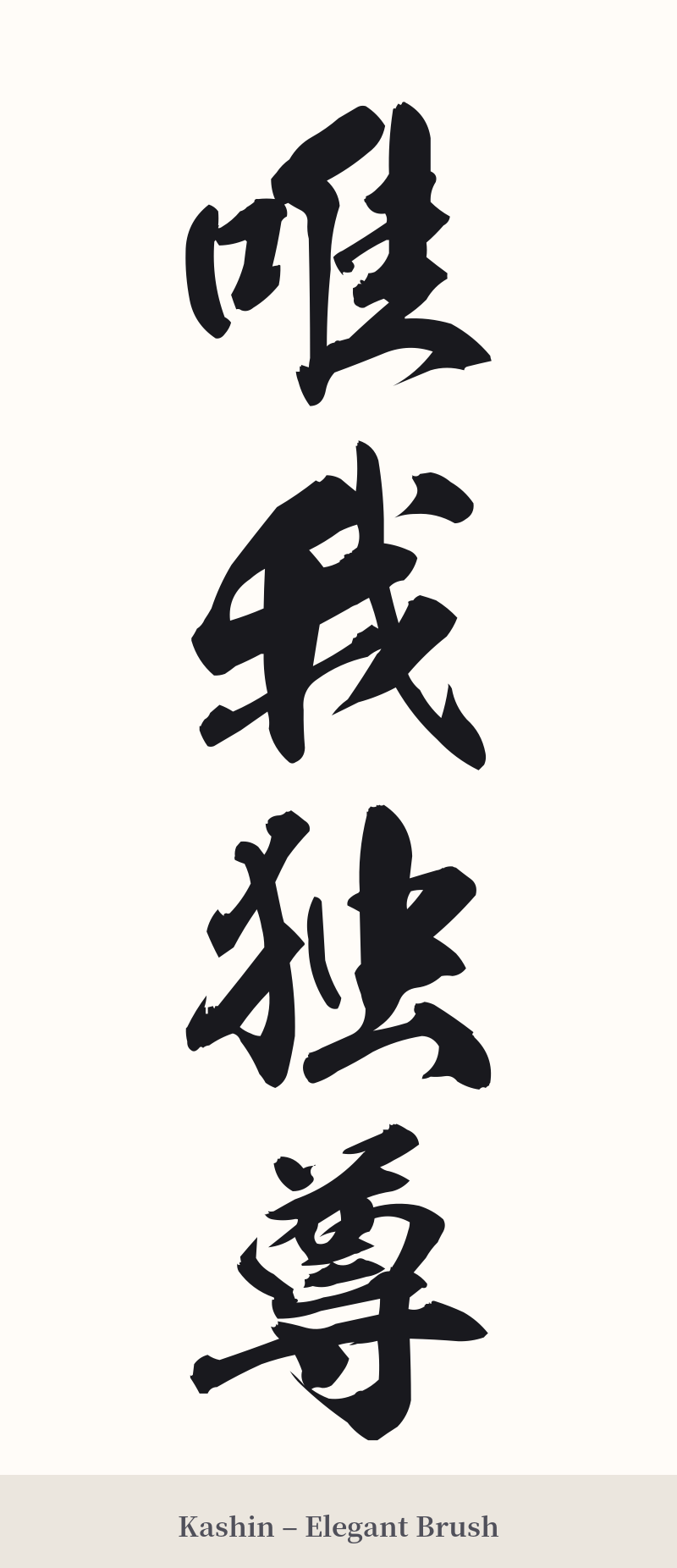
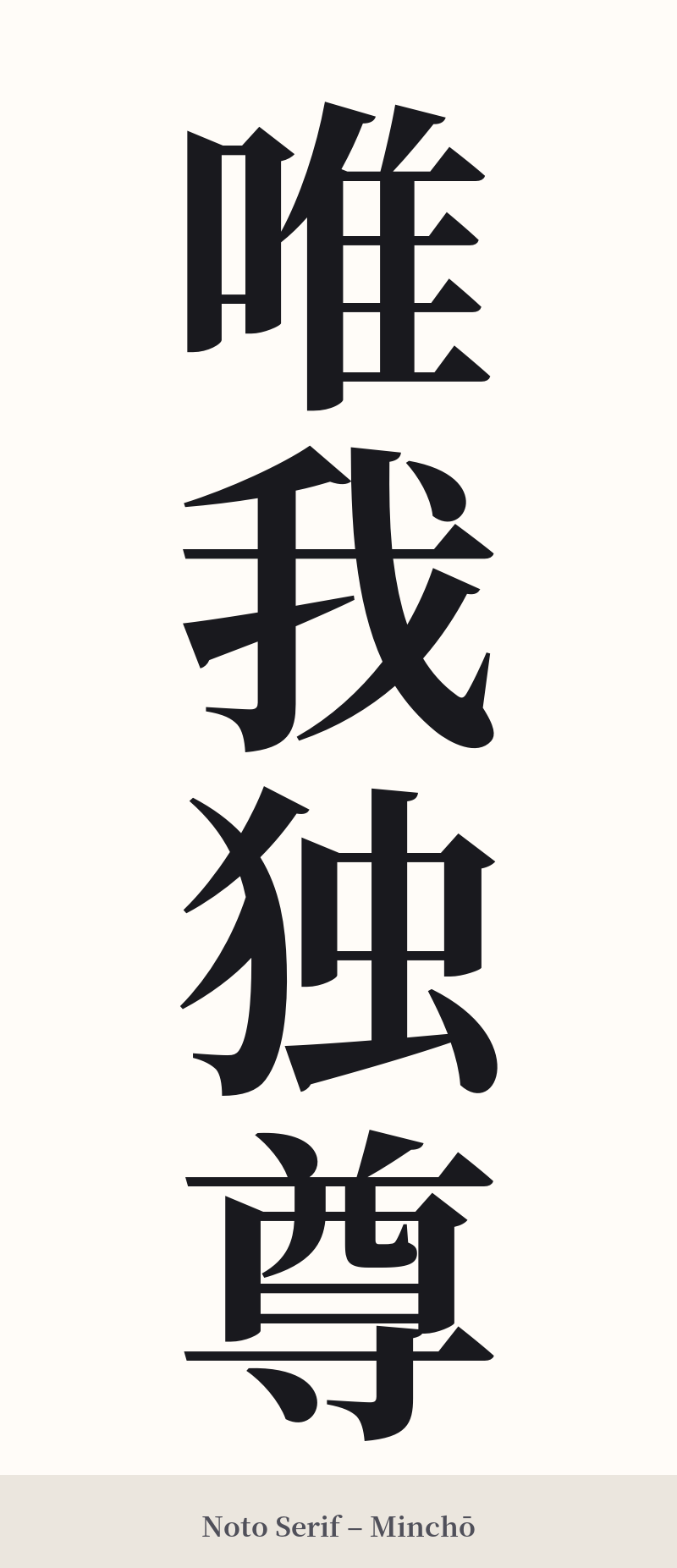
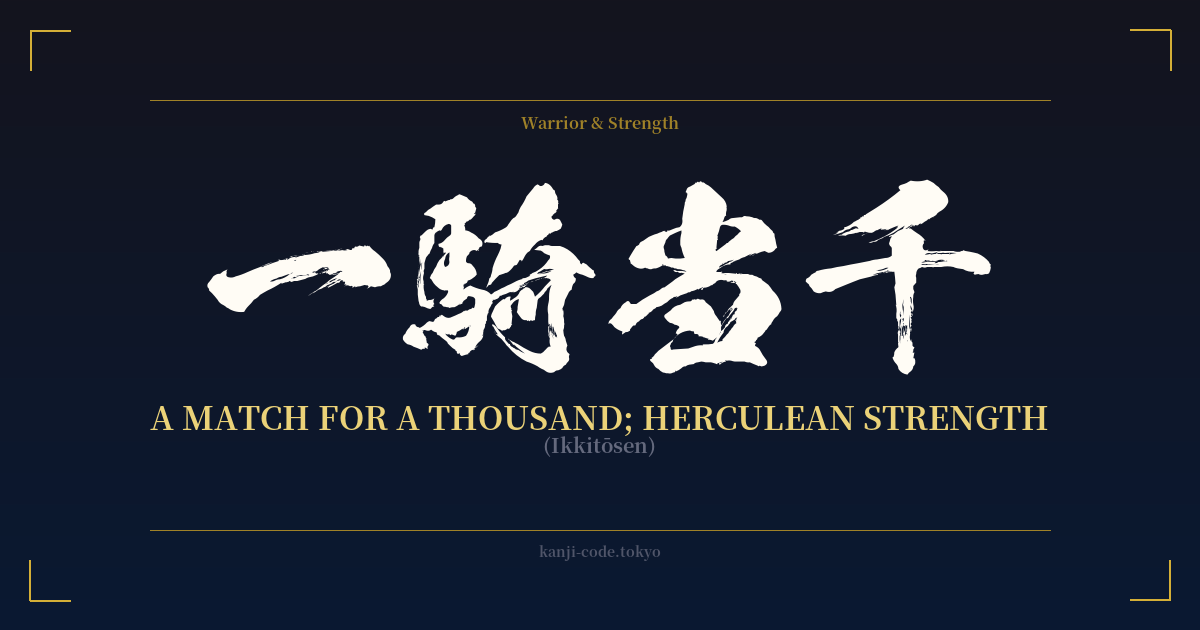
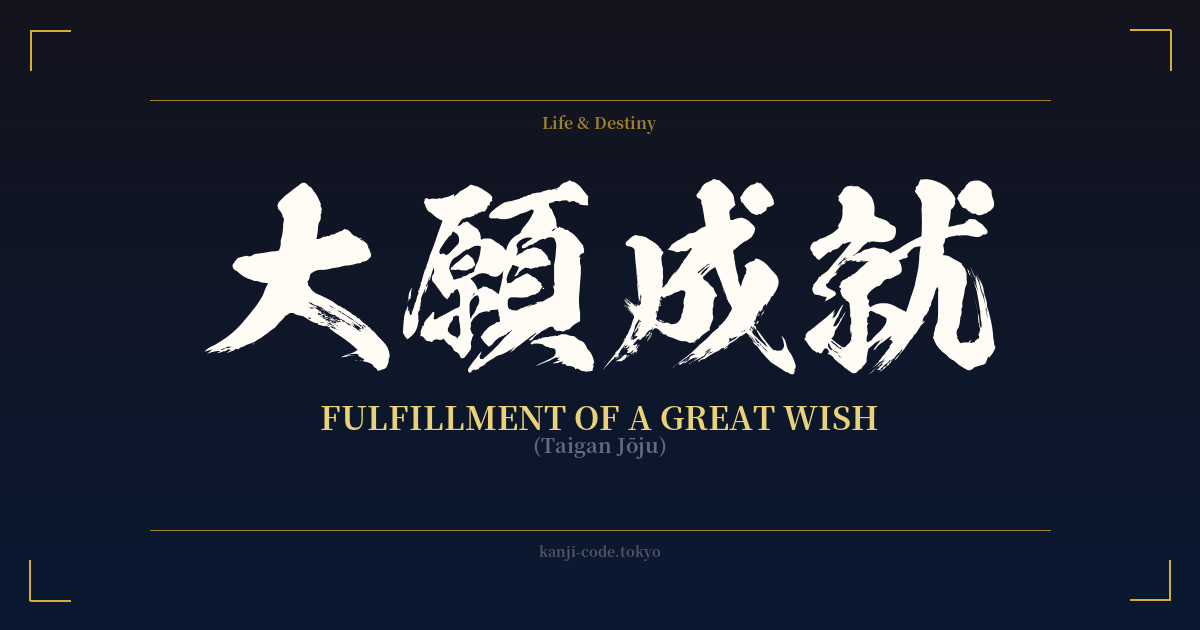
The same kanji can look dramatically different depending on the calligraphy style. Choose a font that matches the mood you want for your tattoo or design.
🎨 Tattoo Suitability
📐 Tattoo Design Guide
Given the phrase's structure as a four-character idiom (yojijukugo), the design choices are fairly specific but powerful.
– Placement: Vertical alignment is strongly recommended. This honors the traditional way Japanese is written and looks most natural. Ideal placements include the spine, the inner or outer forearm, or running down the calf or side of the ribs.
– Font Style: The choice of script can either lean into the sacred origin or the modern interpretation. A formal, clean block script (Kaisho) or a flowing semi-cursive (Gyosho) can evoke the classic Buddhist feel. Conversely, a rougher, more aggressive brushstroke style (Sosho) might capture the modern, rebellious connotation, though this amplifies the risk of being seen as arrogant.
– Visual Tips: This is a complete, self-contained phrase. Do not break the four characters apart or mix them with other imagery, as this would destroy the meaning. Due to the complexity of the characters (especially 唯 and 尊), ensure you work with a tattoo artist skilled in kanji and choose a size large enough to prevent the strokes from blurring together over time.
Comments