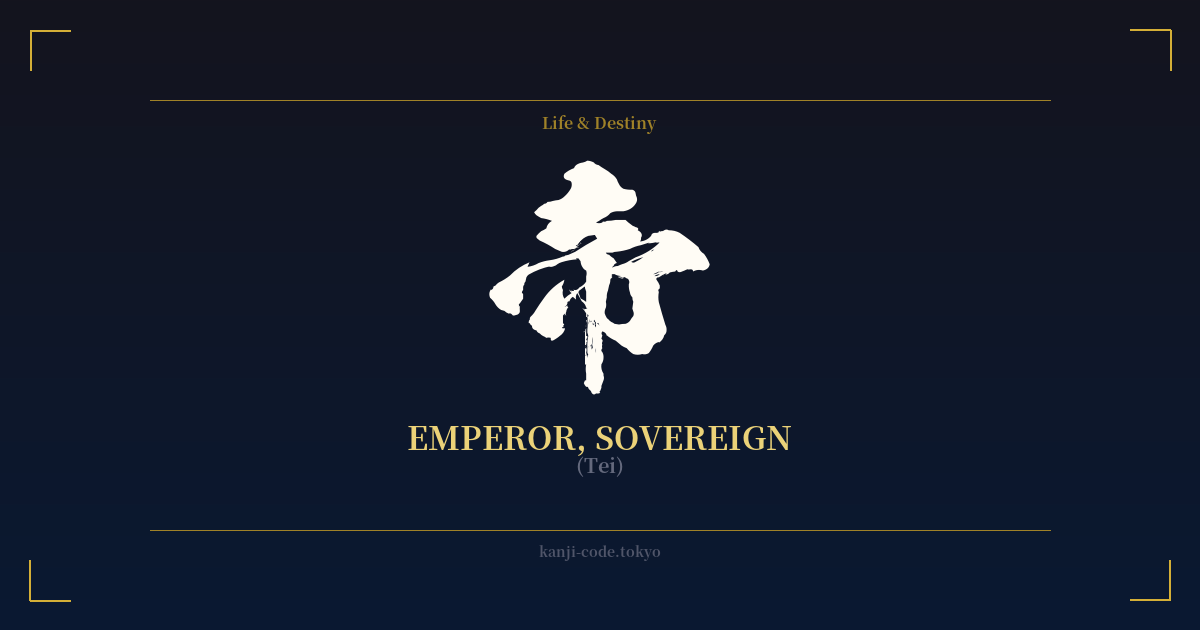
✍️ 帝 (Tei) — Cultural Context
The kanji 帝 (Tei) is a character that resonates with ultimate authority, divinity, and historical weight. Its meaning is 'emperor' or 'sovereign,' a title that stands at the pinnacle of human hierarchy. The character's origins are deeply rooted in ancient Chinese cosmology, where it was associated with 上帝 (Shàngdì), the Supreme Deity or 'High God' of the Shang dynasty.
The visual structure of 帝 itself is symbolic. It's often interpreted as a pictograph of a ruler wearing a crown or ceremonial headdress, standing with authority. This visual power makes it one of the most recognizable and potent characters in the entire kanji system.
When this character was adopted into Japanese, it brought with it this immense sense of power. It is a key component in the word 皇帝 (Kōtei), the general term for an emperor, and more famously, in 天皇 (Tennō), the specific title for the Emperor of Japan. The Tennō was historically considered a living god (現人神, arahitogami), a direct descendant of the sun goddess Amaterasu Ōmikami. This divine lineage imbues the character 帝 with a layer of sacredness and spiritual significance that goes beyond mere political power.
However, the character is not just about divinity; it's also about dominion. It forms words like 帝国 (Teikoku), meaning 'Empire.' This word is inextricably linked to the period of the Empire of Japan, a time of aggressive military expansion in the early 20th century. For this reason, the character can carry heavy historical baggage and is a reminder of a controversial period in Japanese history.
In modern usage, 帝 is often used more metaphorically to denote the best or most dominant in a field. A business magnate might be called a 'king of the industry' or 帝王 (Teiō), which translates to 'sovereign' or 'monarch.' This usage strips away some of the divine and historical weight but retains the core concept of supreme authority and mastery. Choosing this kanji is to invoke a concept of absolute power, with all the historical, cultural, and spiritual complexities that come with it.
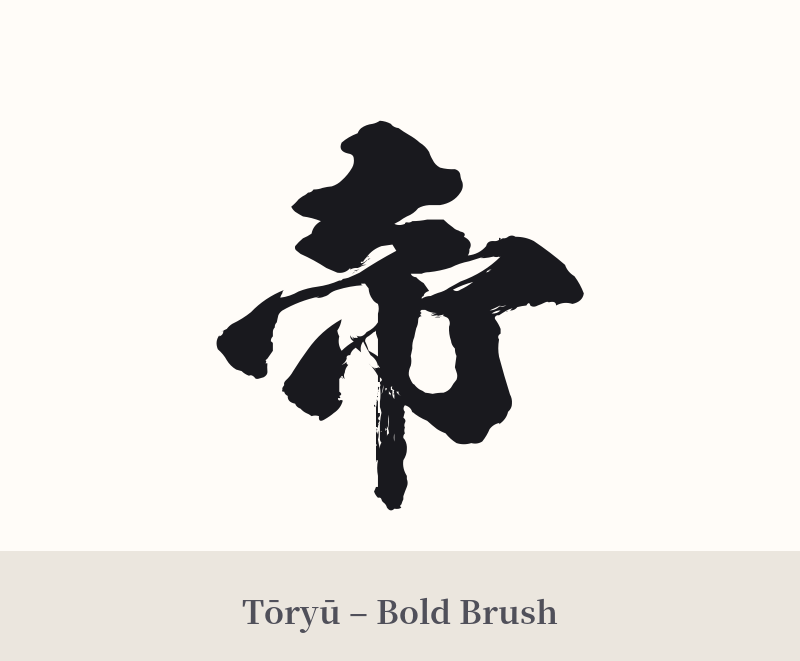
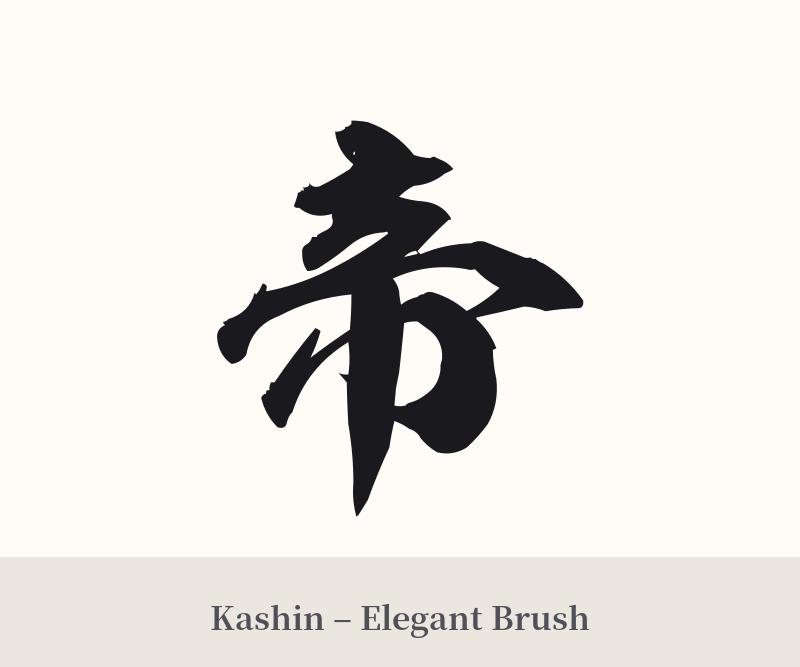
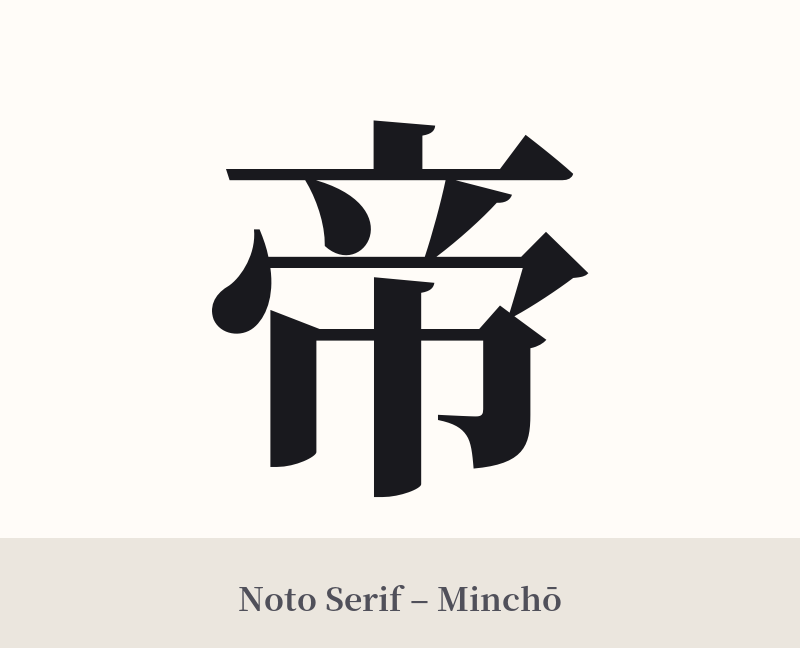
🖌️ Font Styles for 帝
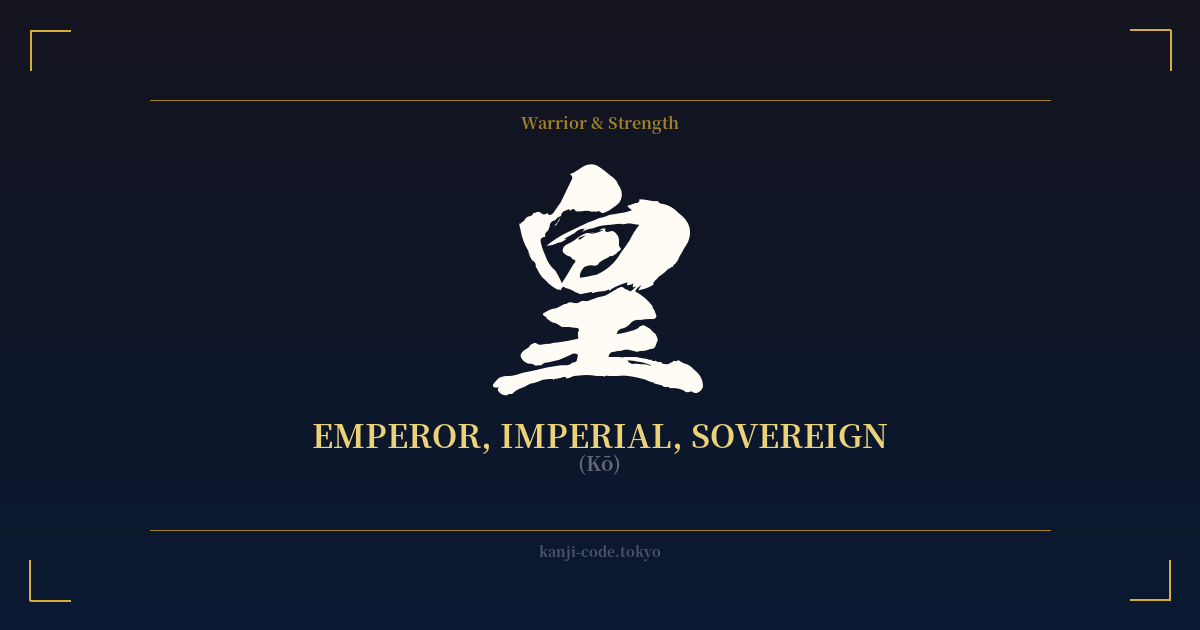
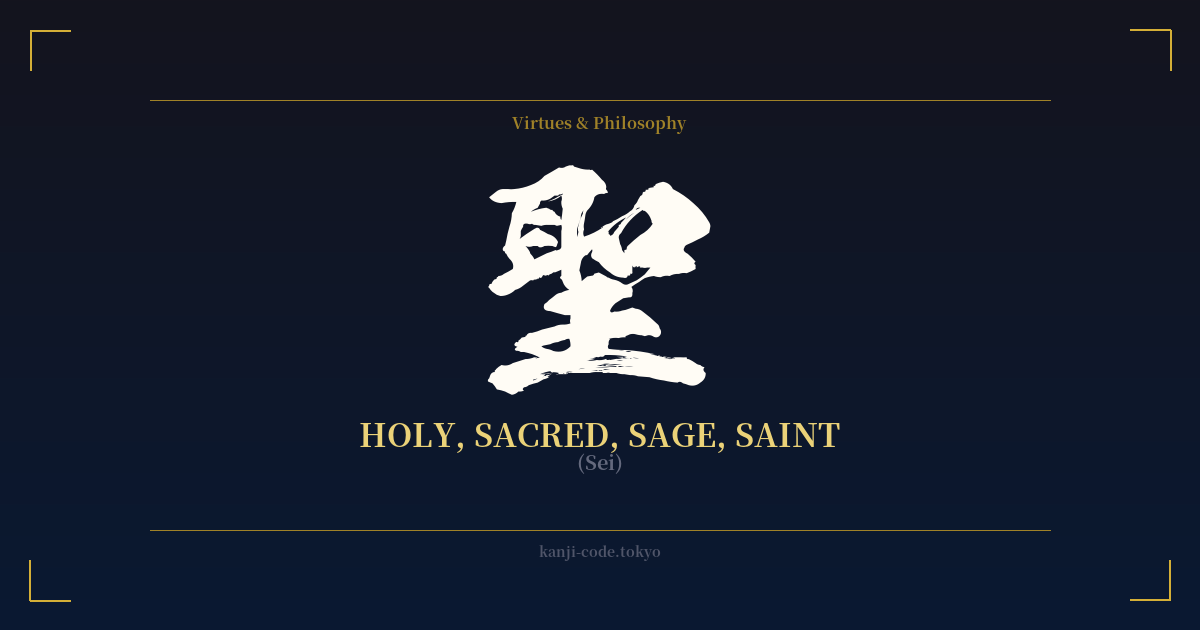
The same kanji can look dramatically different depending on the calligraphy style. Choose a font that matches the mood you want for your tattoo or design.
🎨 Tattoo Suitability
📐 Tattoo Design Guide
A tattoo of the kanji 帝 should project strength and authority. Its balanced, regal form offers several design possibilities that can emphasize its powerful meaning.
– Placement: Consider areas of the body that have a strong presence. The center of the chest or upper back allows the character's symmetry to shine. A forearm or calf placement also works well, providing a vertical canvas that complements the character's structure.
– Font Style: The choice of script can dramatically alter the feel. A bold, blocky Kaisho (block script) or Mincho (serif style) font will give it a solid, immovable, and authoritative look. For a more artistic and historical feel, a flowing Gyosho (semi-cursive) or Sosho (cursive) script can evoke the brushstrokes of an ancient master calligrapher.
– Visual Tips: Due to its inherent power, 帝 works exceptionally well as a standalone piece. Let its form and meaning speak for itself without distraction. If you wish to add other elements, do so with care. Imperial symbols like a dragon (龍) or the chrysanthemum seal could be thematically appropriate but also significantly increase the cultural weight and potential for misinterpretation. Ensure the tattoo is large enough for the nine strokes to be clear and distinct, preventing it from becoming a blur over time.
Comments