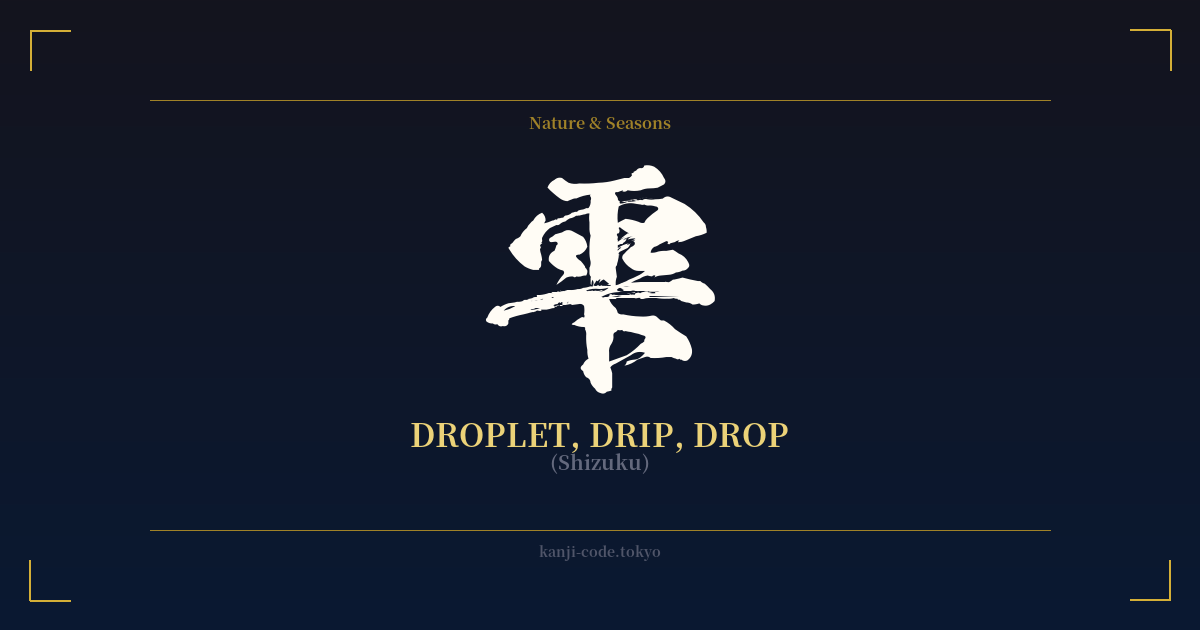
✍️ 雫 (Shizuku) — Cultural Context
The kanji 雫 (shizuku) is a beautiful and evocative character that holds a special place in the Japanese language, largely because it is a 'kokuji' (国字) – a character created in Japan, not inherited from ancient China. Its very structure tells a story: the radical 雨 (ame), meaning 'rain,' sits atop 下 (shita), meaning 'below' or 'under.' Together, they form a perfect pictogram for a droplet, the very essence of what falls from the rain clouds.
This character is deeply intertwined with Japanese aesthetics, particularly the concepts of 'wabi-sabi' (侘寂), the appreciation of transient and imperfect beauty. A single droplet of water—whether it's morning dew on a leaf, a raindrop on a windowpane, or water falling from a bamboo 'shishi-odoshi' fountain in a garden—is a powerful symbol of this philosophy. It represents a fleeting moment of perfect, simple beauty that will soon disappear, reminding us of the impermanence of all things.
In Japanese literature and poetry, especially haiku, 'shizuku' is frequently used to paint a scene of tranquility, stillness, or gentle melancholy. It can evoke the quiet sound of a temple garden after a storm or the fresh purity of nature. This connection to nature and quiet contemplation makes it a deeply resonant symbol in Japanese culture. It speaks not of the roaring ocean or a mighty river, but of the small, significant detail that defines a moment.
Furthermore, 雫 is a popular and poetic female given name in Japan. A girl named Shizuku is often associated with qualities of purity, gentleness, and a quiet, inner strength. Its use in popular culture, such as the main character Shizuku Tsukishima in the beloved Studio Ghibli film 'Whisper of the Heart,' has further cemented its image as a symbol of creativity, sensitivity, and the journey of self-discovery. To choose 雫 is to embrace a symbol of purity, the beauty of the momentary, and the quiet power found in small things.
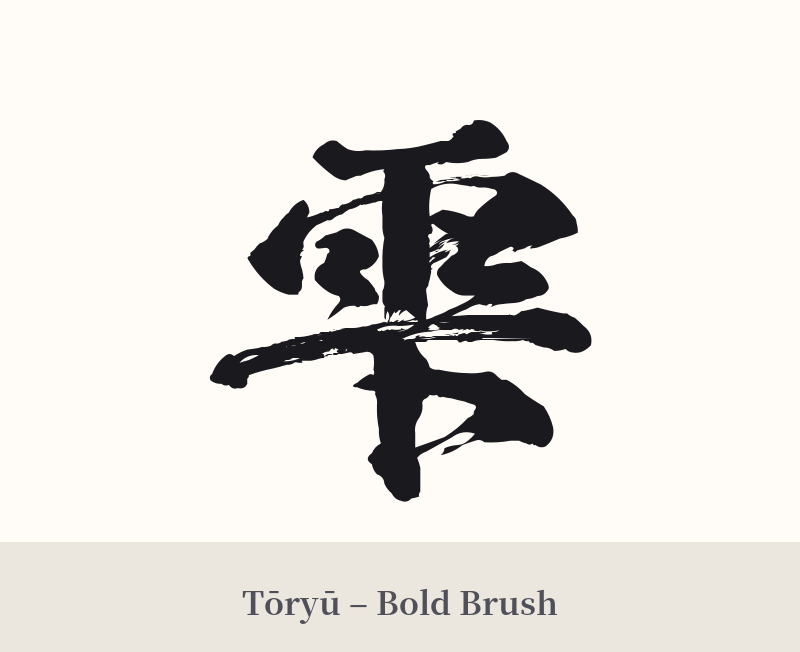
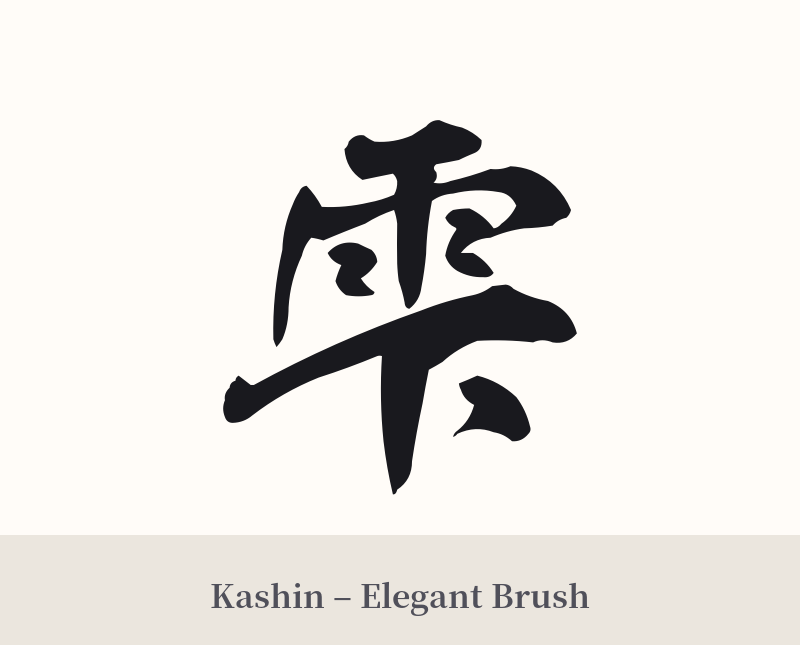
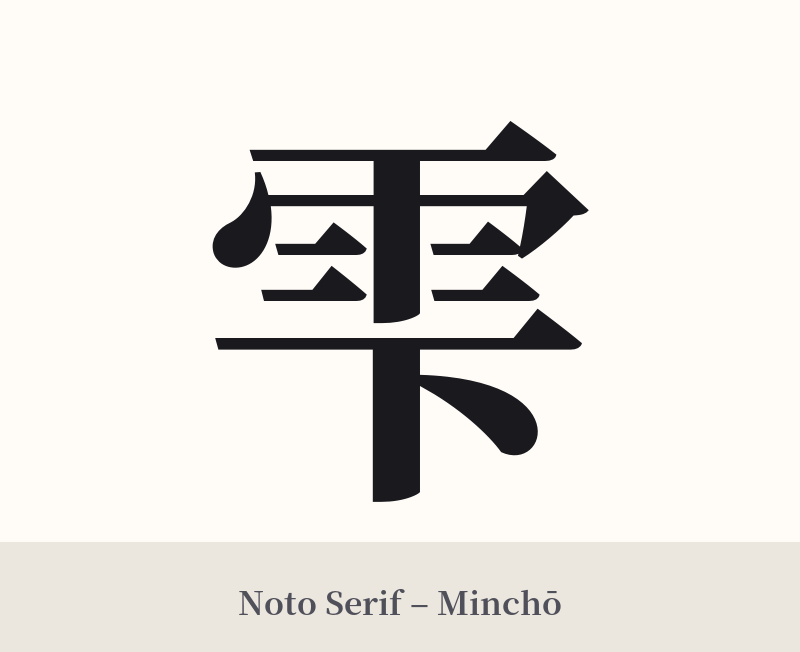
🖌️ Font Styles for 雫
The same kanji can look dramatically different depending on the calligraphy style. Choose a font that matches the mood you want for your tattoo or design.
🎨 Tattoo Suitability
📐 Tattoo Design Guide
The kanji 雫 is delicate and elegant, and its tattoo design should reflect that. It works best when its subtlety is embraced rather than overpowered.
– Placement: Consider small, graceful placements that complement the kanji's meaning. The inner wrist, behind the ear, on the collarbone, or along the ankle are excellent choices. For a larger piece, it could be the central element in a design featuring a lotus, a bamboo stalk, or a koi fish, symbolizing the droplet's interaction with the natural world.
– Font Style: Flowing, organic calligraphy styles are a natural fit. A semi-cursive 'gyosho' or a fully cursive 'sosho' script can mimic the fluid movement of water. For a more modern and clean look, a crisp 'mincho' style with its fine serifs can provide a beautiful contrast, highlighting the character's structure.
– Visual Tips: To enhance the theme, consider adding a subtle watercolor splash of blue or grey behind the kanji. Another creative approach is to have the black ink of the kanji itself 'drip' or 'bleed' slightly at the bottom stroke, as if the character itself is made of liquid.
Comments