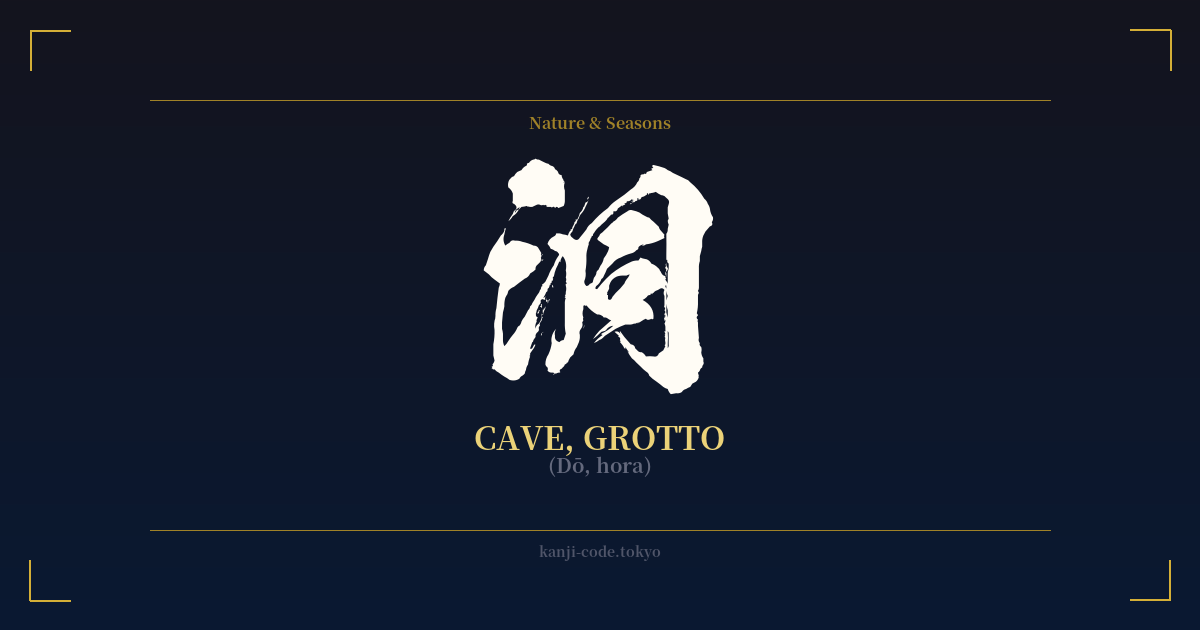
✍️ 洞 (Dō, hora) — Cultural Context
The kanji 洞, read as 'hora' or 'dō', is a character steeped in the primal mysteries of the natural world. Its form itself tells a story: the radical on the left (氵) represents water, while the character on the right (同) means 'same' or 'together,' evoking an image of water flowing into a common opening—a cavern carved by time and tide.
In Japan, a land of dramatic mountains and coastlines, caves hold a powerful place in both geography and mythology. They are entrances to another world, liminal spaces between the known and the unknown. This is most famously illustrated in the Shinto myth of Amaterasu, the sun goddess, who hid in the Amano-Iwato ('heavenly rock cave'), plunging the world into darkness until she was cleverly lured out. This story cements the cave as a place of divine power, withdrawal, and eventual rebirth.
Beyond mythology, caves were historically places of refuge and spiritual pursuit. Yamabushi mountain ascetics and Buddhist monks would retreat to these natural shelters for meditation and to seek enlightenment, far from the distractions of society. The cave represents a womb-like space for introspection and transformation, a quiet hollow where one can confront the self.
This idea of looking inward is beautifully captured in the metaphorical use of 洞. The word 洞察 (dōsatsu) means 'insight' or 'penetration.' The characters literally translate to 'seeing into the cave.' To have insight is to possess the ability to perceive the hidden truths that lie beneath the surface, much like a spelunker exploring a dark grotto with a single torch. It implies a deep, piercing understanding that goes beyond superficial observation.
Therefore, 洞 is not merely a word for a geological feature. It is a symbol of the subconscious, the unknown, and the potential for profound discovery. It represents shelter from the storm, a gateway to the sacred, and the quiet space within our own minds where true understanding is born.
🖌️ Font Styles for 洞
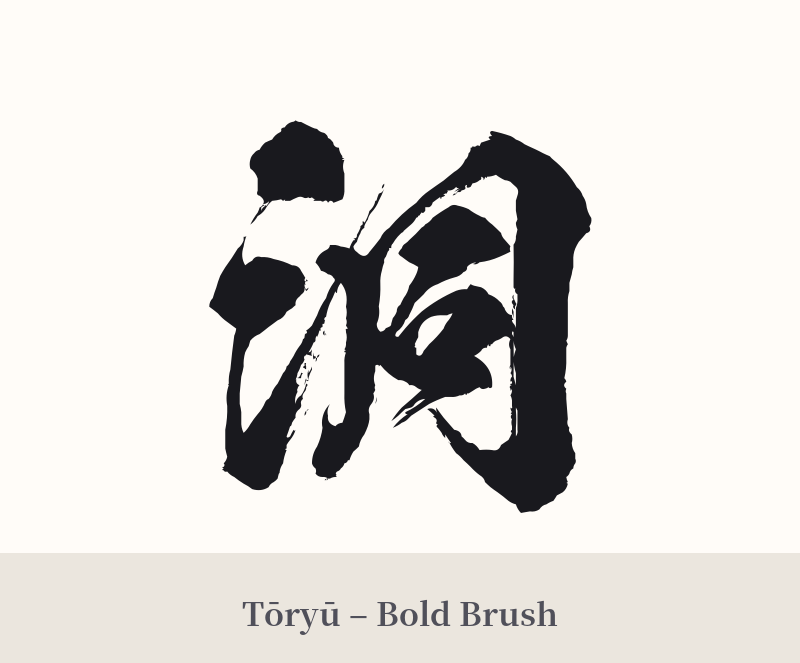
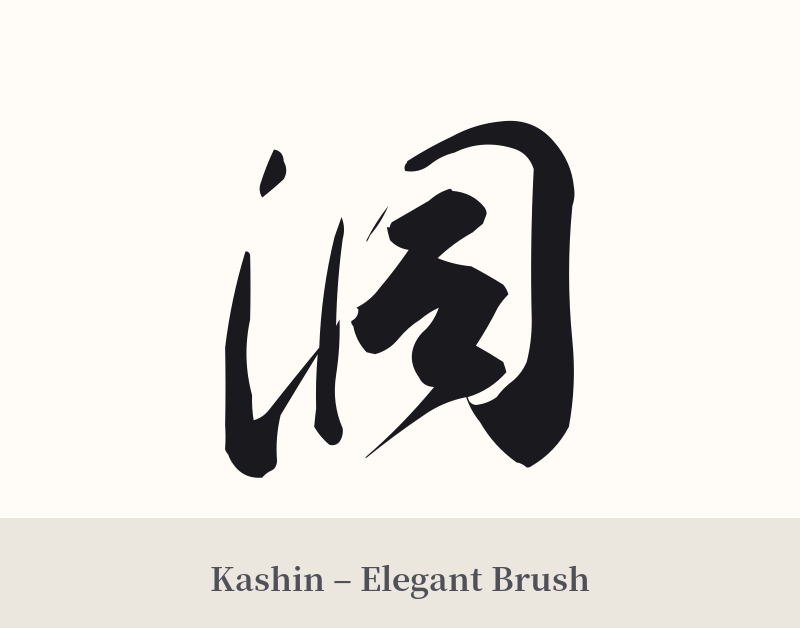
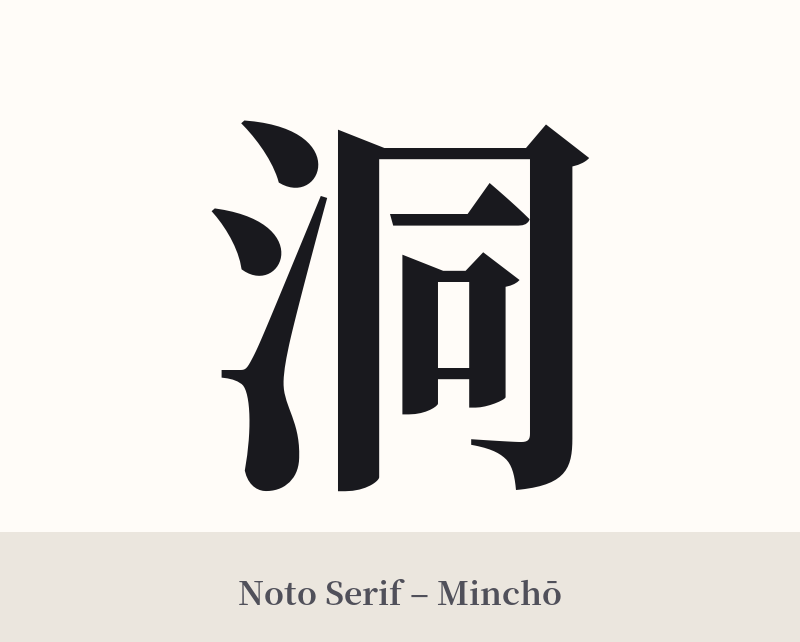
The same kanji can look dramatically different depending on the calligraphy style. Choose a font that matches the mood you want for your tattoo or design.
🎨 Tattoo Suitability
📐 Tattoo Design Guide
For a tattoo of 洞, consider how to best convey its dual meaning of physical shelter and mental insight.
– Placement: Its vertical structure works well on the forearm, calf, or along the spine. For a more subtle placement, the back of the neck or behind the ear can frame the character nicely.
– Style: A traditional calligraphy (shodō) style with rough, earthy brushstrokes can emphasize its connection to nature and ancient history. Conversely, a crisp, clean Mincho or sans-serif font can highlight the more modern, philosophical meaning of 'insight' (洞察).
– Visual Elements: To avoid the ambiguity of the character standing alone, consider incorporating it into a larger design. It could be 'carved' into a rock within a landscape tattoo, or have water elements (like waves or drips) flowing from it to honor the water radical in its composition. Placing it at the entrance of a dark, shaded area in a larger piece can also visually define its meaning as a 'cave'.
Comments