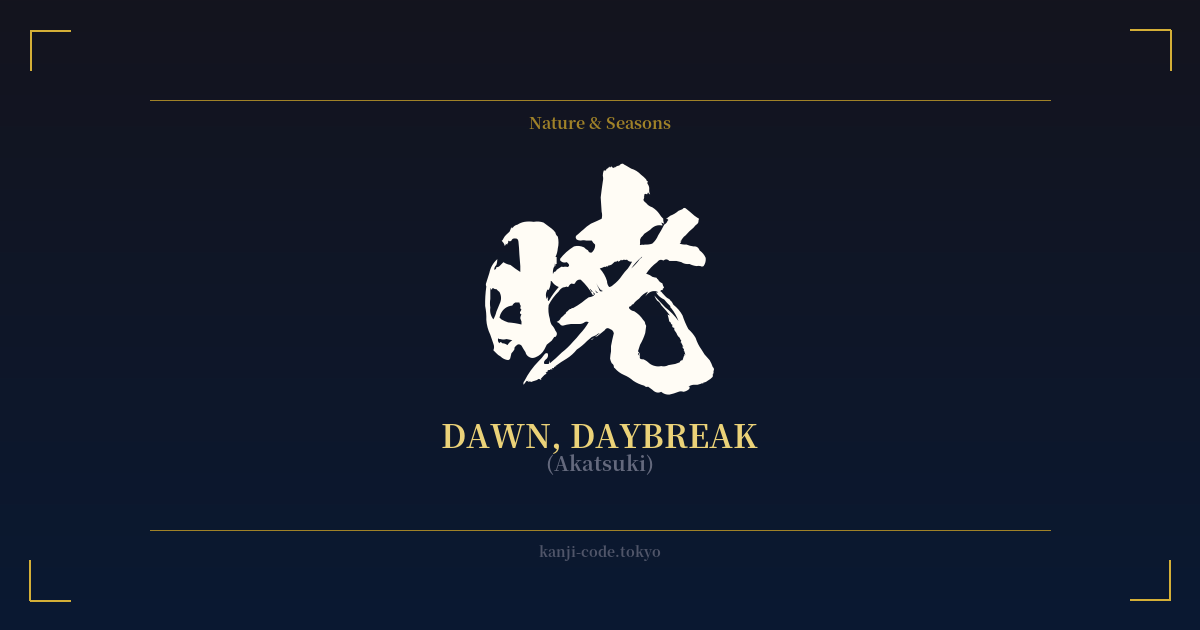
✍️ 暁 (Akatsuki) — Cultural Context
The kanji 暁 (Akatsuki) is one of the most evocative and poetic characters in the Japanese language. While its literal translation is 'dawn' or 'daybreak,' its essence goes far beyond a simple time of day. It captures the specific, magical moment when the first light breaks through the darkness of night, painting the sky in hues of red and gold. This isn't just the morning; it's the very beginning of the new day's story.
Historically and etymologically, 暁 is composed of two parts. On the left is 日 (hi), the radical for 'sun' or 'day.' On the right is 尭 (gyō), a phonetic component that originally depicted a high, lofty person, referencing a legendary Chinese sage-king. Together, they form a vivid image: the sun rising to its high point, signifying the arrival of light and clarity. This structure imbues the character with a sense of grandeur and importance.
In Japanese literature and art, 'akatsuki' is a recurring motif used to evoke deep emotion. It appears in classical poetry, including the waka of the Heian period and the haiku of masters like Matsuo Bashō. The 'akatsuki' sky often serves as a backdrop for moments of quiet contemplation, poignant farewells, or the solitary resolve of a samurai before a battle. It represents a liminal space—the threshold between the past (night) and the future (day), filled with potential, hope, and sometimes melancholy.
Metaphorically, 暁 is a powerful symbol for any new beginning. It can represent the dawn of a new era after a period of conflict or stagnation, personal enlightenment after a time of confusion, or the first glimmer of hope after despair. This symbolic weight is why it's a popular choice for names, whether for ships, projects, or even people, signifying a bright and promising future.
In modern pop culture, the kanji gained immense international recognition through the mega-hit anime and manga series Naruto. The 'Akatsuki' is a formidable group of rogue ninja who seek to bring about a new world order, their own version of a 'new dawn.' This association adds a layer of complexity to the kanji, linking it to themes of rebellion, power, and idealism, albeit through a dark lens. For many, this connection doesn't detract from its beauty but adds a modern, edgy narrative to its ancient, poetic meaning.
🖌️ Font Styles for 暁
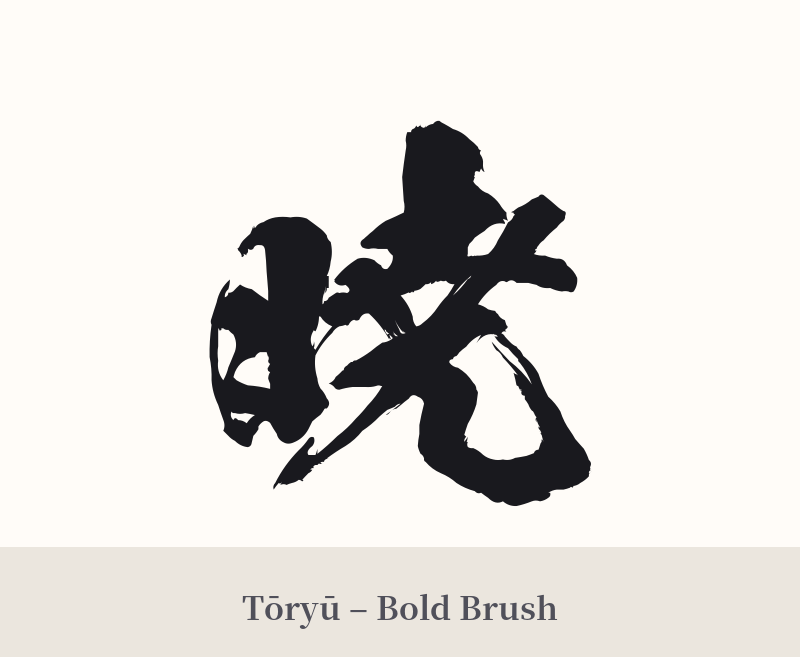
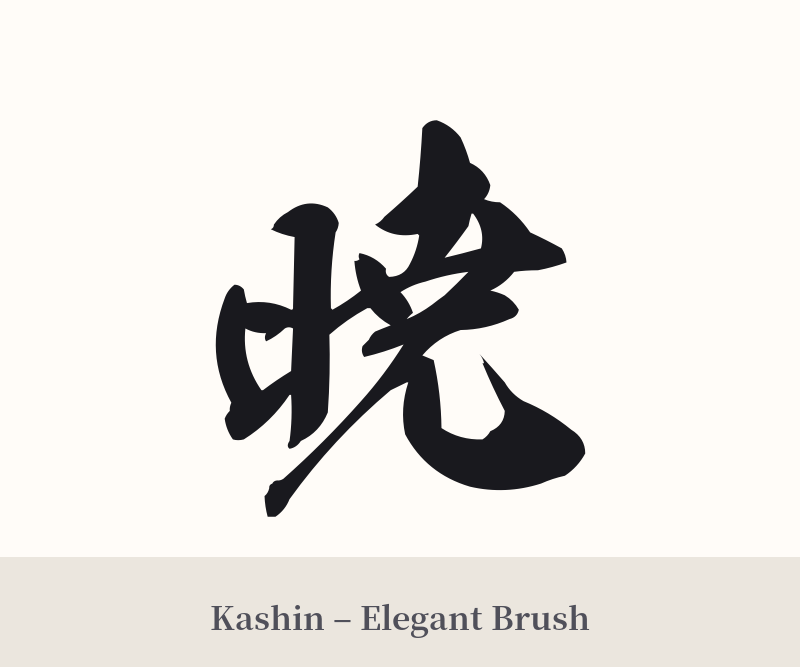
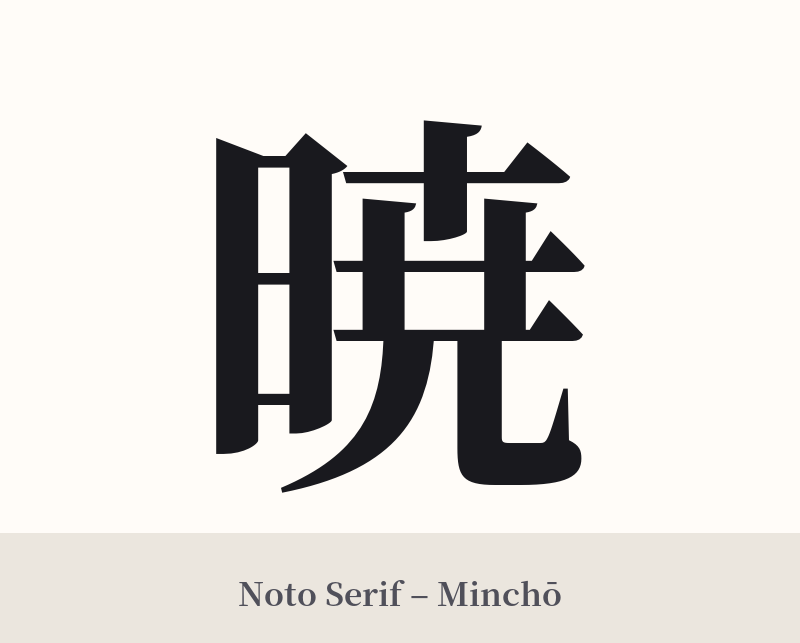
The same kanji can look dramatically different depending on the calligraphy style. Choose a font that matches the mood you want for your tattoo or design.
🎨 Tattoo Suitability
📐 Tattoo Design Guide
The kanji 暁 is visually balanced and works well in various tattoo designs. Its moderate complexity allows it to be legible at different sizes.
– Placement: For a vertical design, the inner forearm, calf, or along the spine are excellent choices. For a more compact, singular statement, the wrist, chest, or back of the neck can be very effective.
– Font Style: A dynamic, semi-cursive script (Gyōsho) can capture the flowing, transient nature of dawn. For a more traditional and bold statement emphasizing strength and new beginnings, a clean, block-like script (Kaisho) is a strong option.
– Visual Tips: Consider integrating 暁 with other imagery. A red or orange watercolor splash behind the character can represent the rising sun. It can also be placed within a larger design, such as a Japanese landscape with mountains or a torii gate, to create a full scene that tells a story of hope and renewal.
Comments