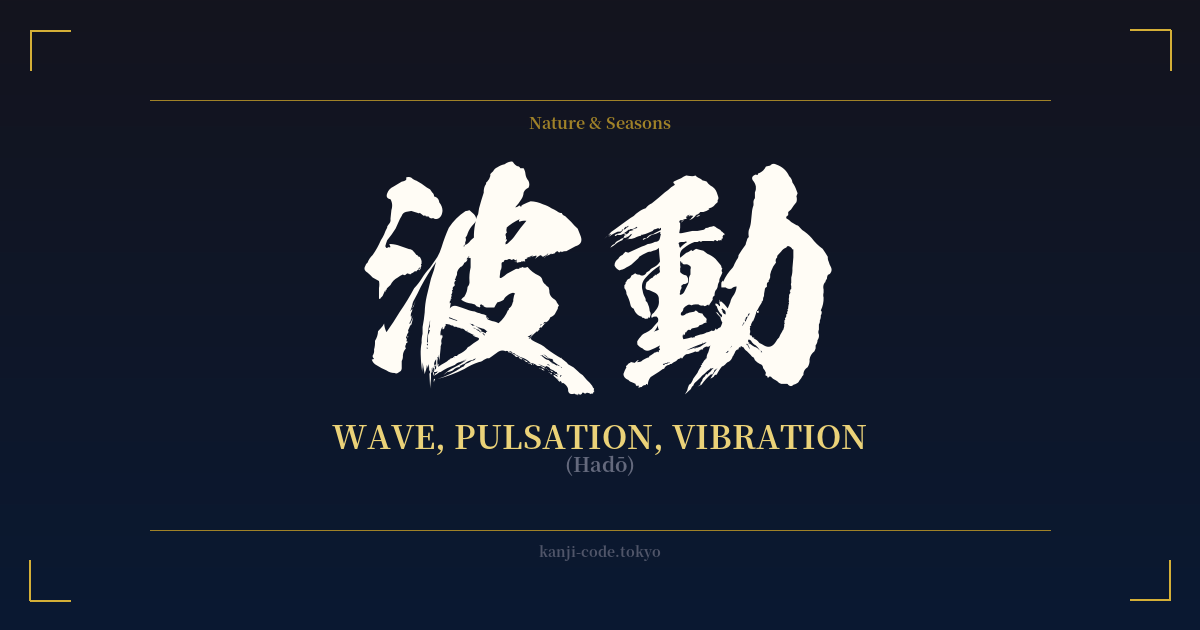
✍️ 波動 (Hadō) — Cultural Context
The Japanese word 波動 (Hadō) is a fascinating compound that bridges the gap between the physical world and metaphysical concepts. At its most literal level, it combines 波 (ha), meaning 'wave' or 'billow', and 動 (dō), meaning 'motion' or 'movement'. Together, they form 'wave motion', a term used in physics to describe the propagation of energy through a medium, such as sound waves, light waves, or ripples in water.
However, the true cultural resonance of Hadō lies in its more abstract and spiritual applications. In Japan and beyond, Hadō is frequently used to describe an invisible force, an aura, a vibration, or a 'vibe' emitted by a person, place, or object. When someone says a temple has a 'good hadō', they are referring to a palpable sense of peace and positive energy. Similarly, a person can be said to have a strong or weak Hadō, referring to their personal charisma, life force, or spiritual presence. This concept is closely related to the traditional East Asian idea of 気 (ki) or 'chi', the fundamental life force that flows through all things.
For many in the English-speaking world, the word was indelibly burned into memory by the iconic video game series, Street Fighter. The signature special move of characters Ryu and Ken is the 波動拳 (Hadōken), which translates to 'Wave Motion Fist'. In the game, this is a visible projectile of pure ki energy that the fighter projects from their hands. This single pop culture reference perfectly encapsulates the dual meaning of Hadō: a tangible, wave-like force born from a person's inner spiritual energy and motion.
This connection has made Hadō a symbol of inner power, discipline, and the ability to project one's will into the world. It’s not just about a fictional fireball; it represents the culmination of training and focus, turning intangible energy into a tangible effect. Whether you see it through the lens of quantum physics, spiritual energy, or classic video games, Hadō speaks to the unseen currents and vibrations that define our reality, a powerful concept of energy in motion.
🖌️ Font Styles for 波動
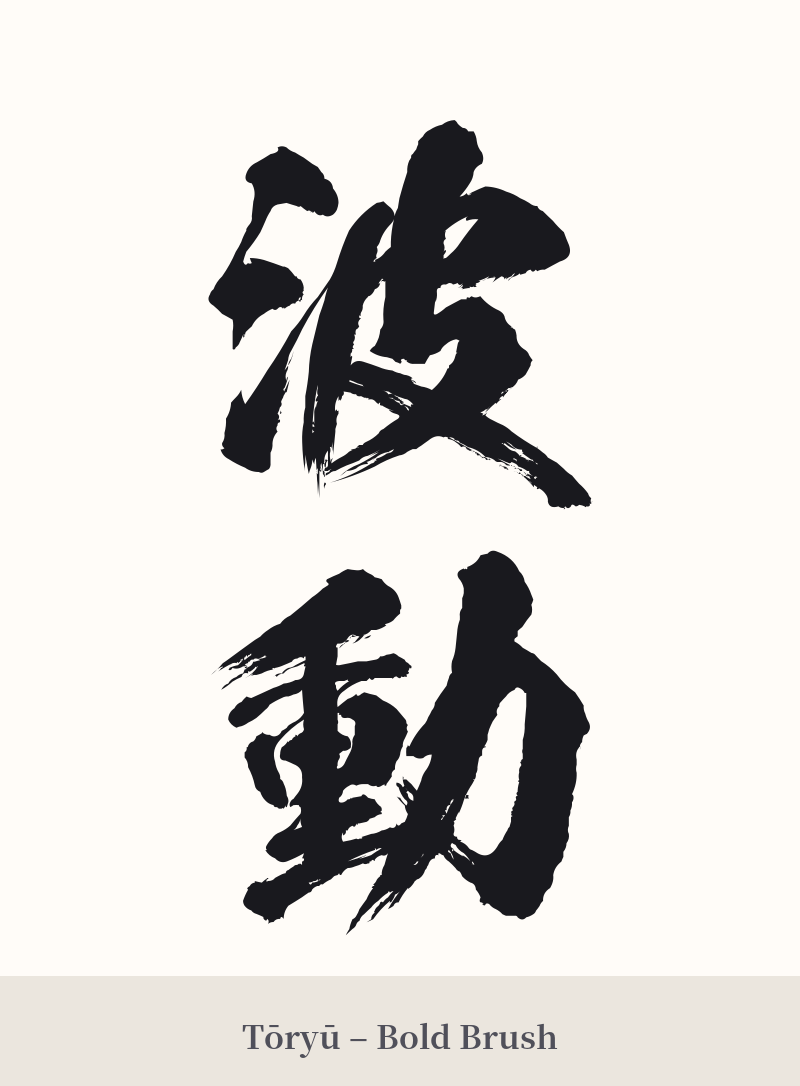
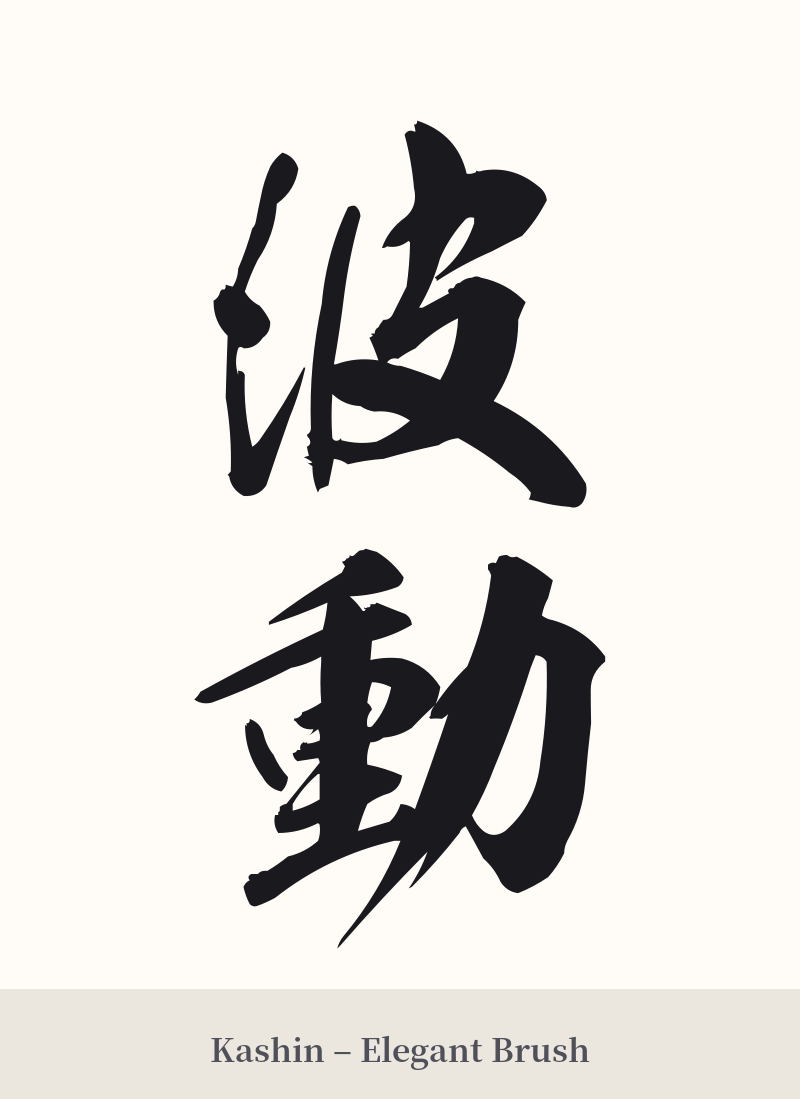
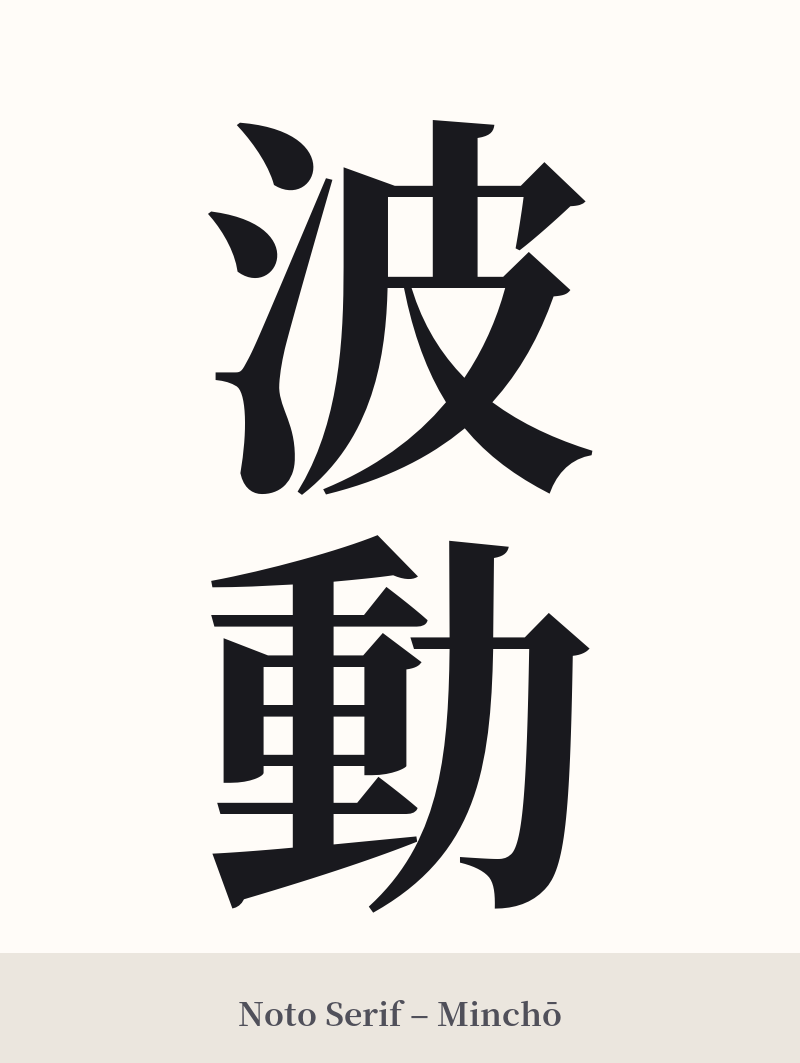
The same kanji can look dramatically different depending on the calligraphy style. Choose a font that matches the mood you want for your tattoo or design.
🎨 Tattoo Suitability
📐 Tattoo Design Guide
The kanji 波動 (Hadō) offers great flexibility for a tattoo design, evoking a sense of both fluid motion and powerful energy.
– Placement: A vertical orientation is classic and looks excellent along the forearm, calf, or spine. A horizontal layout works well across the chest, upper back, or on the bicep.
– Font Style: For an energetic, spiritual feel, a dynamic calligraphy style (gyōsho or sōsho) is perfect. The flowing, connected strokes can visually represent the 'wave motion' the word describes. For a more modern, clean, or scientific interpretation, a crisp Mincho or bold Gothic font would be fitting.
– Visual Embellishments: Consider incorporating visual elements that enhance the meaning. You could have the kanji dissolving into or emerging from abstract energy ripples, sound waves, or even a classic Japanese wave pattern like that seen in Hokusai's art. Using a color gradient, such as a glowing blue or electric yellow, can further emphasize the idea of a vibrant, pulsating energy.
Comments