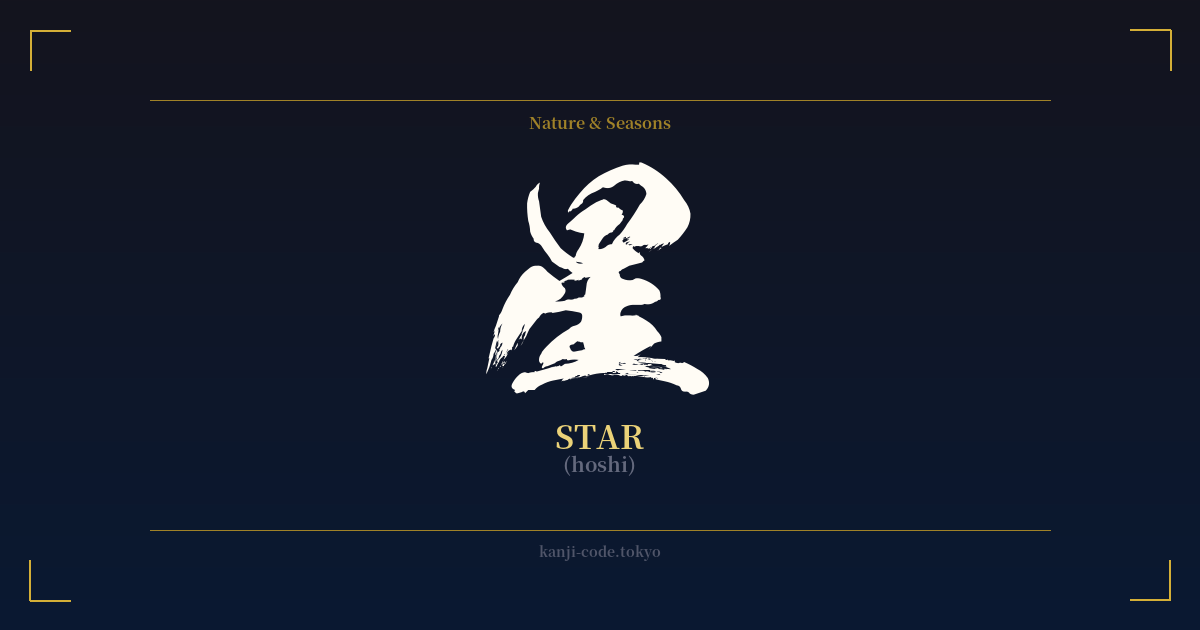
✍️ 星 (hoshi) — Cultural Context
The kanji 星 (hoshi) is a beautiful and evocative character that captures the essence of a star. Its origins are wonderfully poetic. The character is a combination of 日 (hi), meaning 'sun' or 'day,' and 生 (sei), meaning 'life' or 'birth.' Together, they paint a picture of light being 'born' from the sun to shine in the heavens, a celestial body with its own life.
In its most direct sense, 星 refers to any star or planet visible in the night sky. It’s the foundation for many astronomical terms in Japanese, such as 惑星 (wakusei), meaning 'planet' (literally 'wandering star'), and 彗星 (suisei), meaning 'comet' ('broom star'). This scientific grounding gives the kanji a sense of cosmic wonder and ancient observation.
However, the cultural significance of 星 goes far beyond astronomy. It is deeply woven into Japanese folklore and festivals, most notably Tanabata (七夕), the Star Festival. This festival celebrates the romantic tale of two celestial lovers, Orihime (the star Vega) and Hikoboshi (the star Altair), who are separated by the Milky Way and can only meet once a year on the seventh day of the seventh month. This story imbues the kanji 星 with powerful themes of longing, eternal love, and the hopeful making of wishes.
Metaphorically, 星 is a potent symbol of hope, guidance, and destiny. The phrase 希望の星 (kibō no hoshi) translates to 'star of hope,' referring to someone or something that offers a guiding light in dark times. It can also signify a goal or an aspiration—something to aim for, much like sailors once navigated by the stars. This makes it a popular symbol for encouragement and perseverance.
Interestingly, 星 has also found its way into the world of sumo wrestling. A loss is marked with a 黒星 (kuroboshi), or 'black star,' while a win is a 白星 (shiroboshi), or 'white star.' This unique usage ties the celestial symbol to the very tangible concepts of victory and defeat in a traditional Japanese sport.
From its pictographic roots to its role in epic love stories and modern metaphors, 星 is a character that carries the weight of the cosmos while remaining intensely personal. It represents not just a point of light in the sky, but the dreams we attach to it, the paths it illuminates, and the destiny we hope to find.
🖌️ Font Styles for 星
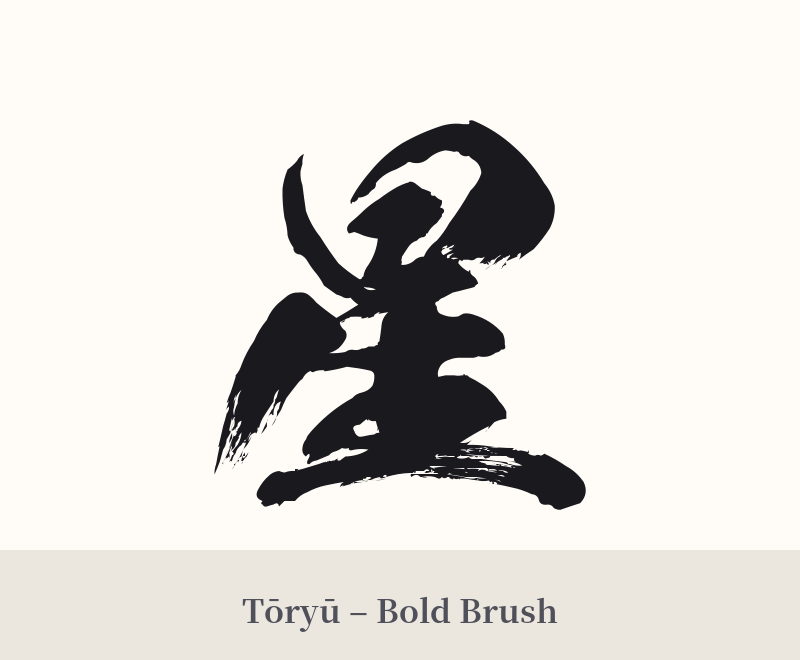
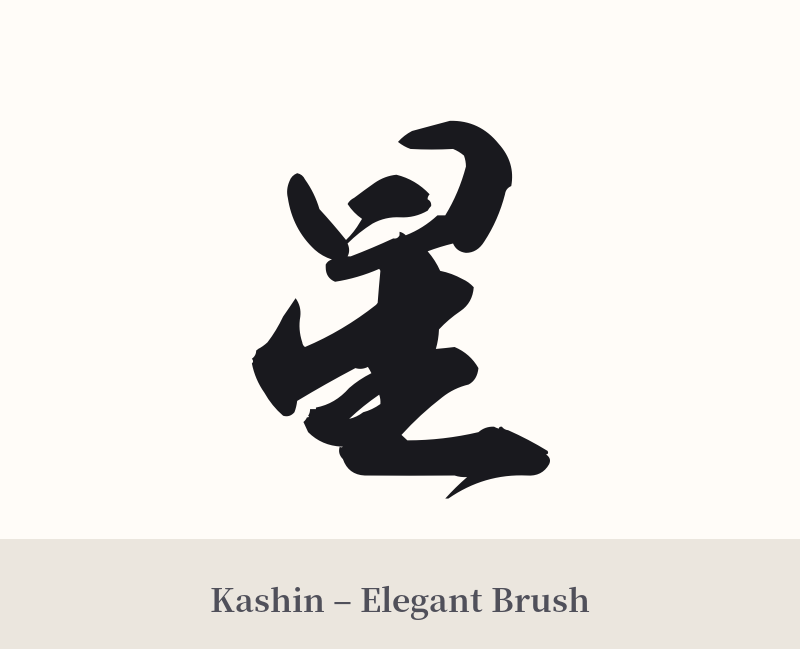
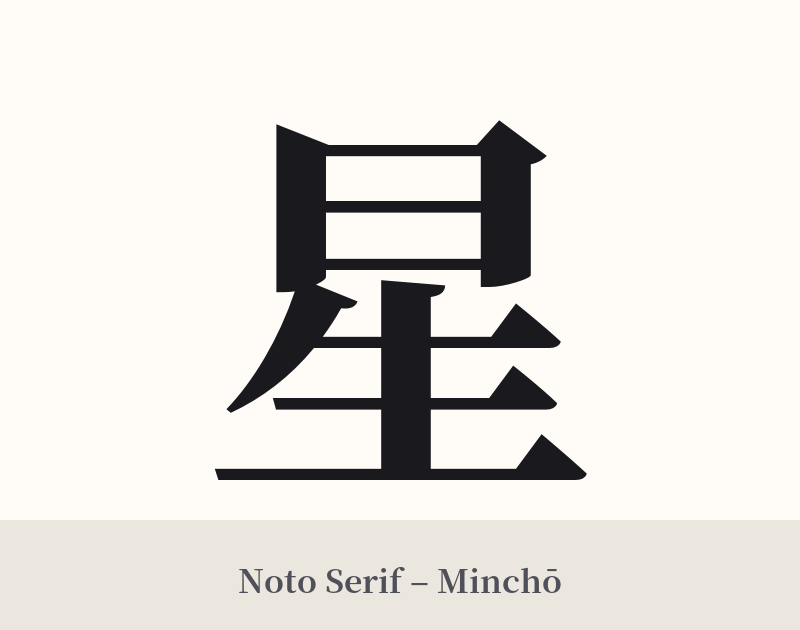
The same kanji can look dramatically different depending on the calligraphy style. Choose a font that matches the mood you want for your tattoo or design.
🎨 Tattoo Suitability
📐 Tattoo Design Guide
The kanji 星 (hoshi) offers wonderful versatility in tattoo design, fitting both small, subtle placements and larger, more expressive pieces.
For placement, consider: – A small, delicate 星 on the wrist, ankle, or behind the ear for a personal and discreet touch. – A medium-sized design on the inner forearm or calf, where the verticality of the character can be appreciated. – A larger, more impactful piece between the shoulder blades or on the back of the neck, serving as a 'guiding star.'
Stylistic recommendations include: – Gyosho (semi-cursive script): This style gives the character a flowing, elegant, and slightly dreamy feel, perfect for emphasizing its poetic nature. – Kaisho (block script): A clean, precise Kaisho font makes the kanji look timeless, strong, and clear. It’s a great choice for a bold statement. – Minimalist strokes: A modern, deconstructed version can look chic and abstract, focusing on the core elements of the character.
To make your design unique, consider incorporating 星 with other imagery. It pairs beautifully with a crescent moon, a small constellation, or surrounded by a subtle watercolor splash of a deep blue or purple night sky. Placing the kanji within an Ensō (Zen circle) can also create a powerful symbol of the universe and personal enlightenment.
Comments