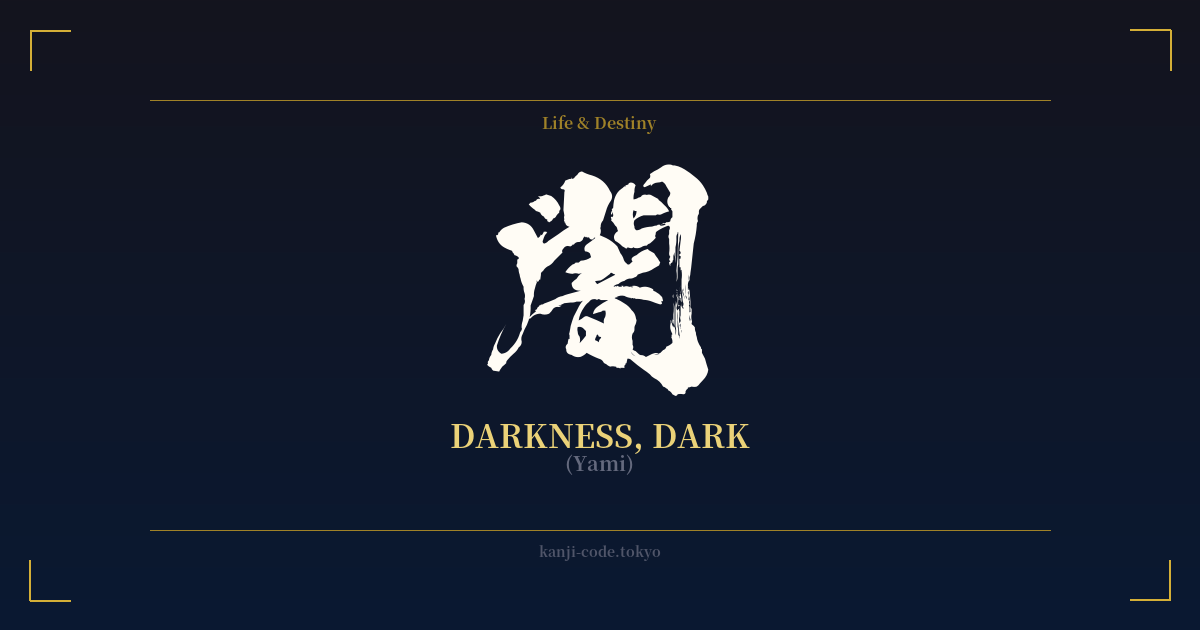
✍️ 闇 (Yami) — Cultural Context
The kanji 闇 (Yami) is one of the most evocative and emotionally charged characters in the Japanese language. On the surface, it simply means darkness—the physical absence of light. However, its true power lies in its deep well of metaphorical meanings, touching upon the unknown, the hidden, sorrow, and the profound mysteries of existence.
Historically and culturally, Yami is not just a void; it is a presence. It represents everything that is concealed from sight and understanding. This includes the literal darkness of night, but also extends to the darkness within the human heart (心の闇, kokoro no yami), symbolizing despair, grief, or hidden malice. In Japanese folklore, the Yami is the realm from which yōkai (spirits and demons) emerge, a place where the rules of the ordinary world do not apply.
The character's construction itself tells a story. It is composed of the radical 門 (mon), meaning 'gate,' enclosing the character 音 (on/oto), meaning 'sound.' This creates a powerful visual metaphor: a sound trapped behind a closed gate. It evokes a sense of being silenced, hidden, or unable to escape. This imagery perfectly captures the feeling of being enveloped by a darkness that is not just empty, but muffling and isolating.
In modern Japanese society, the word Yami is often used to describe the illicit or unseen parts of the world. For instance, 闇市 (yami ichi) refers to a 'black market,' and 闇取引 (yami torihiki) means 'illegal transaction.' This usage ties the character to concepts of secrecy, illegality, and the shadowy underbelly of society. It's a darkness that conceals, often for nefarious purposes.
It's important to distinguish Yami from a similar concept, 影 (Kage), which means 'shadow.' While both relate to the absence of light, Kage is a specific shadow cast by an object. It is defined by the light it blocks. Yami, in contrast, is an all-encompassing, absolute darkness. It is the primordial state before light, the vast unknown that exists independently. Kage needs light to exist; Yami is the absence of it.
In popular culture, from manga and anime to video games, Yami is a pervasive theme. It often represents a source of immense, untamed power, a villain's domain, or a hero's inner struggle. This has given the kanji a modern 'cool' factor, but it doesn't erase its fundamentally somber and heavy cultural weight.
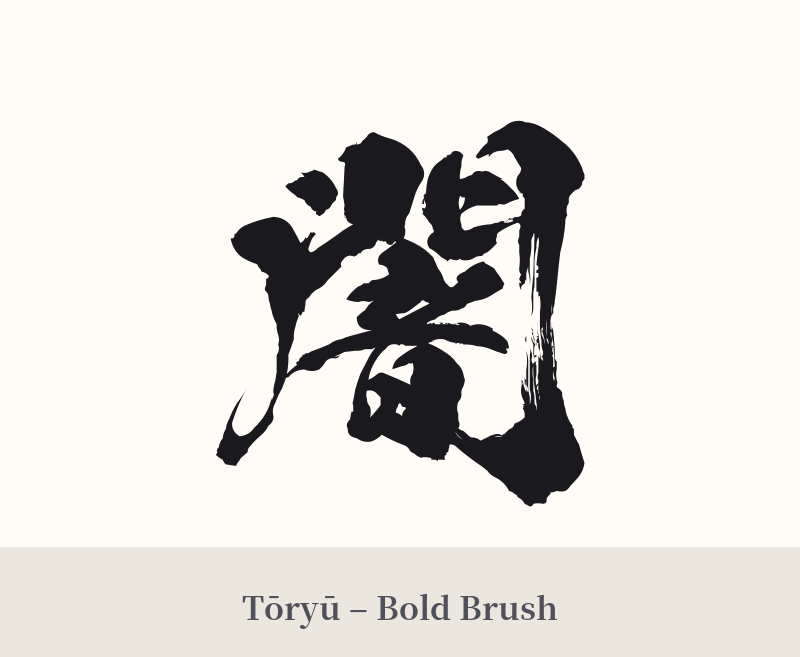
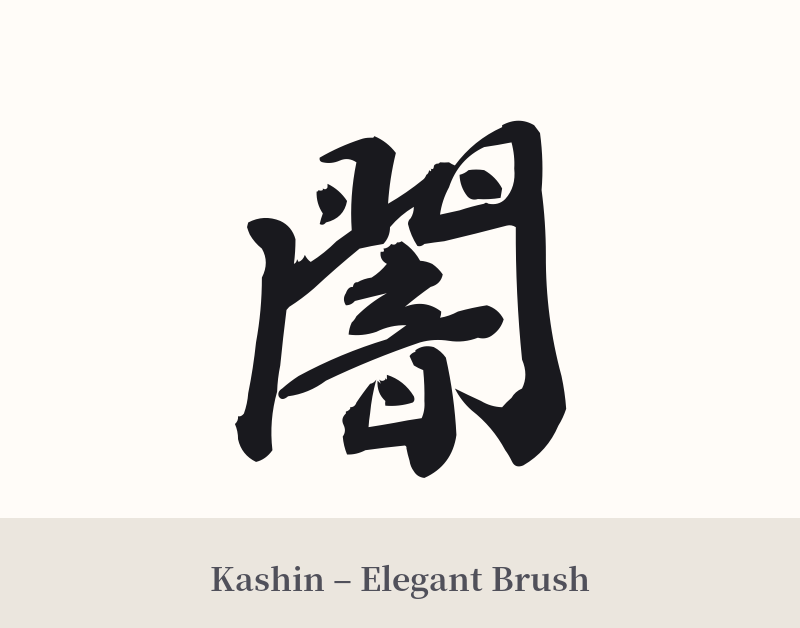
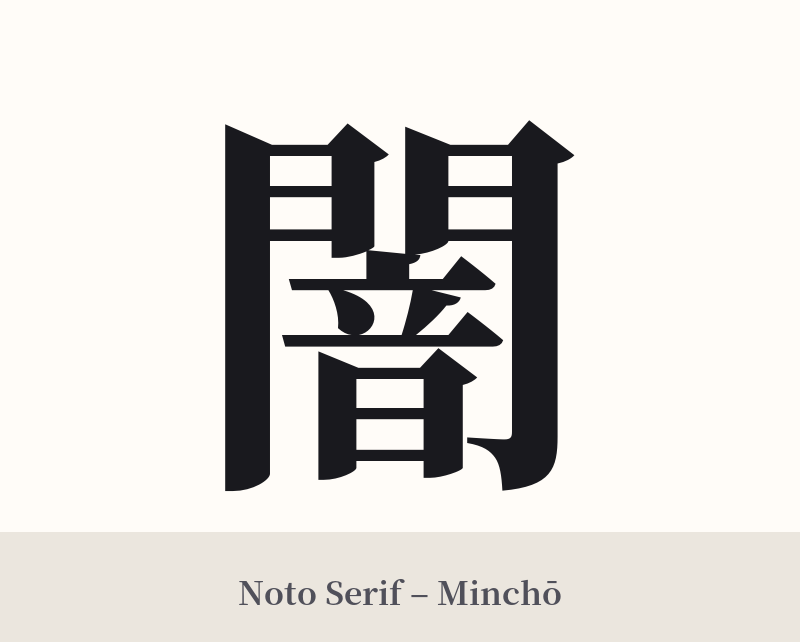
🖌️ Font Styles for 闇
The same kanji can look dramatically different depending on the calligraphy style. Choose a font that matches the mood you want for your tattoo or design.
🎨 Tattoo Suitability
📐 Tattoo Design Guide
The kanji 闇 (Yami) offers a visually compelling and powerful choice for a tattoo, but its complexity and strong presence require thoughtful design.
– Placement: Due to its vertical balance, it works exceptionally well as a standalone piece on the forearm, calf, spine, or the back of the neck. For a larger, more impactful statement, it can be placed centrally on the back or chest.
– Font Style: The style can dramatically alter its feel. A dynamic, semi-cursive calligraphy (gyōsho) or a wild, expressive brushstroke (sōsho) can emphasize its raw, emotional power. In contrast, a clean, sharp Mincho or Kaisho font gives it a more traditional, almost literary feel, highlighting its profound meaning.
– Visual Tips: Because of its 17 strokes, avoid making this tattoo too small, as the lines could blur together over time and lose their clarity. Consider a design that uses negative space, where the character is formed by the un-inked skin against a black background, literally creating 'darkness.' It can also be integrated with imagery like a faint moon, swirling fog, or the silhouette of a torii gate to build a larger scene.
Comments