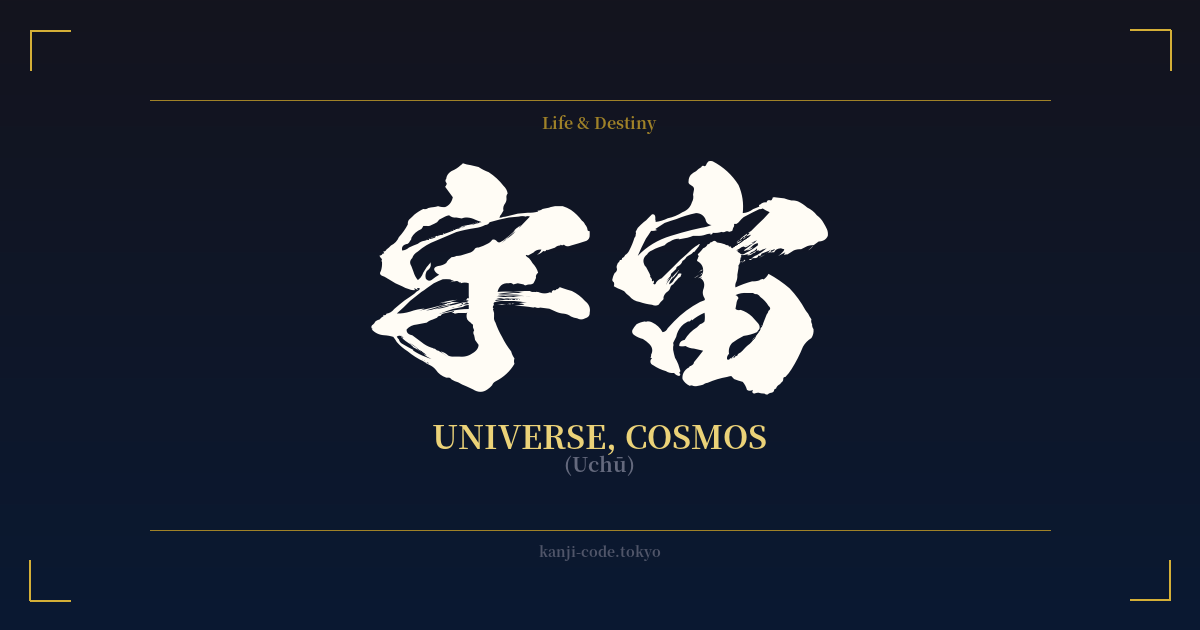
✍️ 宇宙 (Uchū) — Cultural Context
The Japanese word for universe, 宇宙 (Uchū), is a concept far more profound than a simple astronomical term. Its origin lies in ancient Chinese philosophy, specifically from texts like the Huainanzi, where it was defined as the embodiment of all space and all time.
The word is a beautiful combination of two characters. The first, 宇 (u), originally meant 'eaves' or 'roof.' This tangible image of shelter was expanded to represent the three-dimensional expanse of space in all directions—up, down, and the cardinal points. It is the container for everything that exists.
The second character, 宙 (chū), refers to 'mid-air' or an 'interval of time.' In this compound, it represents the endless flow of time—past, present, and future. It is the timeline upon which all events unfold.
Together, 宇宙 (Uchū) literally means 'roof-time' or 'eaves-time,' a poetic and powerful metaphor for the entirety of the space-time continuum. It’s a concept that marries the physical vastness of the cosmos with the unstoppable, abstract river of time. This is why it feels so much grander than the word 世界 (sekai), which means 'world' and typically refers to the Earth or human society.
In Japanese culture, this word resonates on multiple levels. In Buddhism and Shinto, it can evoke the idea of interconnectedness (縁, en) and the grand tapestry of existence. It speaks to both the external universe—the stars, galaxies, and nebulae—and the internal universe, the boundless potential and consciousness within an individual.
This duality has made 宇宙 a cornerstone of Japanese pop culture, particularly in science fiction. From the iconic anime Space Battleship Yamato (宇宙戦艦ヤマト) to the sprawling Gundam franchise, the word sets a stage for epic stories of exploration, conflict, and humanity's place among the stars. It represents the ultimate frontier, a source of both wonder and trepidation. Choosing 宇宙 is to embrace a concept that is simultaneously ancient philosophy, modern science, and futuristic imagination.
🖌️ Font Styles for 宇宙
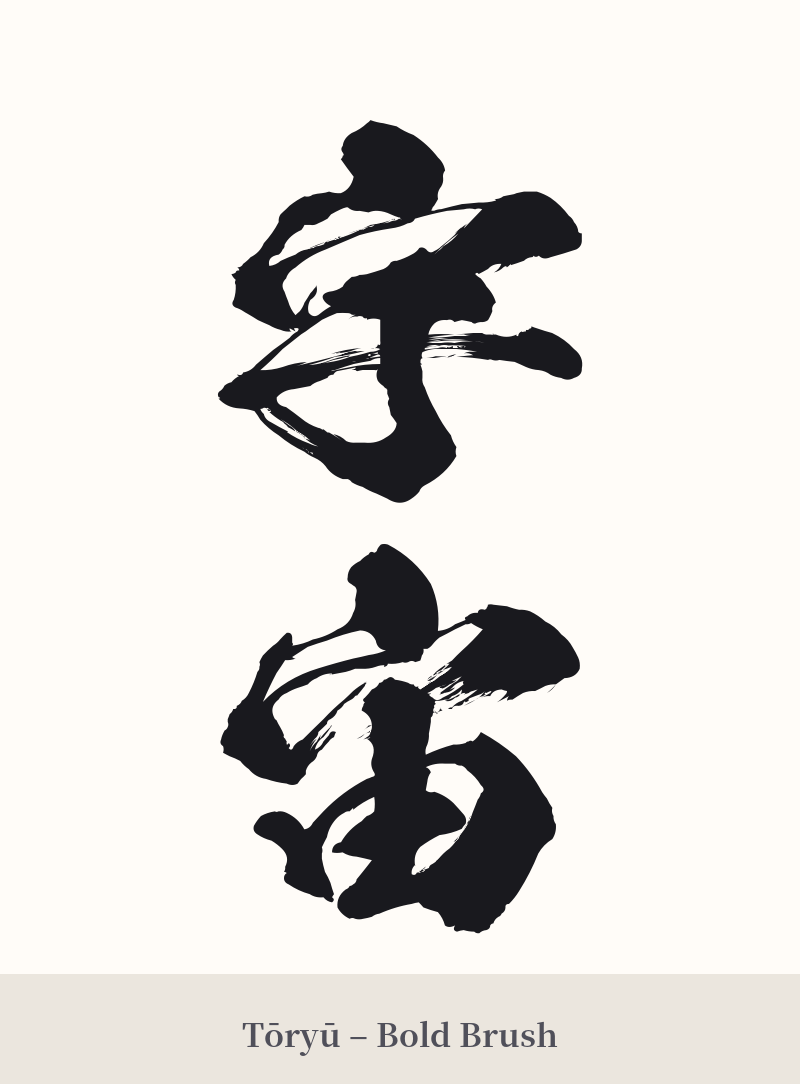
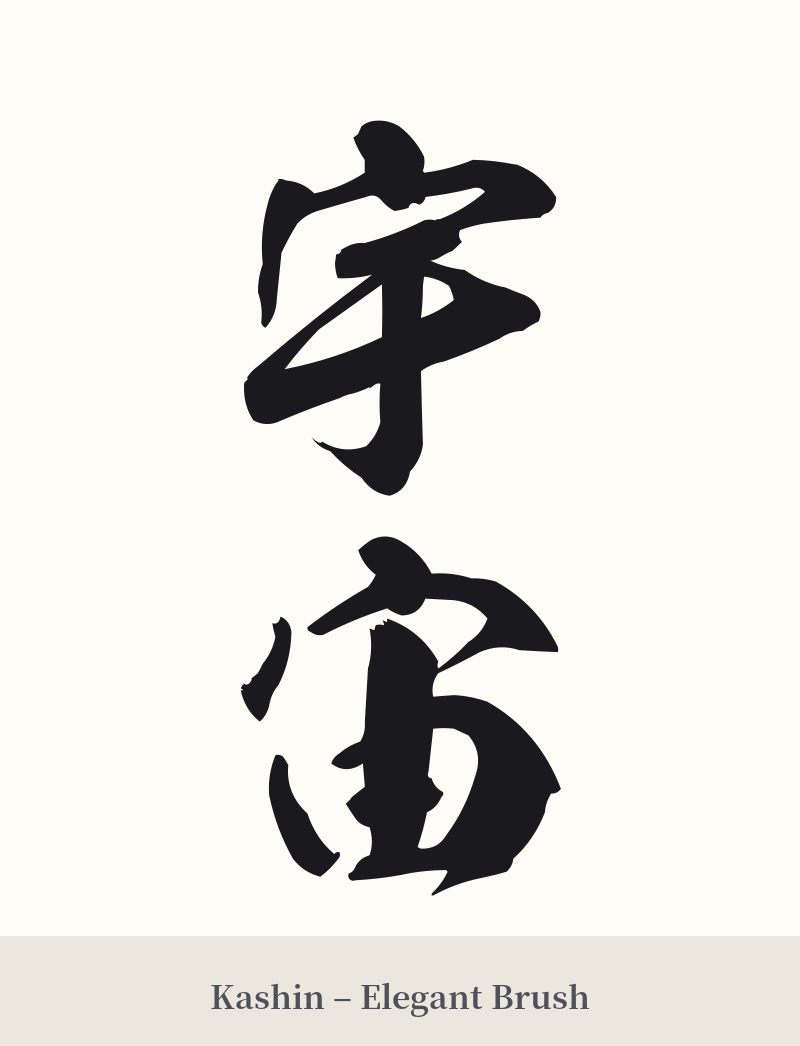
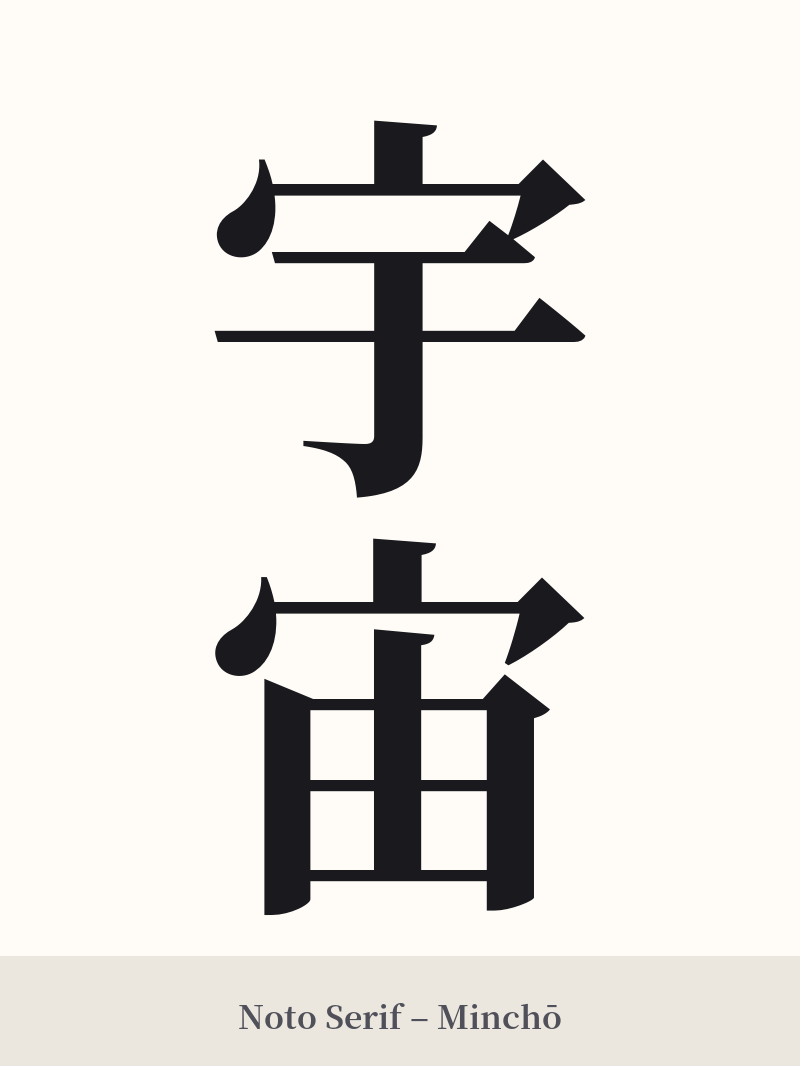
The same kanji can look dramatically different depending on the calligraphy style. Choose a font that matches the mood you want for your tattoo or design.
🎨 Tattoo Suitability
📐 Tattoo Design Guide
The word 宇宙 offers wonderful flexibility for a tattoo design, whether you lean towards traditional aesthetics or a more modern, sci-fi vibe.
– Placement: A vertical orientation is classic and works exceptionally well on the spine, forearm, or calf. For a horizontal layout, the chest, upper back, or across the ribs are excellent choices.
– Font Style: For a flowing, organic feel that evokes nebulae and cosmic dust, a semi-cursive (gyōsho) or cursive (sōsho) calligraphic style is perfect. For a bold, architectural, or sci-fi look, a crisp block script (kaisho) or even a custom geometric font can be very effective.
– Visual Tips: Consider integrating the kanji with other cosmic elements. A popular and beautiful approach is to have the characters formed by negative space within a watercolor-style nebula or starfield. You could also subtly embed the kanji within a larger image of a galaxy or have it encircled by an Ensō (Zen circle) to symbolize the universe and enlightenment.
Comments