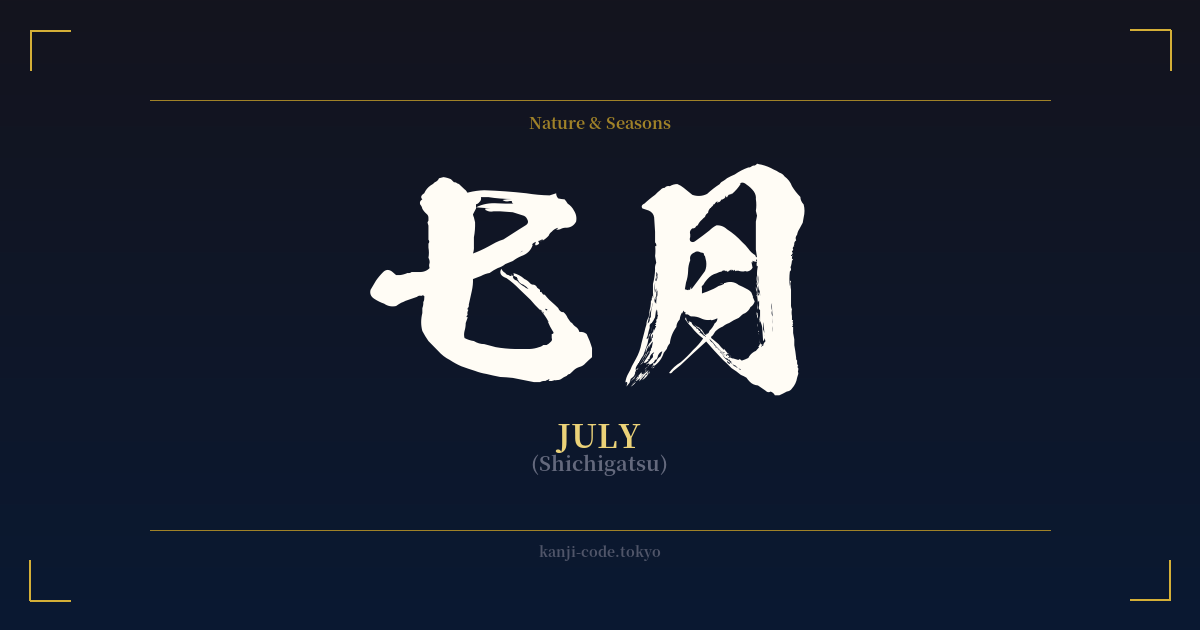
✍️ 七月 (Shichigatsu) — Cultural Context
七月 (Shichigatsu) is the Japanese word for July, literally translating to "seventh month." While straightforward, this name belies the rich tapestry of cultural events and seasonal feelings that define July in Japan. It marks the true arrival of summer's peak, a time of intense heat, vibrant festivals, and cherished traditions.
Before the widespread adoption of the Gregorian calendar, the seventh lunar month was known by a more poetic name: 文月 (Fumizuki), the "month of letters." The exact origin is debated, but a popular theory links it to the custom of writing poems and wishes on strips of paper called tanzaku (短冊) during the Tanabata festival.
Tanabata (七夕), the Star Festival, is arguably the most significant cultural event in July, celebrated on the 7th day. It commemorates the romantic legend of two celestial lovers, Orihime (the weaver star, Vega) and Hikoboshi (the cowherd star, Altair), who are separated by the Milky Way and allowed to meet only once a year. Across Japan, people write their wishes on colorful tanzaku and hang them on bamboo branches, hoping the lovers will grant them.
Modern July is synonymous with the sensory experience of Japanese summer. The air grows heavy with humidity (mushiatsui), and the relentless chorus of cicadas (semi) becomes the season's soundtrack. It's the month when school summer vacations begin, filling parks and beaches with energy. It's a time for cooling off with seasonal treats like watermelon (suika) and shaved ice (kakigōri).
The month is also a peak season for local festivals (matsuri). Communities come alive with parades, traditional music, and food stalls. People don traditional summer kimono called yukata to attend these events, culminating in spectacular fireworks displays (hanabi) that light up the night sky. The most famous of these is the Gion Matsuri in Kyoto, a month-long festival of immense scale and historical importance. For many, 七月 is not just a name on a calendar; it's a feeling—a mix of festive energy, romantic folklore, and the undeniable presence of deep summer.
🖌️ Font Styles for 七月
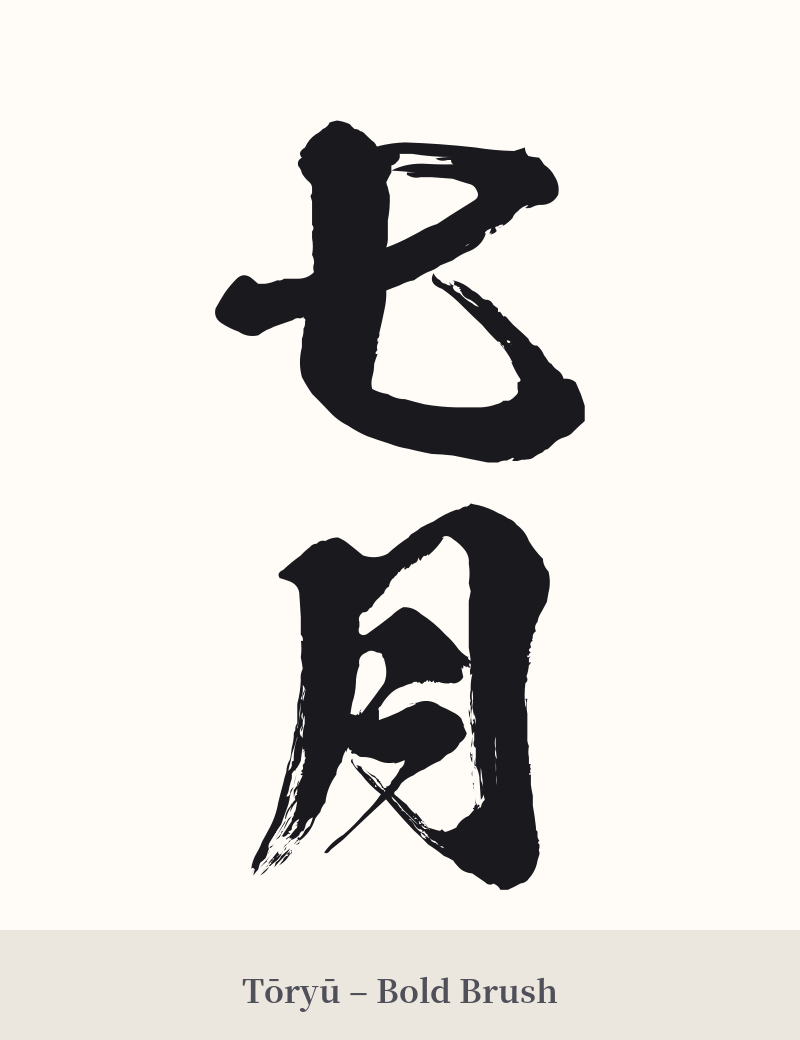
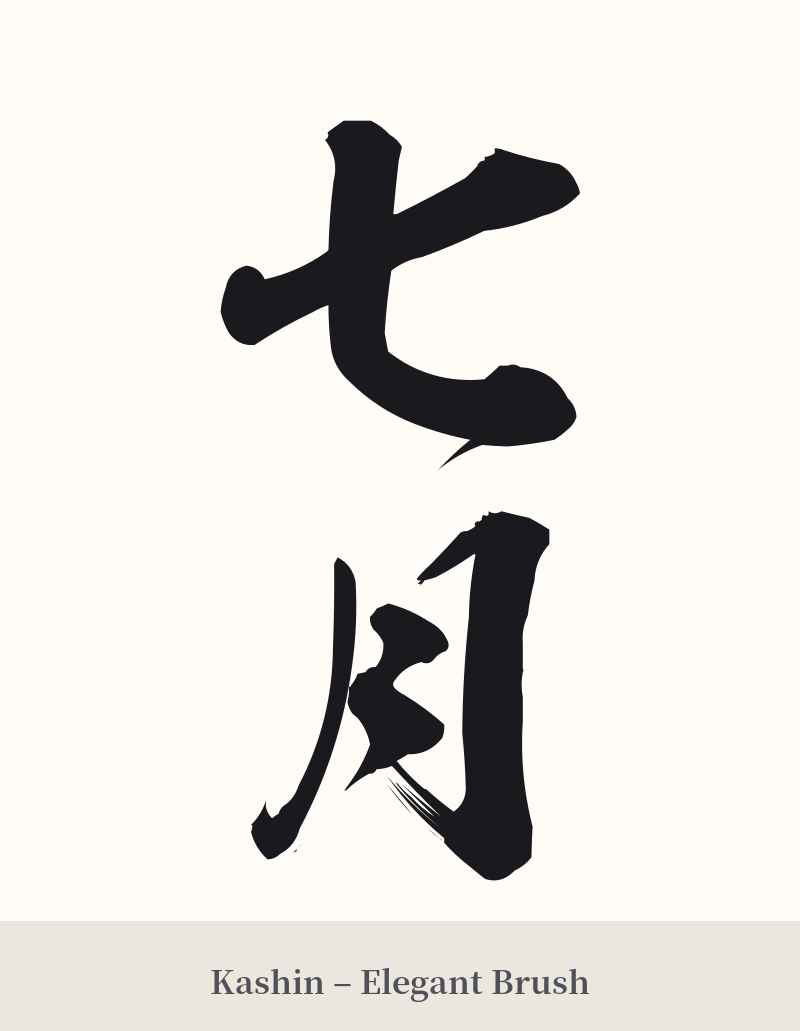
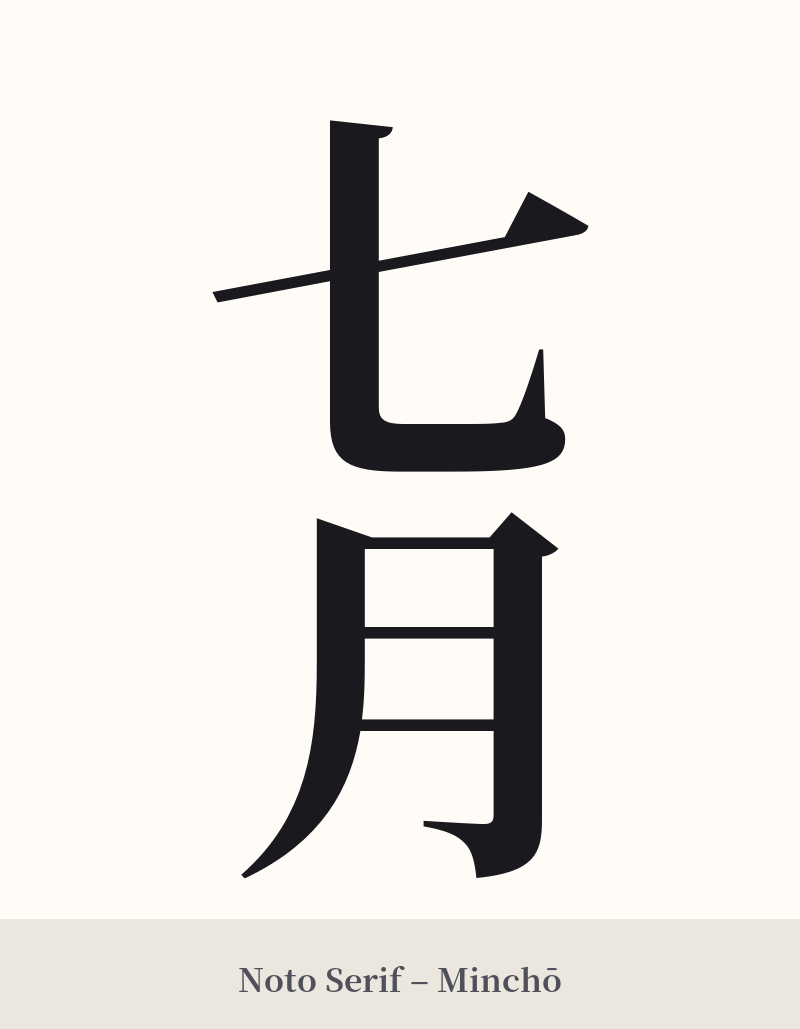
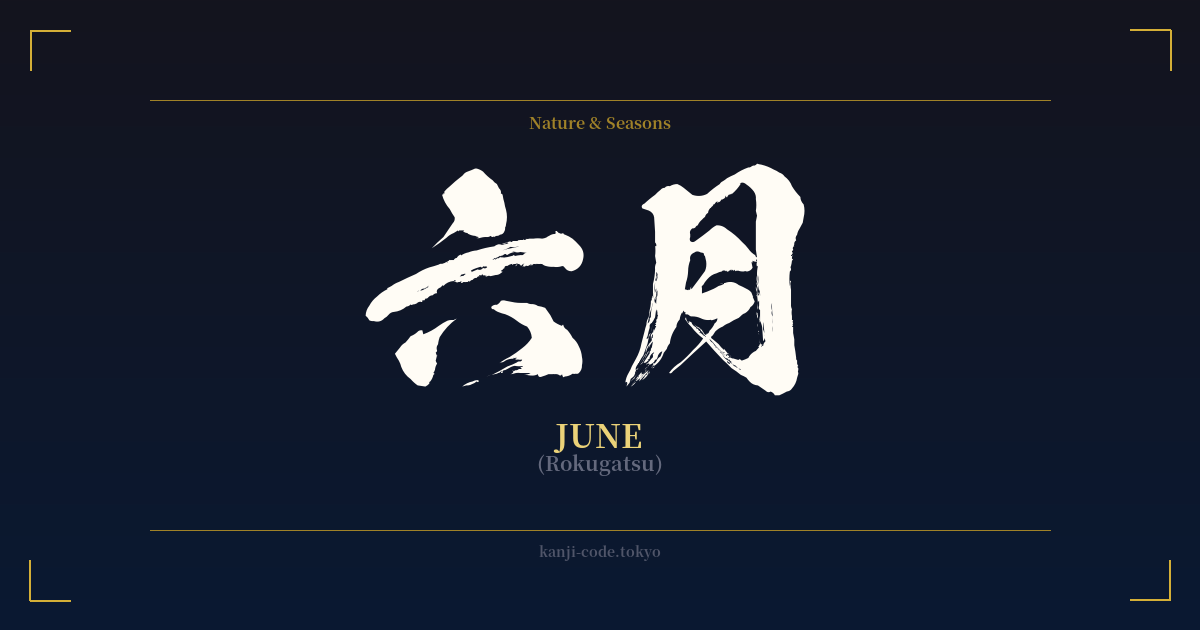
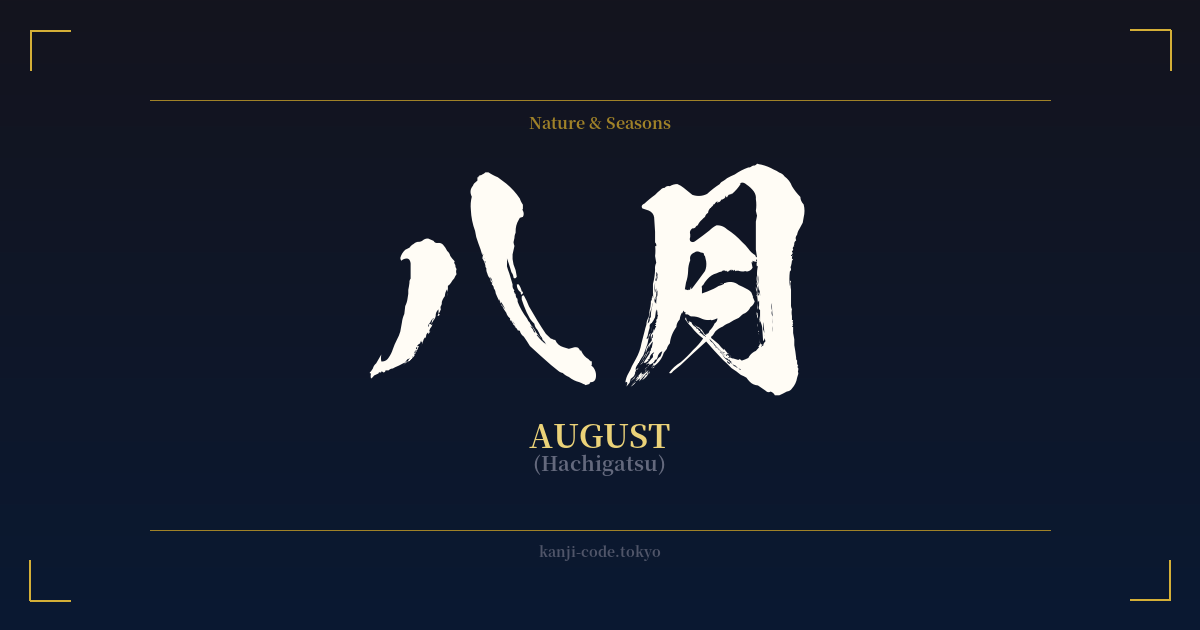
The same kanji can look dramatically different depending on the calligraphy style. Choose a font that matches the mood you want for your tattoo or design.
🎨 Tattoo Suitability
📐 Tattoo Design Guide
For a tattoo of 七月, the design's simplicity is both a challenge and an opportunity. The key is to present it with intention.
– Placement: Its simple, balanced form works well in smaller, personal spots like the inner wrist, behind the ear, or on the ankle. For a larger piece, it could be the centerpiece of a design that includes other summer or Tanabata motifs.
– Font Style: A classic, serif-style Mincho font would emphasize the clean lines and traditional feel. For a more modern and bold look, a sans-serif Gothic font works well. A flowing, semi-cursive (gyōsho) calligraphy style could inject a sense of movement, like a summer breeze or a flowing river (the Milky Way).
– Visual Tips: Consider orienting the characters vertically (七 on top of 月), which is a traditional and elegant way to write Japanese. To add more context, you could incorporate imagery related to July: a small bamboo leaf, a subtle firework burst, or the crescent shape of the moon within the 月 character itself.
Comments