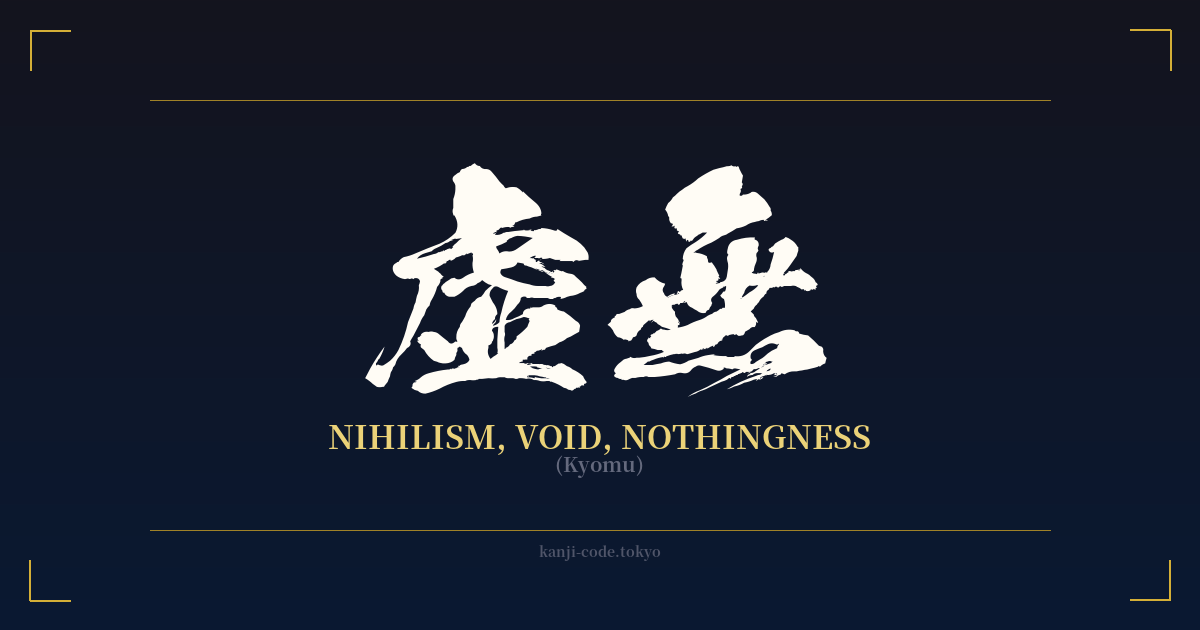
✍️ 虚無 (Kyomu) — Cultural Context
虚無 (Kyomu) is a Japanese word that translates to void, nothingness, or nihilism. It is a compound of 虚 (kyo), meaning 'void' or 'empty,' and 無 (mu), meaning 'nothingness.' Together, they form a concept that is far more profound and weighty than simple emptiness. Kyomu represents a complete absence—not just of things, but of value, meaning, and purpose.
In Western philosophy, Kyomu is the closest Japanese equivalent to nihilism, the belief that life is without objective meaning, purpose, or intrinsic value. It speaks to an existential crisis, a state of being where all foundations have crumbled away, leaving only a hollow void. This isn't just sadness or loneliness; it's a state beyond emotion, a profound apathy born from the realization of ultimate meaninglessness.
While related to Buddhist concepts, Kyomu should not be confused with 空 (Kū), the concept of 'emptiness' or 'śūnyatā.' Kū in Buddhism is not a negative void but a state of potentiality, the recognition that all phenomena are without a permanent, independent self. It is a path to enlightenment. Kyomu, in contrast, is often seen as a dead end—a bleak, static vacuum. It is the abyss, not the path through it.
Historically, the feeling of Kyomu has surfaced in Japanese culture during times of great upheaval and social change. After World War II, Japan experienced a so-called "kyomu boom" (虚無ブーム), a widespread sense of listlessness and disillusionment among the youth who had lost faith in pre-war values and struggled to find new meaning in the rapidly modernizing world.
In modern pop culture, from anime to video games, characters associated with Kyomu are often immensely powerful but emotionally detached, villainous, or tragic figures. They may wield the power of the void itself or be driven by a nihilistic philosophy that makes them formidable and unpredictable. This has given the word a certain 'cool' but dark edge, cementing its image as a concept of immense, often destructive, power and profound emptiness.
🖌️ Font Styles for 虚無
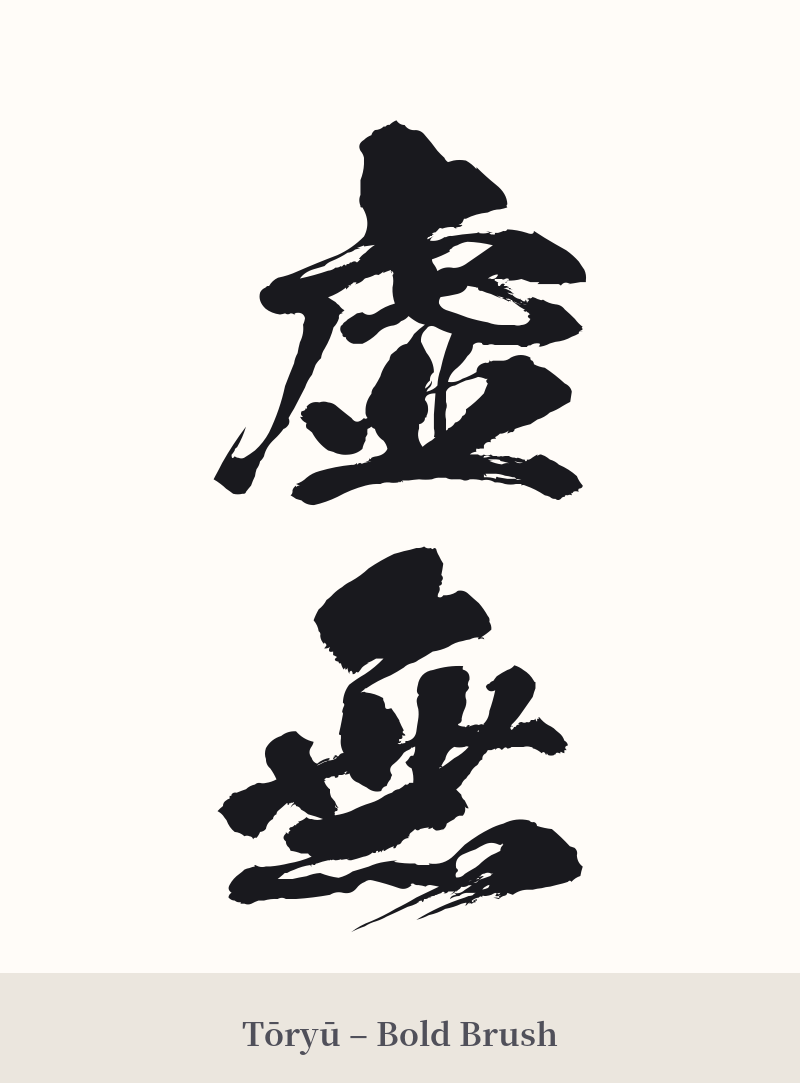
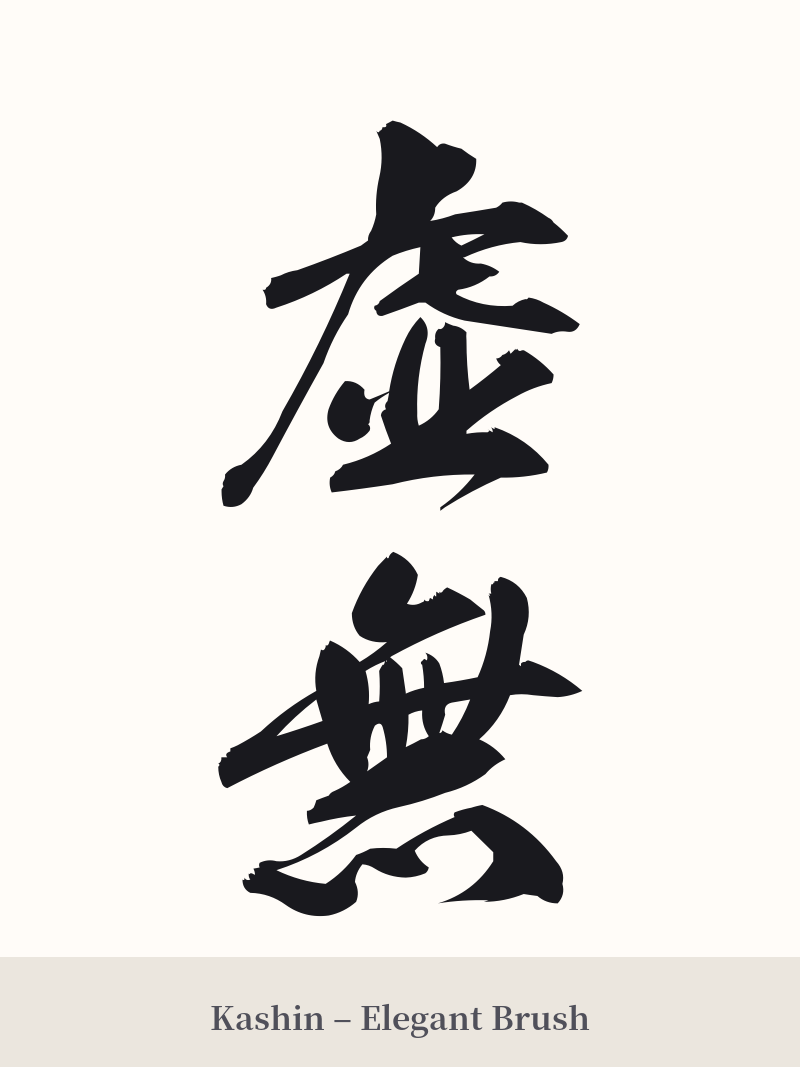
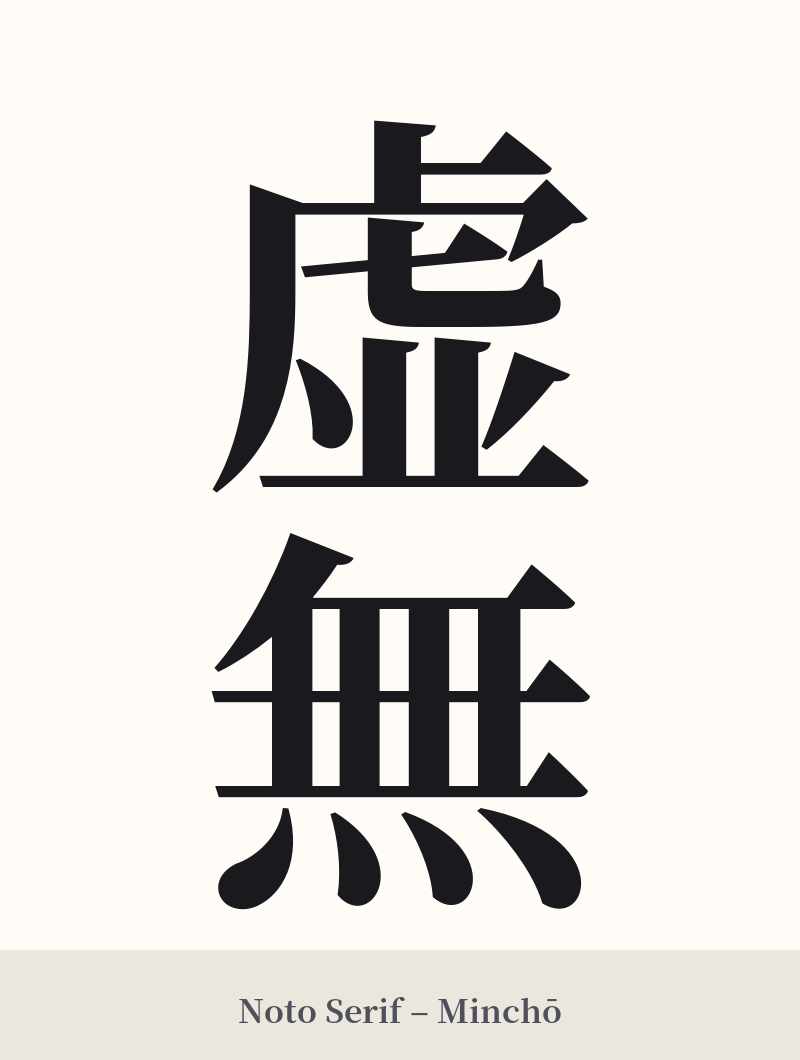
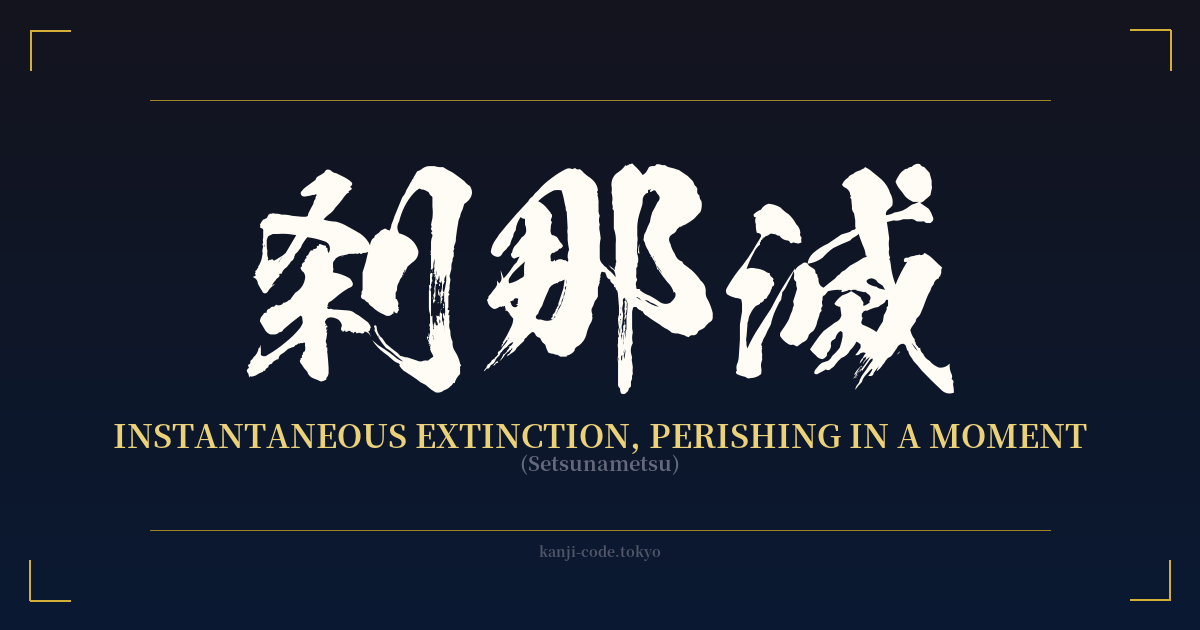
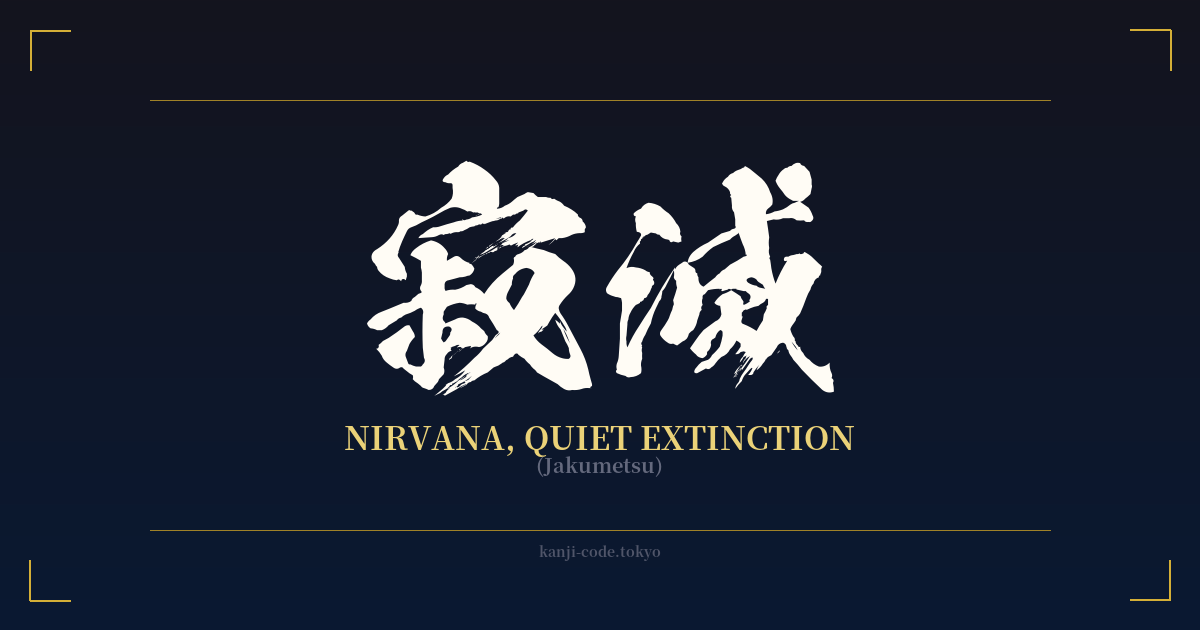
The same kanji can look dramatically different depending on the calligraphy style. Choose a font that matches the mood you want for your tattoo or design.
🎨 Tattoo Suitability
📐 Tattoo Design Guide
The design for 虚無 should reflect its heavy, philosophical nature. The two characters are well-balanced and offer flexibility in design.
– Placement: For a vertical arrangement, the spine, forearm, or calf are excellent choices, emphasizing the downward pull of the void. Horizontally, it works well across the chest, upper back, or along the clavicle.
– Font Style: Consider a stark Mincho (serif) font with thin, sharp lines to convey a feeling of cold, precise emptiness. Alternatively, a bold, semi-cursive brushstroke (Gyosho) can capture the chaotic, overwhelming power of the void, as if the ink itself is being consumed.
– Visual Elements: Less is more. Incorporate significant negative space around the kanji to enhance the theme. You might consider a design where the characters themselves appear to be dissolving, cracking, or fading into nothingness. Pairing it with a broken Enso (Zen circle) can be a powerful visual metaphor for the collapse of totality and meaning.
Comments