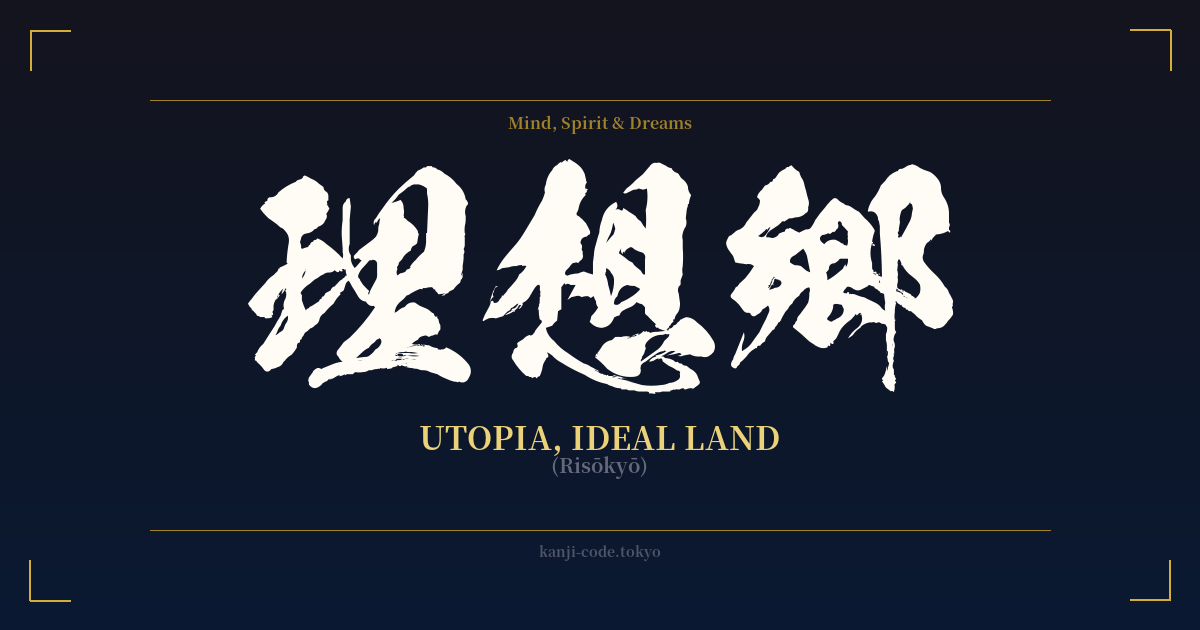
✍️ 理想郷 (Risōkyō) — Cultural Context
理想郷 (Risōkyō) is the Japanese word for an ideal or perfect place—what English speakers call 'Utopia.' It’s a term that evokes images of a flawless society, a land free from conflict, suffering, and want. But its origin and nuance reveal a fascinating intersection of Eastern and Western thought.
Literally broken down, the word combines 理 (ri – reason, logic), 想 (sō – thought, concept), and 郷 (kyō – hometown, village). Together, they form the concept of a 'homeland conceived through ideals' or a 'place born from logical thought.' This construction itself is a clue to its history. Unlike ancient, myth-based terms, Risōkyō is a relatively modern word, a wasei-kango (Japanese-made Chinese word) created during the Meiji Restoration in the late 19th century. Its primary purpose was to translate Western philosophical and literary concepts, most notably Sir Thomas More's 1516 book, Utopia.
This makes Risōkyō distinct from a more traditional East Asian concept of paradise: 桃源郷 (Tōgenkyō), the 'Peach Blossom Spring.' Tōgenkyō originates from a Chinese fable about a fisherman who stumbles upon a hidden, idyllic village where people live in blissful isolation, unaware of the outside world. Tōgenkyō represents a natural, found paradise—a lost world of simplicity and harmony. In contrast, Risōkyō is an intellectual, constructed paradise—a society engineered to be perfect based on reason and philosophy.
In modern Japanese culture, Risōkyō is a common trope in fiction, anime, and manga. It often describes a seemingly perfect world that, upon closer inspection, reveals a dark underbelly. This plays on the idea that a forced or artificially created utopia is often a dystopia in disguise. The pursuit of a perfect society can lead to the suppression of individuality or a chilling lack of freedom, a theme explored in countless stories.
For an individual, Risōkyō can also represent a personal aspiration. It's the dream of finding a place or community where one truly belongs and can live according to their highest values. It is the perfect job, the ideal relationship, or the serene state of mind one strives for. It is both a grand societal dream and an intimate personal quest for a place of peace and fulfillment.
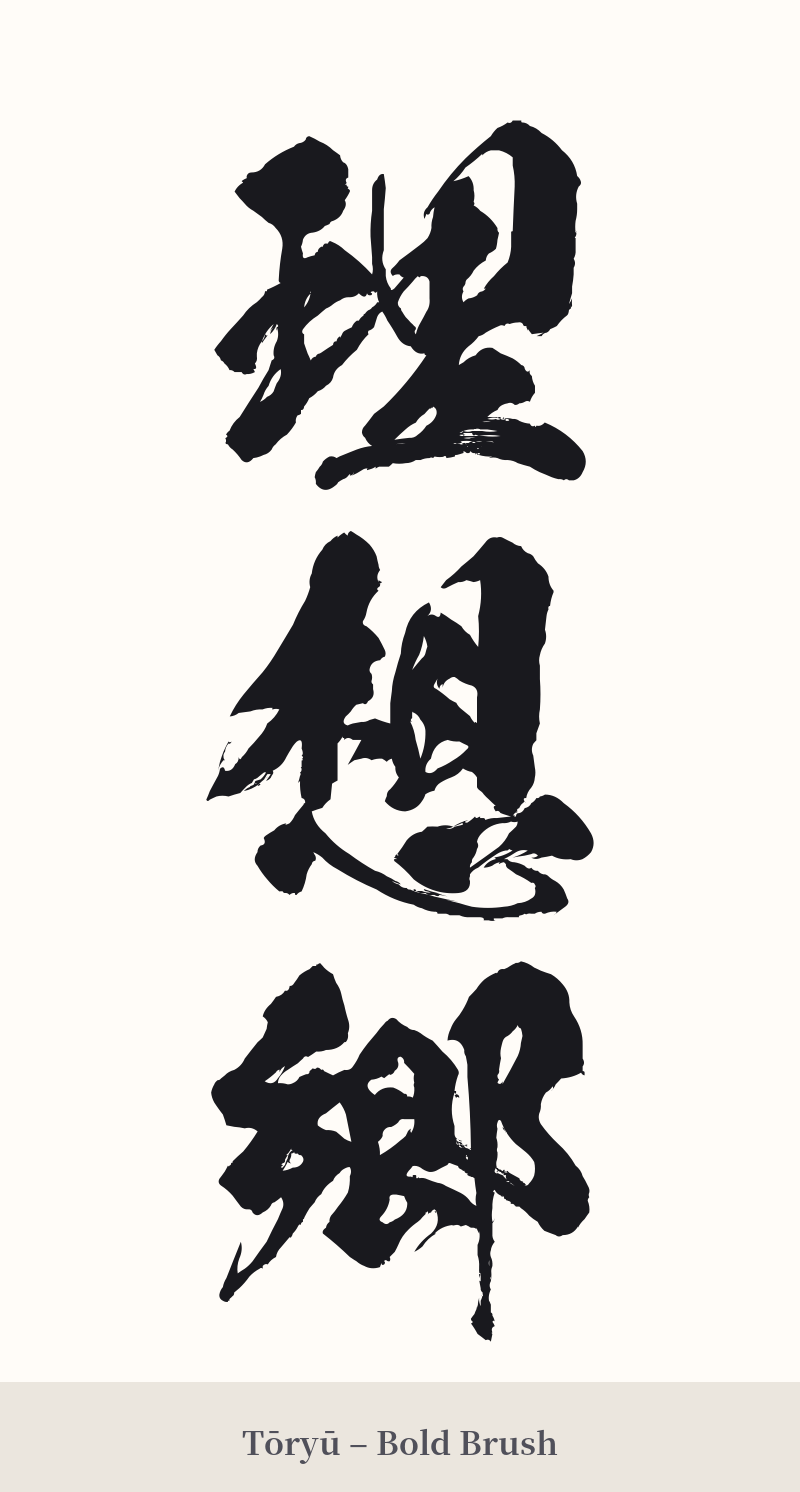
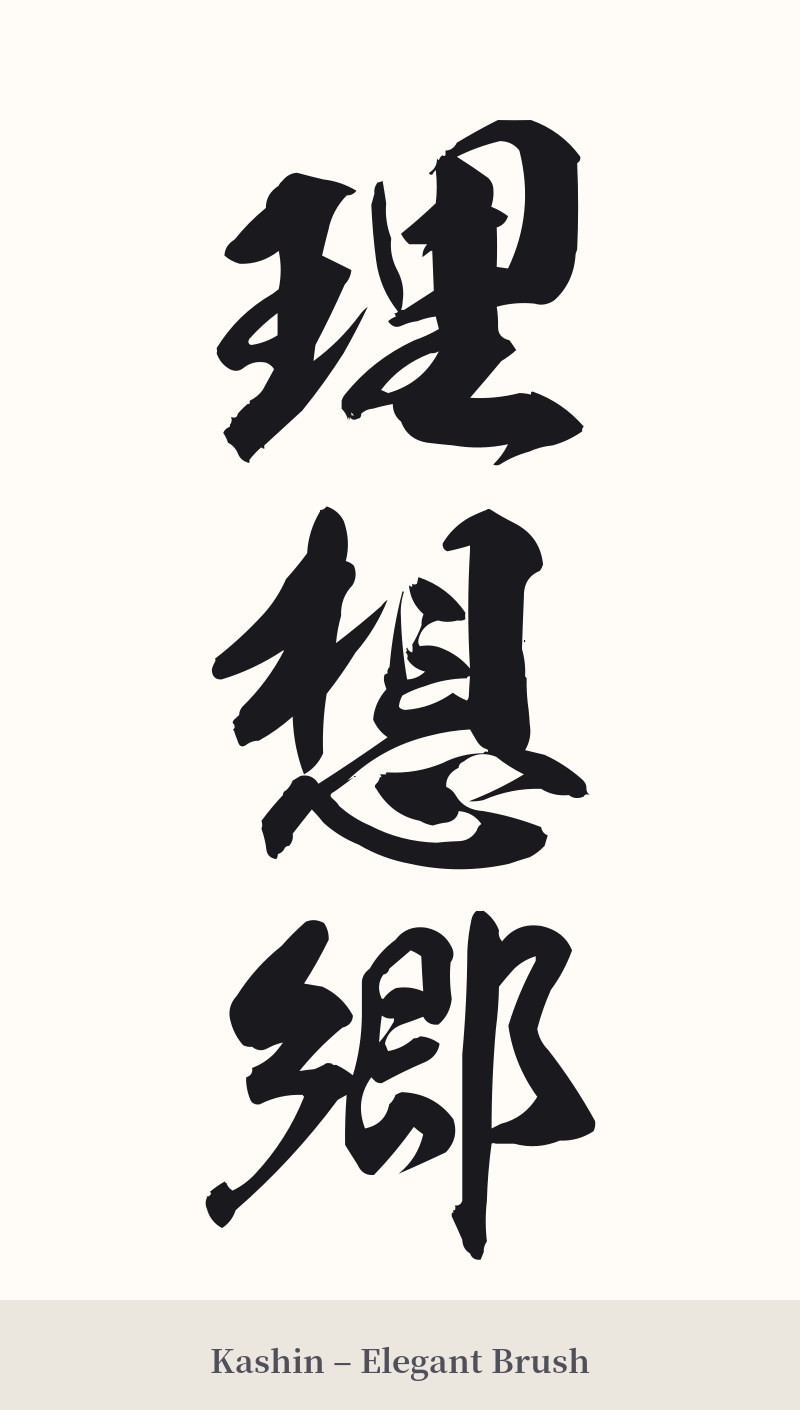
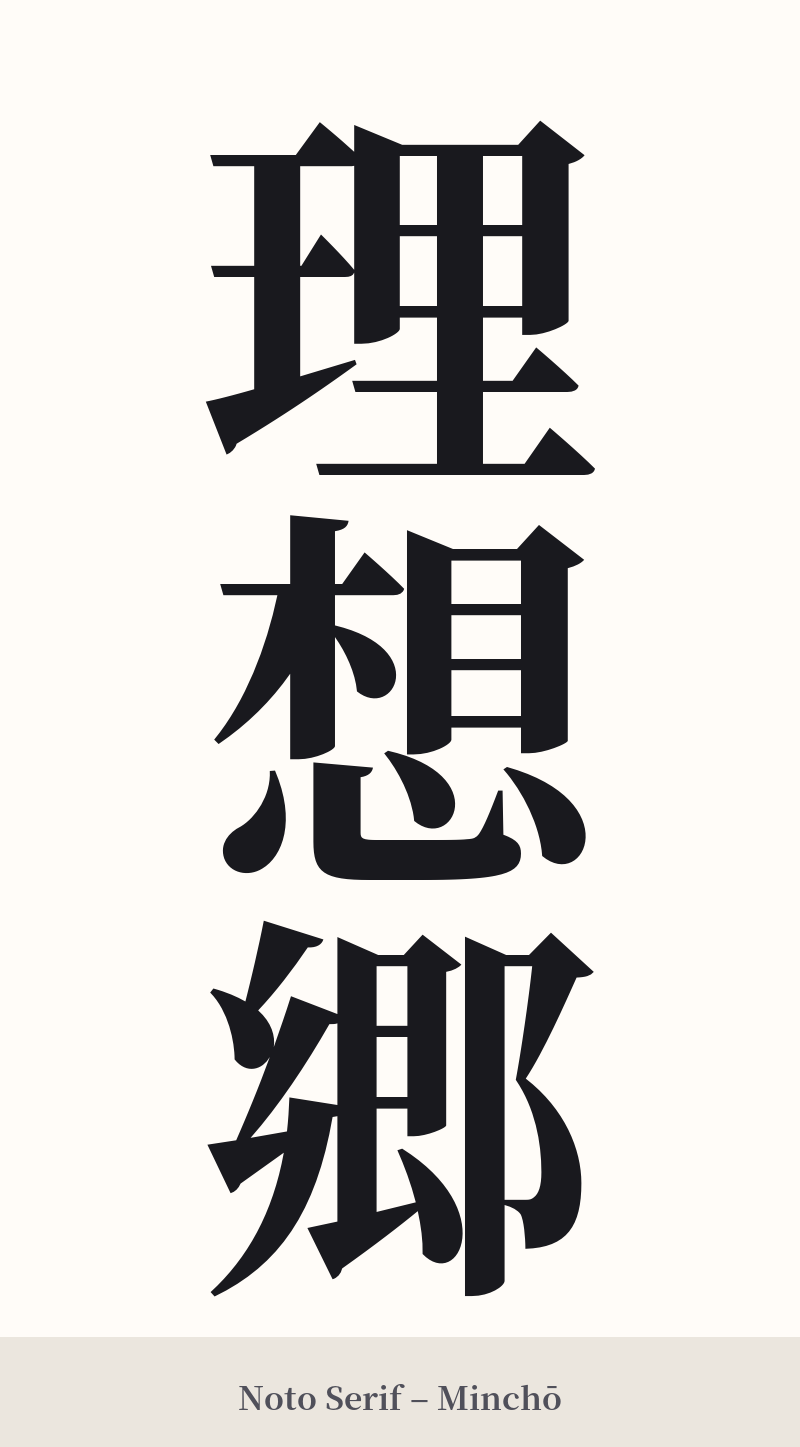
🖌️ Font Styles for 理想郷
The same kanji can look dramatically different depending on the calligraphy style. Choose a font that matches the mood you want for your tattoo or design.
🎨 Tattoo Suitability
📐 Tattoo Design Guide
The three characters of 理想郷 offer excellent design flexibility, looking particularly powerful in a traditional vertical column.
– Placement: For a vertical design, the spine, forearm, or calf are ideal locations that allow the characters to flow naturally with the body's lines. A horizontal placement across the chest or upper back would also be very effective.
– Font Style: An elegant, serif-style Mincho font would emphasize the word's literary and philosophical nature. For a more artistic and dynamic feel, a semi-cursive Gyosho or a bold Kaisho calligraphy style would be stunning. Avoid overly simplistic or blocky fonts that can strip the characters of their inherent grace.
– Visual Tips: Consider integrating the kanji into a larger visual theme. For example, the characters could be placed over a subtle watercolor background of a serene landscape, or intertwined with elements like clouds or gentle waves. This adds a layer of artistry that complements the meaning of an 'ideal land'.
Comments