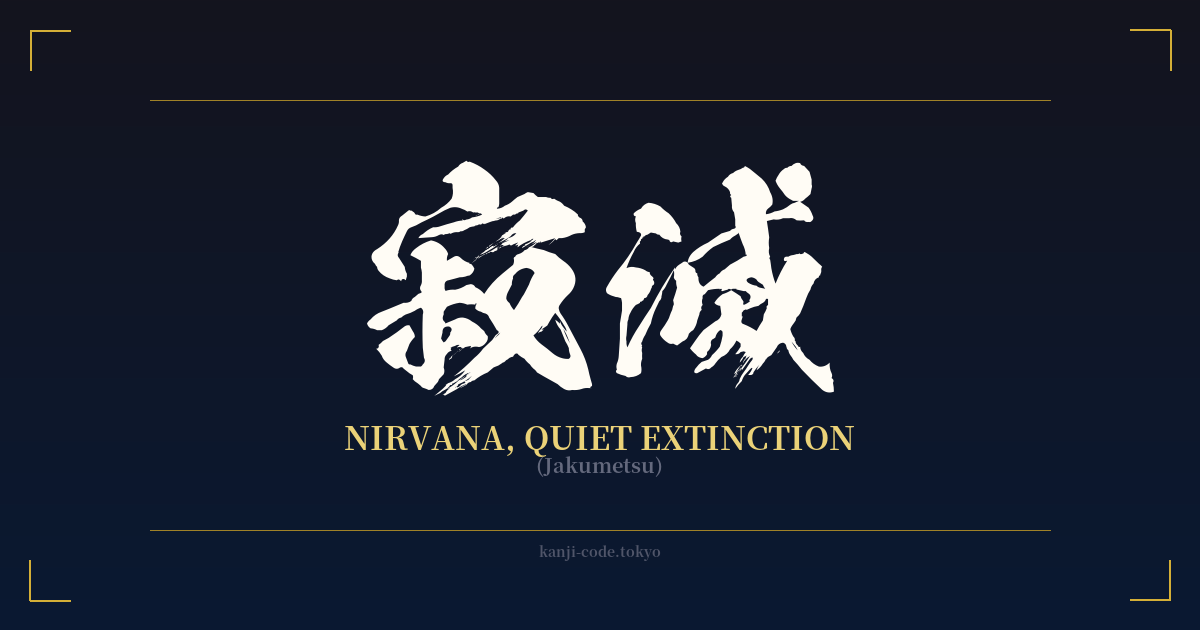
✍️ 寂滅 (Jakumetsu) — Cultural Context
寂滅 (Jakumetsu) is a Japanese Buddhist term of profound significance, often translated as 'Nirvana,' 'quiet extinction,' or 'cessation.' It represents one of the most central concepts in Buddhism: the ultimate goal of spiritual practice, which is liberation from suffering and the endless cycle of rebirth, known as saṃsāra.
The word is a direct translation of the Sanskrit concept of nirvāṇa, which literally means 'to extinguish' or 'to blow out.' This refers to the extinguishing of the 'Three Fires' or 'Three Poisons': greed (rāga), aversion (dveṣa), and ignorance (moha). Jakumetsu is not an annihilation of the self into nothingness, but rather the cessation of the ego, desire, and attachment that cause suffering.
To understand its depth, we can look at the two kanji that form the word. The first, 寂 (jaku), conveys a sense of quiet, tranquility, and even loneliness. It’s the same character found in 'sabi' of the wabi-sabi aesthetic, evoking a feeling of serene desolation and the beauty of quietude. It sets the tone for a peaceful, not violent, end.
The second character, 滅 (metsu), means 'extinction,' 'cessation,' or 'to perish.' While this sounds stark, in a Buddhist context it is not about destruction. Instead, it is the extinguishing of the flames of passion and delusion. When combined, 寂滅 (Jakumetsu) paints a picture of a 'quiet extinction'—the peaceful fading away of the false self and the suffering it endures.
In a more literal sense, the term is also used respectfully to refer to the death of the Buddha or a high-ranking, enlightened priest. This usage is sometimes seen as 入寂 (nyūjaku), meaning 'to enter into tranquility.' This highlights the belief that for an enlightened being, death is not an end but a final transition into the ultimate state of peace, free from the confines of the physical world.
Therefore, Jakumetsu stands in stark contrast to Western notions of oblivion. It is an affirmative concept representing the attainment of an unconditioned state, a supreme reality beyond the comprehension of ordinary consciousness. It is the end of striving and the beginning of true, unshakable peace.
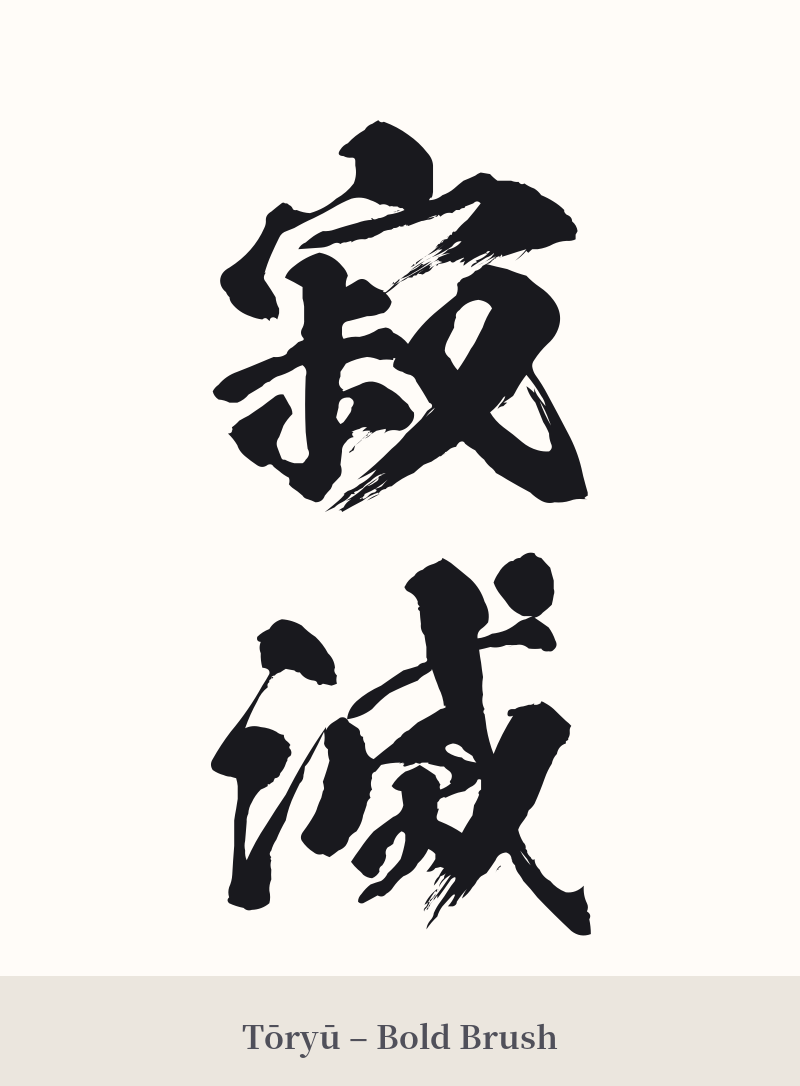
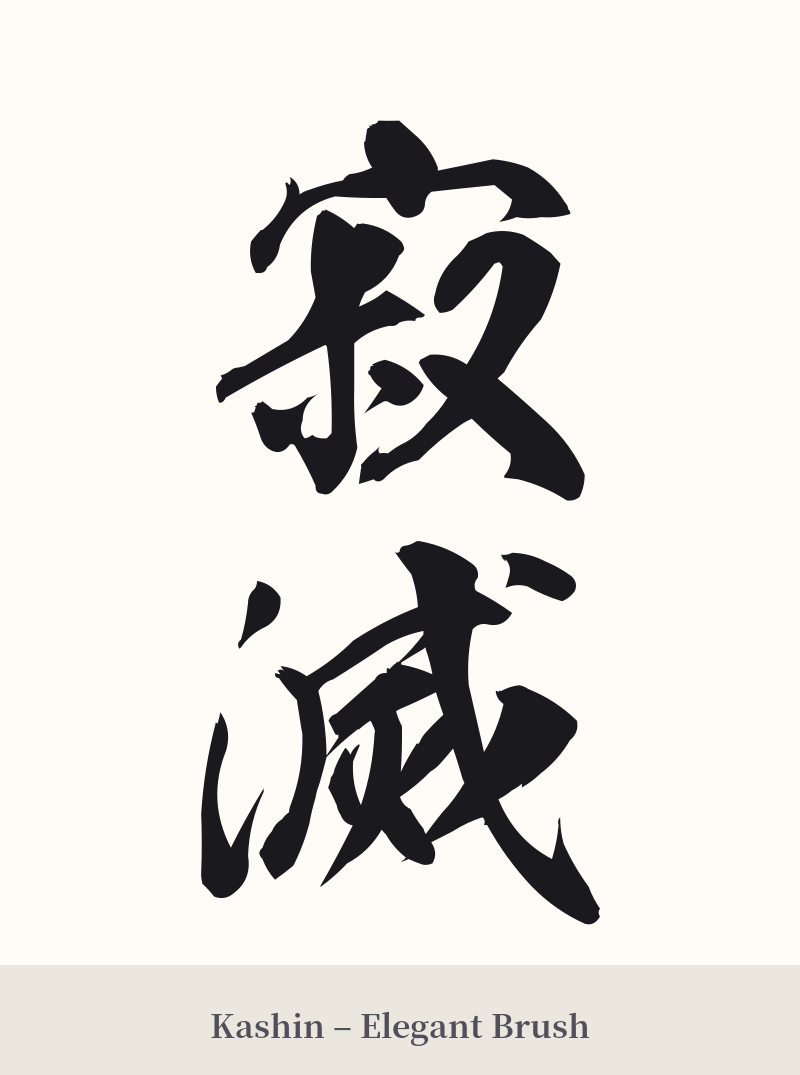
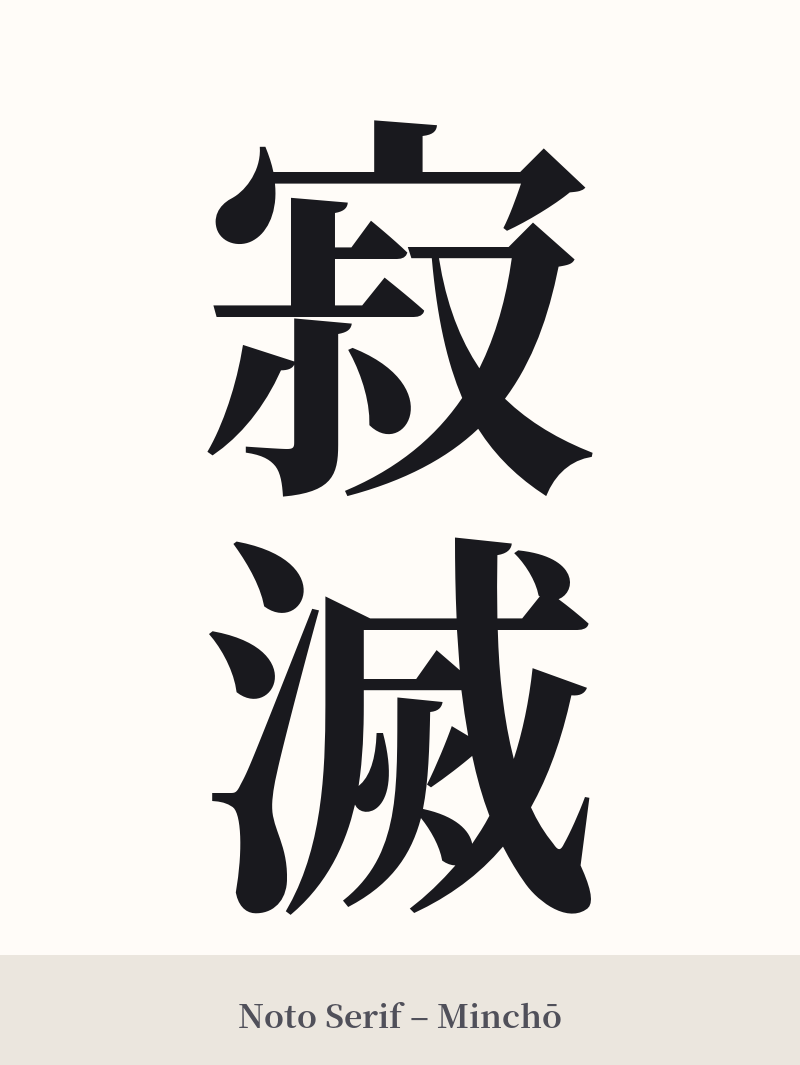
🖌️ Font Styles for 寂滅
The same kanji can look dramatically different depending on the calligraphy style. Choose a font that matches the mood you want for your tattoo or design.
🎨 Tattoo Suitability
📐 Tattoo Design Guide
A word with the gravity of 寂滅 (Jakumetsu) deserves a thoughtful and respectful design approach.
– Placement: Vertical alignment is highly recommended to honor its traditional origins. The spine, inner forearm, or along the calf are excellent placements that provide the necessary space for the characters to be rendered clearly.
– Font Style: Stick to traditional Japanese calligraphy styles. A formal Kaisho (block) script emphasizes the structure and seriousness of the characters. A slightly more fluid Gyosho (semi-cursive) script can add a sense of calm movement. Avoid modern, geometric, or overly stylized fonts as they would clash with the profound, ancient meaning.
– Visual Tips: Due to the high stroke counts (11 and 13), the tattoo must be sized appropriately. If too small, the lines will blur together over time, rendering the word illegible. Consider a design that gives the characters room to breathe, perhaps complemented by a simple enso circle or a minimalist lotus flower to reinforce the Buddhist theme.
Comments