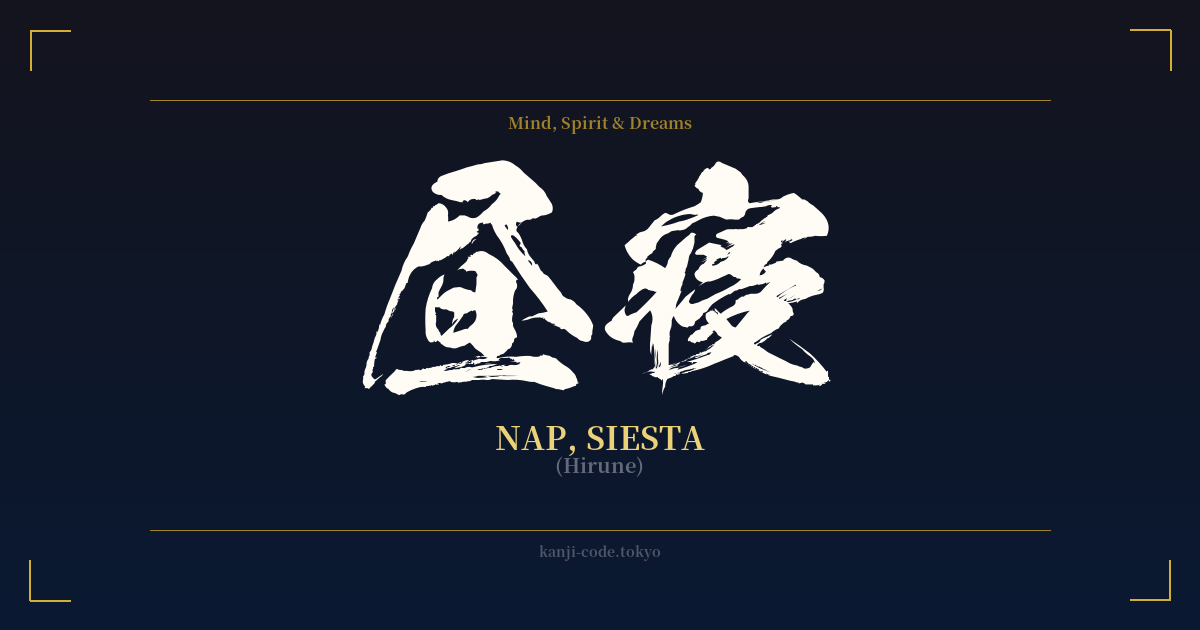
✍️ 昼寝 (Hirune) — Cultural Context
昼寝 (Hirune) is the Japanese word for a nap or siesta. Composed of the kanji for “daytime” (昼) and “sleep” (寝), its meaning is beautifully direct: daytime sleep. While the concept of napping is universal, its perception and practice in Japan carry unique cultural weight, balancing on a fine line between personal indulgence and a tool for societal productivity.
In the West, napping during work hours might be seen as a sign of laziness. In Japan, however, the concept is often viewed through a different lens, most famously with the practice of 'inemuri' (居眠り), which means “to be present while sleeping.” It's not uncommon to see office workers dozing at their desks or on the train. Far from being a fireable offense, it’s often interpreted as a sign of extreme diligence—a person so dedicated that they have worked themselves to the point of exhaustion. Hirune is the more intentional, scheduled version of this rest.
Modern Japanese corporate culture has started to formally embrace the power of the nap. Recognizing the benefits for productivity and employee well-being, some progressive companies have installed dedicated “napping rooms” or “gohirune spaces” for their staff. This shift reframes the hirune from a simple moment of leisure into a strategic tool for maintaining focus and efficiency in a demanding work environment.
Beyond the office, hirune holds a softer, more poetic place in Japanese culture. It evokes images of a quiet, lazy summer afternoon, with the buzz of cicadas in the background. It represents a small, stolen moment of peace in a fast-paced world. This imagery is a common theme in Japanese literature, haiku, and art, symbolizing a return to simplicity and the quiet joys of life. In anime, a character taking a peaceful nap under a tree is a frequent visual trope used to convey tranquility, innocence, and a connection to nature.
Ultimately, 昼寝 embodies a charming duality. It is both a practical response to the rigors of modern life and a symbol of serene, personal escape. It represents the wisdom in taking a moment to recharge, whether to face the rest of the workday with renewed vigor or to simply savor a moment of quiet stillness.
🖌️ Font Styles for 昼寝
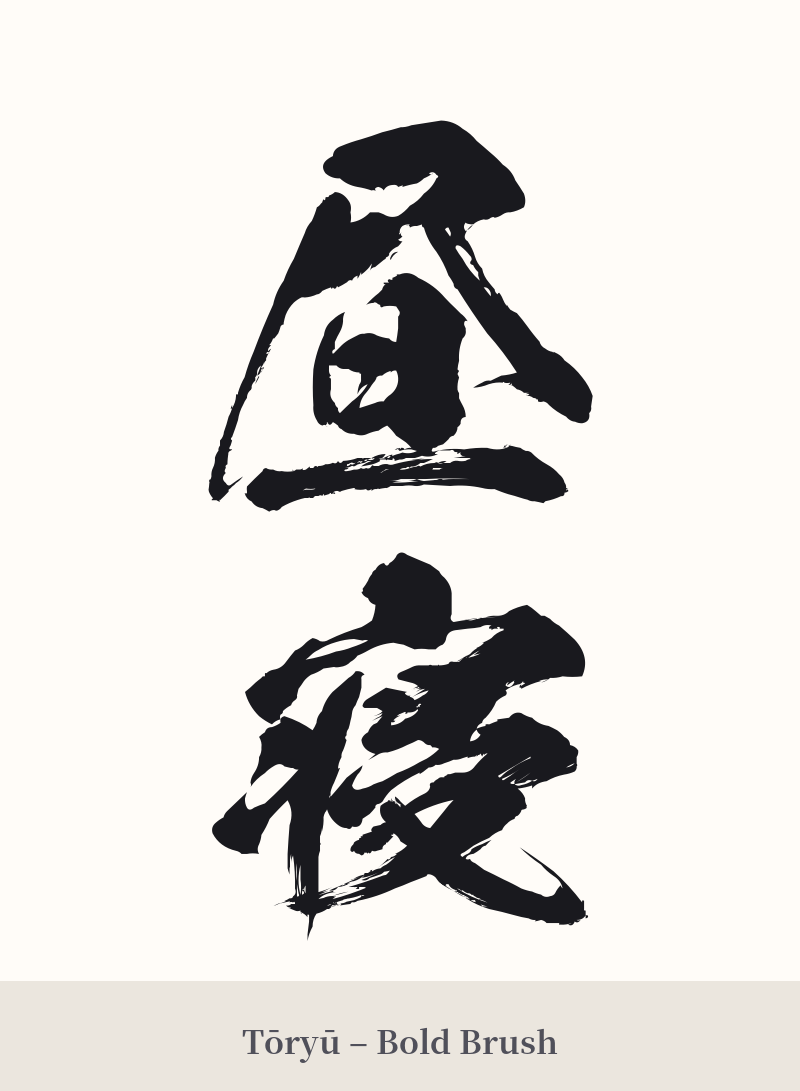
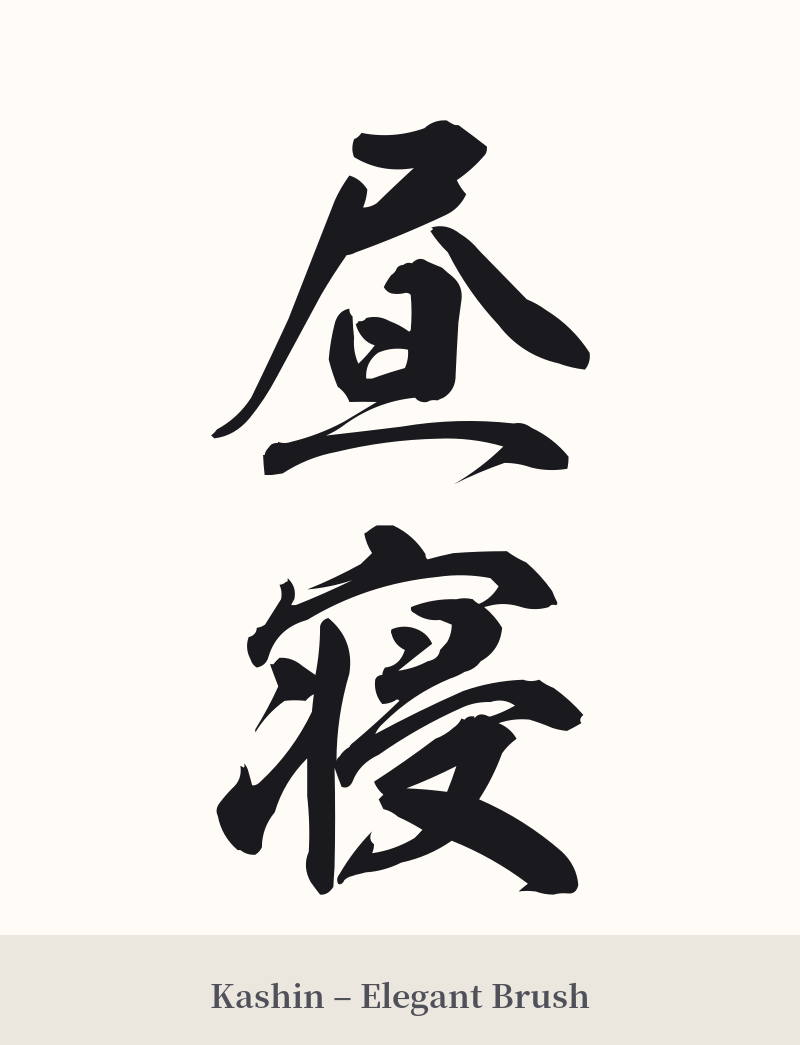
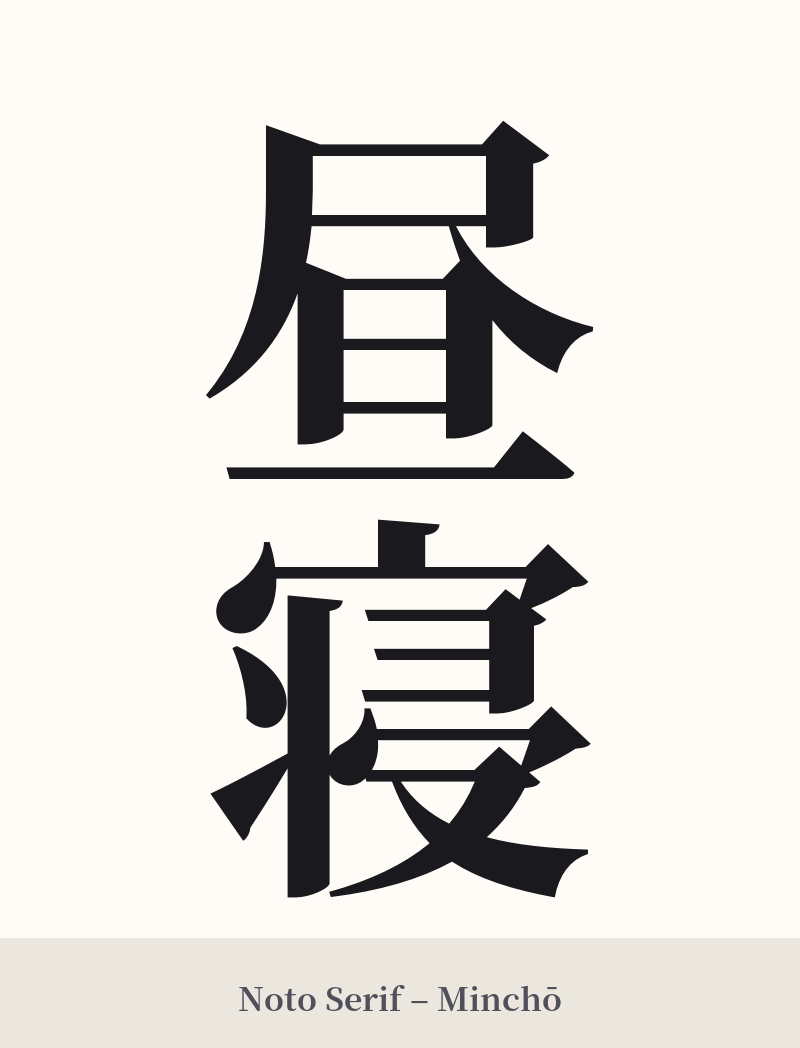
The same kanji can look dramatically different depending on the calligraphy style. Choose a font that matches the mood you want for your tattoo or design.
🎨 Tattoo Suitability
📐 Tattoo Design Guide
A tattoo of 昼寝 (Hirune) is a personal statement about the value of rest and peace. The design should reflect this gentle, quiet sentiment.
– Placement: This kanji feels most at home in more personal, less conspicuous locations. Consider the inner forearm, the ribs, along the collarbone, or on the ankle. These placements complement the intimate, self-care nature of the word.
– Font Style: Avoid aggressive, blocky, or overly sharp fonts. A soft, flowing calligraphy script (Gyosho) would be ideal, capturing the feeling of drifting off to sleep. A clean, rounded Mincho or even a simple, handwritten-style font would also work well to convey its calm and approachable meaning.
– Visual Tips: To add more visual flair, consider incorporating related imagery. A sleeping cat, a few falling cherry blossom petals, or the gentle arc of a crescent moon can be woven into the design. Writing the kanji vertically (縦書き, tategaki) is a classic and aesthetically pleasing orientation for this two-character compound.
Comments