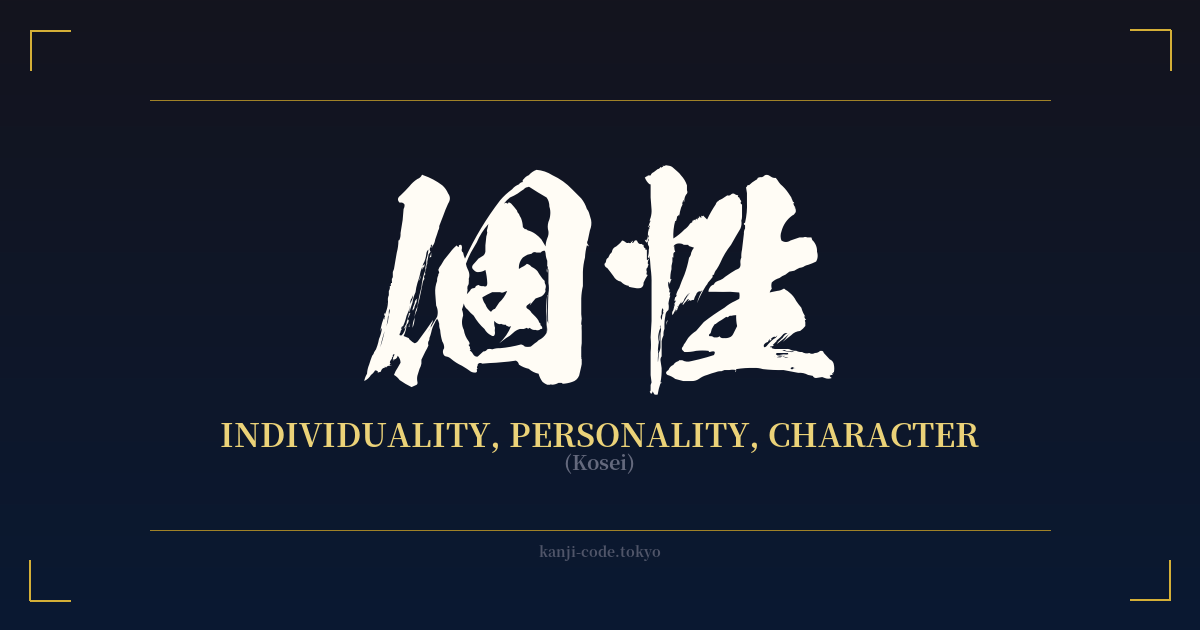
✍️ 個性 (Kosei) — Cultural Context
個性 (Kosei) is the Japanese word for 'individuality,' 'personality,' or 'one's unique character.' It is a concept that navigates the fascinating intersection of Japan's traditional group-oriented society and its modern embrace of personal expression.
Historically, Japanese culture has often been characterized by the proverb, 'The nail that sticks out gets hammered down' (出る杭は打たれる, deru kui wa utareru). This highlights a societal value placed on harmony, conformity, and prioritizing the needs of the group over the desires of the individual. In this context, overt displays of 'kosei' were sometimes discouraged in favor of collective unity.
However, this traditional view has evolved significantly. In contemporary Japan, especially since the post-war economic boom, the idea of Kosei has gained immense importance. It is now seen as a vital element of personal identity and fulfillment. This shift is visible everywhere, from the world-renowned street fashion of Harajuku, where self-expression is celebrated, to the emphasis on developing unique talents in the Japanese education system.
Today, Kosei is not about rebellious non-conformity but about understanding and cultivating one's own distinct nature. It's about what makes you, you. This aligns closely with another important Japanese concept, 生き甲斐 (ikigai), or 'reason for being.' Discovering one's Kosei is often considered the first step toward finding one's ikigai, as it requires deep self-reflection to identify personal passions, strengths, and values.
In business and art, having a strong Kosei is highly prized. A product with Kosei has a unique selling proposition; an artist with Kosei has a distinct voice and style. The word encapsulates the quiet confidence of being different, not for the sake of being loud, but for the sake of being authentic. It represents a modern Japanese ideal: contributing to the whole by being the best version of one's unique self.
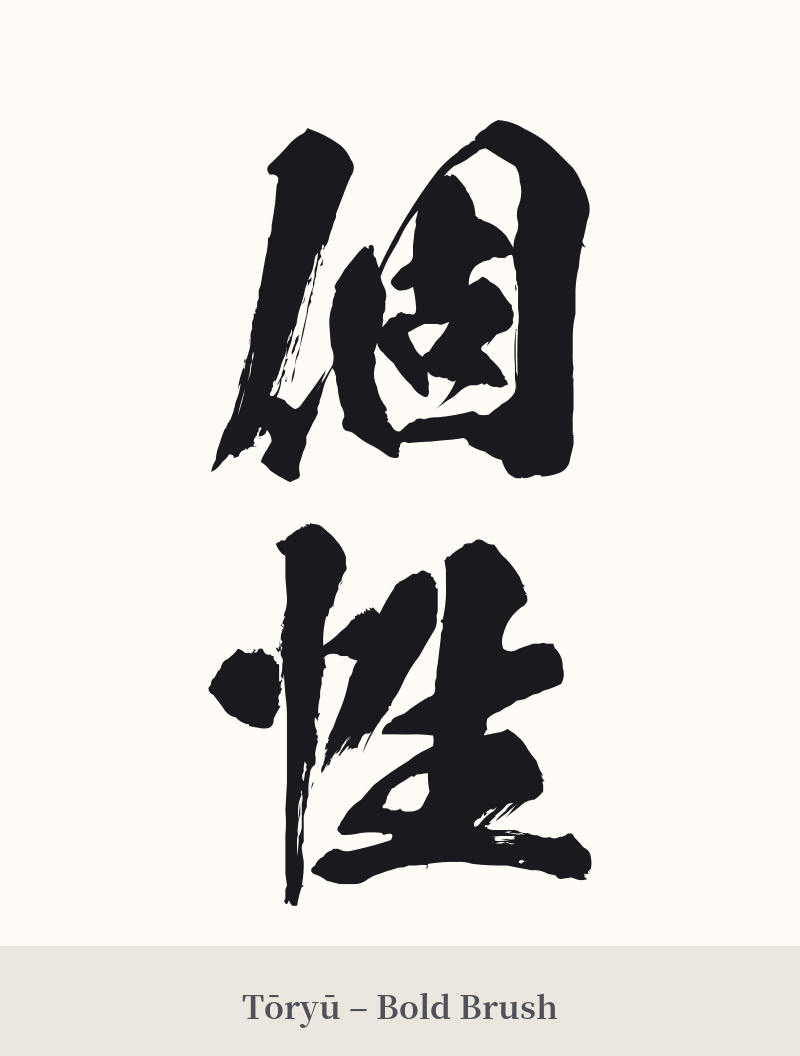
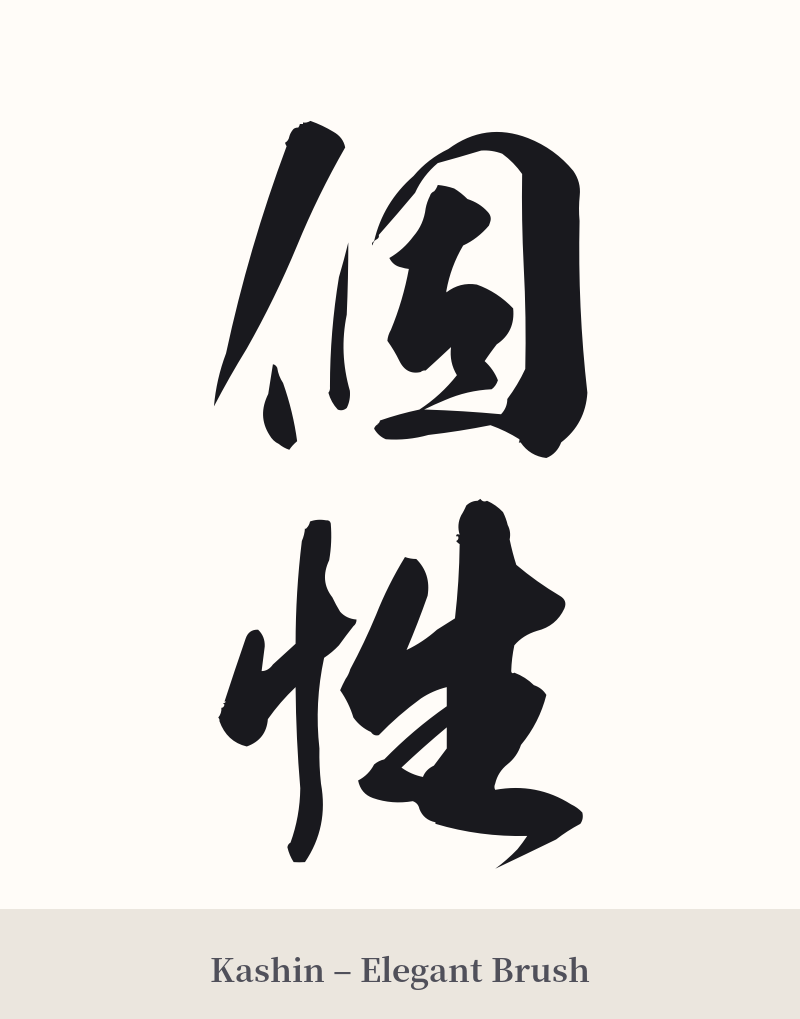
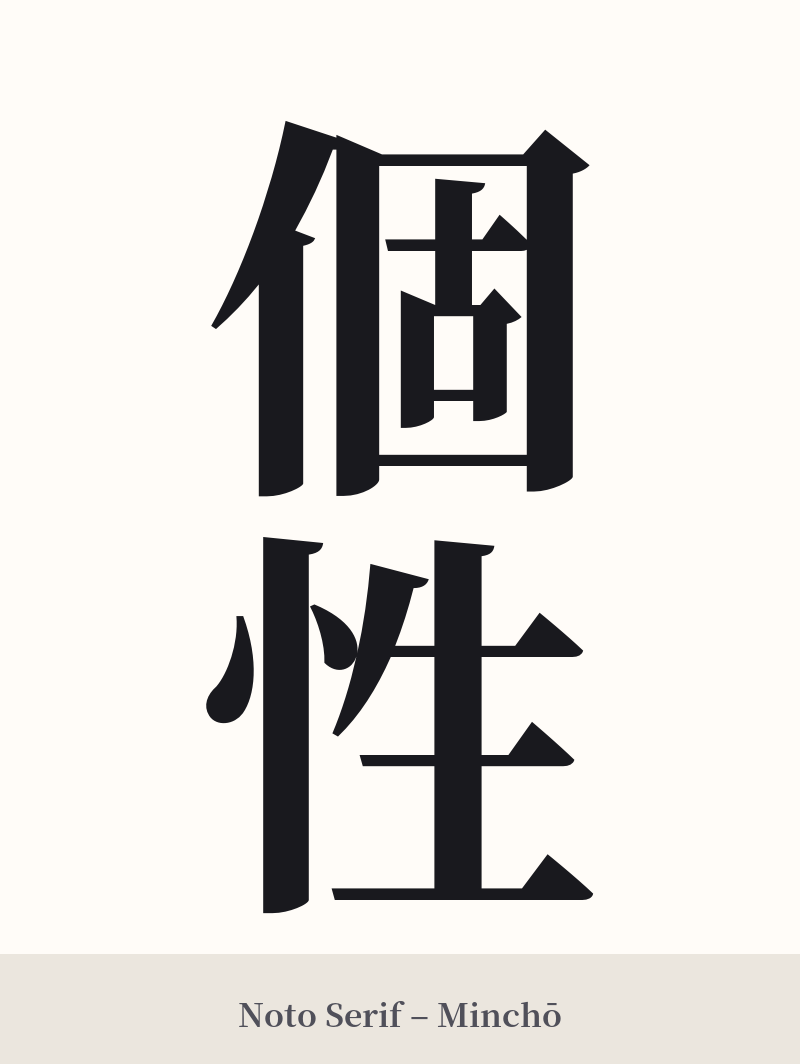
🖌️ Font Styles for 個性
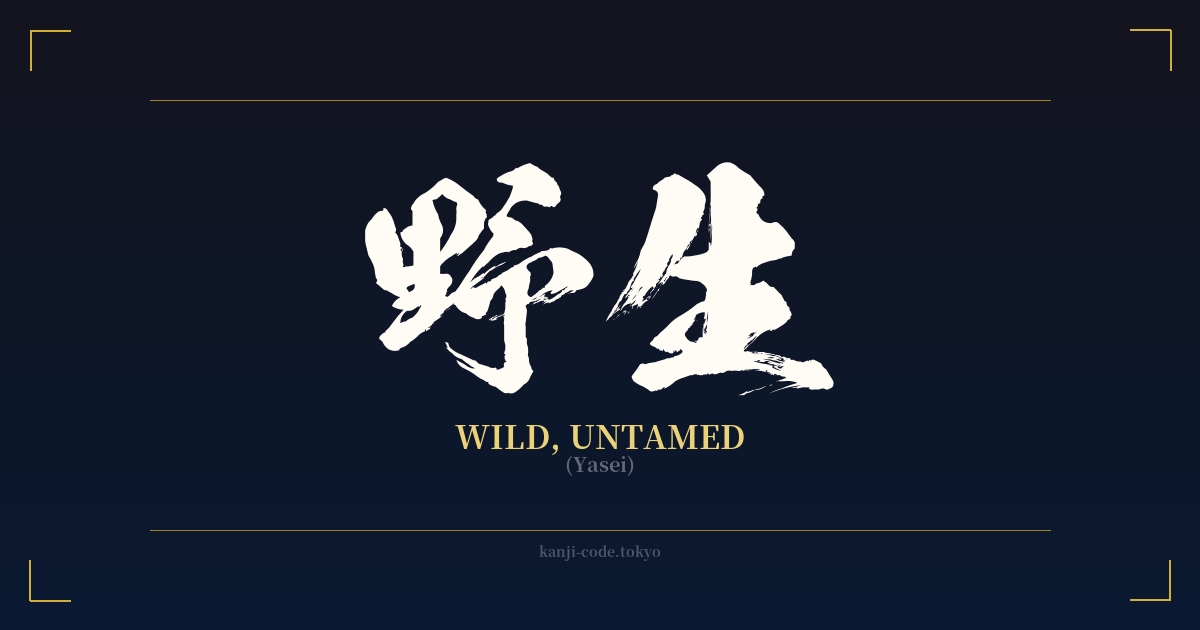
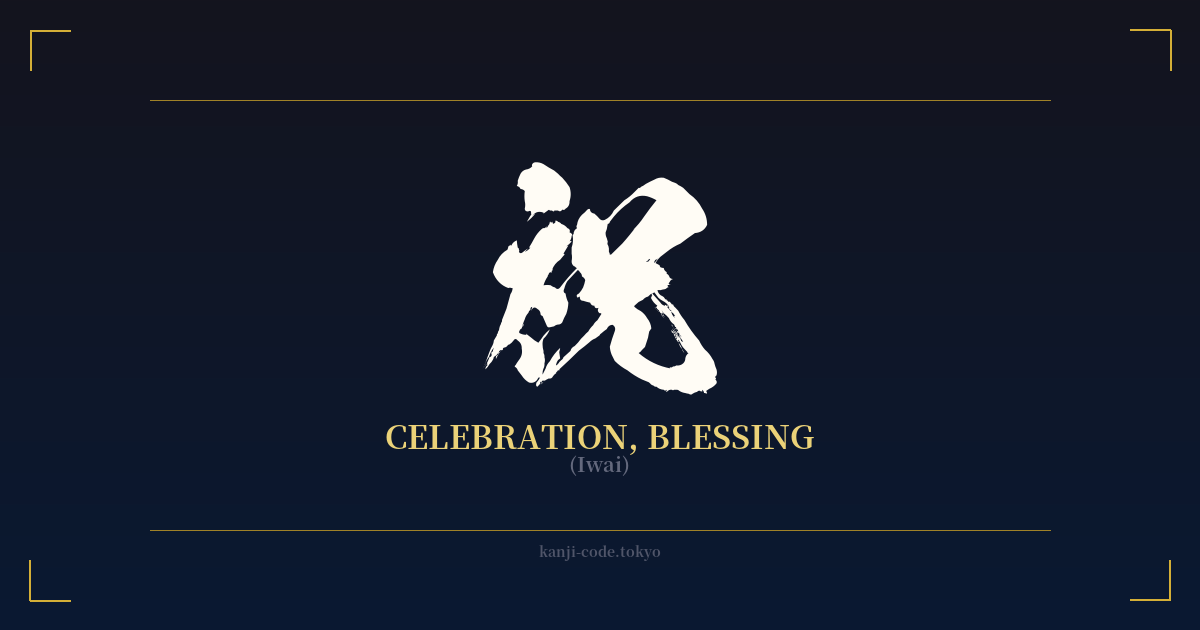
The same kanji can look dramatically different depending on the calligraphy style. Choose a font that matches the mood you want for your tattoo or design.
🎨 Tattoo Suitability
📐 Tattoo Design Guide
For a tattoo of 個性 (Kosei), the design should reflect the personal nature of the word. Its two-character structure offers great versatility in placement and style.
– Placement: A vertical alignment works beautifully on the forearm, calf, or along the spine. For a horizontal layout, the inner bicep, collarbone, or across the ribs are excellent choices. These placements allow the characters to be read clearly and naturally.
– Font Style: The choice of script can dramatically alter the feeling. A bold, clean Kaisho (block script) font gives the word a strong, definitive presence. For a more fluid and personal touch, a Gyosho (semi-cursive) or Sosho (cursive) style evokes a sense of movement and artistic expression, perfectly mirroring the concept of individuality. A custom brushstroke from an artist can make the design truly one-of-a-kind.
– Visual Tips: Consider integrating a small, personal element that symbolizes your own individuality, such as a specific flower, a subtle geometric shape, or even a splash of color within or around the kanji. Ensure the two characters, 個 and 性, are balanced in size and weight, maintaining a harmonious flow whether arranged vertically or horizontally.
Comments