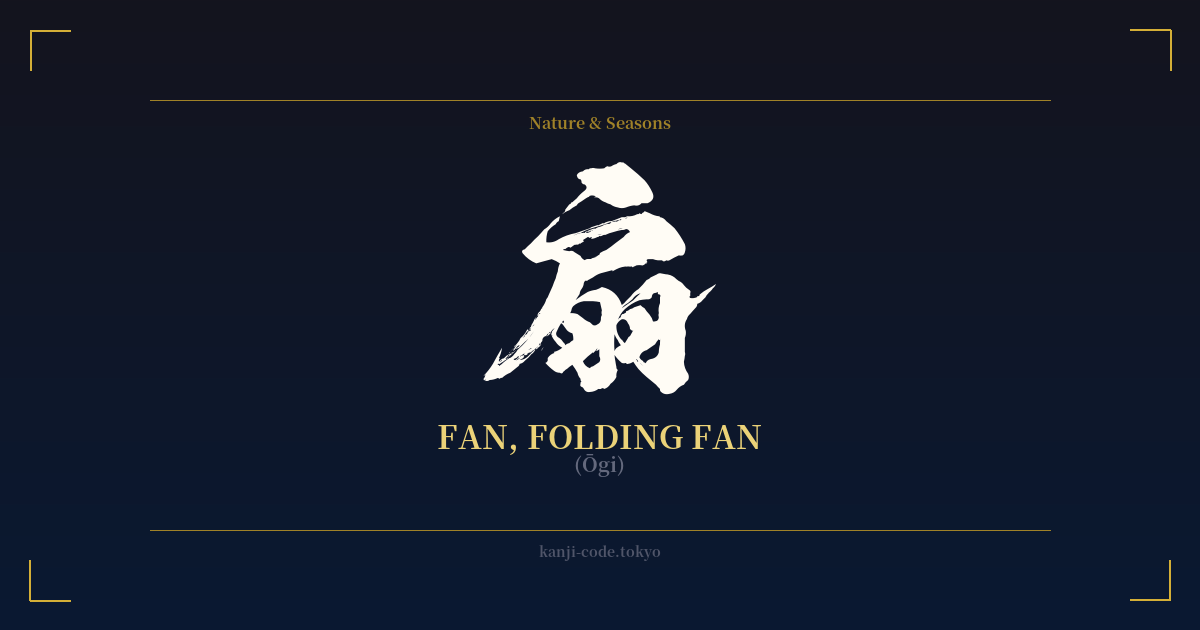
✍️ 扇 (Ōgi) — Cultural Context
The kanji 扇 (ōgi) represents the folding fan, an object far more significant in Japanese culture than its simple function of creating a breeze might suggest. It is an icon of elegance, a tool of performance, a symbol of status, and a harbinger of good fortune. The character's construction offers a glimpse into its essence, combining the radical 戸 (to), meaning 'door' or 'panel,' with 羽 (hane), meaning 'feather' or 'wing.' This evocative pairing paints a picture of lightweight, feathered panels that pivot and move, perfectly capturing the image of a folding fan.
The Japanese folding fan, or 'sensu' (another reading for objects made with 扇), is believed to have been invented in Japan during the Heian period (794-1185). Its creation was a stroke of ingenuity, improving upon the rigid, flat fans ('uchiwa') that were imported from China. The ability to fold made it portable and convenient, and it quickly became an indispensable accessory for the aristocracy.
One of the most profound meanings associated with the ōgi is the concept of 'suehirogari' (末広がり), which literally means 'spreading out toward the end.' The shape of an open fan, narrow at the pivot and widening at the outer edge, symbolizes a life or future that expands and becomes more prosperous over time. This makes the ōgi a powerful emblem of good luck, growth, and a bright future. For this reason, fans are traditional gifts for celebratory occasions like weddings, milestone birthdays, and New Year's.
Beyond its symbolism, the ōgi is a vital prop in many traditional Japanese performing arts. In Noh theater, Kabuki, and traditional dance ('Nihon-buyō'), a single fan in the hands of a skilled performer can represent a multitude of objects and emotions—a sword, a sake cup, falling rain, a rising moon, or the fluttering of a heart. Its movements are a language unto themselves, conveying subtle nuances that words cannot.
Furthermore, the fan had a martial application. The 'tessen' (鉄扇), or iron fan, was a weapon of self-defense used by samurai. Designed to look like a harmless folding fan, it could be carried into places where swords were forbidden, serving as an effective tool for blocking and striking. This dual nature—an object of both delicate beauty and formidable strength—adds a fascinating layer of complexity to the kanji's meaning.
🖌️ Font Styles for 扇
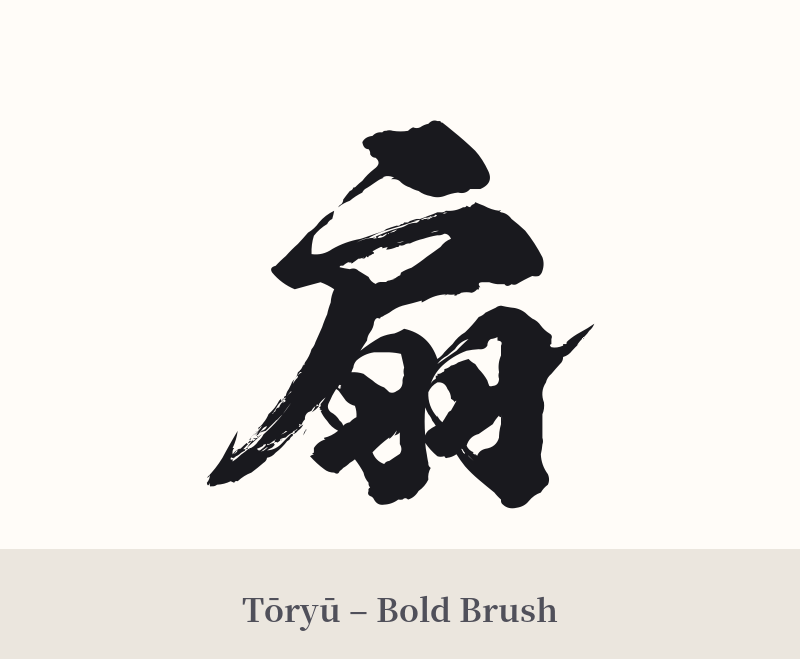
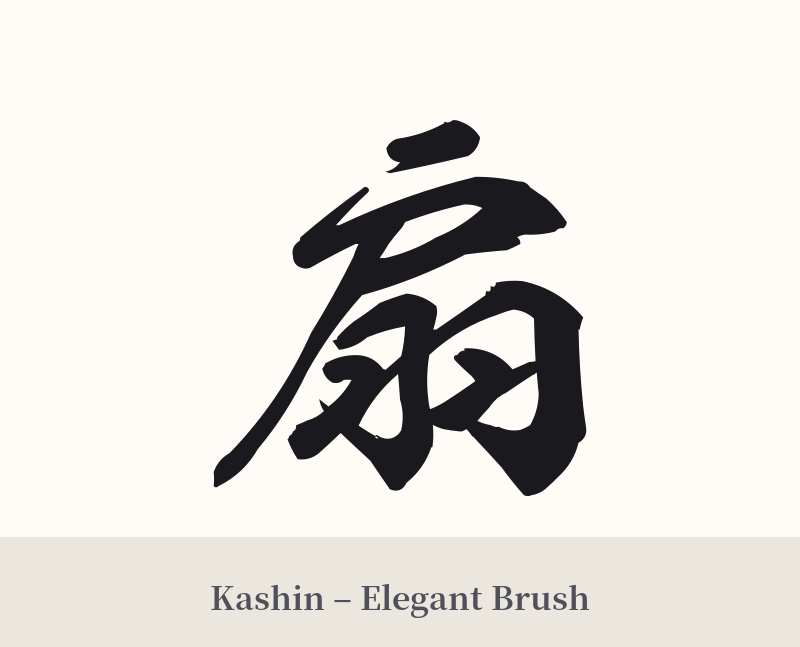
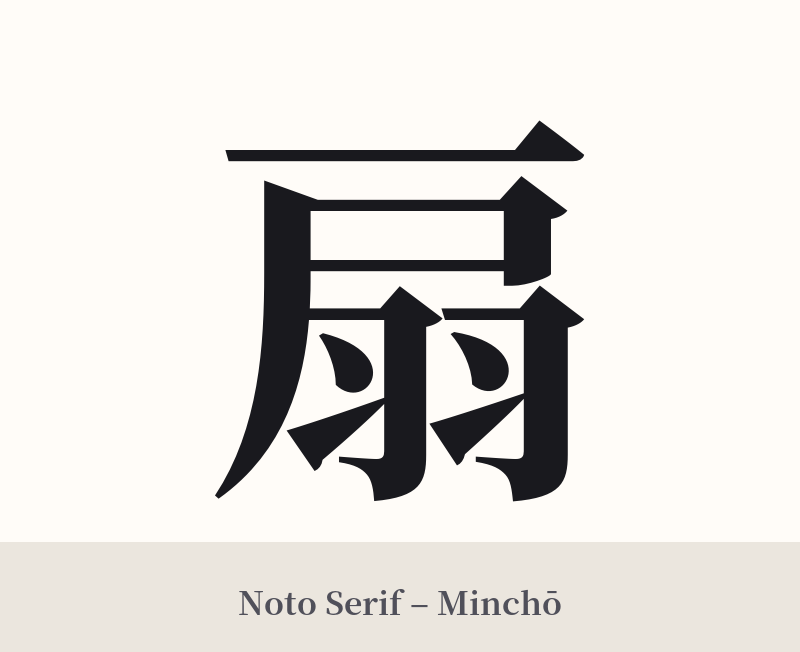
The same kanji can look dramatically different depending on the calligraphy style. Choose a font that matches the mood you want for your tattoo or design.
🎨 Tattoo Suitability
📐 Tattoo Design Guide
The kanji 扇 (ōgi) offers a wonderful balance of elegance and structure, making it versatile for tattoo design. Its form is naturally graceful and works well in various styles.
– Placement: Consider placing it on the forearm, calf, or ribs, where the vertical flow of the limb can complement the character's shape. The back of the neck or between the shoulder blades are also excellent spots that emphasize its elegance.
– Style: A semi-cursive 'gyōsho' or fully cursive 'sōsho' script can highlight the sense of movement and artistry associated with dance and performance. For a stronger, more stoic look that evokes the 'tessen' (iron fan), a bold 'kaisho' (block script) would be very effective.
– Visuals: This kanji pairs beautifully with other traditional Japanese motifs. Consider having it tattooed alongside cherry blossoms to represent the beauty of the moment, or with flowing water to symbolize adaptability. A unique approach could be to have the kanji itself appear as if it's made from bamboo and paper, or to have it subtly integrated into a larger scene.
Comments