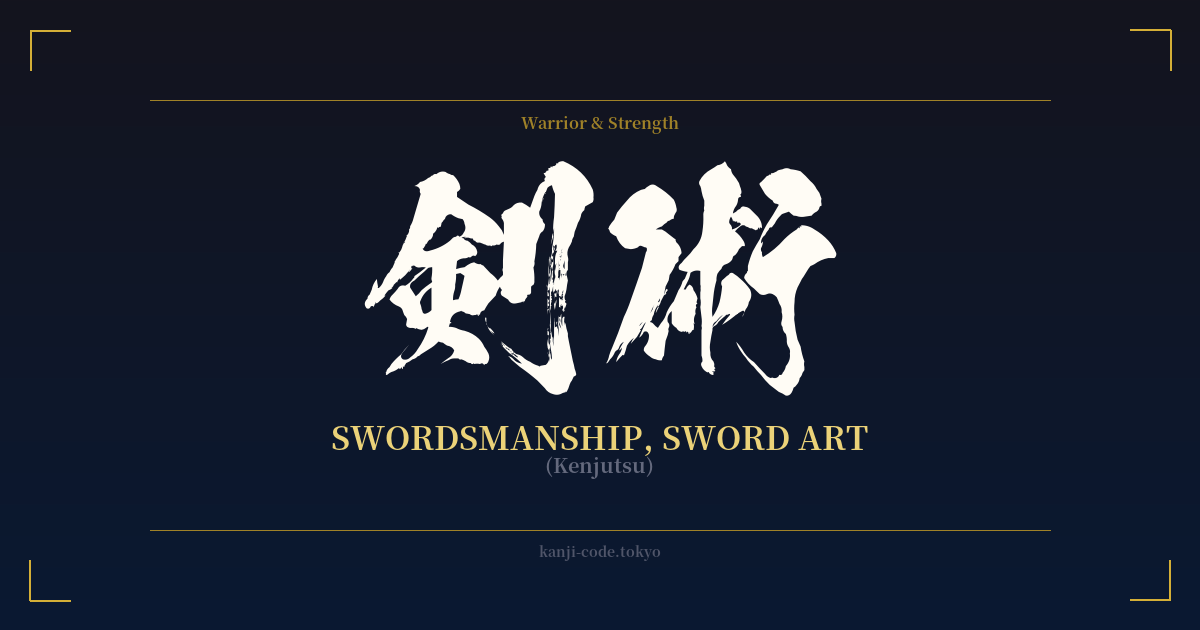
✍️ 剣術 (Kenjutsu) — Cultural Context
剣術 (Kenjutsu) translates to "the art of the sword" or "swordsmanship," and it stands as one of the most iconic martial disciplines of pre-modern Japan. It is the umbrella term for the classical systems of sword fighting that were developed, refined, and practiced by the samurai class for centuries. Unlike its modern descendant, Kendo, Kenjutsu was born on the battlefield, where life and death were decided by the edge of a blade.
The origins of Kenjutsu are ancient, with techniques evolving continuously through the Heian, Kamakura, and particularly the turbulent Sengoku Jidai (Warring States Period). During these eras, practicality was paramount. Kenjutsu was not a sport or a spiritual pastime; it was a vital combat skill. Different schools, or ryū, emerged, each with its own unique philosophy, strategies, and techniques for wielding the katana, wakizashi, and other swords.
With the unification of Japan and the beginning of the peaceful Edo Period (1603-1868), the role of the samurai and their sword arts began to change. With fewer large-scale battles, Kenjutsu transformed. While still a martial art, it became a "dō" (道), a "way" or path to spiritual and personal development. The focus shifted from solely killing an opponent to perfecting one's character, cultivating discipline, and achieving a state of unity between mind, body, and sword. This is the era when many of the philosophical tenets associated with the samurai, known as Bushido, were codified and deeply integrated into Kenjutsu training.
It is crucial to distinguish Kenjutsu from Kendo (剣道), "the way of the sword." Kendo is a modern Japanese martial art, developed after the Meiji Restoration, that uses bamboo swords (shinai) and protective armor (bōgu). While it descends from Kenjutsu, Kendo is a sport and a form of spiritual training with rules and points. Kenjutsu, in its classical form (koryū), preserves the older, more combat-oriented techniques designed for use with a live blade. Practitioners of koryū Kenjutsu often use wooden swords (bokken) or metal practice swords (iaitō) to study forms (kata) passed down through generations.
Today, Kenjutsu represents a direct link to the warrior spirit of the samurai. It embodies concepts like zanshin (lingering mind or continued awareness), fudōshin (immovable mind), and the relentless pursuit of perfection. To choose Kenjutsu is to embrace the legacy of the warrior, the discipline of the master, and the profound philosophy that the sword is not merely a weapon, but an extension of the soul.
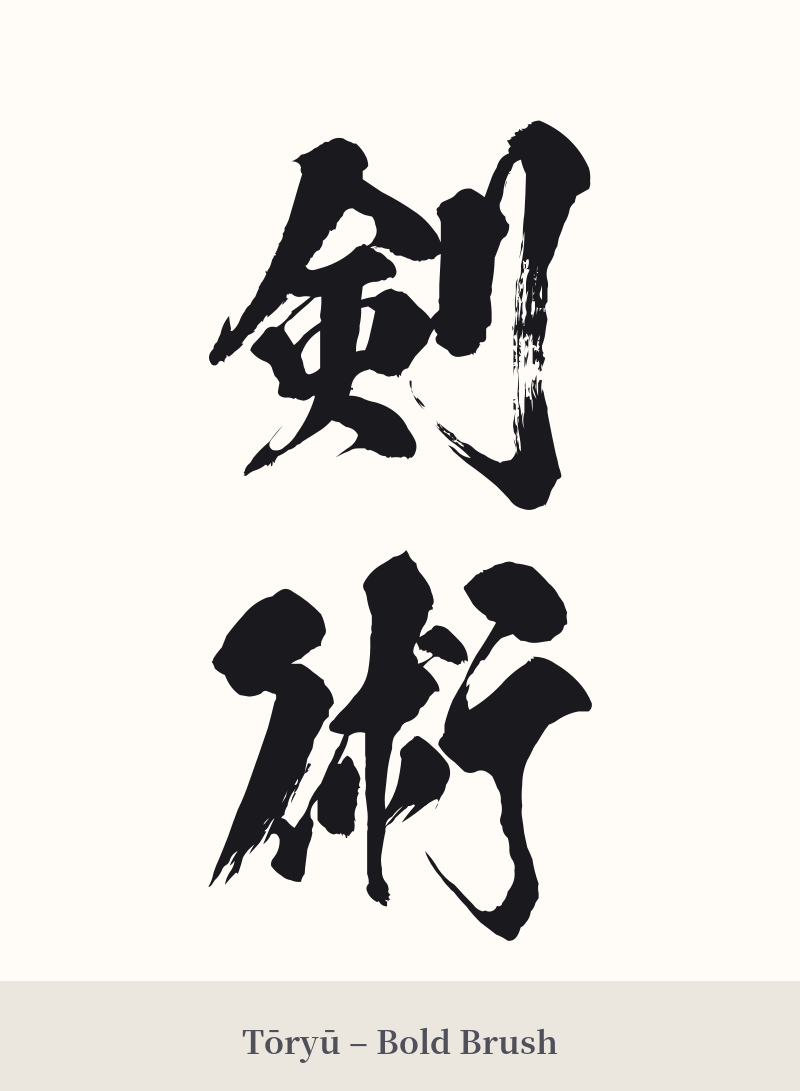
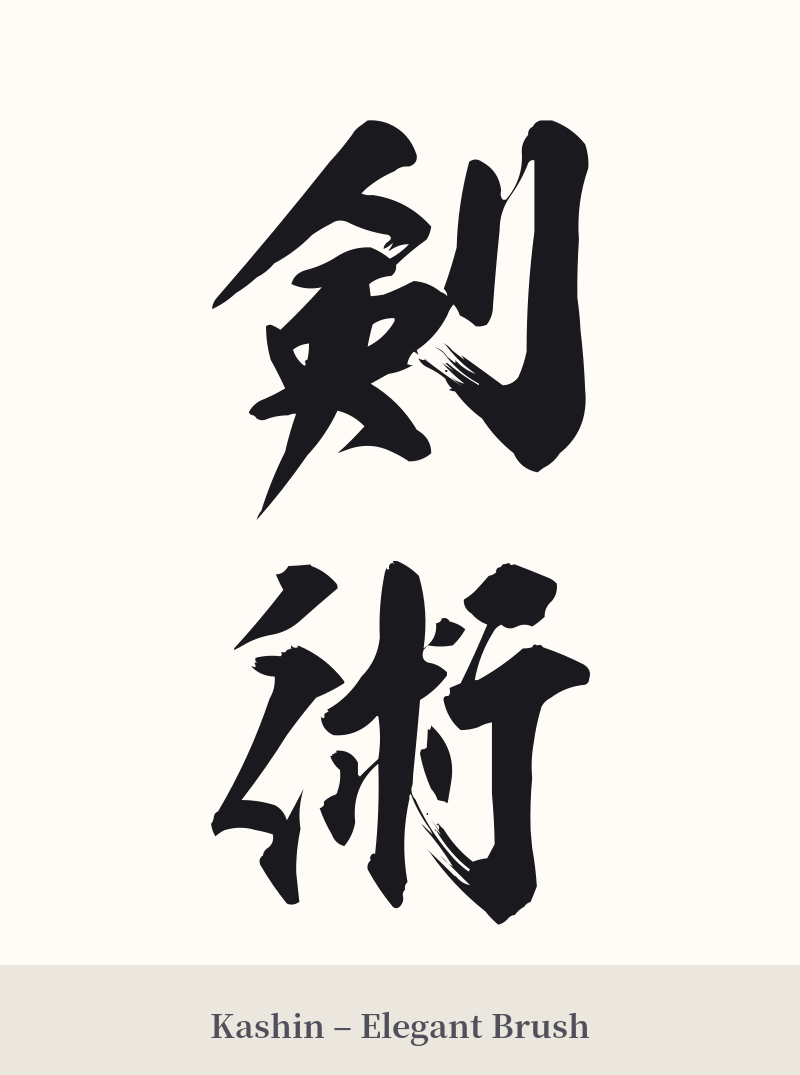
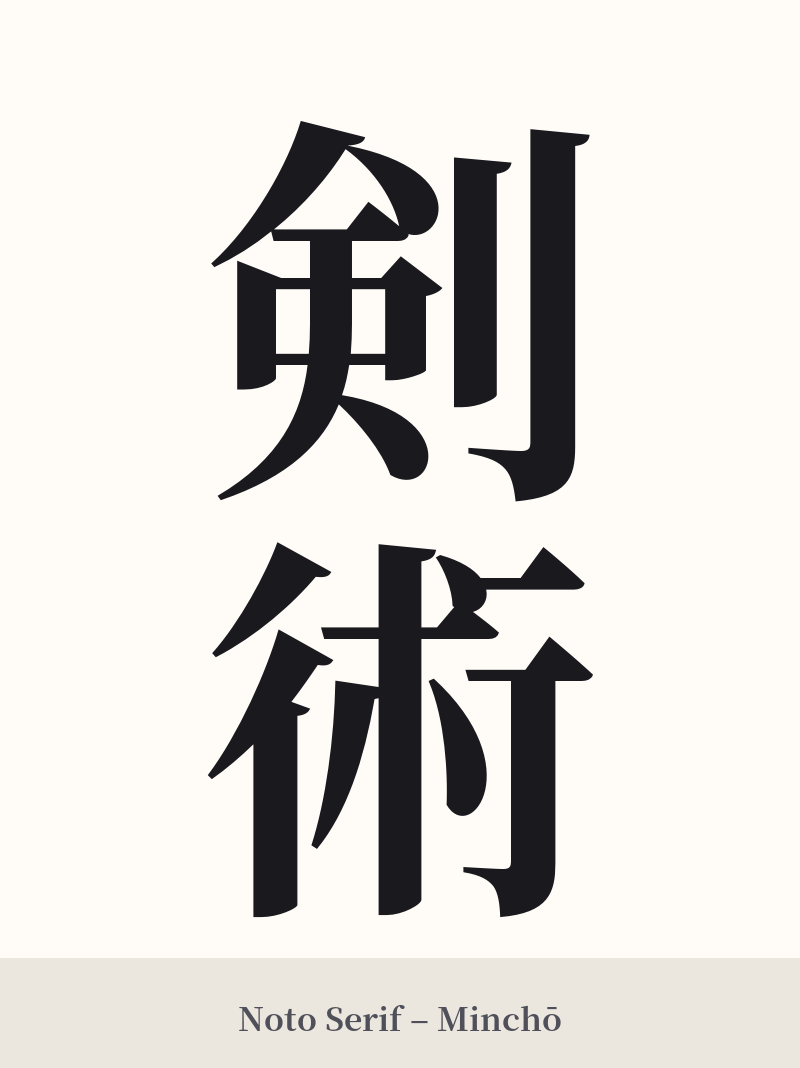
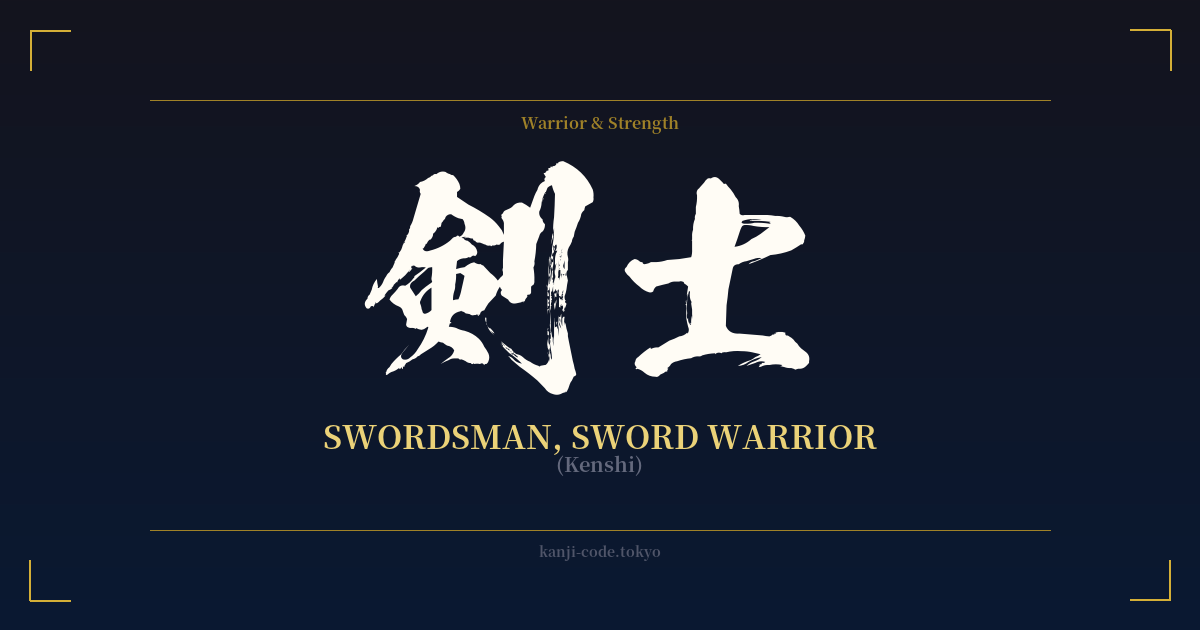
🖌️ Font Styles for 剣術
The same kanji can look dramatically different depending on the calligraphy style. Choose a font that matches the mood you want for your tattoo or design.
🎨 Tattoo Suitability
📐 Tattoo Design Guide
The two characters of 剣術 (Kenjutsu) offer a balanced and powerful design, making them well-suited for a variety of tattoo concepts.
– Placement: A vertical alignment is the most traditional and visually striking. This looks excellent running down the forearm, the bicep, the calf, or along the spine. A horizontal placement works well across the chest or upper back.
– Font Style: The choice of script can dramatically alter the feel. A bold, semi-cursive brushstroke style (Gyōsho) can evoke the fluid, deadly motion of a sword slash. For a more formal and disciplined feel, a crisp, architectural block script (Kaisho) emphasizes the structure and tradition of the art form.
– Visual Accompaniments: Kenjutsu pairs naturally with other classic Japanese motifs. Consider incorporating it with an image of a katana, a fierce dragon, a stoic samurai helmet (kabuto), or a single Enso circle representing enlightenment and the void. Adding falling cherry blossoms (sakura) can introduce the concept of the transient nature of life, a core tenet of the samurai ethos.
Comments