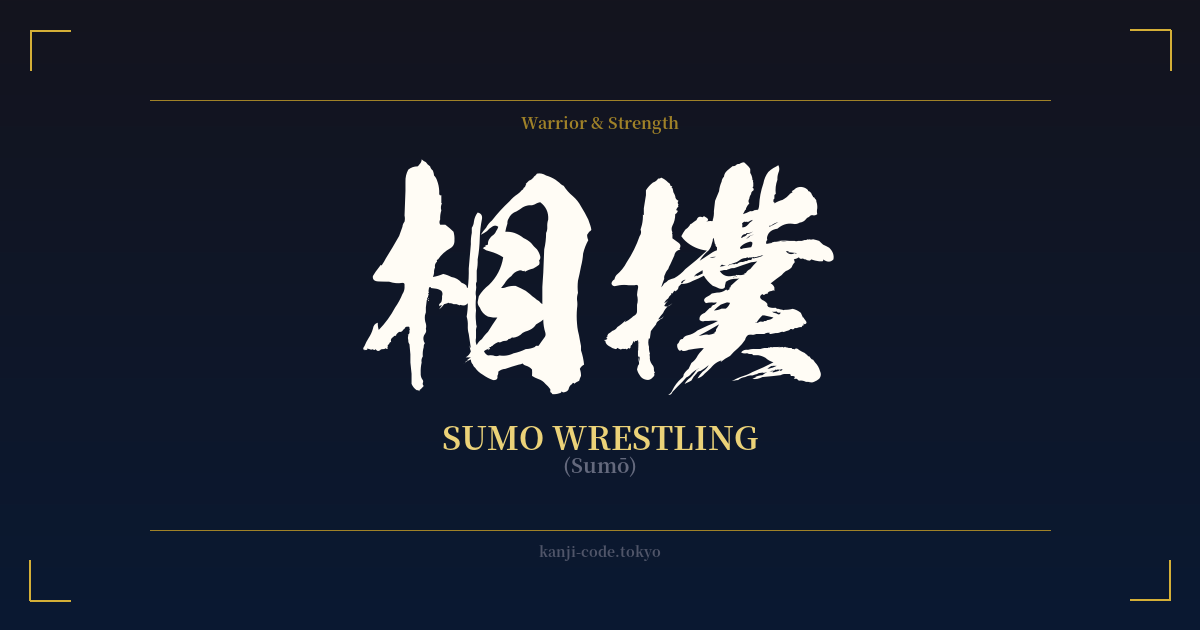
✍️ 相撲 (Sumō) — Cultural Context
相撲 (Sumō) is more than just a sport; it is a living embodiment of Japanese tradition, ritual, and spirit. With a history stretching back over 1,500 years, its roots are deeply intertwined with Shinto, the indigenous religion of Japan. Originally, sumo was performed as a ritual to entertain the gods (kami) and pray for a bountiful harvest, a practice known as 'sumai no sechie'.
Over the centuries, these ritualistic contests evolved from agricultural ceremonies into a form of martial training for samurai and eventually into the professional spectator sport we know today as 大相撲 (Ōzumō), or Grand Sumo. Despite its modernization, sumo retains its profound connection to its religious origins. The wrestling ring, or 土俵 (dohyō), is considered sacred ground, purified with salt before each bout. The elaborate pre-match rituals, like the powerful leg-stomping (四股, shiko), are not just for show; they are meant to drive away evil spirits.
The life of a sumo wrestler, or 力士 (rikishi), is one of extreme discipline and sacrifice. They live and train together in communal stables (部屋, heya), adhering to a strict hierarchy and a code of conduct that governs every aspect of their lives, from their diet to their dress. This lifestyle is built around the concept of 心技体 (shingitai): heart, technique, and body. It teaches that true strength comes not just from physical power, but from a disciplined mind and perfected skill.
Therefore, the word 相撲 represents a universe of meaning. It is a symbol of raw power, but also of refined technique. It signifies a connection to ancient history and a commitment to a disciplined, almost monastic way of life. It’s a testament to the idea that through relentless training and spiritual fortitude, one can achieve a level of greatness that transcends the physical.
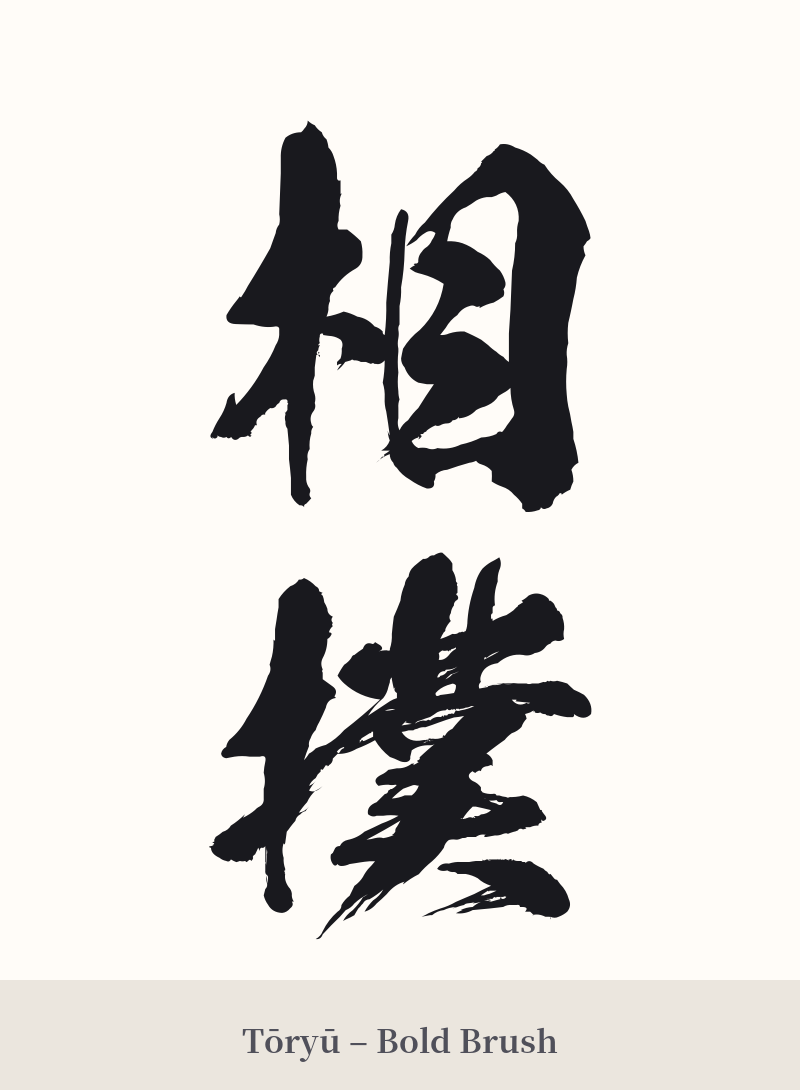
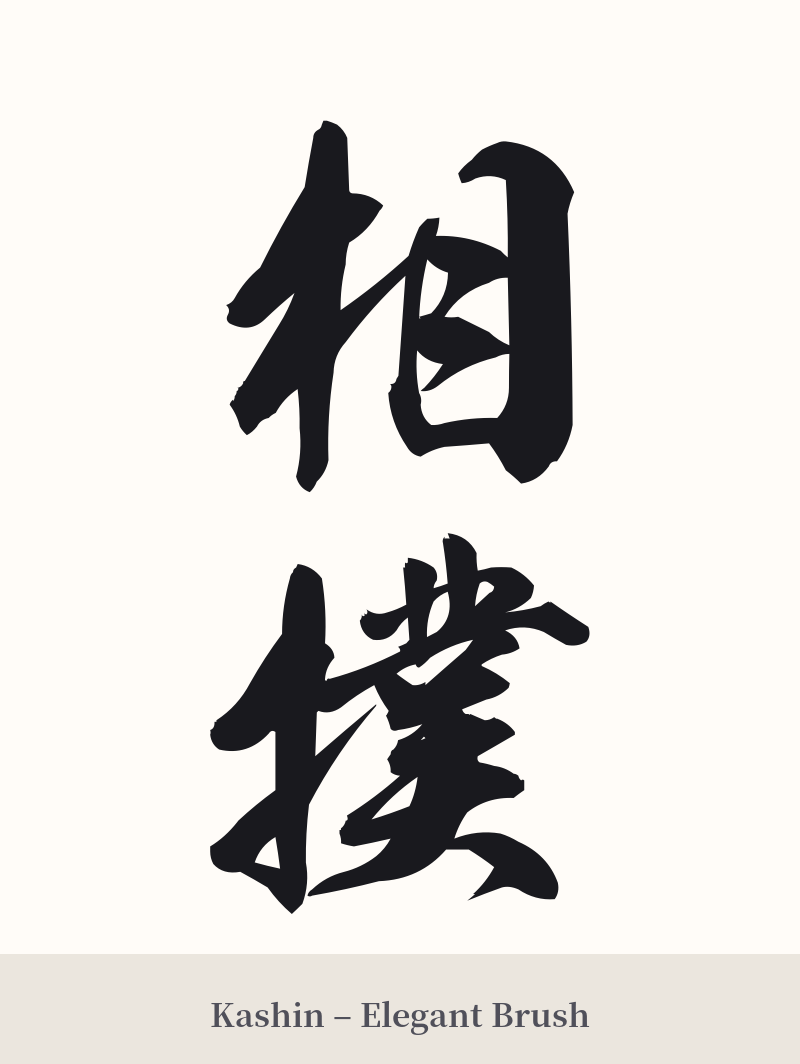
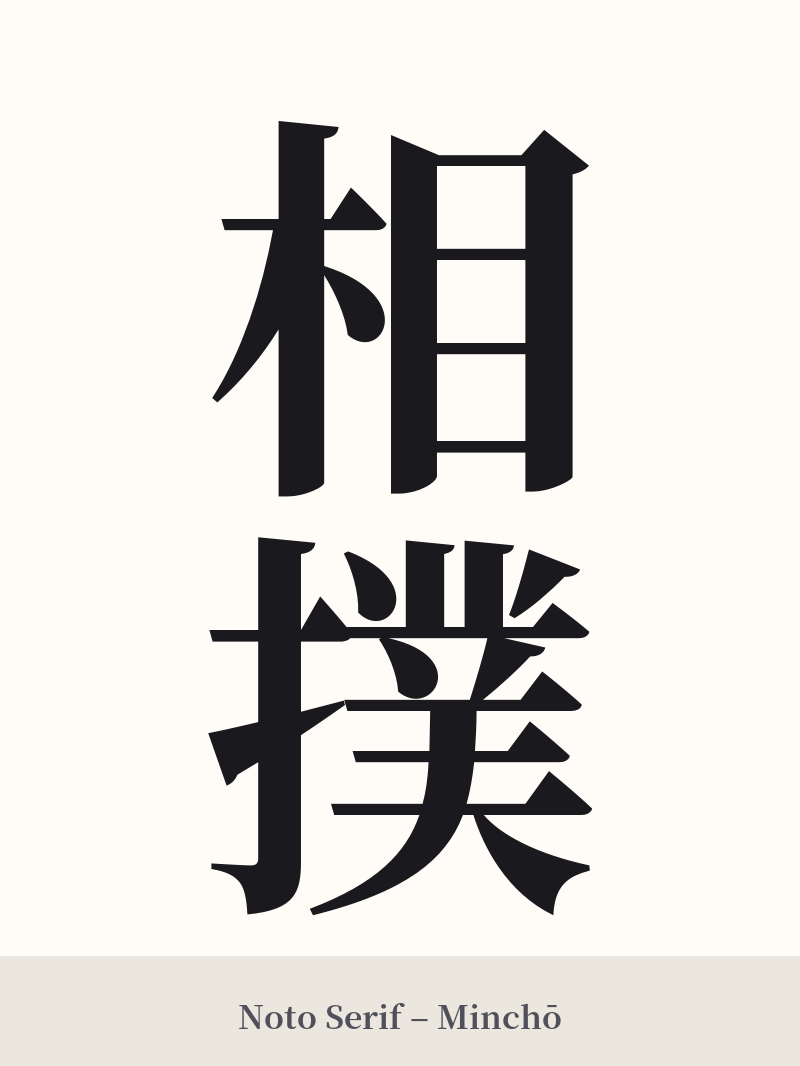
🖌️ Font Styles for 相撲
The same kanji can look dramatically different depending on the calligraphy style. Choose a font that matches the mood you want for your tattoo or design.
🎨 Tattoo Suitability
📐 Tattoo Design Guide
The kanji for Sumō is bold and powerful, making it well-suited for a tattoo that commands attention. Its two-character structure offers a balanced and solid aesthetic.
– Placement: Due to the complexity of the second character, larger surface areas are ideal. The calf, thigh, or upper back provide ample space to ensure the strokes remain clear and defined. For a vertical orientation, the forearm or along the spine can be very effective.
– Style: A thick, heavy brushstroke style, similar to Kantei-ryū (the font used on sumo banners), can emphasize the raw power and weight associated with the sport. A traditional Kaisho (block) script will give it a formal, dignified feel, while a Gyōsho (semi-cursive) style can add a sense of dynamic motion.
– Visuals: Consider pairing the kanji with related imagery to create a more comprehensive piece. A background of a yokozuna's ceremonial rope (tsuna), the referee's fan (gunbai), or even a subtle depiction of the sacred dohyō can add layers of meaning and visual interest.
Comments