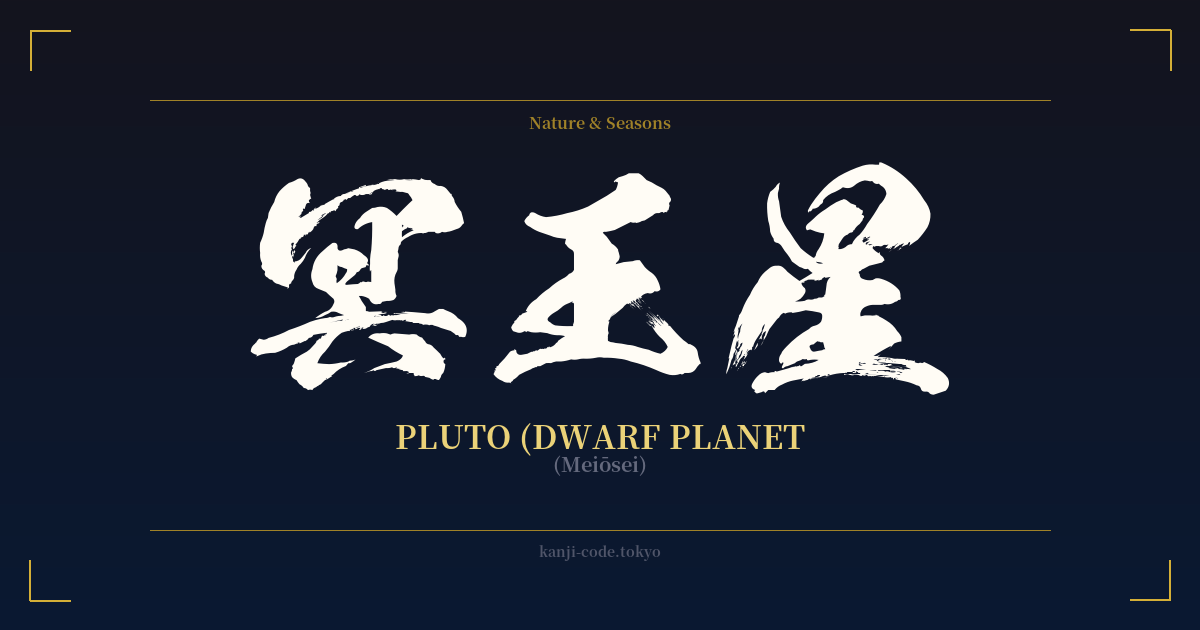
✍️ 冥王星 (Meiōsei) — Cultural Context
冥王星 (Meiōsei) is the Japanese name for the dwarf planet Pluto. The name is a direct and beautifully literal translation, combining ancient characters to describe a modern scientific discovery. It was named in alignment with the international astronomical convention, which drew from Greco-Roman mythology. Pluto, the Roman god of the underworld, became the namesake for the ninth and most distant planet known at the time.
Japanese astronomers and scholars brilliantly captured this concept using kanji. The name breaks down into three parts: 冥 (mei), meaning 'dark' or 'underworld'; 王 (ō), meaning 'king'; and 星 (sei), meaning 'star' or 'celestial body'. Together, they form 'Dark King Star' or 'Star of the King of the Underworld'—a perfect linguistic parallel to Pluto.
This naming convention highlights a fascinating aspect of the Japanese language: its ability to use its logographic system to absorb and contextualize foreign concepts. While the West had Pluto, Japan's own traditional mythology features a similar figure in Enma-Daiō (閻魔大王), the King and Judge of the afterlife. Though 冥王星 refers specifically to the Roman deity, the concept of a ruler of a dark, distant realm resonates with this pre-existing cultural archetype.
The story of 冥王星 took a famous turn in 2006 when the International Astronomical Union reclassified it as a 'dwarf planet.' This event sparked a global conversation, and Japan was no exception. The official term became 準惑星 (junwakusei), or 'quasi-planet.' This 'demotion' created a wave of public sympathy and affection for Pluto, cementing its status as a beloved underdog of the solar system.
Furthermore, 冥王星 gained significant pop culture relevance through the iconic anime and manga series Sailor Moon. The character Sailor Pluto, whose Japanese name is Sailor Meiōsei, is the guardian of the Space-Time Door. She is depicted as a solitary, mysterious, and powerful figure, embodying the dark and distant qualities of her namesake planet. This portrayal has deeply influenced how a generation of fans perceives the name, associating it with themes of duty, solitude, and immense power.
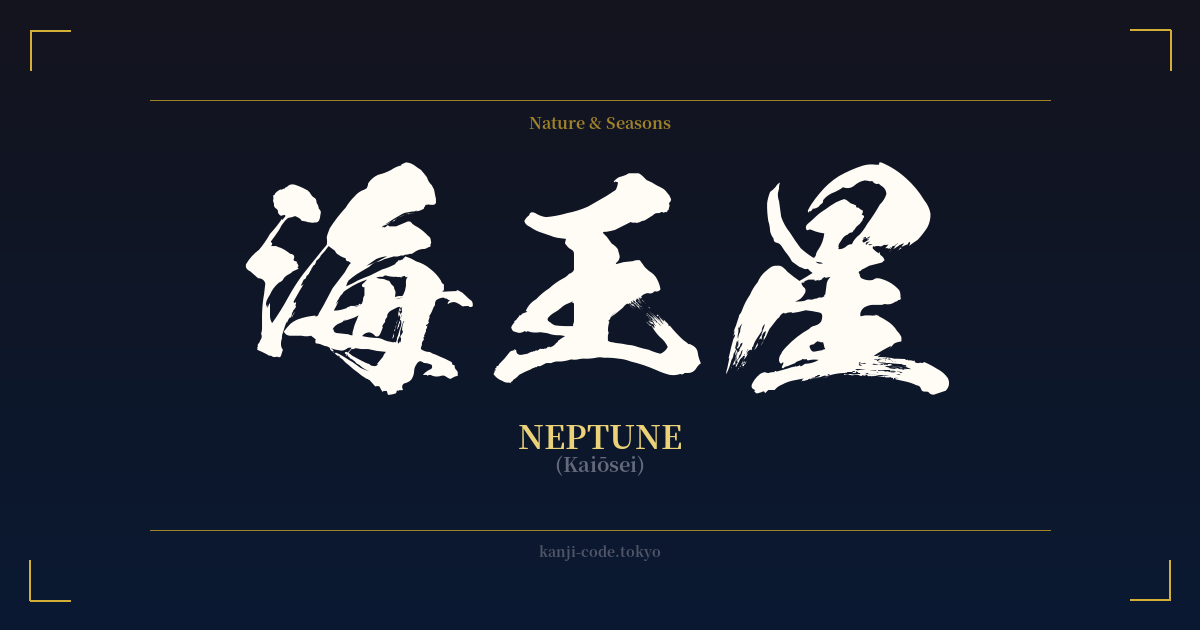
🖌️ Font Styles for 冥王星
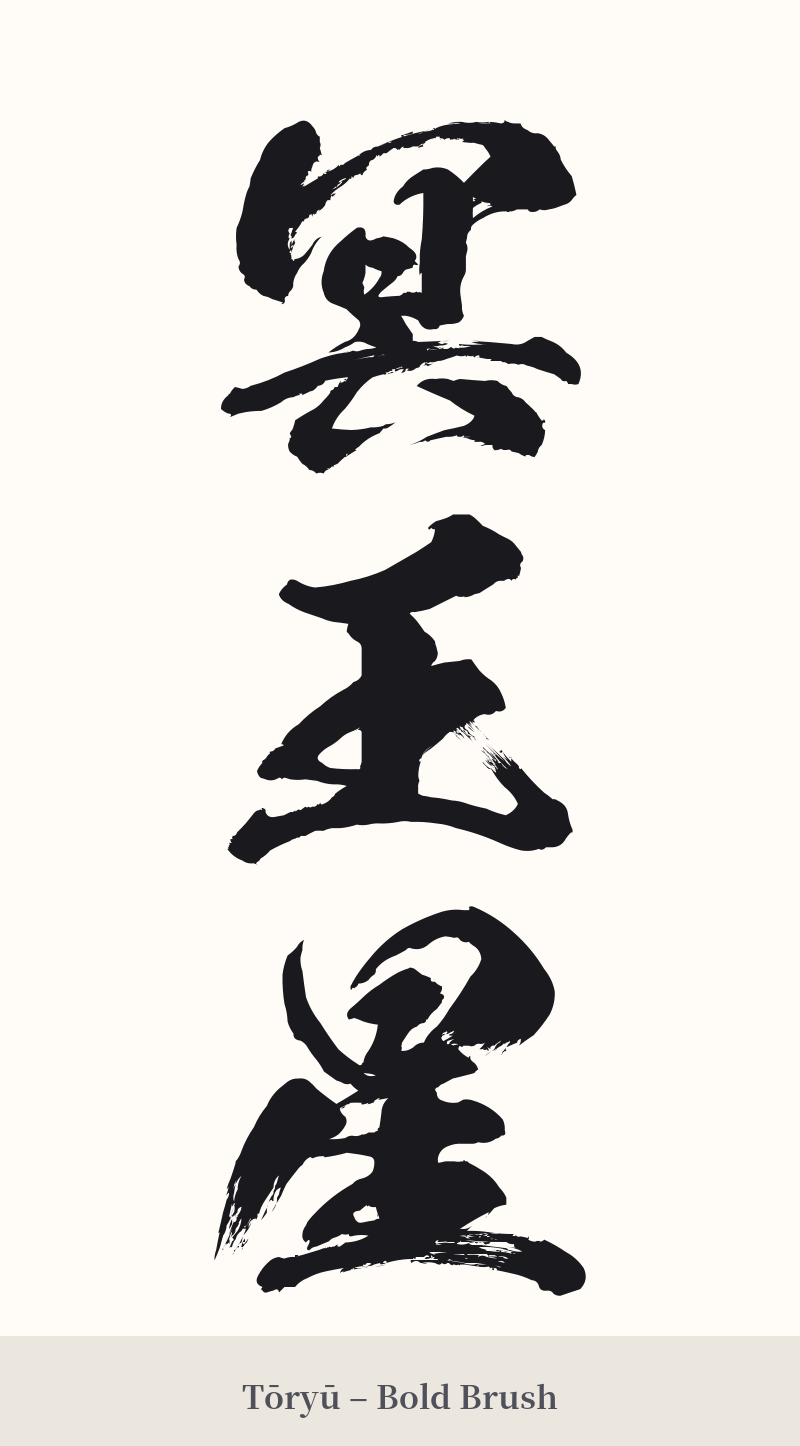
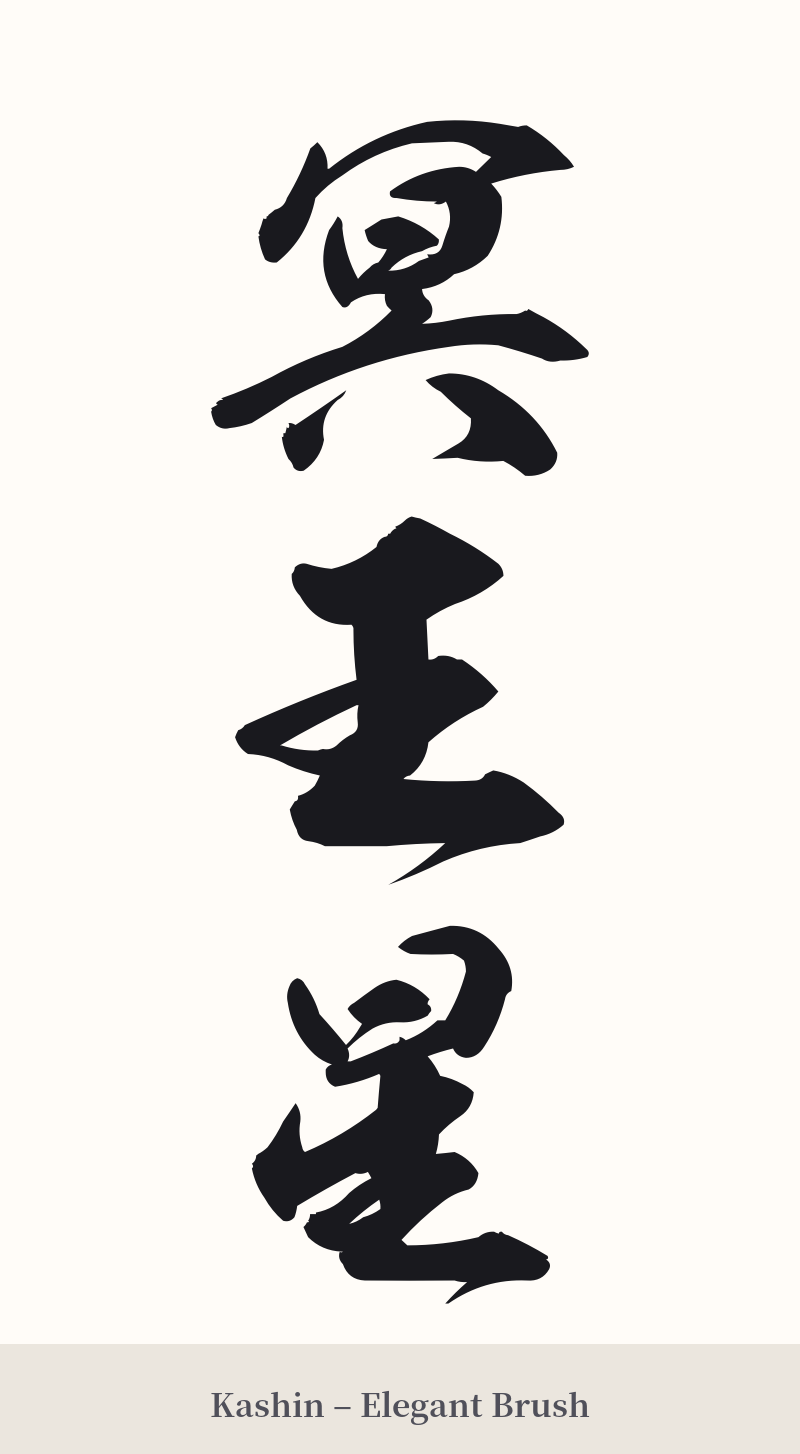
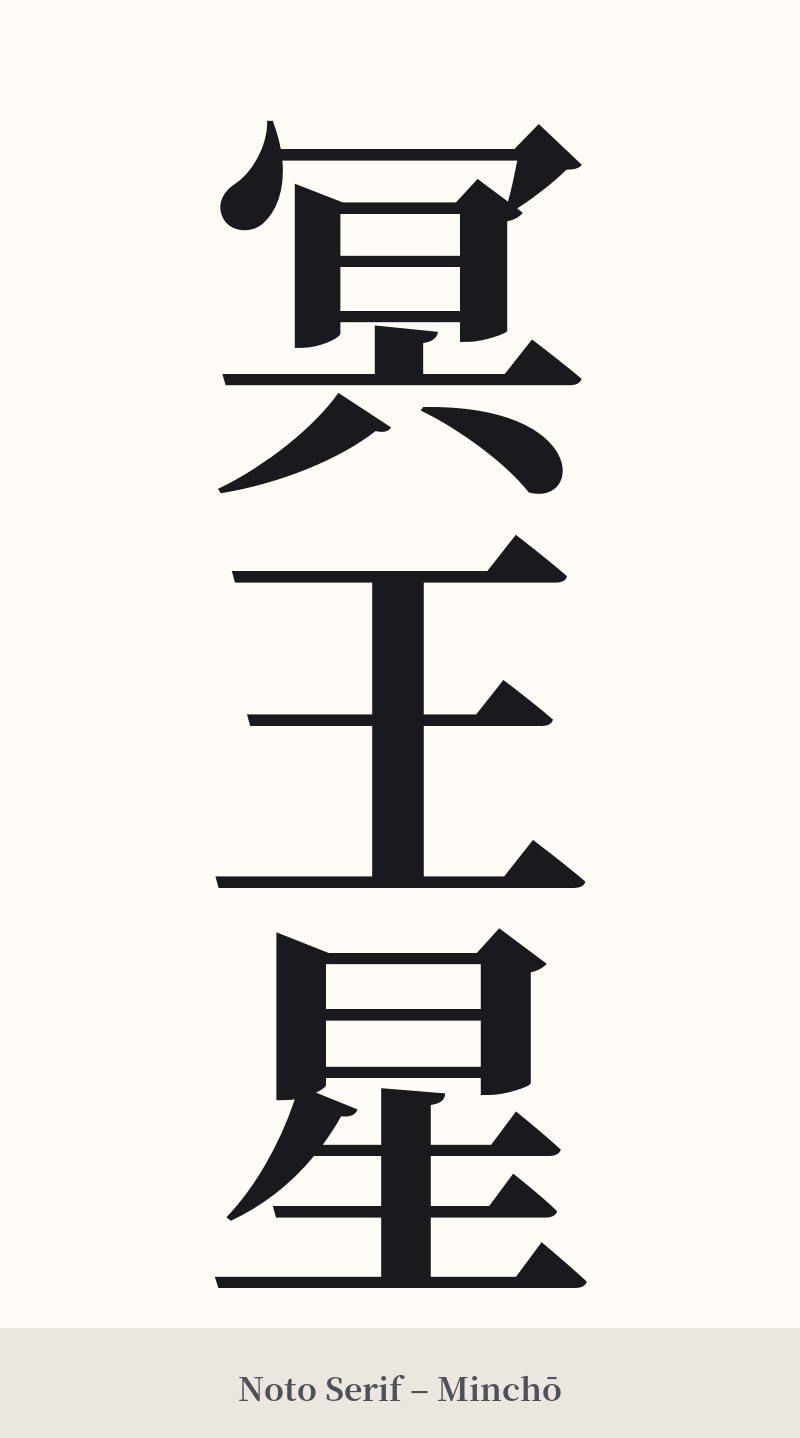
The same kanji can look dramatically different depending on the calligraphy style. Choose a font that matches the mood you want for your tattoo or design.
🎨 Tattoo Suitability
📐 Tattoo Design Guide
For a 冥王星 tattoo, the visual arrangement and style can greatly enhance its meaning.
– Placement: A vertical orientation is highly recommended. It looks stunning down the spine, forearm, or calf, allowing the characters to flow into one another. For a horizontal design, the chest or upper back provides a wide canvas for the three characters to sit side-by-side.
– Font Style: Consider a semi-cursive script (gyōsho) to evoke a sense of mystery and cosmic flow. For a bolder, more powerful statement, a clean block script (kaisho) emphasizes the 'king' aspect of the name. A modern, stylized font could also work, leaning into the scientific and celestial nature of the word.
– Visual Embellishments: Enhance the design by incorporating subtle background elements. A wash of dark watercolor in deep blues, purples, and black can represent the void of space. Faint orbital lines, a hint of the Kuiper Belt, or a small, distant starfield can frame the kanji and provide deeper context.
Comments