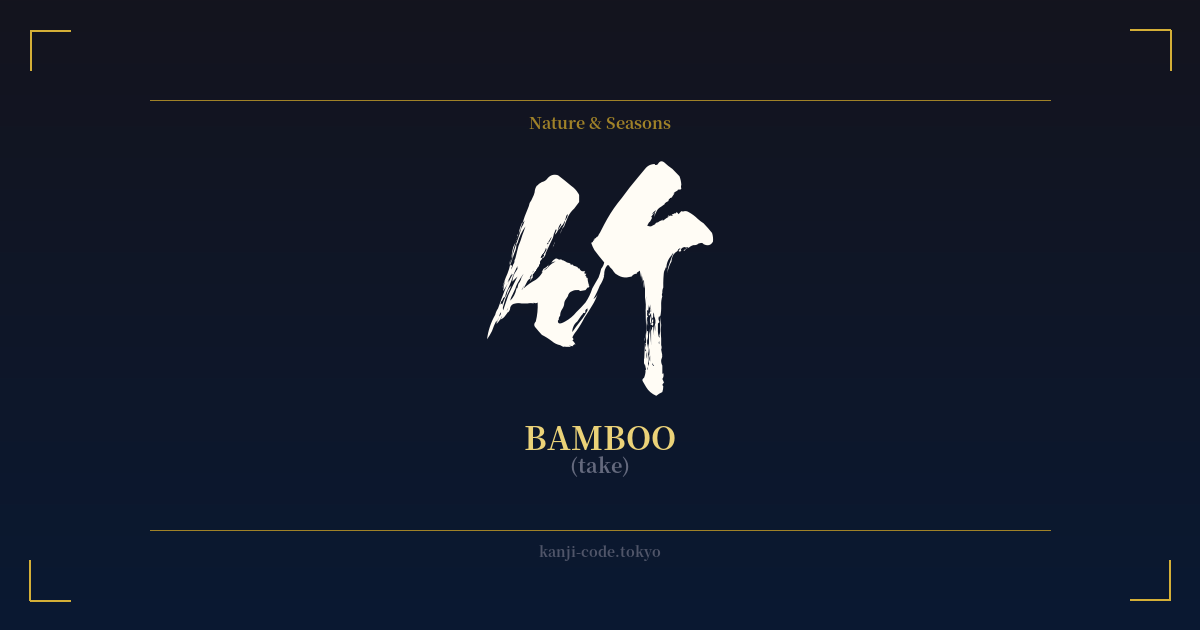
✍️ 竹 (take) — Cultural Context
In Japan, bamboo is more than just a plant; it's a powerful cultural symbol woven into the very fabric of the nation's art, literature, and philosophy. Stroll through any Japanese town or countryside, and you'll find bamboo, from the towering, serene groves of Arashiyama in Kyoto to the meticulously crafted objects in a traditional home. The kanji character for bamboo, 竹 (take), captures the essence of this remarkable plant.
The character itself is a pictogram, a stylized drawing of two bamboo stalks with their leaves. This visual simplicity belies a wealth of meaning. Foremost, bamboo represents resilience and flexibility. It sways and bends in the fiercest winds and heaviest snows but rarely breaks, springing back upright once the storm passes. This quality has made it a metaphor for enduring adversity with grace and strength, a core tenet in both Zen Buddhism and the Bushido code of the samurai.
Furthermore, bamboo symbolizes integrity and purity. Its long, straight stalk represents an upright and honest character, while its hollow center is seen as a metaphor for an open mind, free from ego and preconceived notions. This emptiness (空, kū) is a key concept in Zen, representing a state of pure potential. The clean, crisp way a bamboo stalk snaps is even associated with decisiveness and a straightforward nature, a quality known as 'take o watta youna' (like splitting bamboo).
Bamboo is one of the 'Three Friends of Winter' (松竹梅, Shōchikubai), alongside pine (matsu) and plum (ume). This trio is celebrated for thriving in the cold, representing perseverance, hope, and renewal during hardship. Pine is for longevity, plum for hope in the darkest days, and bamboo for its unwavering strength and flexibility.
This symbolism is immortalized in Japan's oldest folktale, 'The Tale of the Bamboo Cutter' (Taketori Monogatari). It tells the story of Kaguya-hime, a mysterious princess discovered as a baby inside a glowing bamboo stalk. Her celestial beauty and impossible demands on her suitors have captivated the Japanese imagination for centuries, forever linking bamboo with ethereal beauty, mystery, and the divine.
🖌️ Font Styles for 竹
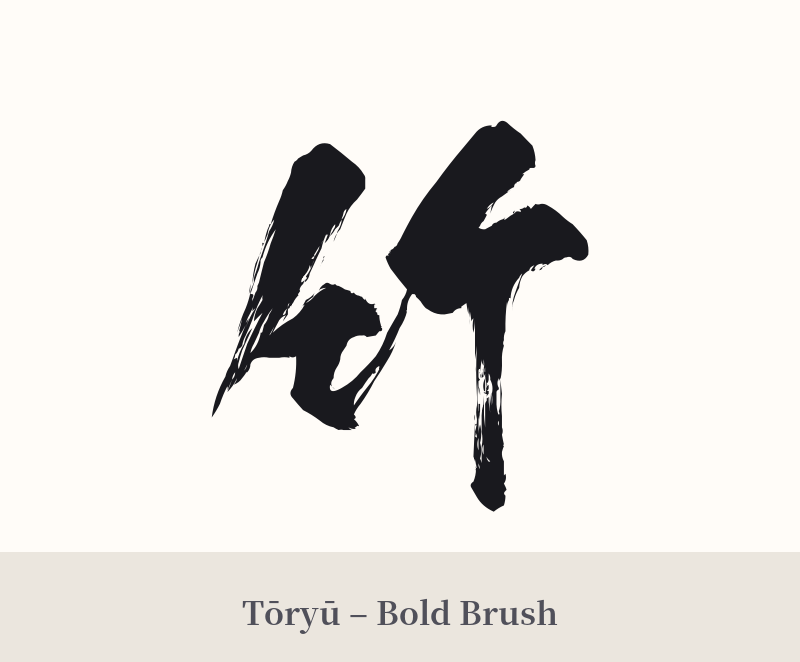
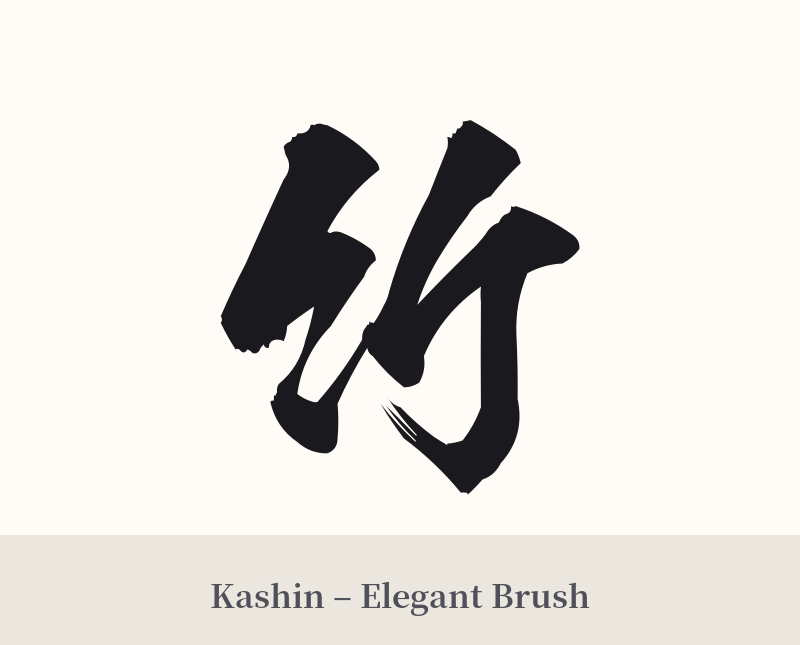
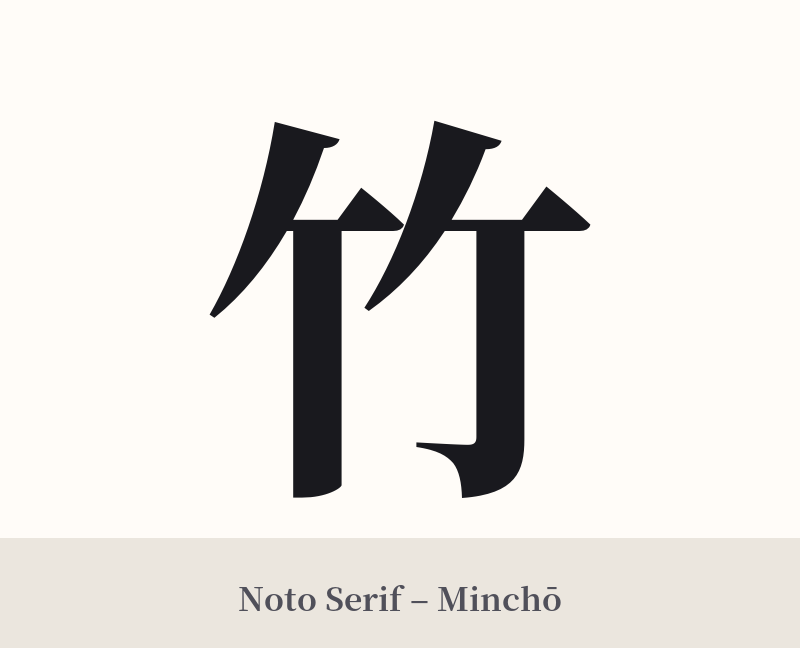
The same kanji can look dramatically different depending on the calligraphy style. Choose a font that matches the mood you want for your tattoo or design.
🎨 Tattoo Suitability
📐 Tattoo Design Guide
The kanji 竹 (take) is visually elegant and lends itself to a variety of tattoo designs.
– Placement: Its natural verticality works well on the forearm, calf, or along the spine. For a more subtle design, it looks excellent on the wrist or behind the ear.
– Style: A cursive or semi-cursive calligraphy style (Sosho or Gyosho) can capture the natural, flowing movement of bamboo in the wind. For a more classic and dignified look, a crisp Mincho or Kaisho font is ideal.
– Visual Tips: Consider pairing the kanji with an image of a bamboo forest, a single stalk, or a crescent moon to allude to the Tale of Kaguya-hime. Integrating it with pine and plum blossoms creates the 'Three Friends of Winter' motif, adding layers of meaning. A vertical orientation is almost always preferred for this character to honor its natural form.
Comments