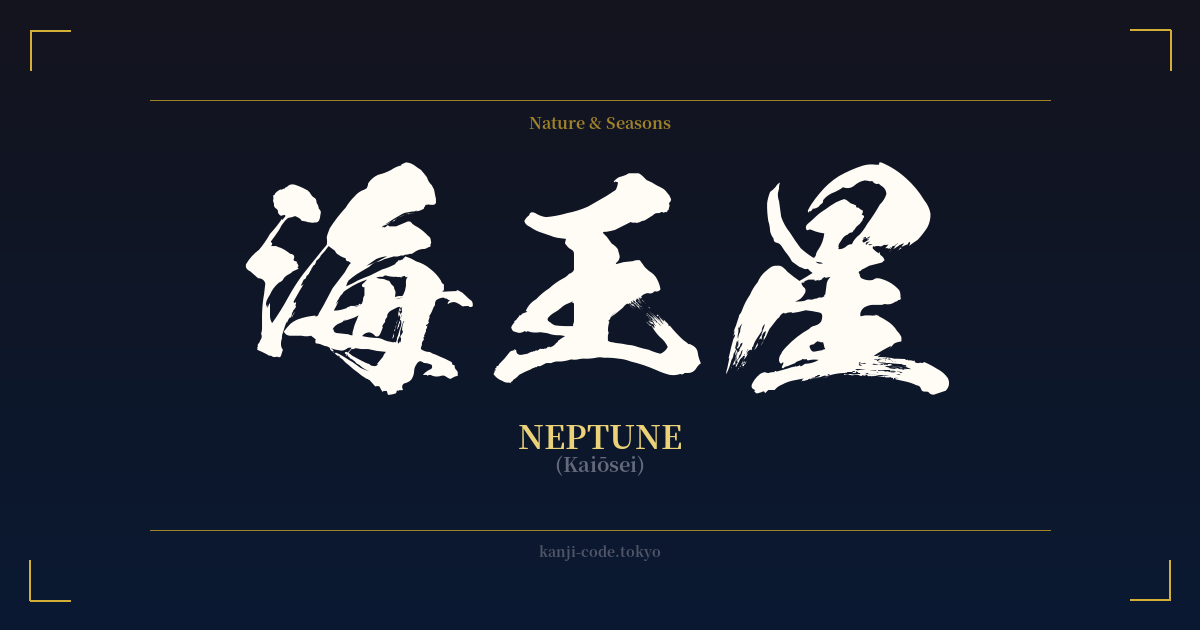
✍️ 海王星 (Kaiōsei) — Cultural Context
海王星 (Kaiōsei) is the Japanese word for the planet Neptune. The name is a masterpiece of translation, beautifully capturing the essence of the Roman deity it's named after through the power of kanji. Broken down, it literally means “Sea King Star,” a direct and poetic rendering of Neptune, the god of the sea.
This naming convention arose during the Meiji Restoration in the late 19th century, a period when Japan was rapidly absorbing Western science, technology, and culture. Japanese scholars were tasked with creating new vocabulary (wasei-kango) for concepts that didn't exist in their language. For the planets in our solar system, they developed a systematic and elegant solution based on Greco-Roman mythology.
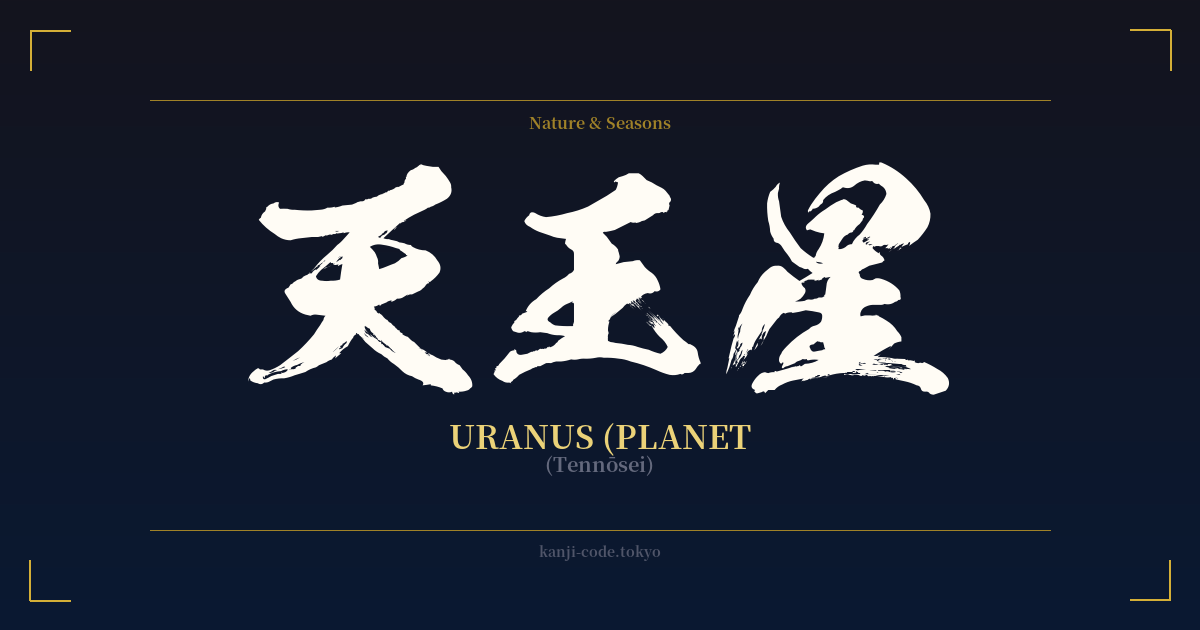
Uranus became 天王星 (Tennōsei), the “Heavenly King Star,” for the primordial god of the sky. Neptune, fittingly, became 海王星 (Kaiōsei). The final character, 星 (sei/hoshi), meaning “star,” is the standard suffix for planets in Japanese, as seen in the word for planet itself, 惑星 (wakusei), or “wandering star.” This system created a cohesive and intuitive astronomical lexicon.
While the term 海王星 is modern, the individual kanji it employs are ancient and deeply resonant within Japanese culture. The first character, 海 (kai/umi), represents the sea. For an island nation like Japan, the ocean is a fundamental part of its identity, a source of life, artistic inspiration, and formidable power. It evokes images of Hokusai’s great wave, the tales of sea dragons, and the serene beauty of a coastal shrine.
The second character, 王 (ō), means “king.” It conveys majesty, authority, and dominion. Its simple, powerful strokes suggest a figure of ultimate control, connecting the heavens, earth, and humanity. Together, 海王 (Kaiō) creates the image of a powerful ruler of the deep, a concept that is both mythological and primal.
In modern pop culture, the name gained iconic status through the character Sailor Neptune (セーラーネプチューン) in the globally popular series Sailor Moon. Her character, Michiru Kaiō, is elegant, artistic, and possesses powers over the deep ocean, perfectly embodying the sophisticated and mysterious image of her guardian planet. For many, this association has infused the word 海王星 with a new layer of cultural meaning, blending scientific astronomy with fantasy and art.
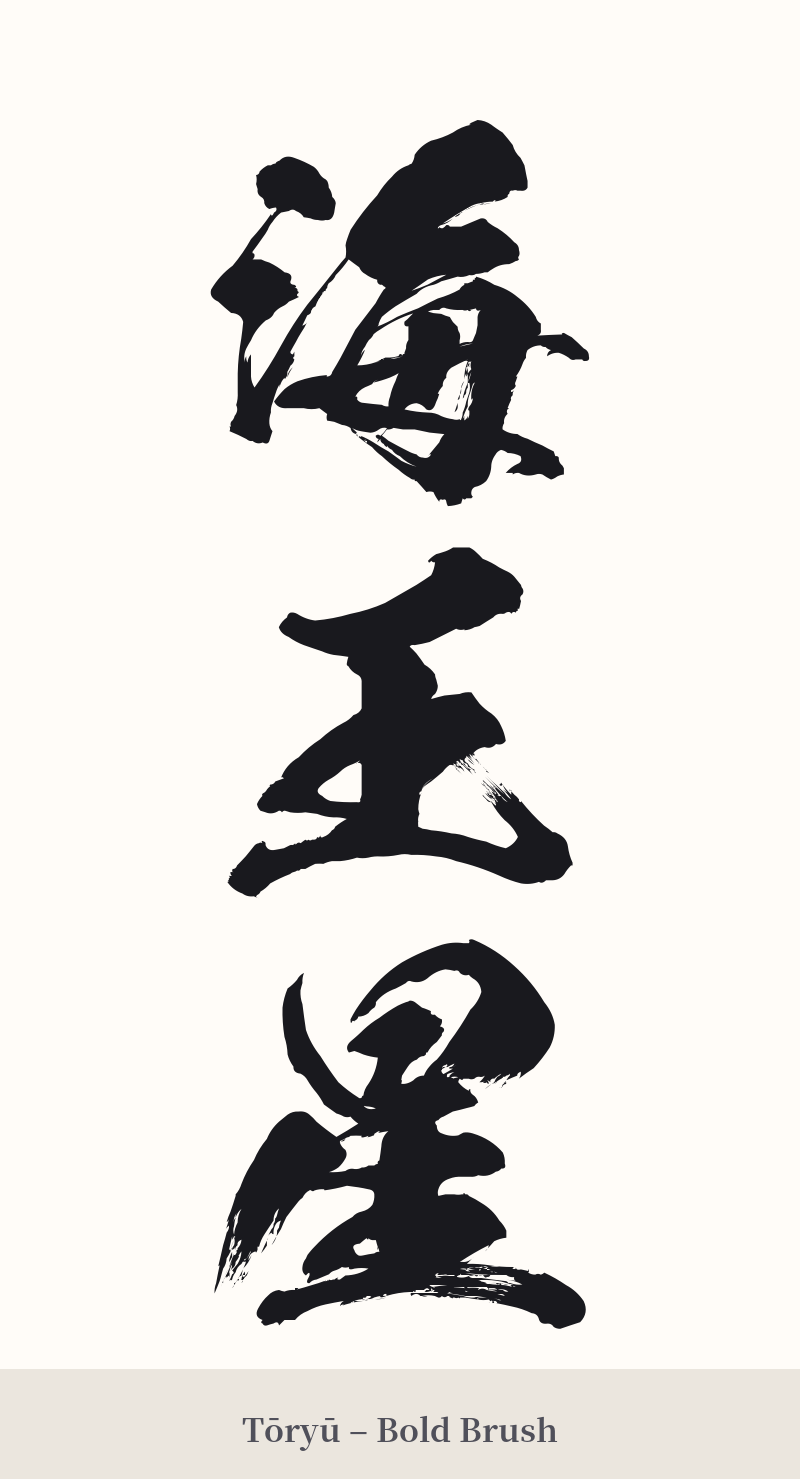
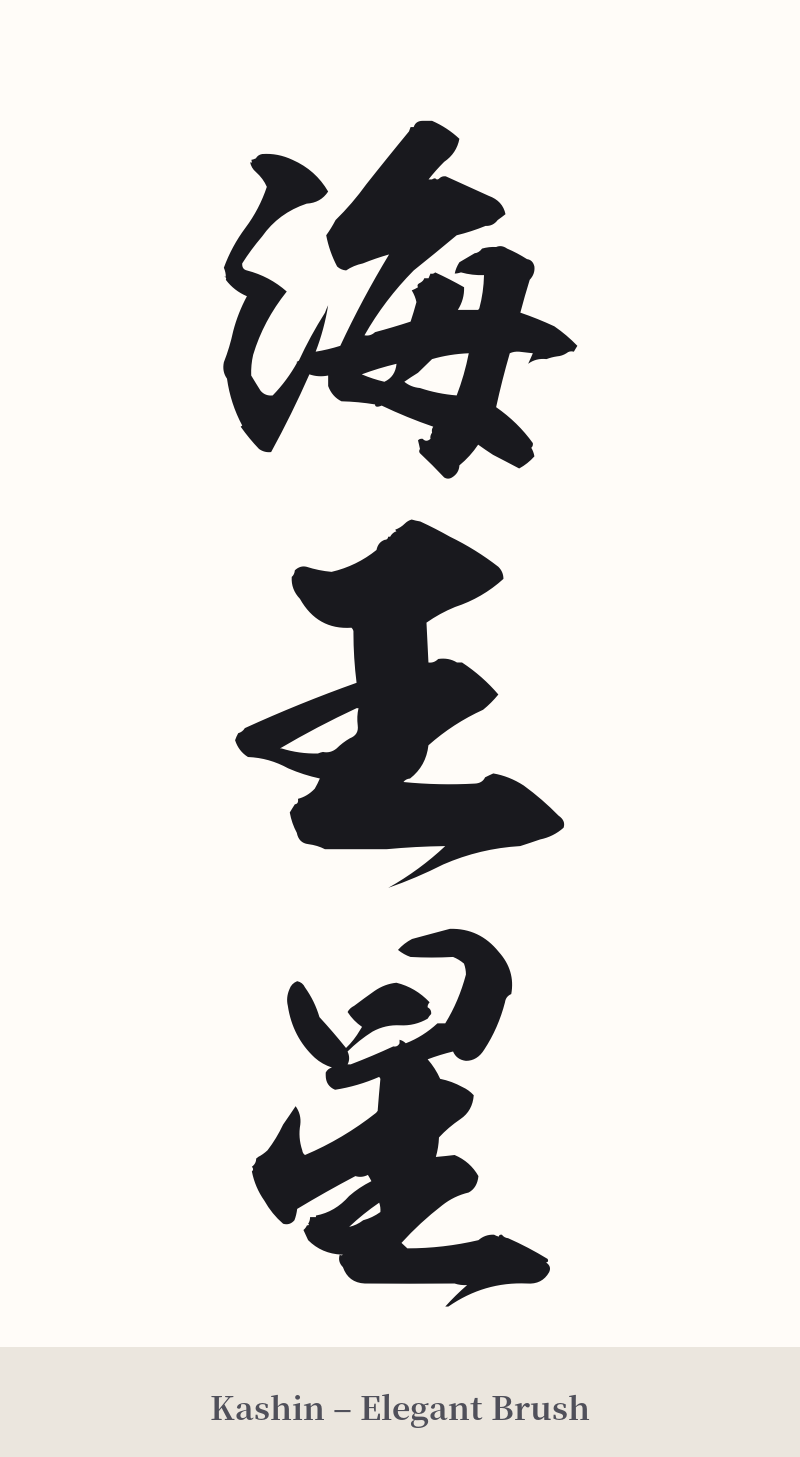
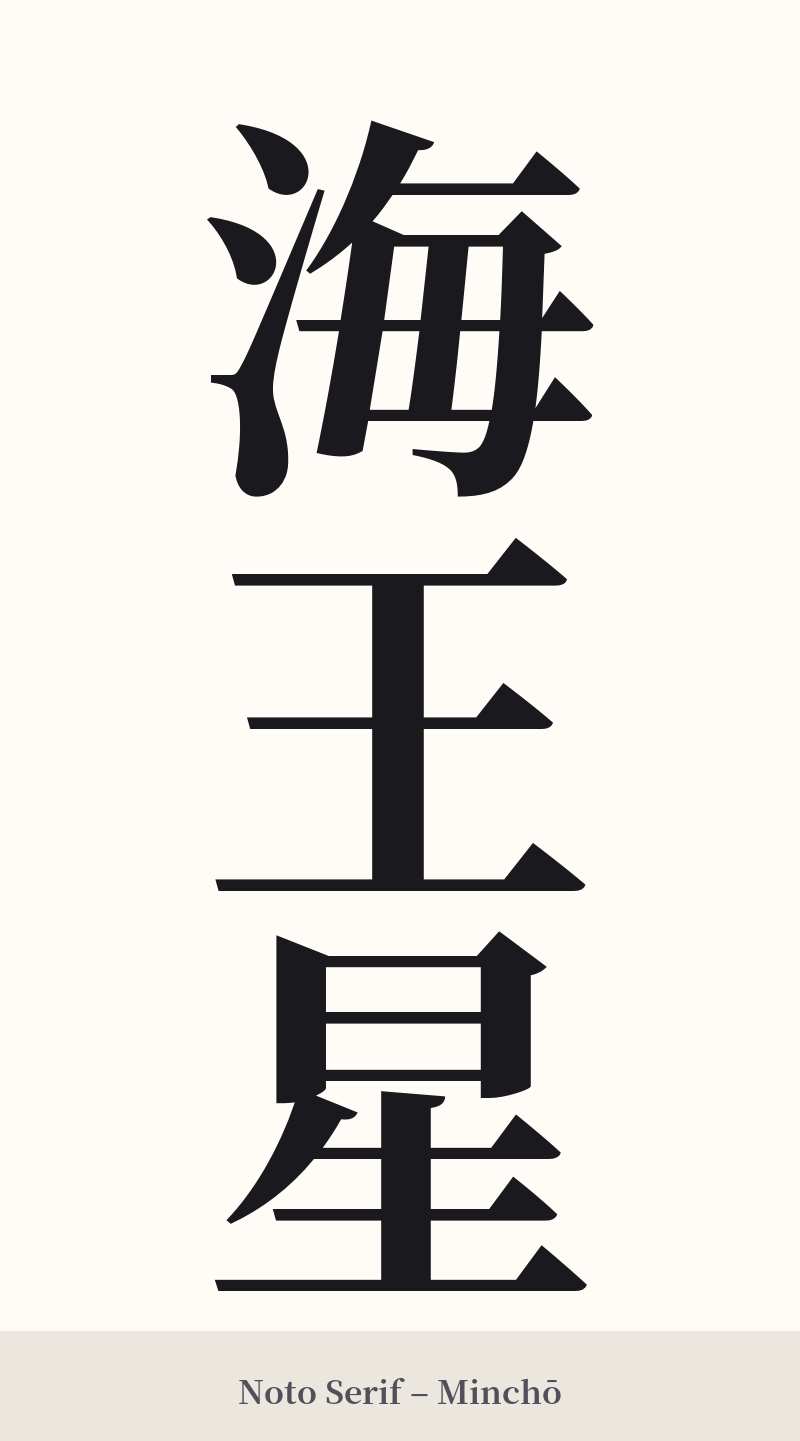
🖌️ Font Styles for 海王星
The same kanji can look dramatically different depending on the calligraphy style. Choose a font that matches the mood you want for your tattoo or design.
🎨 Tattoo Suitability
📐 Tattoo Design Guide
A tattoo of 海王星 (Kaiōsei) offers a wonderful balance of visual elegance and cosmic mystery. Its three-character structure makes it particularly well-suited for vertical placement, which is a classic and aesthetically pleasing style in East Asian calligraphy.
– Placement: A vertical arrangement looks stunning along the spine, forearm, or calf. This orientation allows the characters to flow downwards, creating a sense of gravity and importance. For a horizontal design, the upper back or chest provides a good canvas.
– Font Style: The choice of script can dramatically alter the feel. A crisp, formal Kaisho (block) style emphasizes the 'king' aspect—strong, clear, and regal. A flowing Gyosho (semi-cursive) style can evoke the 'sea' element, with strokes that mimic the movement of water. For a more modern or sci-fi take, a stylized, geometric font could highlight the 'star' or planetary nature.
– Visual Embellishments: Consider integrating imagery that complements the meaning. A subtle trident, the symbol of the Roman god Neptune, can be woven into the background. You might also incorporate stylized waves, a splash of deep blue or teal ink, or a faint star chart or nebula surrounding the kanji to create a complete cosmic scene.
Comments