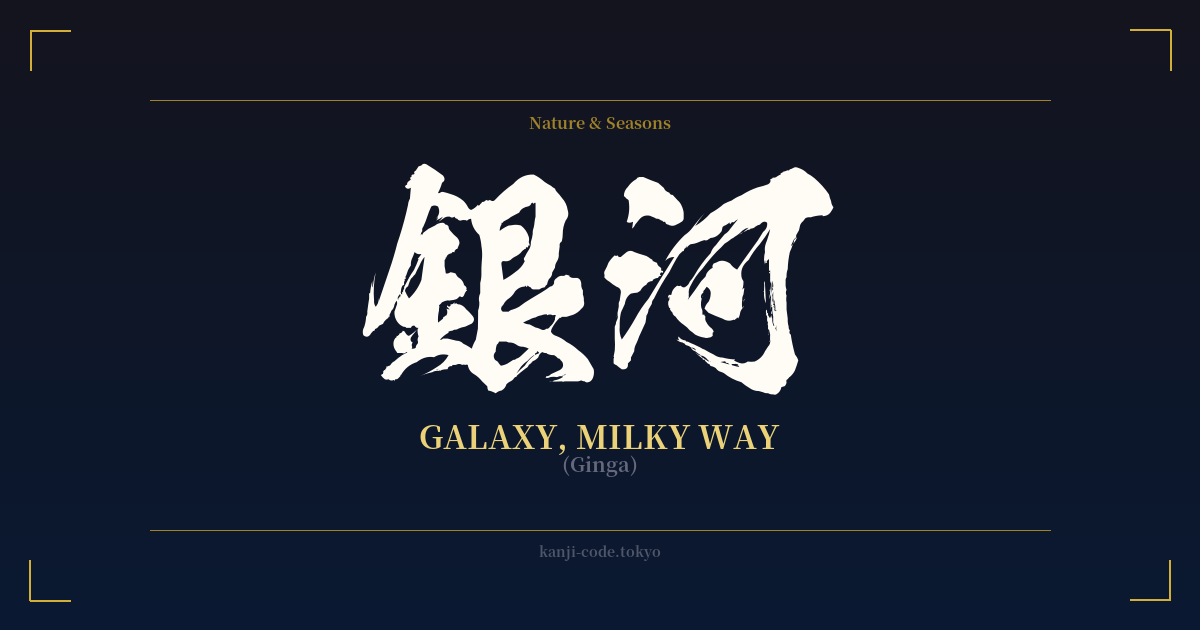
✍️ 銀河 (Ginga) — Cultural Context
The Japanese word for galaxy, 銀河 (Ginga), is a term steeped in poetic beauty and ancient observation. Literally translated, it means “Silver River.” This isn't just a random name; it's a direct, visual description of how the Milky Way appears in the night sky—a shimmering, silvery band stretching across the heavens like a celestial waterway.
This imagery is deeply woven into East Asian folklore, most famously in the story of Tanabata (七夕), the Star Festival, celebrated on the seventh day of the seventh month. The festival originates from a Chinese legend about two lovers, the weaver princess Orihime (represented by the star Vega) and the cowherd Hikoboshi (the star Altair). They were separated by the celestial river, the Amanogawa (天の川, another name for the Milky Way), as punishment by Orihime's father, the Sky King. They are only allowed to meet once a year, on the night of Tanabata, when a bridge of magpies forms across the Silver River for them to cross.
While 銀河 (Ginga) can refer to our own Milky Way, in modern astronomical terms, it's more commonly used to mean any galaxy. Our specific galaxy is often called 天の川銀河 (Amanogawa Ginga) to distinguish it. However, in a general or poetic context, Ginga beautifully captures the essence of a vast, star-filled system. The term 天の川 (Amanogawa), meaning “Heavenly River,” carries a more traditional, romantic, and mythological nuance, while Ginga feels slightly more scientific yet still profoundly poetic.
This dual identity makes Ginga a powerful word in Japanese culture. It appears frequently in science fiction, where it evokes the grand scale of space opera. Titles like “Ginga Eiyū Densetsu” (Legend of the Galactic Heroes) and “Ginga Nagareboshi Gin” (Silver Fang: The Shooting Star Gin) use the word to immediately establish a sense of epic scale and cosmic significance. It represents humanity's fascination with the unknown, the vastness of the universe, and our place within it.
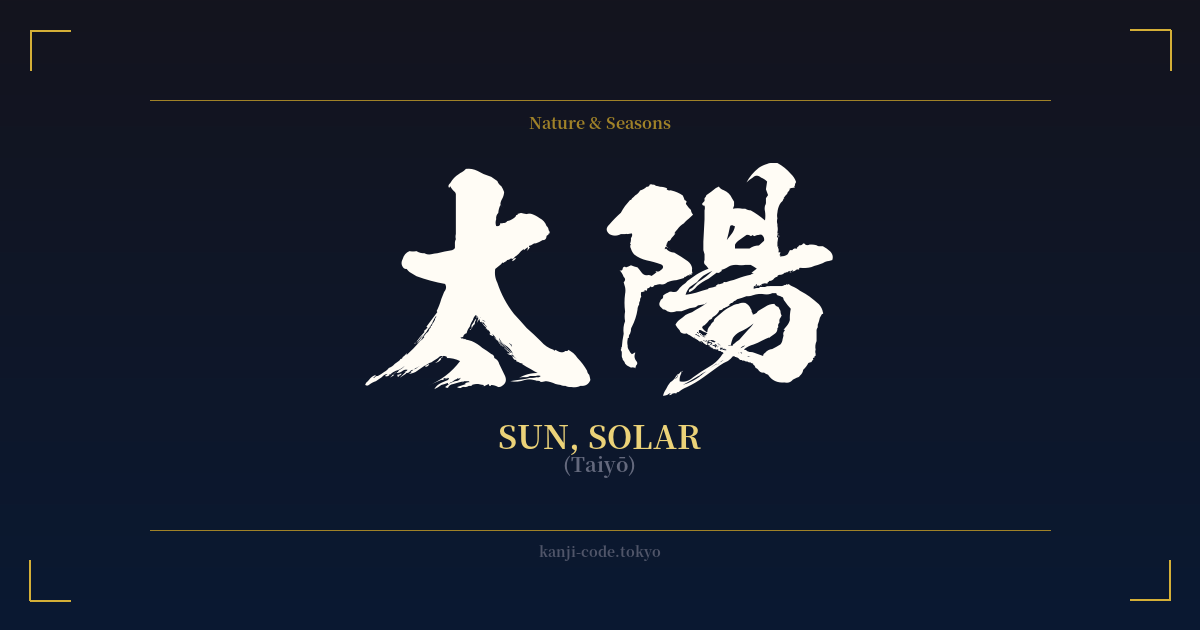
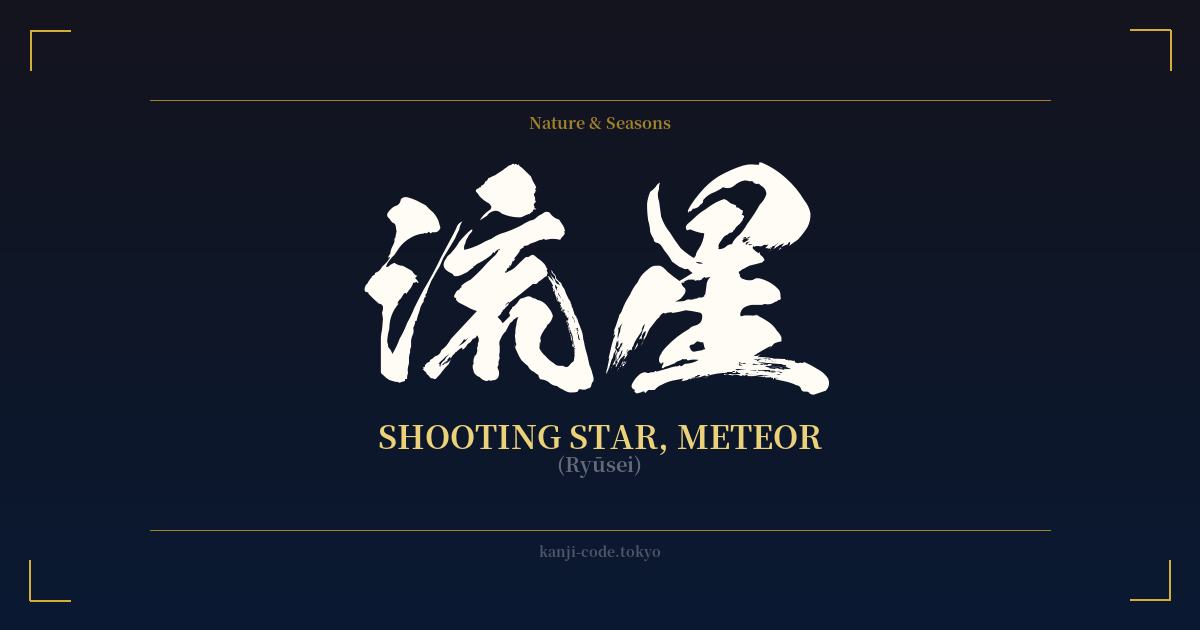
🖌️ Font Styles for 銀河
The same kanji can look dramatically different depending on the calligraphy style. Choose a font that matches the mood you want for your tattoo or design.
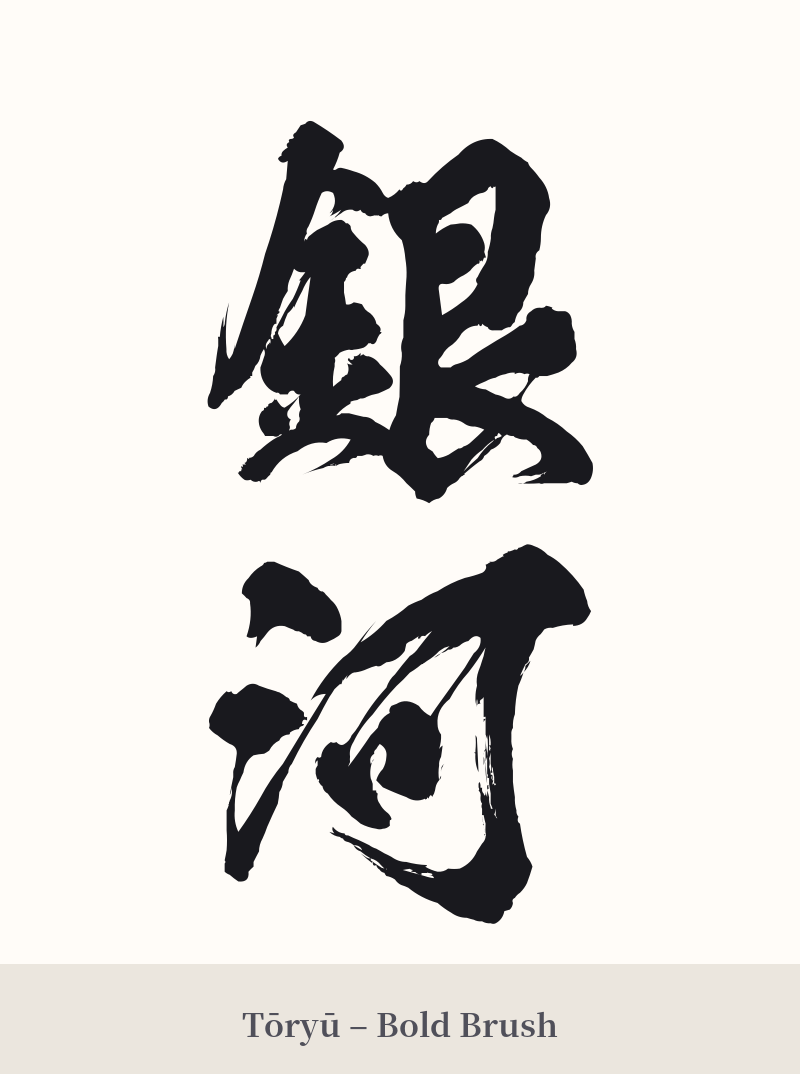
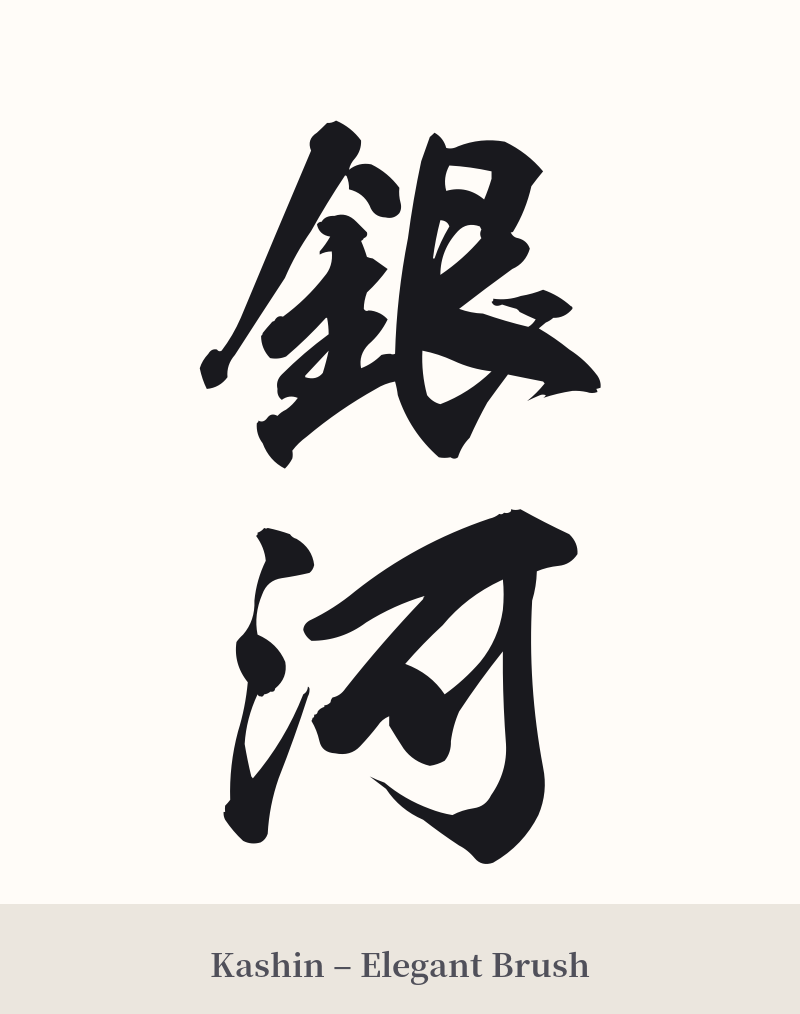
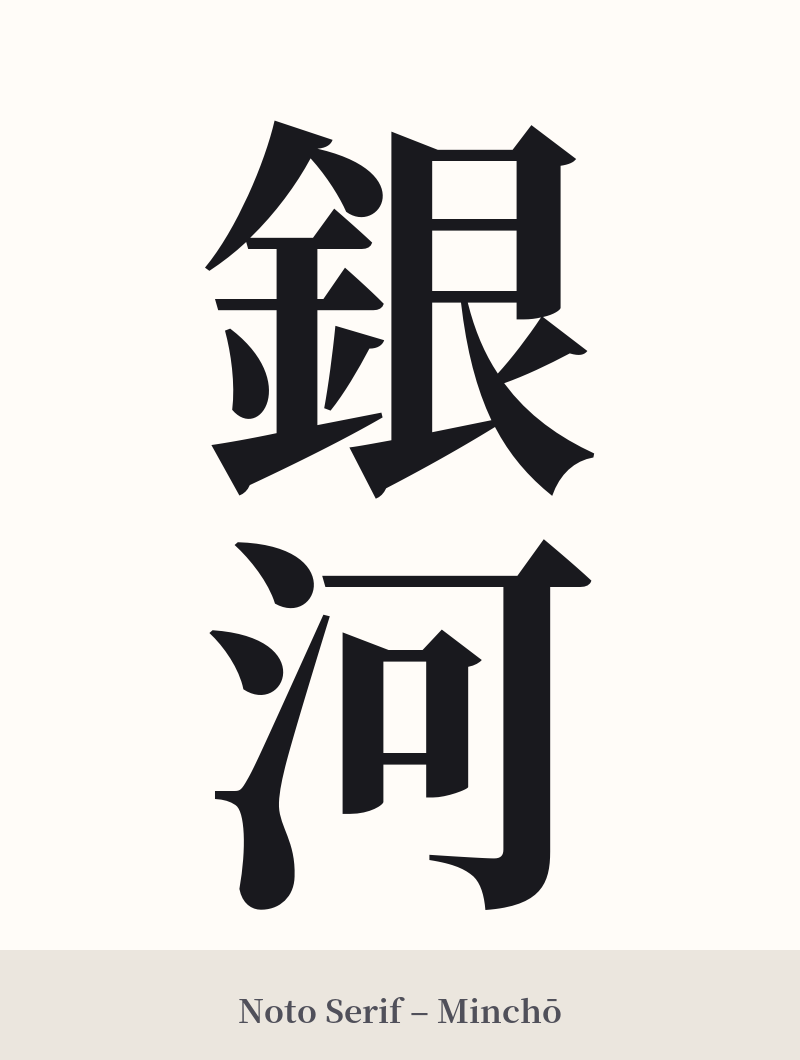
🎨 Tattoo Suitability
📐 Tattoo Design Guide
For a 銀河 (Ginga) tattoo, the design possibilities are as vast as the concept itself. Consider these recommendations:
– Placement: A vertical orientation is highly recommended to play on the “river” aspect of the word. The spine, forearm, or calf are excellent choices, allowing the characters to flow downwards. For a horizontal design, the chest, upper back, or across the clavicle provides a strong canvas.
– Font Style: A semi-cursive script (gyōsho) can beautifully capture the flowing, river-like quality of the kanji. For a more modern, sci-fi feel, a crisp, angular, or bold block script (kaisho) works well. A painterly, expressive brushstroke style (sōsho) can mimic the nebula-like appearance of a galaxy.
– Visual Elements: Enhance the kanji by integrating it with other imagery. You could have the characters formed by stars, set against a watercolor nebula background, or have the “river” of the Milky Way flowing through or behind the kanji. Using blue, purple, or silver-infused ink can further emphasize the cosmic theme.
Comments