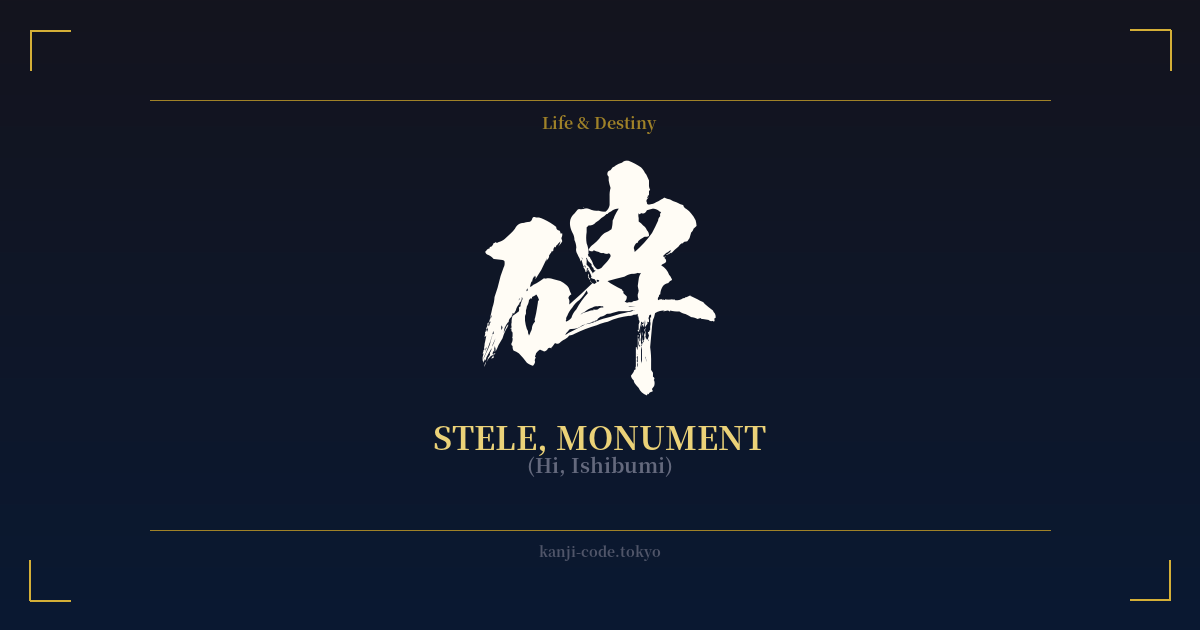
✍️ 碑 (Hi, Ishibumi) — Cultural Context
The kanji 碑 (hi) is a character steeped in history, memory, and the human desire to leave a permanent mark on the world. Its primary meaning is a stele or monument—a stone slab, pillar, or tablet erected to commemorate a person, event, or even a piece of art. These are not just markers; they are anchors to the past, physical manifestations of history intended to endure for generations.
Structurally, the kanji offers a glimpse into its own meaning. It is composed of two parts: 石 (ishi) on the left, meaning "stone," and 卑 (hi) on the right. The character 卑 originally depicted a person holding a tool, evolving to mean "low," "humble," or "base." The combination suggests a stone set low to the ground for people to read, or perhaps a humble inscription upon a grand stone, grounding the monumental with a sense of human accessibility.
In Japan, you will encounter 碑 in countless significant places. They stand silently in temple grounds, castle parks, and at historical sites, their inscriptions telling stories of battles, leaders, and cultural milestones. Famous haiku poets like Matsuo Bashō have their poems carved onto 句碑 (kuhi), or poetry steles, scattered across the country at locations that inspired their work. These monuments serve as a pilgrimage map for literary enthusiasts, connecting the present-day landscape to its artistic past.
There are several distinct types of monuments denoted by this kanji. A 記念碑 (kinenhi) is a commemorative monument for an event or achievement. An 慰霊碑 (ireihi) is a monument built to console the spirits of the dead, often found at sites of major tragedies or wars, such as the memorials in Hiroshima and Nagasaki. Perhaps the most common association is with 墓碑 (bohi), which specifically means a gravestone or tombstone inscription. This direct link to funerary practices gives the kanji a solemn and reverent weight.
Ultimately, 碑 represents more than just a piece of carved stone. It embodies the cultural importance of honoring ancestors, remembering history, and preserving knowledge. It is a testament to the idea that while life is transient, memory and legacy can be set in stone, serving as a silent teacher for all who come after.
🖌️ Font Styles for 碑
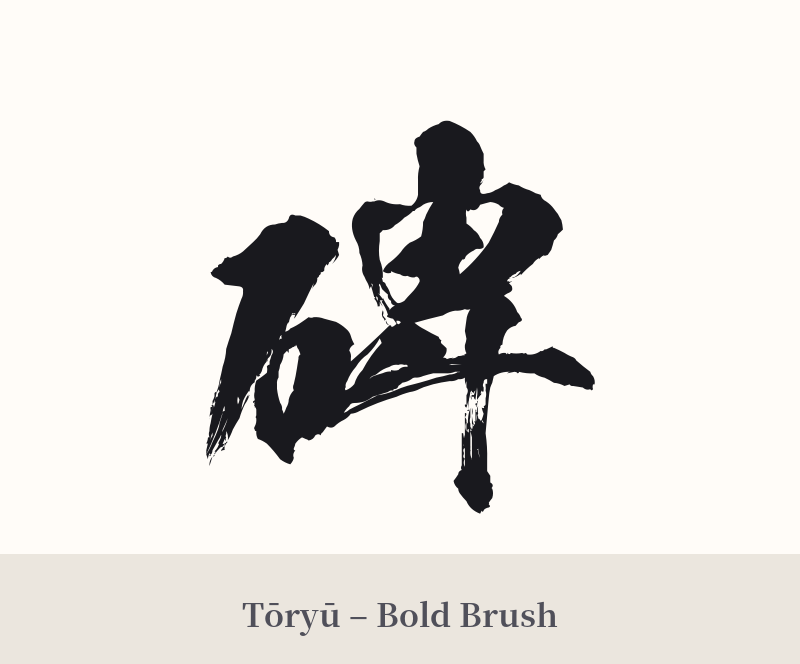
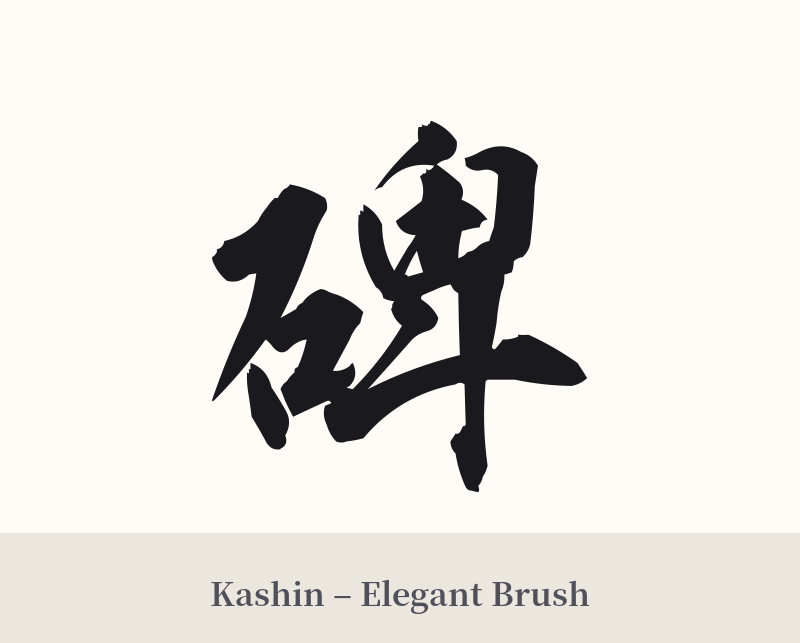
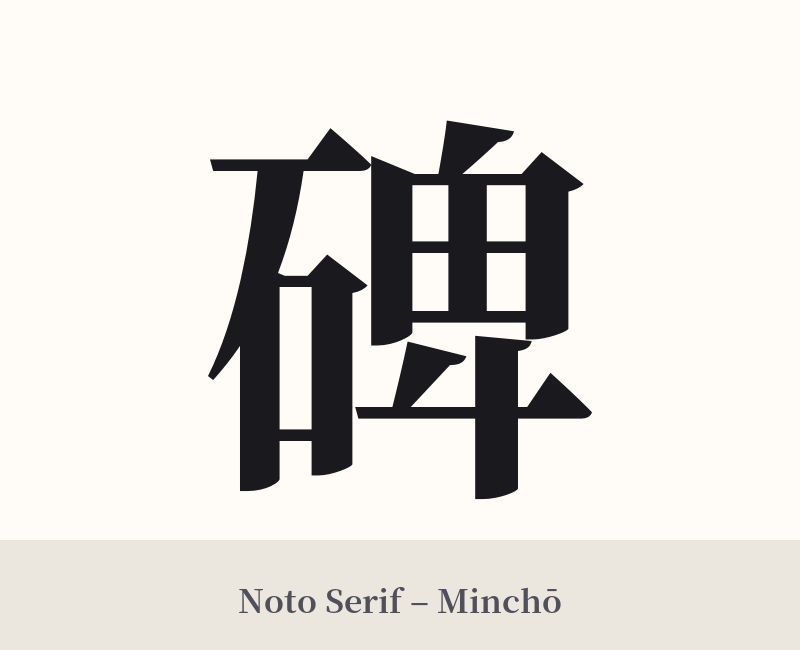
The same kanji can look dramatically different depending on the calligraphy style. Choose a font that matches the mood you want for your tattoo or design.
🎨 Tattoo Suitability
📐 Tattoo Design Guide
A tattoo of 碑 (hi) should convey a sense of weight, permanence, and history. The design choices should reflect its role as a monument.
– Placement: Consider areas that suggest a foundation or a pillar of strength, such as the forearm, the calf, or vertically along the spine. The back also provides a large, stable canvas fitting for a 'monumental' concept.
– Font Style: Traditional, strong calligraphic styles are most appropriate. A blocky, formal Kaisho (楷書) script will emphasize its solid, stone-like quality. A slightly more fluid Gyōsho (行書) can add a sense of history and the passage of time. Avoid thin, delicate, or overly modern fonts that would contradict the character's inherent meaning.
– Visual Tips: While it can stand alone as a stark statement, 碑 works exceptionally well when integrated into a larger piece. Consider placing it as a central element in a scene. You could surround it with cherry blossoms to contrast the permanence of stone with the fleeting nature of life, or with flowing water to symbolize time washing over a fixed point in history. For a memorial tattoo, pairing it with a name, date, or a relevant symbol like a lotus flower can create a deeply personal and complete design.
Comments