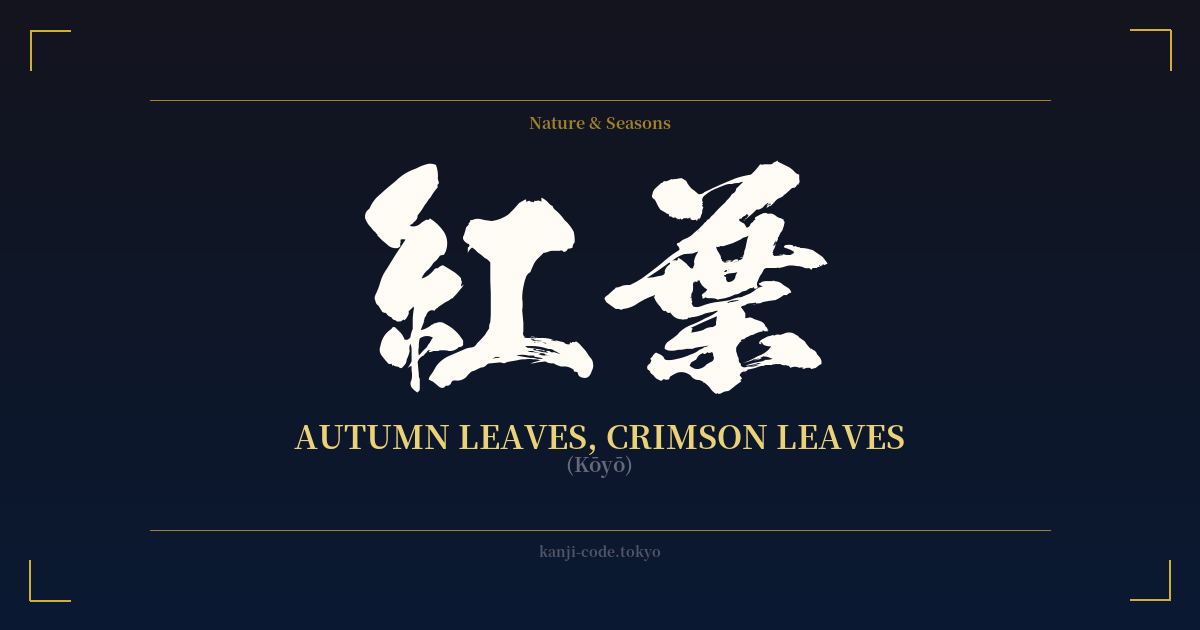
✍️ 紅葉 (Kōyō) — Cultural Context
The word 紅葉 (Kōyō) literally translates to "crimson leaves," a simple yet evocative description that opens a window into one of Japan's most cherished cultural seasons. While it generally refers to the phenomenon of autumn foliage changing color, its essence is deeply rooted in Japanese history, art, and philosophy.
In Japan, the viewing of autumn leaves is a national pastime, an event as significant as the cherry blossom viewing (hanami) in spring. This activity is known as 紅葉狩り (momijigari), which translates to "autumn leaf hunting." Far from being a sport, it is a contemplative and aesthetic pursuit where people travel to mountains, parks, and temples to witness the spectacular transformation of the landscape. The vibrant reds, oranges, and yellows of the Japanese maple (楓, kaede) and the brilliant gold of the ginkgo (銀杏, ichō) create breathtaking scenes.
This appreciation for kōyō is deeply connected to the traditional Japanese aesthetic of 物の哀れ (mono no aware), a gentle sadness or pathos for the transience of things. The stunning beauty of the autumn leaves is powerful precisely because it is fleeting. It serves as a poignant reminder of the impermanent nature of life and beauty, encouraging a mindful appreciation of the present moment. This concept is a recurring theme in Japanese literature, from the classical poetry of the Man'yōshū and Kokinshū to the modern novels of Yasunari Kawabata.
Historically, kōyō has been a favorite subject for artists. Ukiyo-e woodblock prints by masters like Hiroshige and Hokusai often depict famous locations for leaf-viewing, capturing the atmosphere of people enjoying the seasonal display. The maple leaf motif is also a common design element in textiles, lacquerware, and ceramics, symbolizing autumn and refined elegance.
It's also worth noting the dual reading of the characters 紅葉. When read as "kōyō," it refers to the general phenomenon of autumn leaves. When read as "momiji," it often specifically refers to the Japanese maple tree itself, which is the star of the autumn season. This linguistic nuance highlights the deep cultural importance of this specific tree in the context of autumn beauty. Kōyō is more than just leaves changing color; it is a celebration of change, a meditation on time, and a profound expression of the Japanese connection to the natural world.
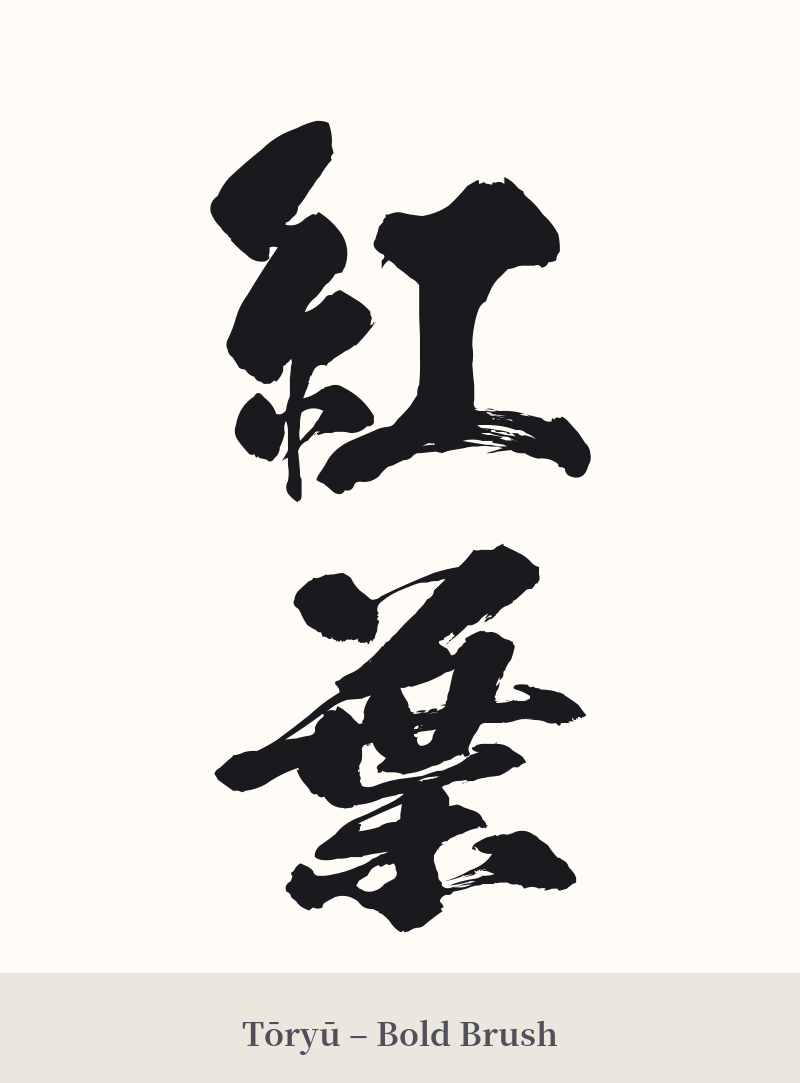
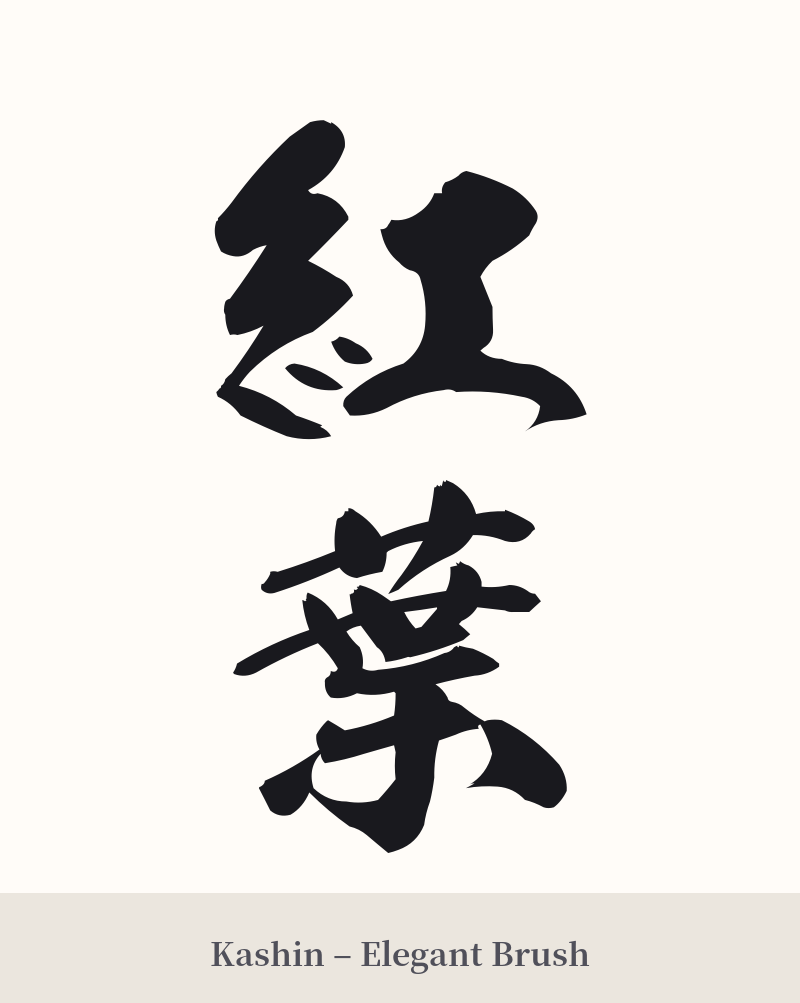
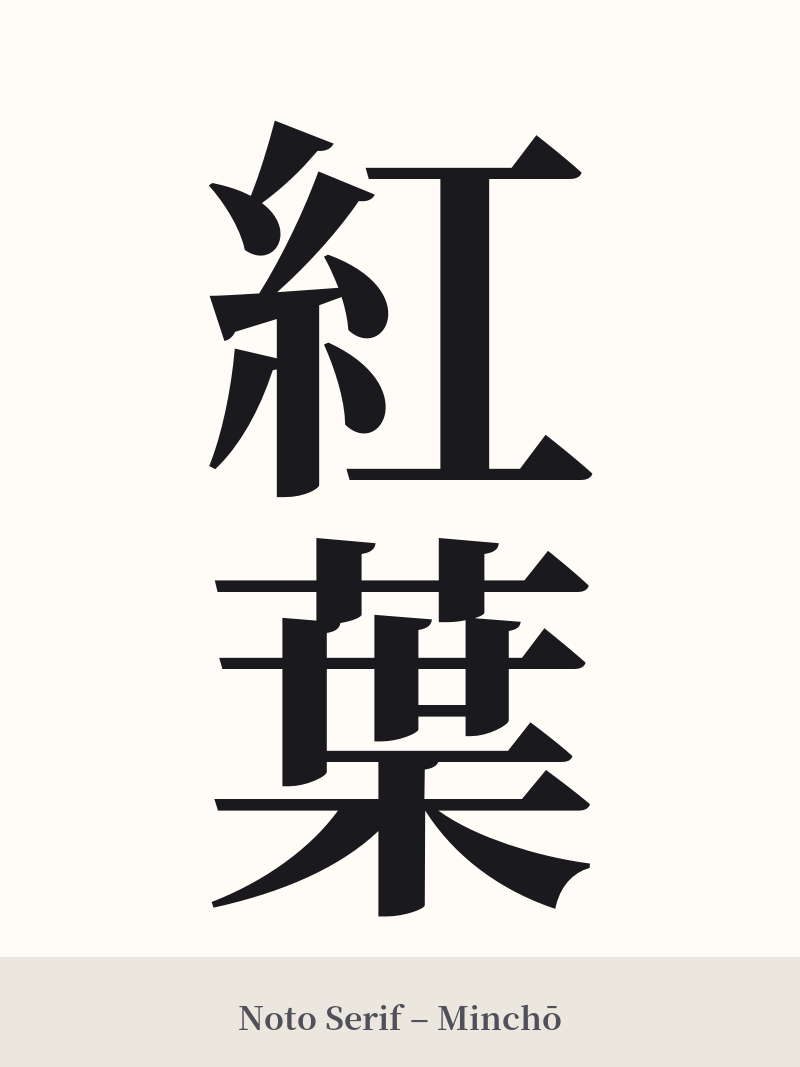
🖌️ Font Styles for 紅葉
The same kanji can look dramatically different depending on the calligraphy style. Choose a font that matches the mood you want for your tattoo or design.
🎨 Tattoo Suitability
📐 Tattoo Design Guide
The word 紅葉 offers wonderful versatility for a tattoo design, balancing visual elegance with deep meaning.
– Placement: For a vertical composition (紅 stacked above 葉), the forearm, calf, or along the spine are excellent choices. A horizontal arrangement works well across the chest, on the back of the neck, or along the collarbone. For a smaller, more subtle tattoo, the wrist or ankle can be very effective.
– Font Style: The style of calligraphy can dramatically change the feel. A flowing, semi-cursive script (gyōsho) would emphasize the natural, transient quality of leaves falling. For a more formal and crisp look, a standard block script (kaisho) provides clarity and strength. A bold, expressive brushstroke style can capture the vibrant energy of the colors.
– Visual Embellishments: Consider incorporating visual elements to enhance the meaning. A few Japanese maple leaves, perhaps rendered in red or orange ink, could be scattered around the kanji. A subtle watercolor splash of autumn colors behind the black ink of the characters can create a beautiful and dynamic effect. You could also design the kanji to appear as if it's being swept up in a gust of wind, reinforcing the theme of transience.
Comments